
Mace wants to change the Constitution so naturalized Americans can no longer serve in Congress, on the federal bench, or in certain powerful government positions, even after becoming full United States citizens.
The proposal has opened a divisive debate over national loyalty, political representation, and whether the country should distinguish between Americans who acquired citizenship at birth and those who earned it through naturalization.
Newsom’s political philosophy places him on the opposing side of that argument, although the dramatic face-to-face confrontation attributed to him in circulating political commentary has not been independently established.
There is no verified record of Newsom delivering the specific opening line, confronting Mace personally, or humiliating Republican lawmakers during a hearing over her proposed constitutional amendment.
Nevertheless, the underlying dispute is real, and the questions raised by Mace’s legislation reach far beyond a partisan exchange between California’s Democratic governor and South Carolina’s Republican congresswoman.
On May 20, 2026, Mace introduced House Joint Resolution 188, seeking a constitutional amendment requiring members of Congress, federal judges, and Senate-confirmed federal officers to be natural-born United States citizens.
The legislation would extend a citizenship requirement already associated with the presidency and vice presidency to numerous positions that naturalized Americans have historically been permitted to hold.
For Mace, the distinction reflects a concern about national allegiance and the responsibilities of public office. For critics, it threatens to create two fundamentally different classes of American citizens.
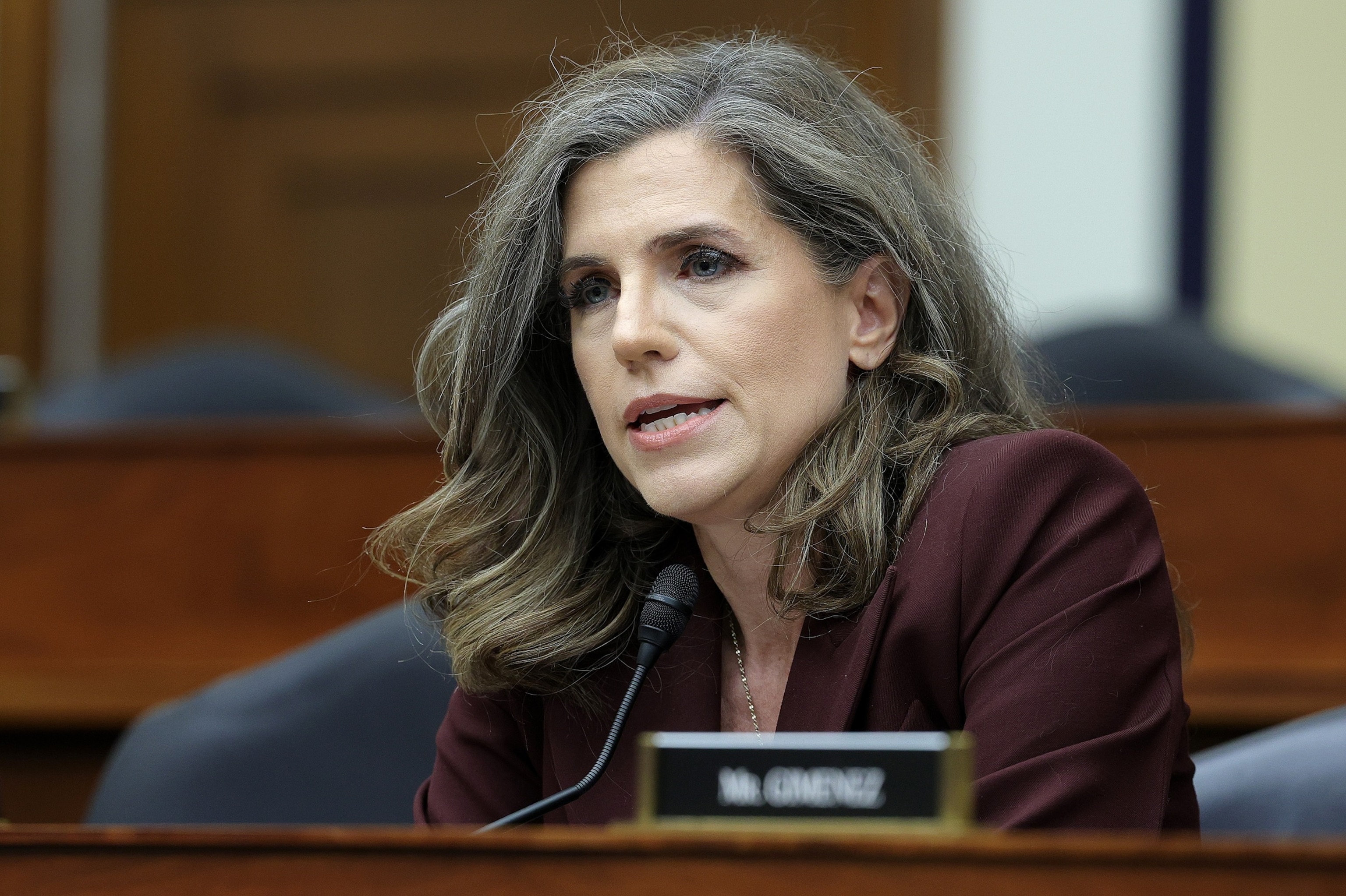
That disagreement goes directly to the central question surrounding the proposal: Does becoming an American citizen provide equal access to political representation, or should birthplace determine eligibility for the nation’s highest institutions?
Mace made her position unmistakable when announcing the legislation, arguing that individuals exercising substantial federal power should possess an undivided commitment to the United States.
Her proposal would affect not only future candidates seeking election but potentially individuals already serving in government after years of legal citizenship, public service, and successful electoral campaigns.
One of the most controversial elements was Mace’s decision to identify specific Democratic lawmakers as examples of why she believes the constitutional change is necessary.
Among those she singled out were Representatives Ilhan Omar of Minnesota, Pramila Jayapal of Washington, and Shri Thanedar of Michigan, all of whom became American citizens after being born abroad.
Mace questioned their national allegiances, linking her constitutional proposal to broader Republican criticism of immigration policy, foreign influence, and political figures whose backgrounds include other countries.
Those allegations are political accusations, not proof that the lawmakers violated their oaths or acted on behalf of foreign governments while exercising their congressional responsibilities.
The distinction matters because naturalized citizens must swear allegiance to the United States, and American law does not treat foreign birth itself as evidence of disloyalty.
Mace’s proposed constitutional restriction would replace that individualized assessment with a categorical eligibility requirement, preventing naturalized citizens from holding designated positions regardless of their actual conduct.
That is precisely where the debate intersects with the broader political argument Newsom has advanced through his defense of immigrant communities and criticism of restrictive Republican policies.
Although no authenticated Newsom statement specifically responding to this resolution has been established, the proposal presents a direct conflict with the inclusive conception of citizenship frequently associated with California’s Democratic leadership.
The constitutional details are particularly important because existing law already establishes eligibility standards for the House of Representatives and Senate without requiring lawmakers to have been citizens from birth.
Under Article I, House members must be at least 25 years old, have held American citizenship for seven years, and reside in the state they represent.
Senators must be at least 30 years old, have been United States citizens for nine years, and reside in the states from which they are elected.
Neither requirement specifies that a congressional candidate must have been born in the United States or acquired citizenship automatically through an American parent.
The Constitution deliberately establishes a different citizenship standard for the presidency, requiring a natural-born citizen while permitting naturalized Americans who satisfy the qualifications to serve in Congress.
Mace argues that extending this presidential standard would provide greater consistency across the federal government and strengthen confidence in the allegiance of national leaders.
Opponents question whether offices with different constitutional responsibilities require identical citizenship restrictions, particularly when voters already possess the authority to reject candidates whose loyalties they distrust.
The broader issue is not whether government officials should serve American interests. Both sides claim to support that principle, although they disagree profoundly about how allegiance should be measured.
Supporters of the proposed amendment emphasize national security, foreign influence, and the possibility that individuals maintaining strong relationships with other countries could face competing obligations.
Critics counter that those concerns should be addressed through disclosure requirements, security investigations, ethics enforcement, and evidence of improper conduct rather than an exclusion based on the circumstances of citizenship.
The disagreement becomes more complicated when examining the Republican politicians who could also be affected by the natural-born citizenship requirement Mace has proposed.
Ohio Republican Senator Bernie Moreno was born in Colombia and became an American citizen after immigrating to the United States, making his background directly relevant to the proposal.
Republican Representatives Young Kim of California, Victoria Spartz of Indiana, and Juan Ciscomani of Arizona also became American citizens after being born in other countries.
Their participation in Republican politics demonstrates that the proposed restriction would not operate exclusively against Democrats, even though several of Mace’s public criticisms focused on Democratic officeholders.
The inclusion of Republican lawmakers creates an important question about whether supporters are prepared to apply the proposed standard consistently across political parties and ideological affiliations.
If foreign birth automatically disqualified individuals from certain federal offices, politicians who share Mace’s positions on immigration, taxation, and national security could still become constitutionally ineligible.
That consequence complicates the argument that citizenship restrictions can be understood primarily as a response to the conduct or political views of particular Democratic lawmakers.
It also places additional attention on the distinction between legal citizenship and political allegiance, which are related concepts but cannot automatically be treated as interchangeable.
A naturalized American may disagree sharply with federal policies while remaining fully committed to the constitutional system and the country in which that person holds citizenship.
Likewise, being born an American citizen does not independently establish that an officeholder will act ethically, protect classified information, or place public responsibilities above personal interests.
These realities do not eliminate concerns about foreign interference, but they make the question of how to identify actual security risks substantially more complicated than birthplace alone.
Representative Pramila Jayapal publicly condemned Mace’s initiative, characterizing it as discriminatory and inconsistent with America’s history as a nation shaped by generations of immigrants.
Jayapal also emphasized that naturalized lawmakers represent American constituents who exercised their voting rights to choose the individuals they wanted serving in Congress.
Her response shifted attention from the politicians who would be excluded to the citizens whose electoral choices could be restricted by the proposed constitutional amendment.
Representative Ilhan Omar offered a shorter public reaction, expressing skepticism that Mace’s proposal would succeed in securing the political support necessary for constitutional change.
The responses illustrate a significant division between lawmakers who view citizenship-based eligibility rules as national safeguards and those who regard the proposal as an unjustified limitation on political participation.
For Newsom, whose political identity is closely tied to California’s diverse electorate and its long history of immigration, the dispute also touches a central theme of national identity.
California contains substantial immigrant communities whose economic contributions, professional accomplishments, and participation in local government have become important features of the state’s social and political landscape.
Any proposal redefining which American citizens may hold federal office therefore carries consequences beyond Washington, particularly in states where large numbers of residents acquired citizenship through naturalization.
The immediate legal obstacles facing Mace’s proposal are formidable because the Constitution cannot be amended through an ordinary congressional majority or a presidential signature.
Under the congressional amendment process, a proposed constitutional change requires approval from two-thirds of both the House of Representatives and Senate before proceeding to state ratification.
It must then receive ratification from three-fourths of the states, a threshold that demands exceptionally broad political and geographic support across the country.
Mace’s original resolution was referred to the House Judiciary Committee, and the available official legislative record does not establish that it has completed the congressional amendment process.
That distinction is essential because the controversy concerns a proposed constitutional change, not an existing federal prohibition against naturalized citizens serving in Congress or the judiciary.
In fact, Congress cannot simply impose additional qualifications for its members through ordinary legislation when those requirements would conflict with the qualifications established by the Constitution.
The Supreme Court has reinforced that constitutional principle in cases concerning congressional qualifications, making the amendment process central rather than incidental to Mace’s legislative strategy.
The controversy expanded further on June 3, 2026, when Mace announced another proposed constitutional amendment addressing foreign citizenship, nationality, and allegiance among federal officeholders.
Unlike her earlier natural-born citizenship proposal, the later measure focused on officials maintaining foreign citizenship or allegiance and contemplated eligibility for individuals who formally relinquished such ties.
The distinction matters because a naturalized citizen who maintains no foreign citizenship presents a different legal situation from an American who possesses citizenship in multiple countries.
The two approaches nevertheless share a political foundation: Mace’s belief that stronger constitutional restrictions are necessary to protect American government institutions from competing national allegiances.
Her legislative efforts continued into October, when she introduced the Dual Citizen Disclosure Act, proposing additional public reporting requirements concerning federal employees who hold foreign citizenship.
Announced on October 22, the measure would require information about affected employees, their agencies, positions, compensation, and foreign citizenship connections to be made publicly available.
Together, the proposals demonstrate that Mace’s campaign extends beyond a single controversial amendment into a broader effort to redefine how federal institutions assess citizenship and allegiance.
Representative Nancy Mace+3
However, the measures also raise distinct legal and policy questions, and their differences should not be overlooked when assessing their potential consequences for naturalized Americans.
Mace’s defenders can point to legitimate government interests in preventing foreign interference, protecting sensitive information, and requiring officials to comply with their constitutional obligations.
Her critics can point to existing legal safeguards and question why an individual’s birthplace should outweigh the demonstrated responsibilities of citizenship, electoral accountability, and established public service.
Newsom’s relevance to this dispute lies in that unresolved conflict, rather than in an unverified account of a dramatic exchange supposedly unfolding before television cameras.
The California governor has frequently challenged Republican approaches to immigration and national identity, making this constitutional controversy a natural subject for disagreement between their competing political perspectives.
But an anticipated political disagreement must not be confused with an actual confrontation, and no invented quotation can substitute for a documented statement from Newsom addressing Mace directly.
The controversy remains consequential without that theatrical framing because its implications are measurable: elected representatives could lose eligibility, federal appointments could face new restrictions, and voters could encounter narrower choices.
It also raises difficult questions for Republicans whose own political coalition includes naturalized citizens occupying prominent positions in Congress and other areas of public life.
For Democrats, the proposal offers a direct challenge to their interpretation of equal citizenship, although opposing the amendment does not remove the need to address legitimate national security concerns.
For the American public, the debate ultimately concerns whether constitutional eligibility should be determined by citizenship acquired through birth or by citizenship recognized through the lawful naturalization process.
Mace has placed that question before Congress through proposed constitutional amendments, while lawmakers opposing her restrictions have challenged the assumptions underlying her approach to national allegiance.
The immediate outcome remains unresolved, but the disagreement exposes a deeper constitutional tension between expanding safeguards for federal institutions and preserving the political rights historically available to naturalized citizens.
And that is the question neither sharp political rhetoric nor an imagined confrontation can settle: Once someone becomes an American citizen, how much should the circumstances of that citizenship matter?
