
A tense confrontation between two powerful American senators can quickly become more than an ordinary congressional disagreement, especially when accusations involving campaign finances, political influence, and questionable information enter the discussion.
Imagine a packed Capitol Hill hearing room, dozens of cameras pointed toward the witness table, and lawmakers waiting for answers about allegations involving campaign contributions.
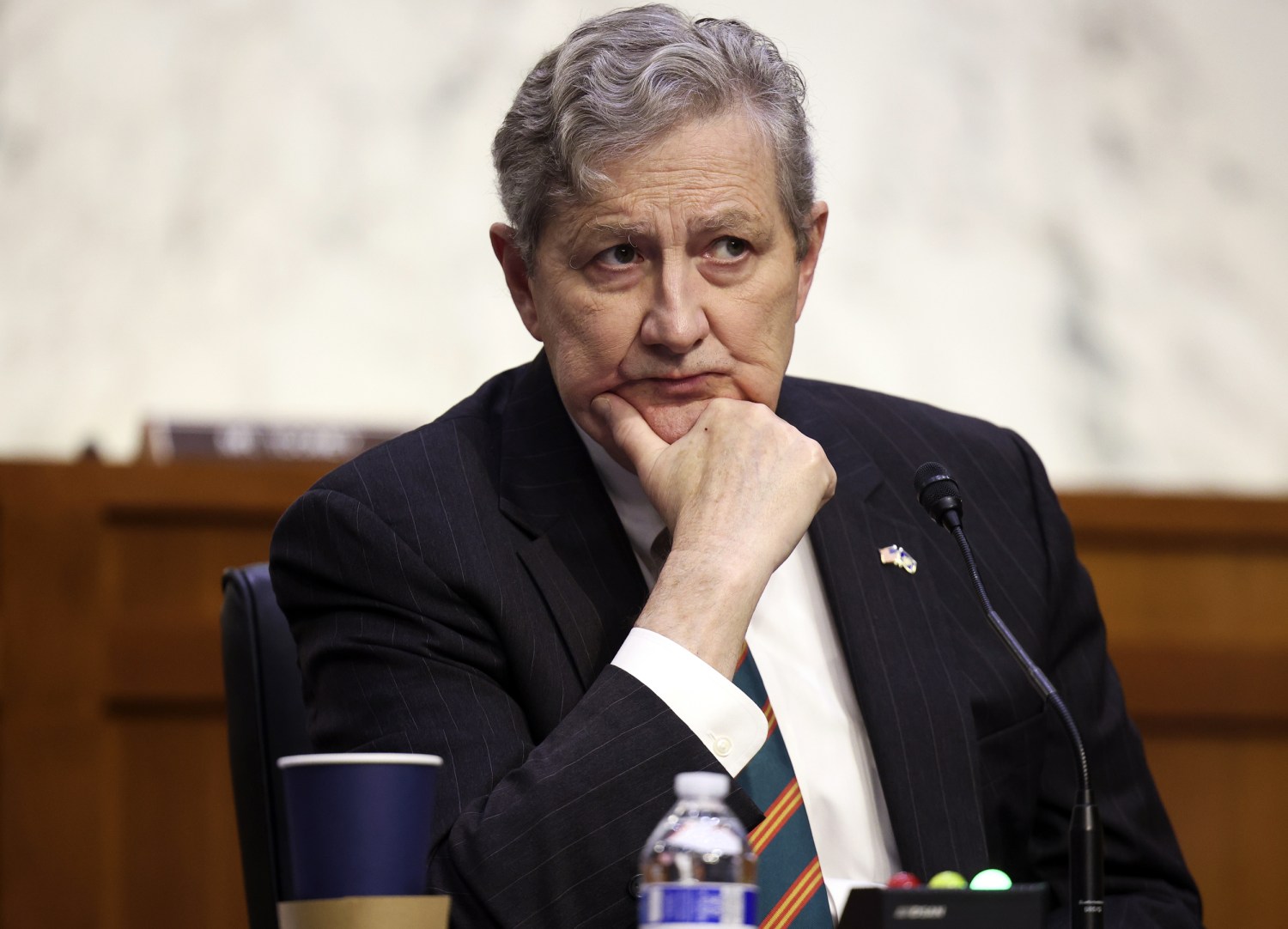
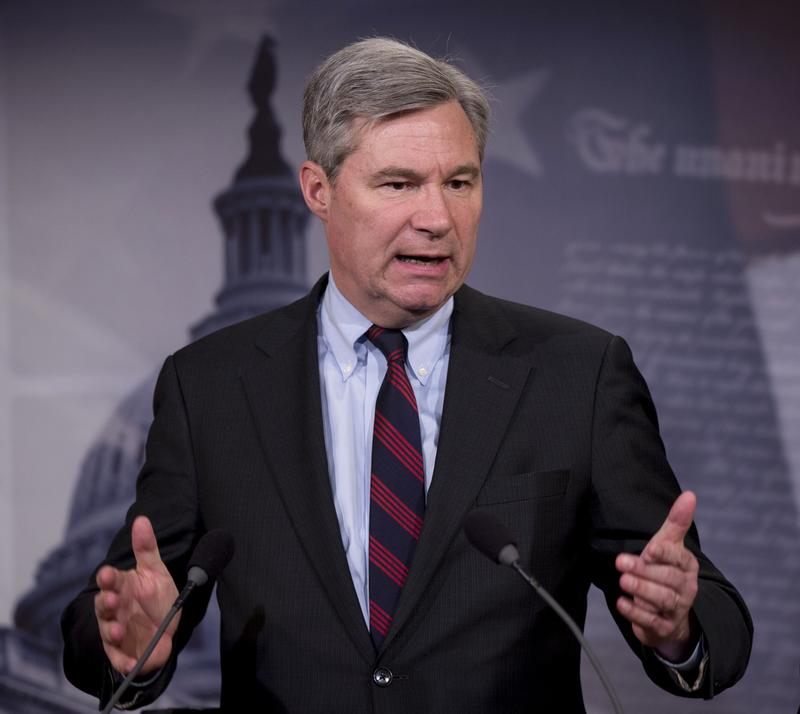
At the center of the hypothetical confrontation are Republican Senator John Kennedy of Louisiana and Democratic Senator Sheldon Whitehouse of Rhode Island.
Both politicians have developed reputations for aggressive questioning, distinctive communication styles, and an unmistakable willingness to challenge political opponents.
But this time, the disagreement is not about an ordinary legislative proposal.
It is about money, political accountability, and the credibility of information being presented to the American public.
Kennedy begins by questioning the reliability of information Whitehouse has introduced during a discussion about campaign financing.
He argues that political allegations should be supported by verifiable financial records rather than selective interpretations or partisan commentary.
Whitehouse, however, refuses to accept the suggestion that the information should be dismissed.
He argues that campaign finance transparency is a legitimate congressional concern and that lawmakers have a responsibility to examine potential conflicts of interest.
The disagreement intensifies when Kennedy challenges the origins of the figures being discussed.
“Where did these numbers come from?” he demands.
Whitehouse responds that the information should be evaluated against the underlying financial records.
Kennedy insists that the senator must identify precisely which documents support the allegations.
The exchange becomes increasingly uncomfortable as both lawmakers attempt to control the discussion.
Kennedy argues that public accusations involving campaign money can damage reputations and mislead voters if the evidence is incomplete.
Whitehouse counters that demanding transparency is not the same as making an unsupported accusation.
The distinction becomes the central issue.
At this point, Kennedy delivers another sharp challenge, suggesting that Democrats are using financial allegations to create political headlines rather than establish wrongdoing.
Whitehouse rejects the characterization.
He maintains that campaign finance investigations are about understanding how money moves through political organizations and whether existing disclosure requirements are being followed.
The hypothetical confrontation reaches its dramatic peak when Kennedy accuses Whitehouse of relying on politically motivated information.
“You’re presenting fabricated information,” Kennedy declares in the imagined exchange.
He demands that the committee distinguish between documented financial transactions and claims that have not been independently established.
Whitehouse does not respond with an equally loud accusation.
Instead, he pauses, looks toward Kennedy, and delivers a measured response.
“Senator, transparency is not the problem; refusing to examine the evidence is.”
The sentence becomes the defining moment of the fictional confrontation.
It shifts the discussion away from personal accusations and back toward the central question of congressional oversight.
Kennedy’s challenge is understandable in one important respect: financial allegations should never be presented as established facts without reliable documentation.
But Whitehouse’s response raises an equally important question.
Should lawmakers abandon an investigation simply because the subject disputes the information being examined?
The answer depends on the evidence, the legal authority behind the investigation, and the specific allegations involved.
Campaign finance investigations can be particularly complicated because political money frequently passes through multiple organizations.
Political action committees, nonprofit organizations, independent expenditure groups, and campaign committees operate under different legal requirements.
Some contributions must be disclosed publicly.
Other forms of political spending may be subject to different reporting rules.
Understanding those distinctions is essential before concluding that a particular transaction violated federal law.
Whitehouse has spent years criticizing the influence of undisclosed political spending.
He has repeatedly argued that wealthy donors and politically connected organizations can exercise enormous influence over American elections without voters receiving sufficient information about the sources of that money.
His concerns have frequently focused on dark money, nonprofit political organizations, and the Supreme Court’s campaign finance jurisprudence.
Kennedy, meanwhile, has often approached political controversies through pointed questions designed to expose weaknesses in an opponent’s argument.
His communication style frequently combines humor, sarcasm, and direct challenges.
That makes him a formidable participant in congressional hearings.
But campaign finance oversight is not simply a contest between competing personalities.
It requires detailed examination of financial disclosures, organizational relationships, contribution records, and applicable federal regulations.
A senator cannot establish misconduct merely by expressing suspicion.
Equally, an official cannot eliminate legitimate questions simply by calling an investigation politically motivated.
The public deserves access to reliable information.
That principle becomes particularly important when allegations involve elected officials and the financial networks surrounding them.
American voters have a legitimate interest in knowing who funds political campaigns, how money is spent, and whether elected representatives have financial relationships that could influence their decisions.
They also deserve protection against misleading accusations.
The hypothetical Kennedy-Whitehouse exchange illustrates the difficulty of balancing those responsibilities.
For Republicans, the concern would be that Democrats could use congressional oversight to damage political opponents through selective disclosures.
For Democrats, the concern would be that accusations of partisanship could become a convenient excuse for avoiding legitimate financial scrutiny.
Both arguments deserve examination.
The most important question is not which senator delivers the more memorable sentence.
It is whether the underlying information can withstand independent verification.
If the figures are accurate, lawmakers should explain what they reveal.
If the figures are misleading, the committee should correct the record.
If evidence of wrongdoing exists, investigators should follow the appropriate legal procedures.
And if no violation occurred, the public should be told that as clearly as possible.
That is what meaningful congressional oversight should accomplish.
The imagined confrontation also highlights a growing problem in American political communication.
Congressional hearings increasingly produce short video clips that circulate across social media before viewers have seen the complete proceedings.
A single sarcastic remark can become a national headline.
A brief disagreement can be portrayed as a political collapse.
And an unverified allegation can quickly acquire the appearance of established fact.
That environment rewards dramatic language but does not necessarily reward accuracy.
For politicians, the temptation to produce a memorable sound bite is obvious.
For journalists and commentators, the challenge is separating what actually happened from what online audiences believe happened.
The difference matters enormously.
A genuine confrontation involving campaign finance records could reveal important information about political accountability.
A fictional confrontation presented as real news, however, could mislead readers about the conduct of elected officials.
That is why the evidence must remain at the center of the story.
Kennedy’s insistence on documented figures and Whitehouse’s demand for transparency represent two competing responsibilities that should coexist in a functioning democracy.
Neither financial oversight nor the presumption that allegations must be proven should be treated as optional.
Ultimately, congressional investigations should be judged by the quality of their evidence, the fairness of their procedures, and their willingness to correct mistakes.
The American public does not need another political shouting match disguised as accountability.
It needs answers.
And when senators disagree about campaign money, those answers should come from documents, verified financial records, and transparent investigative findings rather than accusations exchanged across a committee table.
That is the real standard against which both sides should be measured.
