
Senator Bernie Sanders delivered a direct challenge to Chuck Schumer’s political future, declaring that he would not support the New York Democrat for Senate majority leader despite the party’s sweeping midterm victories.
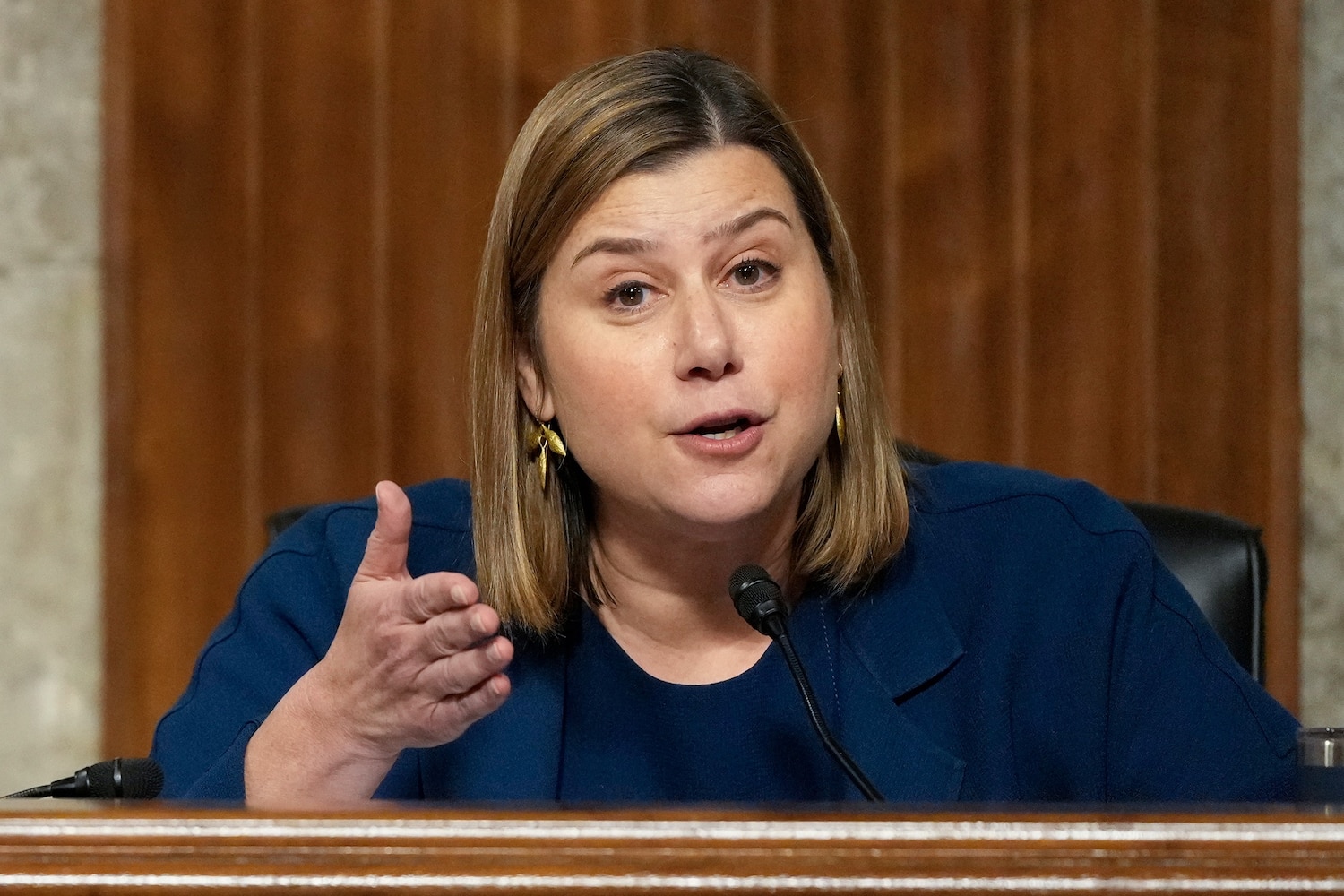
Standing beside Michigan Senator Elissa Slotkin at a November 10 Capitol news conference, Sanders argued that Democrats needed new leadership, a different political direction, and a serious reckoning with voter expectations.
“The time is now for change,” Sanders declared, making clear that his opposition was not merely a warning about party strategy but a decision concerning Schumer’s continued leadership.
Slotkin, a moderate Democrat whose political approach differs significantly from Sanders’ progressive agenda, joined the demand for change while making an unexpected admission about her own intentions.
She was not actively seeking the leadership position herself, and she would not automatically support another candidate merely because that person challenged Schumer.
Instead, Slotkin insisted that anyone seeking her vote must present a concrete governing plan demonstrating how the next Democratic Senate majority would operate differently.
The unusual alliance immediately exposed a serious disagreement within a party celebrating its return to power after the November 3 midterm elections.
But the story took another significant turn on November 12, when Maryland Senator Chris Van Hollen announced that he would challenge Schumer for the leadership position.
The announcement transformed an emerging rebellion into an actual leadership contest, placing Schumer’s position before Democratic senators in what will be their first contested leadership election in decades.
The confrontation is particularly striking because Democrats had just achieved an outcome that normally strengthens congressional leaders: winning control of both chambers of Congress.
Schumer helped recruit candidates, coordinate campaign resources, and direct party strategy during an election that delivered victories across states once considered difficult Democratic targets.
Democrats captured Republican-held Senate seats in states including Texas, Kansas, and South Carolina, expanding their position beyond the races initially considered competitive.
Those successes strengthened Schumer’s argument that his leadership had helped deliver the very electoral breakthrough Democrats had spent years trying to achieve.
Yet Sanders and Slotkin challenged the assumption that winning an election automatically entitled existing leaders to remain in power without scrutiny.
Their argument reflected dissatisfaction among activists and lawmakers who believed Democrats needed more than a congressional majority to confront President Donald Trump’s administration.
Sanders, an independent who caucuses with Democrats, emphasized that his opposition did not arise from personal hostility toward the longtime Democratic leader.
He acknowledged knowing Schumer for decades and described him as an exceptionally hardworking politician before explaining why he believed the leadership needed to change.
That distinction mattered because Sanders was challenging Schumer’s political direction rather than alleging personal wrongdoing or questioning the legitimacy of the election results.
For Sanders, the central issue was whether Democrats could convert electoral victories into a governing agenda capable of addressing economic inequality and restoring public confidence.
His political movement has consistently emphasized healthcare affordability, higher wages, corporate accountability, and the influence of wealthy donors on American government.
Those priorities shaped his criticism of Democratic leadership, especially among activists who believed the party had sometimes responded too cautiously to Republican initiatives.
Sanders argued that the midterms represented a public demand for change, not simply an invitation for Democrats to resume familiar congressional routines.
Slotkin approached the confrontation from a different political background, making her participation especially consequential for Schumer and his allies.
A former national security official representing Michigan, Slotkin has developed a political reputation centered on economic concerns, electoral competitiveness, and communication with voters outside progressive strongholds.
Her presence complicated any attempt to portray dissatisfaction with Schumer as a movement confined exclusively to the Democratic Party’s left wing.
At the Capitol news conference, Slotkin said potential leaders needed to provide specific commitments about how Democrats would use their newly obtained congressional authority.
Her position was deliberately conditional. She would consider candidates who presented a convincing plan, but she refused to make an unconditional endorsement.
That distinction also meant Sanders and Slotkin were not identical in their public commitments. Sanders explicitly rejected Schumer, while Slotkin demanded changes before offering support.
Neither senator initially announced a leadership campaign, leaving reporters and political observers asking who would turn the public criticism into an organized challenge.
Van Hollen soon provided the answer, announcing that he would seek the position after discussing the leadership question with colleagues and considering demands from progressive organizations.
His candidacy introduced a new phase of the dispute because Democratic senators would now have to evaluate an identifiable alternative rather than an abstract demand for renewal.
Van Hollen argued that voters had rejected the status quo and expected their elected representatives to respond with changes extending beyond partisan control of Congress.
The Maryland Democrat emphasized that the leadership contest should concern the party’s ability to deliver results, rather than become a personal dispute centered on Schumer.
His announcement gave activists seeking new leadership a candidate with congressional experience, established relationships, and a record of advocating progressive policy positions.
Van Hollen previously served in the House of Representatives before joining the Senate in 2017, giving him experience with legislative negotiations and party organization.
Nevertheless, entering the race did not guarantee that he possessed enough support to replace Schumer, whose relationships throughout the Democratic caucus remain politically important.
The leadership election is scheduled for early December and will take place through a closed-door, secret-ballot process involving Democratic senators and aligned independents.
That procedure introduces uncertainty because lawmakers can publicly express support, remain undecided, or decline to disclose their intentions without revealing how they ultimately vote.
Schumer has repeatedly projected confidence that he possesses enough votes to retain the leadership position when Democrats select their next Senate leader.
He has emphasized his campaign efforts and the importance of immediately preparing Democrats to govern rather than allowing internal disagreements to consume their electoral momentum.
Following the midterm victories, Schumer told reporters that his priority was delivering results for the American people through the newly empowered Democratic majority.
He has also begun developing an agenda for the party’s first 100 days in control, focusing attention on governing responsibilities rather than exclusively on the leadership contest.
Those plans provide Schumer with a substantive response to critics demanding change: his supporters argue that the existing leadership helped win power and can now deliver legislation.
New York Senator Kirsten Gillibrand, who chairs the Democratic Senatorial Campaign Committee, publicly defended Schumer’s contribution to the party’s electoral success.
Gillibrand credited his strategic leadership and suggested that senators would recognize the work involved in recruiting candidates and financing competitive campaigns.
Her defense highlighted a significant tension within the caucus: whether the electoral victories demonstrated successful leadership or created an opportunity to reconsider the party’s priorities.
For Schumer’s supporters, replacing him immediately after the party won control of the Senate could sacrifice valuable experience and institutional knowledge during a consequential transition.
For his critics, keeping the same leadership could signal that Democrats were unwilling to respond to voters seeking a more assertive political approach.
The disagreement also reflects frustration dating to March 2025, when Schumer supported allowing a Republican-backed government funding measure to advance despite strong objections from progressive Democrats.
Schumer defended that decision as necessary to avoid a shutdown that he believed could have given the Trump administration additional opportunities to weaken federal agencies.
Progressive critics argued that the decision surrendered political leverage and demonstrated excessive caution in confronting an administration they believed required stronger congressional resistance.
The dispute became an enduring source of dissatisfaction, resurfacing as Democrats prepared to regain the Senate majority following the 2026 elections.
That history helps explain why Sanders’ opposition carried more weight than a routine leadership disagreement following an ordinary congressional election.
He represented a longstanding progressive movement, while Slotkin brought the perspective of a senator associated with electoral pragmatism and competitive-state politics.
Their joint appearance suggested that concerns about leadership extended across ideological boundaries, even when participating lawmakers disagreed about specific policies or political tactics.
Slotkin captured that distinction by rejecting a simplistic progressive-versus-moderate explanation and instead emphasizing whether Democratic leaders intended to pursue meaningful political and legislative change.
Her criticism placed greater emphasis on effectiveness than ideological identity, challenging candidates to explain how they would convert congressional authority into measurable accomplishments.
The approach could also complicate Van Hollen’s campaign, because his ideological alignment with progressive organizations would not automatically satisfy senators seeking a detailed governing strategy.
Incoming Michigan Senator Abdul El-Sayed has publicly supported Van Hollen, providing an early indication that some newly elected Democrats want a different leadership direction.
Other incoming lawmakers have expressed skepticism toward Schumer, although not all have endorsed a particular alternative or explained the conditions governing their eventual decisions.
Meanwhile, incoming Ohio Senator Sherrod Brown and independent Senator Angus King have supported Schumer, illustrating the existing leader’s continued relationships across the caucus.
Those competing commitments demonstrate that the leadership debate cannot be reduced to a unanimous demand for Schumer’s removal or a purely symbolic protest by progressive activists.
The outcome will depend on how senators evaluate electoral success, institutional experience, legislative priorities, and the political risks of replacing an established leader.
There is another important constitutional distinction: Senate Democrats choose their own party leader internally, rather than asking American voters to select the majority leader directly.
The majority leader plays a central role in scheduling legislation, managing floor proceedings, coordinating nominations, and negotiating with the White House and congressional Republicans.
Because those responsibilities influence what legislation receives consideration, leadership decisions can substantially affect the policies Americans encounter long after an election concludes.
A leader also must manage disagreements within the majority, especially when senators representing different states and constituencies hold conflicting positions on spending, foreign policy, and economic regulation.
That responsibility helps explain why Schumer’s supporters emphasize experience and why his critics demand a clearer governing strategy before committing their votes.
The transition to a Democratic majority also places the leadership question directly within the broader confrontation between Congress and the Trump administration.
Democratic control of the Senate provides opportunities to influence legislative priorities, conduct oversight, and exercise authority over nominations and other matters requiring Senate action.
However, Senate rules and constitutional requirements continue to impose limitations, meaning that winning control does not automatically guarantee passage of every Democratic proposal.
Sanders and Slotkin therefore face a practical question alongside their leadership challenge: what specific changes would make a Democratic Senate more effective?
Their demand for a different direction establishes the political disagreement, but prospective leaders must still explain how they would assemble sufficient votes to implement their agendas.
Van Hollen’s entry gives senators an opportunity to examine one alternative, including his approach to committee management, legislative negotiations, and the priorities of the new majority.
Schumer must simultaneously demonstrate that his experience and campaign successes provide a convincing foundation for governing rather than merely preserving his position.
The leadership debate has already attracted pressure from progressive organizations encouraging constituents to contact Democratic senators and demand a genuine contest.
Such activism reflects the frustration of voters and organizers who believe electoral victories should produce visible policy changes, not simply a rearrangement of congressional titles.
Yet congressional leadership elections remain decisions made by elected lawmakers, whose calculations can include institutional considerations that differ from the priorities of outside advocacy groups.
That gap between activist demands and Senate decision-making may become especially important as the December vote approaches and senators weigh competing arguments privately.
As of November 13, Schumer has not stepped aside, Van Hollen has formally entered the race, and Sanders remains publicly opposed to another Schumer leadership term.
Slotkin has continued emphasizing the need for a concrete plan, rather than declaring that any particular challenger automatically deserves her support.
No verified evidence establishes that the November 10 news conference left lawmakers visibly shaken, although the statements themselves created a documented and consequential leadership dispute.
The most significant development was not an imagined moment of stunned silence, but the transformation of public dissatisfaction into a formal challenge against an established Democratic leader.
For Sanders, the confrontation represents another effort to persuade Democrats that political success requires a more ambitious response to economic hardship and institutional distrust.
For Slotkin, it reflects concern that Democrats must communicate a credible governing plan to voters who expect practical improvements rather than continuous partisan confrontation.
For Van Hollen, the challenge is turning those demands into enough support to replace a leader who retains considerable institutional influence and loyal colleagues.
And for Schumer, the test is demonstrating that the same leadership credited with helping Democrats regain the Senate can satisfy the expectations created by that victory.
The next major decision will arrive when Democratic senators cast their leadership ballots in early December, determining who will guide the majority into the new Congress.
Until then, the party faces an unusual political argument in which electoral success has intensified rather than silenced questions about the direction of its leadership.
Sanders and Slotkin have made clear that they want a more substantive debate, while Schumer has insisted that the governing work ahead should remain the priority.
Van Hollen’s candidacy means that the disagreement can no longer be dismissed as a demand for change without anyone willing to accept the responsibility of leading.
The unresolved question is whether senators believe replacing Schumer would strengthen their ability to govern or whether preserving his leadership offers greater continuity after the midterm victories.
Whatever Democrats decide, the confrontation demonstrates that winning congressional power does not necessarily settle internal disagreements about how that power should be exercised.
Sanders’ declaration has become the defining message of the dispute, but the lasting significance will depend on whether Democratic senators translate their competing visions into a leadership decision and governing agenda.
