
A live CNN discussion erupted into a shouting match when Democratic Representative Jamie Raskin and Republican Representative Dan Crenshaw confronted each other over Donald Trump, congressional corruption, and the consequences of the 2026 midterm elections.
What began as a discussion about governing after Democrats reclaimed control of Congress quickly descended into overlapping accusations, sharp interruptions, and increasingly personal exchanges between the two lawmakers.
“Stop interrupting me!” Crenshaw demanded as Raskin accused Republicans of protecting Trump instead of addressing the economic concerns that had contributed to their electoral defeat.
The November 4 confrontation, broadcast during CNN’s post-election coverage, became an unusually direct illustration of the challenges facing a divided Washington after voters changed the balance of congressional power.
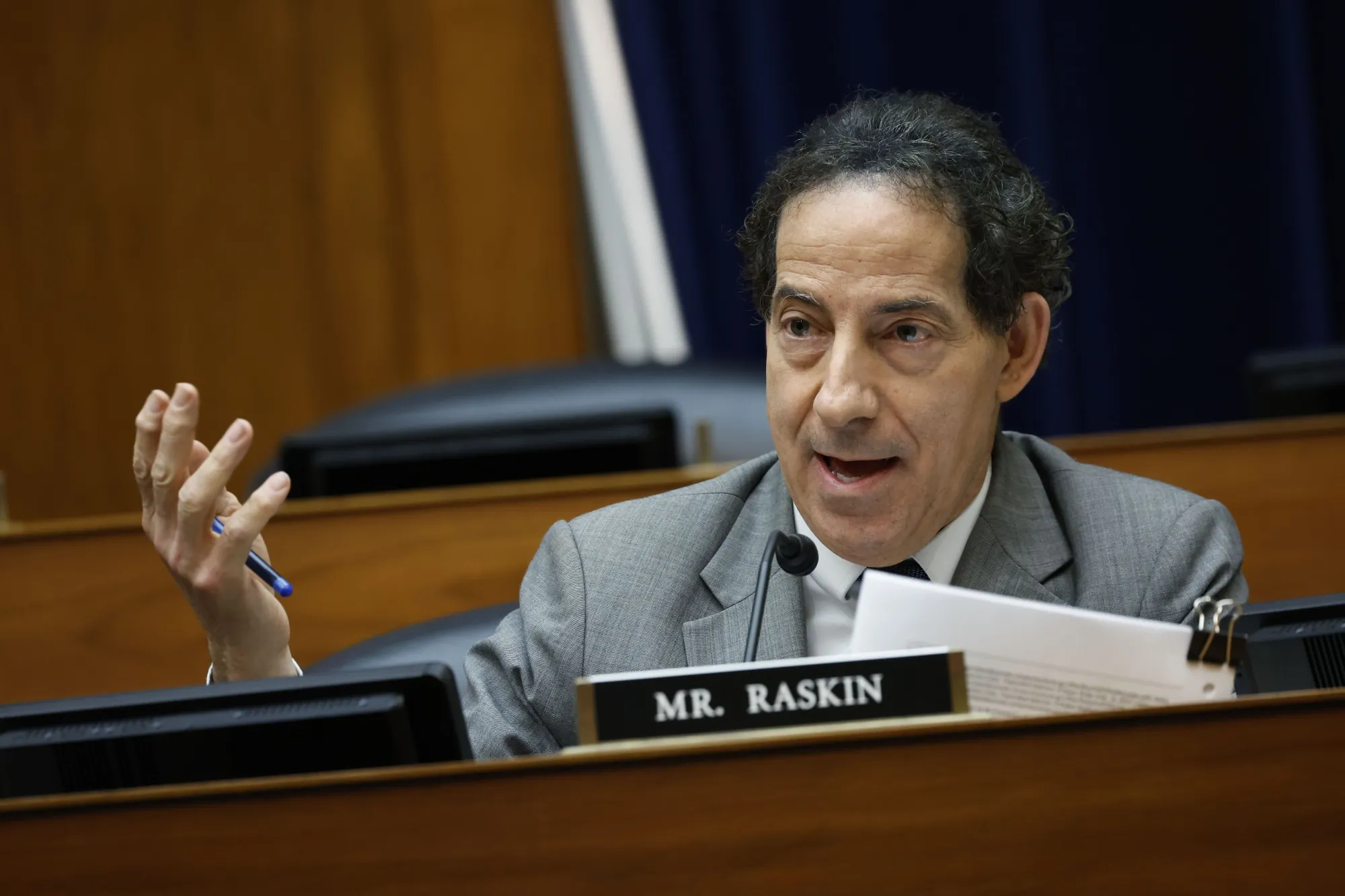
Raskin argued that Republicans had ignored public frustration with Trump’s administration, while Crenshaw maintained that Democrats had deliberately blocked bipartisan legislation to deny Republicans political victories.
Their disagreement involved congressional stock trading, government accountability, economic affordability, presidential impeachment, and the limits of legislative power under Senate procedural rules.
At several points, the exchange became so heated that CNN anchor Dana Bash struggled to direct the conversation, eventually interrupting to acknowledge the intensity of the debate.
Yet beneath the television confrontation was a substantive dispute about which party bore responsibility for legislative gridlock and whether the incoming Democratic majority could deliver the changes voters expected.
The argument began with questions about Democrats’ plans after the November 3 elections, which gave the party control of both the House of Representatives and the Senate.
Raskin, a Maryland Democrat and prominent member of the House Judiciary Committee, welcomed the results as an opportunity to challenge Trump’s policies and expand congressional oversight.
Crenshaw, the Texas Republican whose congressional career was approaching its conclusion after a primary defeat, questioned whether Democrats intended to prioritize legislation or pursue another impeachment effort.
He suggested that attempting to remove Trump had become a familiar Democratic political objective, raising doubts about whether the new majority would focus on practical governing.
Raskin rejected that characterization, responding that Democrats viewed defending constitutional principles as a central responsibility rather than a partisan exercise.
The disagreement quickly shifted toward legislation that Republicans had attempted to advance before the election, including proposals addressing stock trading by members of Congress.
Crenshaw argued that Democrats had refused to support measures with bipartisan appeal because they feared giving Republicans legislative accomplishments immediately before voters went to the polls.
His argument centered on the Stop Insider Trading Act, a proposal intended to restrict members of Congress and their families from purchasing certain individual stocks.
The measure had passed the Republican-controlled House on July 22 by a vote of 232 to 198, demonstrating that it had obtained support from some Democrats.
However, the legislation failed to advance in the Senate on September 30, when a procedural vote produced 53 votes in favor and 47 against.
Because the Senate generally requires 60 votes to overcome a filibuster on ordinary legislation, the bill could not move forward without additional Democratic support.
Crenshaw emphasized that distinction, arguing that Republican control of both congressional chambers did not automatically provide enough votes to advance every measure.
He accused Democrats of withholding cooperation on proposals they might otherwise support, suggesting that their calculations had been influenced by the approaching midterm elections.
Raskin challenged the implication that Republicans had been powerless, pointing out that the party controlled the White House, House, and Senate throughout the preceding congressional session.
The dispute intensified when Crenshaw suggested that Democrats might become more willing to cooperate with Trump after the election had removed immediate campaign pressures.
Raskin responded skeptically, questioning whether the president would genuinely support measures intended to prevent conflicts of interest and improper financial transactions within government.
He accused the Trump administration of tolerating insider trading, turning Crenshaw’s example of potential bipartisan cooperation into another argument over presidential ethics.
Crenshaw objected that Raskin was avoiding the legislative question, while Raskin insisted that Republicans had misunderstood the concerns motivating voters.
The Maryland Democrat pointed directly to the election results, arguing that Republican losses demonstrated a broader public rejection of the administration’s governing priorities.
Crenshaw grew visibly frustrated with the interruptions and repeatedly asked Raskin to allow him to finish explaining his position.
Raskin responded with a pointed reference to Crenshaw’s approaching departure from Congress, telling the Texas Republican to use his remaining opportunity to speak before returning home.
The remark introduced a personal dimension because Crenshaw had lost his Republican primary earlier in 2026, ending his opportunity to seek another consecutive House term.
His defeat, however, was separate from the November midterm results under discussion, and it did not establish whether his legislative arguments were correct.
Crenshaw continued pressing the substantive issue, accusing Democrats of sacrificing potentially useful legislation to prevent Republicans from claiming political credit before Election Day.
Raskin rejected that characterization, arguing that Republicans had instead concentrated on defending Trump against accusations of corruption while failing to address pressing national concerns.
The two began talking over one another, with Crenshaw demanding that Raskin explain his allegations and Raskin repeatedly referring to the election results.
Their exchange soon moved from congressional procedure into broader accusations concerning Trump’s financial activities, government ethics, and the responsibilities of elected officials.
Crenshaw challenged Raskin to provide specific evidence rather than repeating political talking points, arguing that discussing actual legislation required greater attention to detail.
Raskin responded by accusing Trump of collecting approximately $2.2 billion through relationships involving foreign governments, wealthy international figures, and cryptocurrency-related business interests.
The figure was presented as Raskin’s allegation during the televised debate, not as an independently established finding that Trump personally received that amount in unlawful payments.
The broader question of presidential financial conflicts has attracted congressional scrutiny, particularly regarding foreign interests, cryptocurrency ventures, and businesses connected to the Trump family.
However, evaluating those allegations requires distinguishing company revenue, investment valuations, transactions involving affiliated entities, and money personally received by the president.
Crenshaw did not accept Raskin’s argument as an answer to his criticism of Democratic legislative strategy and returned to questions about the party’s governing plans.
He repeatedly challenged Raskin to explain how Democrats would address affordability when the incoming Senate majority still lacked the 60 votes generally necessary to overcome a filibuster.
That argument identified a genuine procedural constraint. Winning Senate control gives a party important powers, but it does not eliminate requirements for bipartisan cooperation on most legislation.
Raskin argued that Democrats could begin by challenging Trump’s tariff policies, which he blamed for increasing costs faced by American households and businesses.
He also identified opposition to the administration’s military campaign against Iran as an important priority for the new congressional majority.
Raskin characterized the war as illegal, reflecting his argument that Trump had undertaken military action without adequate authorization from Congress.
That was Raskin’s legal assessment, rather than a judicial determination resolving every constitutional question surrounding the military campaign.
Crenshaw disputed the implication that Democrats could simply reverse the administration’s policies, again emphasizing the difficulty of passing legislation without sufficient Senate support.
The disagreement exposed a central tension facing Democrats: voters had given them greater congressional authority, but the party would still need to navigate procedural limits and presidential opposition.
Republicans, meanwhile, faced questions about why legislation they considered beneficial had not advanced during their period of unified control.
The Stop Insider Trading Act offered a concrete example because both parties publicly supported stronger ethics rules while disagreeing over the legislation’s scope and provisions.
The Republican-backed measure would have prohibited lawmakers, spouses, and dependent children from purchasing individual publicly traded stocks while imposing additional disclosure requirements involving sales.
Democrats objected that the proposed restrictions were incomplete because covered individuals could retain existing holdings and potentially continue benefiting from certain transactions.
They also criticized an accompanying voter identification provision, arguing that unrelated election restrictions should not be attached to congressional ethics legislation.
Republicans defended the proposal as a meaningful reform and accused Democrats of using objections to prevent an achievable measure from becoming law.
Those competing explanations provided more context than the televised shouting match allowed either participant to fully develop.
Crenshaw was correct that Senate Democrats had withheld the votes needed to advance the measure, but that fact alone did not establish their motives.
Raskin was correct that Republicans controlled the federal government’s elected branches, but unified party control did not eliminate the Senate’s procedural obstacles.
Their disagreement therefore involved both legislative facts and disputed interpretations of political responsibility, making the exchange more substantial than a simple argument over personalities.
The confrontation also returned repeatedly to impeachment, a subject that has shaped Raskin’s national political profile since Trump’s first presidency.
Crenshaw questioned whether Democrats would again devote substantial attention to removing the president, warning that such a strategy could overshadow issues affecting everyday Americans.
Raskin maintained that congressional oversight and constitutional accountability remained legitimate responsibilities, particularly when allegations concerned presidential misconduct or possible abuses of executive authority.
The distinction matters because congressional investigations do not automatically lead to impeachment, and the House can examine executive conduct without formally initiating removal proceedings.
Even if the House adopted articles of impeachment, conviction and removal would require a two-thirds vote in the Senate, presenting another significant constitutional threshold.
Those limitations reinforced Crenshaw’s larger argument that Democrats would need practical governing strategies rather than simply assuming their electoral victories guaranteed legislative success.
Raskin countered that meaningful governance required confronting policies he believed had contributed to economic hardship and declining confidence in federal institutions.
Their competing positions reflected different interpretations of the midterms, with one emphasizing legislative cooperation and the other stressing accountability for the outgoing Republican majority.
As the dispute escalated, Crenshaw accused Raskin of relying on slogans instead of engaging with the bills he was attempting to discuss.
Raskin responded that Trump’s conduct had damaged Republican credibility, arguing that voters had already expressed their judgment through the election results.
The Maryland Democrat also invoked the Republican Party’s historical origins, contrasting its association with Abraham Lincoln against what he considered Trump’s damaging influence.
Crenshaw resisted that interpretation and continued challenging whether Democrats possessed specific proposals capable of advancing through Congress under existing procedural rules.
At one point, the conversation had become so fragmented by interruptions that Bash intervened to restore some structure before the program moved toward a commercial break.
Rather than declaring either lawmaker victorious, the CNN anchor observed that the exchange at least involved questions about policies and political ideas.
Her intervention underscored the unusual combination of genuine legislative disagreements and personal confrontation that had characterized the discussion.
The segment attracted attention beyond CNN, with subsequent coverage emphasizing the shouting, personal remarks, and questions about whether Democrats could deliver on their post-election promises.
Yet the encounter produced no legislative agreement, formal investigation, or immediate change in congressional policy. Its immediate significance was primarily political and informational.
For Crenshaw, the debate highlighted his contention that political cooperation requires recognizing Senate rules and acknowledging legislation that failed despite support from Republican lawmakers.
For Raskin, it provided an opportunity to argue that Republican control had not produced adequate accountability or relief from policies Democrats considered economically damaging.
Both lawmakers emphasized congressional responsibility, although they disagreed sharply about which party had neglected that responsibility and what reforms should come first.
The disagreement over affordability was especially relevant because household costs remained a central concern during the election campaign and subsequent discussions about government priorities.
Tariffs, energy costs, healthcare expenses, and federal spending decisions all carry economic consequences, but lawmakers disagree about their relative importance and appropriate remedies.
Likewise, congressional stock trading restrictions have attracted public interest across party lines because lawmakers possess access to information and influence that can create potential conflicts.
Addressing those concerns requires legislation with clear standards, meaningful enforcement, and sufficient congressional support, not merely declarations that corruption should be prevented.
The November 4 exchange demonstrated how difficult such cooperation can become when lawmakers interpret legislative defeats primarily through partisan motives and electoral calculations.
It also illustrated the limits of televised debates, where complex procedural questions can become secondary to memorable accusations and rapidly escalating personal exchanges.
As of November 13, the Stop Insider Trading Act had not become law, and Democrats were preparing for the congressional transition following their midterm victories.
The incoming majority would gain control of committee agendas and substantial oversight authority, but it would still confront institutional constraints governing legislation and executive accountability.
That reality made Crenshaw’s procedural questions relevant even as Raskin’s criticism focused on the political responsibilities of the Republican Party after its defeat.
The larger issue raised by their confrontation was whether the next Congress could transform public demands for change into workable legislation despite deep disagreements over Trump.
Raskin’s allegations about presidential financial interests and the Iran war would require examination through appropriate oversight processes, rather than resolution through television arguments.
Crenshaw’s claims about deliberate Democratic obstruction would similarly require attention to legislative records, specific policy disagreements, and the procedural circumstances surrounding individual bills.
The most memorable moments involved commands to stop talking and accusations that opponents were missing the point, but the underlying disputes remained unresolved when the broadcast ended.
Neither lawmaker established that his party alone possessed a comprehensive solution to affordability, government corruption, or the difficult relationship between Congress and the White House.
The encounter instead revealed competing political priorities immediately after an election that had changed congressional control without eliminating the underlying divisions between Republicans and Democrats.
Raskin argued that voters had rejected Republican governance and demanded a different approach, while Crenshaw insisted Democrats needed to explain how their promises could become law.
That disagreement will extend beyond the televised confrontation as the incoming Congress considers ethics legislation, economic policy, presidential oversight, and military authorization.
The shouting match ended when CNN moved toward its commercial break, but the questions that fueled it will remain central to Washington’s next legislative session.
For voters, the consequential test will not be which representative delivered the most memorable interruption, but whether Congress can address the problems both lawmakers claimed to recognize.
