
President Donald Trump’s long-running war with American late-night television has erupted again, with Jimmy Kimmel and Saturday Night Live turning Republican election losses into relentless political comedy.
But the latest confrontation has become something larger than another round of celebrity insults, angry White House statements, and viral jokes about the president’s political troubles.
Following the November 3, 2026, midterm elections, Kimmel openly ridiculed Trump’s explanation for Republican defeats, while SNL continued its recognizable tradition of mocking presidential behavior.
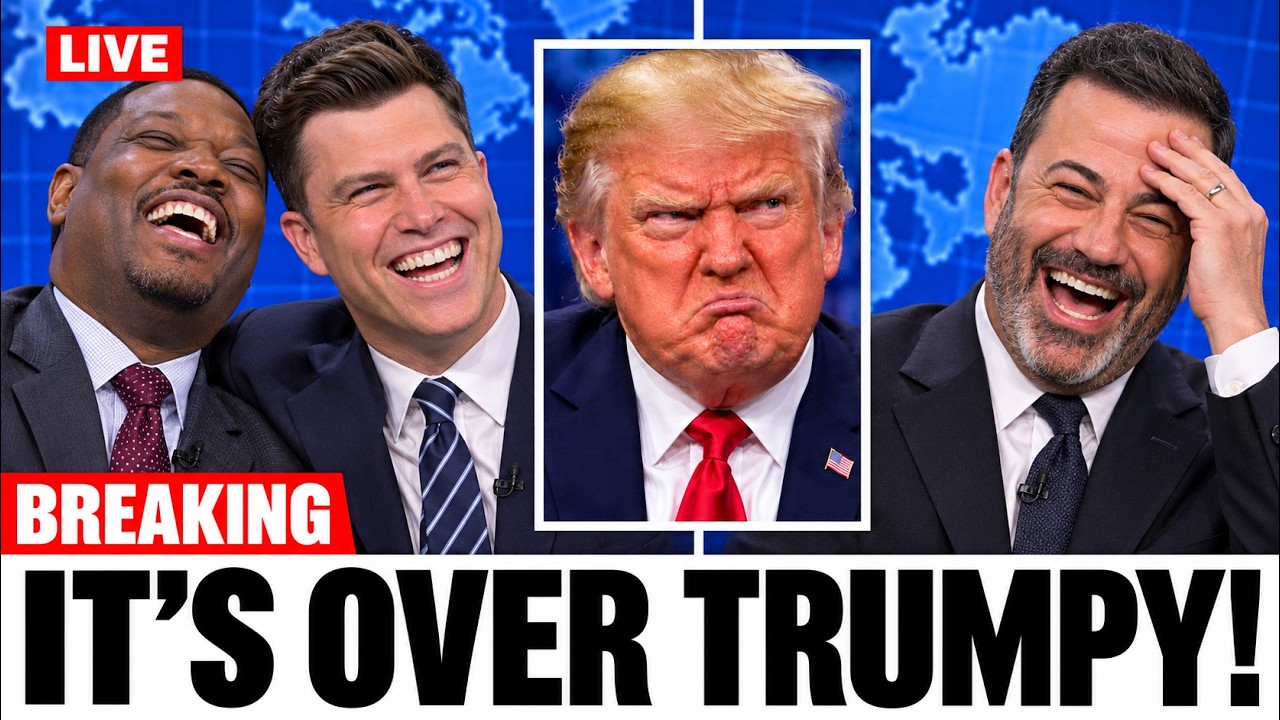
Trump’s subsequent public complaints about the election results, combined with an unusually personal White House attack on Kimmel, intensified the dispute between the administration and late-night entertainers.
And buried inside that controversy was an awkward contradiction: Trump argued that his absence from the ballot explained Republican losses, despite repeatedly making himself central to the election.
Jimmy Kimmel Turns Republican Defeat Into Late-Night Ammunition
On November 4, Kimmel delivered a confrontational monologue criticizing Trump’s explanation for the Republican Party’s disappointing performance in the midterm elections.
The president had suggested that Republicans suffered because he was not personally running, asserting that his presence on the ballot would have produced a dramatically different result.
Kimmel rejected that reasoning, pointing to Trump’s aggressive campaigning, endorsements, and unmistakable influence over the Republican candidates seeking office across the country.
“Oh, shut up. Just shut up,” Kimmel declared, drawing enthusiastic applause from his studio audience as the monologue turned into an increasingly personal critique.
The comedian portrayed Trump’s refusal to accept responsibility as part of a familiar political pattern, accusing the president of blaming others whenever events developed unfavorably.
For viewers already frustrated by the administration, the performance offered an entertaining release. For Trump supporters, it reinforced complaints that late-night television has become openly partisan.
Either way, Kimmel’s remarks quickly attracted attention, demonstrating how a televised comedy monologue can become part of the national political conversation almost immediately.
The Detail Trump Could Not Easily Explain
The central contradiction involved Trump’s insistence that the election results should not be interpreted as a judgment on his own political leadership.
Although his name was absent from the ballots, his endorsements, political appearances, administration policies, and public statements had shaped the campaign environment.
Democratic candidates frequently highlighted their opposition to Trump’s agenda, while Republican candidates appealed to voters who supported the president and his priorities.
Kimmel argued that Trump could not dominate the political conversation throughout the campaign and then distance himself from the outcome when Republicans lost.
That criticism was not proof that every Republican defeat resulted from Trump’s influence. Local candidates, economic concerns, and state-specific issues also shaped voting decisions.
Nevertheless, the president’s explanation created an obvious opening for comedians: if he deserved credit for Republican victories, how much responsibility should he accept for defeats?
It was a question more politically consequential than any individual insult, because it concerned accountability rather than simply the president’s reputation.
Saturday Night Live Joins the Political Spectacle
While Kimmel attacked Trump’s election explanation directly, Saturday Night Live continued using its fictional presidential impersonations to ridicule the administration and its political environment.
James Austin Johnson’s impersonation of Trump remained central to the program’s political satire, with exaggerated interruptions, recognizable mannerisms, and jokes about the president’s public persona.
A November 7 cold open depicted Democratic leaders discussing their electoral successes before the fictional Trump character disrupted their moment in the spotlight.
The sketch used an established recurring joke in which other characters become frozen as the Trump impersonation takes control of the scene.
The production eventually introduced Texas politician James Talarico, using his appearance to satirize not only Trump but also Democratic leadership and the repetitive nature of political comedy.
That distinction matters. SNL was not simply presenting a factual account of presidential behavior; it was using deliberately exaggerated characters to comment on Washington’s political culture.
The president’s critics may find the impersonations effective, while his supporters frequently regard them as predictable attacks from an entertainment industry hostile to conservatives.
Trump’s White House Fires Back at Kimmel
The dispute became more personal when White House spokesperson Davis Ingle responded to Kimmel’s criticisms with a statement attacking the comedian’s intelligence and television ratings.
Ingle accused the host of suffering from “Trump Derangement Syndrome,” while describing his brain as unusually small and questioning his value as an entertainer.
The language was hardly the restrained institutional response traditionally associated with the White House, but it reflected the administration’s willingness to confront media critics directly.
Kimmel responded during his November 9 program, reading the statement aloud before mocking the spokesperson’s attempt to deliver a memorable political insult.
“Sick burn, bro,” the comedian replied sarcastically, using the government’s own language as material for another round of studio laughter.
The exchange revealed the peculiar relationship between political power and entertainment: the more aggressively the administration attacked Kimmel, the more material his program acquired.
What began as a dispute about election results had become a public argument over who could deliver the most effective insult.
The Supposed Midnight Meltdown Remains Unverified
Some viral descriptions of the controversy claim Trump erupted in a furious midnight confrontation after simultaneously watching Kimmel and Saturday Night Live ridicule him.
However, available reporting does not establish that specific sequence, a documented private reaction by his inner circle, or a single televised confrontation involving both programs.
What is documented is Trump’s public criticism of the election results, his administration’s response to Kimmel, and separate satirical performances targeting the president.
The distinction is important because combining several real events into one invented confrontation can make a political story appear more dramatic than the evidence supports.
There is no need to invent a secret White House crisis when the publicly documented exchange already demonstrates how intensely political leaders and entertainers challenge one another.
Trump Questions the Election as Comedians Question His Excuses
The president’s reaction to the midterms also attracted scrutiny after he questioned the election’s legitimacy in social media posts following Republican losses.
Trump raised doubts about the results and polling, prompting criticism from commentators who interpreted the remarks as another attempt to undermine confidence in unfavorable electoral outcomes.
Kimmel seized on that development, portraying Trump’s renewed suspicions as part of a recurring pattern whenever political events contradicted his expectations.
The distinction between questioning polling accuracy and alleging election misconduct is significant, because mistaken forecasts do not independently establish that election results were manipulated.
Critics demanded evidence supporting suggestions of electoral irregularities, while the administration continued to defend its broader political position following the Republican setbacks.
For late-night television, the episode provided a familiar comedic structure: a politician offers an explanation, critics identify inconsistencies, and the resulting confrontation produces another wave of headlines.
The Political Battle Spreads Beyond Television Ratings
The Kimmel controversy also revived longstanding disagreements about media independence, political criticism, and the relationship between presidents and television broadcasters.
Trump has repeatedly criticized late-night hosts who attack his administration, while entertainers have argued that their performances represent legitimate commentary about powerful public officials.
Conservatives often contend that major entertainment programs apply different standards to Republicans and Democrats, creating a cultural environment dominated by liberal political assumptions.
Critics of Trump respond that presidential conduct deserves particularly intense scrutiny because executive decisions affect the entire country, not merely the viewers of one television program.
Neither position eliminates the importance of distinguishing entertainment from journalism, satire from factual allegations, and political disagreement from attempts to suppress expression.
A comedian has considerable freedom to mock the president, while the administration retains the right to criticize the quality, accuracy, and political orientation of that comedy.
The central concern arises when government power, rather than ordinary public disagreement, becomes involved in disputes with media organizations.
Why the Kimmel Feud Has Become Bigger Than Comedy
Kimmel’s relationship with Trump has developed through years of increasingly confrontational monologues about presidential conduct, elections, government priorities, and political accountability.
In September 2025, the temporary suspension of Jimmy Kimmel Live! generated national controversy over broadcast decisions and the potential influence of federal regulatory pressure.
The program subsequently returned, but the dispute intensified discussions about whether political officials should be able to pressure broadcasters over controversial commentary.
Supporters of Kimmel argued that politically offensive speech remains protected expression, while critics questioned whether networks were applying consistent editorial standards.
The current exchange therefore carries additional significance. It follows an earlier controversy in which the relationship between television criticism and government authority became a national concern.
Late-Night Satire Meets the Realities of Political Power
Jimmy Kimmel and Saturday Night Live operate within an entertainment industry where exaggeration, irony, personal criticism, and absurdity are routine components of political comedy.
Trump operates within the presidency, an institution entrusted with enormous constitutional responsibilities and the authority to influence laws, federal agencies, and national security decisions.
That difference shapes how audiences interpret their exchanges, even when the immediate controversy appears to involve little more than competing personal insults.
A television host can spend several minutes mocking a president’s appearance or rhetoric without facing the same institutional responsibilities as an elected executive.
A president can respond sharply to those attacks, but his statements carry the weight and visibility of the nation’s highest political office.
The question is not whether Trump’s supporters or Kimmel’s audience have the better sense of humor, but how public criticism interacts with democratic accountability.
The 2026 Midterms Give the Jokes Political Weight
The Republican Party’s setbacks in the November elections provided a concrete political foundation for the latest television satire.
Democrats regained control of Congress, changing the governing environment for the remainder of Trump’s term and increasing the significance of legislative oversight.
The results also intensified scrutiny of the president’s political strategy, campaign endorsements, economic messaging, and approach to voters outside his most committed base.
Trump’s argument that he would have performed better as a candidate remained a political assertion rather than an independently testable explanation of the actual results.
Kimmel’s criticism highlighted that distinction, although it did not resolve the broader debate about which factors contributed most to Republican losses.
The political consequences will be determined through congressional negotiations, legislative votes, and institutional decisions rather than applause during a late-night monologue.
The Internet Loves a Political Humiliation Story
Modern political media rewards dramatic confrontation, especially when recognizable personalities exchange insults and their supporters share short clips stripped of longer context.
A sharp monologue can generate millions of views, while an angry official response can produce even more exposure for the entertainer it attempts to discredit.
Kimmel’s November 3 election-night monologue reportedly accumulated more than fourteen million YouTube views within days, demonstrating the substantial audience for election-related comedy.
But online popularity does not establish the accuracy of every political claim, nor does a viral joke prove that the person being mocked has lost public support.
Likewise, aggressive criticism from the White House does not automatically demonstrate that the administration is politically weakened or personally distressed by a comedian.
The evidence establishes a sustained public confrontation. Claims about private panic, stunned advisers, or secret midnight explosions require separate verification.
The Overlooked Contradiction Remains the Story
Beneath the celebrity feud sits a recognizable problem in political leadership: explaining election outcomes consistently when the results are unfavorable.
Trump’s influence on Republican politics was widely visible throughout the campaign, making his suggestion that the election was disconnected from his leadership open to criticism.
At the same time, attributing an entire national election to one individual’s popularity or behavior ignores the complexity of American voting patterns.
Kimmel reduced that debate to a memorable confrontation, using sarcastic language and personal criticism to challenge the president’s explanation.
SNL approached the same political environment through fictional characters, portraying Washington as a place where the struggle for attention can overshadow the substance of governing.
Both approaches illustrate how entertainment can shape public discussion without replacing the evidence needed to understand political events accurately.
Washington’s Late-Night War Is Far From Finished
The latest confrontation leaves Trump, Kimmel, and Saturday Night Live occupying familiar positions in an increasingly confrontational American media environment.
The president continues defending his administration and political agenda, while television comedians repeatedly scrutinize his statements, decisions, and relationships with other political figures.
The White House’s personal response to Kimmel has become part of the story, illustrating how official criticism can inadvertently prolong a controversy rather than end it.
For viewers, the exchange offers competing interpretations: legitimate political satire, excessive partisan hostility, an administration defending itself, or an unnecessarily personal confrontation.
Yet the most revealing detail remains Trump’s attempt to separate his personal electoral strength from Republican losses in an election shaped partly by his administration.
That argument deserves scrutiny regardless of whether viewers enjoy Kimmel’s jokes, appreciate SNL’s impersonations, or consider both programs politically biased.
Because beneath the laughter, the insults, and the endless viral clips lies a serious question about political responsibility.
When a president becomes the dominant personality in his party, where does his influence end and his accountability begin?
That unanswered question, rather than an unverified midnight meltdown, gives Washington’s latest late-night confrontation its lasting significance.
