
Senator Adam Schiff confronted Republican colleagues in a tense Senate Judiciary Committee meeting after they blocked his attempt to subpoena a still-secret report detailing the federal classified-documents investigation into President Donald Trump.
The California Democrat accused committee Republicans of selectively releasing investigative materials while preventing the public from examining the full evidence gathered by former Special Counsel Jack Smith.
The confrontation reached its decisive moment when Schiff warned that Republicans were establishing a procedural precedent that could soon be used against them after Democrats assumed control of Congress.
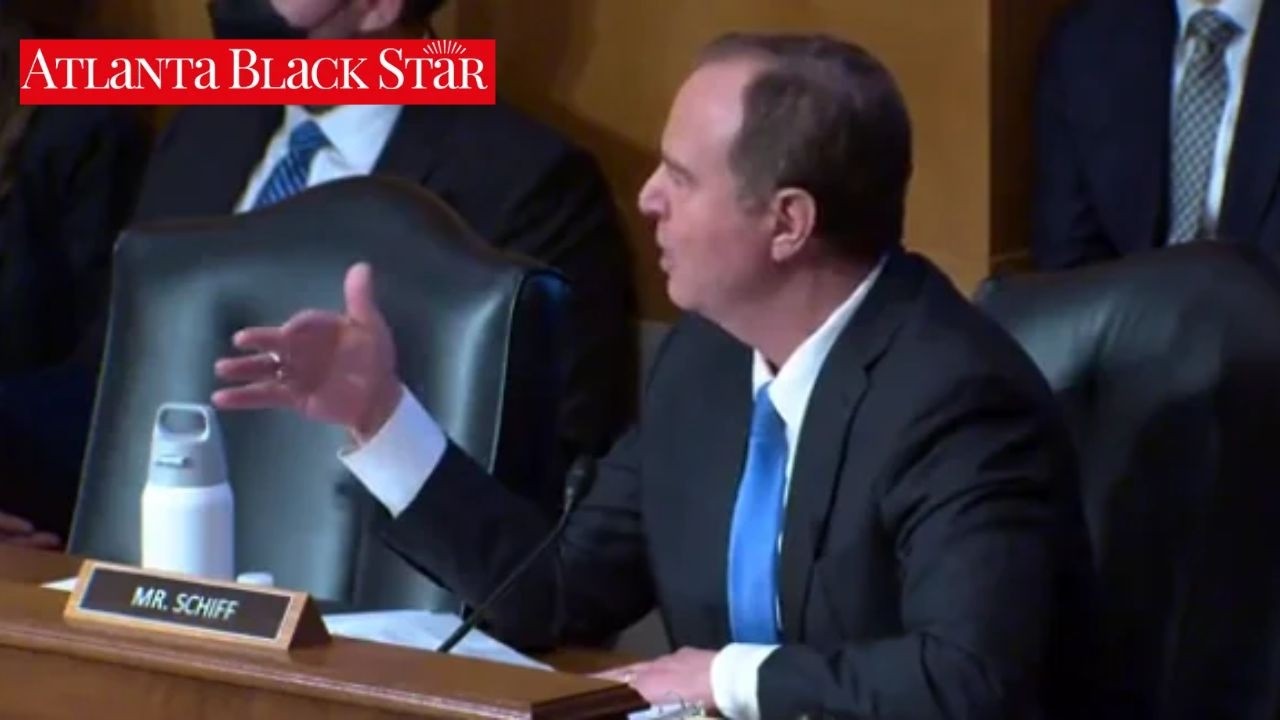
His message was pointed: Republicans could block the subpoena vote now, but they might regret surrendering the same procedural rights when they became the Senate minority.
The November 11 exchange concerned Volume II of Smith’s final special counsel report, which examined Trump’s retention of classified documents at his Mar-a-Lago estate.
Although dramatic descriptions of Schiff’s appearance have circulated online, the verified controversy centers on his procedural challenge and the Republican chairman’s refusal to permit a vote.
There is no substantiated basis for claiming that Schiff’s face turned purple or that witnesses became visibly frightened during the exchange.
What the available record establishes is a confrontation over congressional authority, judicial restrictions, and whether Americans should see evidence collected during a prosecution that never reached trial.
Schiff, who has served as a United States senator since December 2024, framed the dispute as a test of whether congressional Republicans genuinely wanted transparency.
His argument was that lawmakers who had repeatedly criticized Smith’s investigation should be willing to examine the complete report rather than selected documents supporting their preferred interpretation.
Republicans countered that releasing the report would raise substantial legal concerns, particularly because the underlying criminal prosecution ended without a finding of guilt.
The disagreement came after a September 29 Senate Judiciary Committee hearing featuring Smith, whose investigations into Trump had already generated years of political and legal controversy.
During that hearing, Schiff accused Republicans of concentrating on allegations against the former prosecutor rather than confronting evidence developed during the criminal investigations.
He argued that Smith’s report concerning the classified documents case should become available to Congress and the public once the applicable legal obstacles were resolved.
Schiff promised to pursue a subpoena at a subsequent committee business meeting, transforming his criticism into a specific procedural demand.
The November 11 confrontation represented his attempt to fulfill that commitment while Republicans still controlled the committee and its agenda.
At the meeting, Schiff moved for consideration of a resolution directing the Justice Department to produce Volume II of Smith’s final report.
He emphasized that the department already possessed a version containing redactions related to grand jury information, arguing that this reduced certain disclosure concerns.
Schiff also pointed out that ten committee members had previously requested the report, disputing the suggestion that Congress had demonstrated no formal interest in obtaining it.
That point mattered because ongoing litigation in Florida had included judicial consideration of whether congressional demand justified releasing the material.
Schiff argued that lawmakers should establish their institutional interest clearly rather than allow the record to suggest that Congress had abandoned the issue.
He described the continued absence of public access to the evidence underlying the classified-documents charges as unacceptable, particularly given the seriousness of the original allegations.
The prosecution had accused Trump of unlawfully retaining sensitive national defense information and participating in efforts to obstruct the government’s attempts to recover documents.
Trump denied wrongdoing, maintained that the prosecution was politically motivated, and contested the legal authority under which Smith had conducted his investigation.
The case was dismissed in 2024 after U.S. District Judge Aileen Cannon ruled that Smith’s appointment violated constitutional requirements governing federal appointments.
The subsequent presidential election also changed the practical circumstances surrounding federal prosecutions involving Trump, leaving the underlying allegations unresolved by a criminal trial.
Those developments created an unusual situation: prosecutors had prepared a final investigative report, but the case had ended without a jury determining whether the allegations were proven.
Schiff maintained that the absence of an ongoing prosecution strengthened the public interest in disclosure, while Republicans argued that unresolved allegations demanded additional caution.
The committee chairman rejected Schiff’s procedural request, relying partly on the existing judicial order preventing the report’s release outside the Justice Department.
Republicans also emphasized that litigation concerning the report remained before the Eleventh Circuit Court of Appeals, with oral arguments scheduled for January 2027.
Their position was that forcing a subpoena vote before the appellate proceedings concluded would be premature and potentially inconsistent with the existing legal restrictions.
The chairman also argued that the committee’s agenda was controlled through established rules and that Schiff could not compel consideration of an unscheduled resolution.
Schiff responded by invoking the committee’s own procedural requirements, specifically provisions governing subpoenas and members’ ability to seek recorded votes.
He argued that Rule 9 permitted the committee to authorize subpoenas through a vote, rather than requiring agreement between the chairman and ranking member.
He also cited Rule 4, maintaining that the rules entitled him to seek a roll-call vote when the chairman refused to bring the matter forward.
That procedural disagreement became the confrontation’s central issue because Schiff was no longer arguing solely about the contents of the report.
He was also challenging whether the committee majority could prevent minority members from invoking procedures designed to preserve congressional oversight rights.
Schiff warned that Republicans should consider what their decision would mean when Democrats gained control of the Senate after the November midterm elections.
His argument focused on institutional consistency: rules protecting minority participation should not change depending on which party temporarily controls the committee.
Republicans maintained that the motion was out of order because the chairman had not placed it on the business meeting’s agenda.
The chairman’s response reflected a competing interpretation of committee procedure rather than an explicit concession that minority members could never request subpoena votes.
Nevertheless, Schiff argued that denying the request would undermine Republicans’ ability to insist on comparable procedural protections when they occupied the minority.
He told colleagues that the committee could address the matter immediately or revisit it after the new Congress assembled in January.
That warning carried additional political significance because Democrats had just won control of both congressional chambers in the November 3 midterm elections.
The coming transition meant Republicans would soon lose their ability to determine the Senate Judiciary Committee’s agenda through majority control.
Schiff’s prediction that a subpoena could be issued under the next majority was therefore grounded in a genuine change in congressional authority.
However, a future subpoena would still face procedural and legal requirements, including the possibility of litigation over judicial orders and protected investigative information.
The dispute also raised a broader question about whether Congress could obtain confidential prosecutorial materials while related litigation remained unresolved.
Federal courts have recognized substantial congressional investigative authority, but that power does not automatically override every judicial restriction or legal protection governing sensitive records.
Grand jury secrecy, executive interests, and the rights of individuals accused but not convicted can all become relevant when lawmakers demand access to criminal investigative files.
Republicans cited those concerns while emphasizing Judge Cannon’s conclusion that releasing Smith’s report could create unfair consequences for defendants who continued maintaining their innocence.
The chairman argued that publication would expose individuals to allegations developed in criminal proceedings that had never produced findings of guilt.
That concern reflected the principle that criminal defendants remain presumed innocent unless prosecutors establish guilt through the judicial process.
Schiff did not dispute that criminal accusations require proof, but argued that Congress also had legitimate reasons to examine how a major federal investigation was conducted.
He contended that Republicans had already released selected investigative documents while refusing to seek the report that could provide broader context for those materials.
That selective-disclosure allegation became one of his strongest criticisms because it challenged the consistency of the committee’s approach to transparency.
Republicans, meanwhile, maintained that their investigation had uncovered significant concerns about Smith’s investigative methods, including the collection of information involving Republican supporters.
Committee Chairman Chuck Grassley had previously released records concerning subpoenas used during the investigation known as Arctic Frost and Smith’s subsequent special counsel activities.
In October, Grassley alleged that investigators had obtained information concerning hundreds of thousands of Republican donors, voters, and political supporters.
His committee argued that the scope of those records raised serious concerns about privacy, constitutional protections, and possible political targeting.
Smith and his defenders maintained that investigative demands were connected to legitimate inquiries involving efforts to overturn the 2020 presidential election.
The competing arguments reflected sharply different interpretations of the same investigative history, making access to complete records particularly consequential for congressional oversight.
For Republicans, the issue was whether Smith’s team had exceeded legitimate investigative boundaries while pursuing a former president and individuals connected to his political activities.
For Schiff, the issue was whether Republicans were using those concerns to discredit the prosecutor while withholding evidence concerning Trump’s alleged misconduct.
Both questions could be examined through appropriate congressional oversight, but neither automatically establishes the conclusions advanced by either party.
The unresolved Volume II report concerns the classified-documents investigation, whereas portions of the Arctic Frost controversy involve the separate federal election-interference inquiry.
Maintaining that distinction is important because allegations about investigative methods in one case do not necessarily determine the legality of actions taken in another.
Schiff nevertheless argued that the committee’s examination of Smith’s overall conduct made access to the former special counsel’s complete final report especially relevant.
His argument was strengthened, in his view, by the committee’s willingness to demand testimony from Smith while declining to obtain the underlying report.
The September hearing had already demonstrated that Republicans wanted to question Smith about his decisions, investigative techniques, and treatment of politically sensitive information.
Schiff questioned why those objectives did not lead Republicans to support obtaining the full report for examination by lawmakers from both parties.
Republicans responded that the judicial restrictions and procedural circumstances distinguished the request from ordinary congressional demands for records.
The existence of pending appellate proceedings was particularly significant because the Eleventh Circuit could clarify the legal status of the report.
With arguments scheduled for January 12, 2027, the report’s future remained connected to a separate judicial process regardless of the committee’s political composition.
That upcoming hearing created a potential intersection between judicial authority and the new Democratic majority’s congressional oversight priorities.
Even if Democrats issued a subpoena, legal challenges could determine whether the Justice Department was required to comply and what information could lawfully be disclosed.
The dispute therefore could not be resolved simply through a change in the Senate majority, despite Schiff’s confidence that Democrats would pursue the matter.
A separate legislative proposal introduced in April 2026 demonstrated that efforts to disclose the report extended beyond Schiff’s committee motion.
The Volume II Transparency Act sought to require the attorney general to make Smith’s report publicly available, reflecting broader congressional interest in the withheld material.
Like the subpoena dispute, that proposal raised questions about how lawmakers should balance public access against the legal protections associated with criminal investigative records.
The November confrontation also revived arguments dating to Trump’s first presidency, when Schiff became nationally prominent through congressional investigations and the first impeachment proceedings.
As chairman of the House Intelligence Committee, Schiff had repeatedly challenged the administration over access to documents and testimony involving presidential conduct.
Those earlier disputes established his reputation as an outspoken advocate for congressional oversight, while also making him a frequent target of Republican criticism.
Trump and congressional Republicans have accused Schiff of exaggerating allegations and using legislative investigations for partisan purposes, claims Schiff has consistently rejected.
The current dispute differs in its specific facts, but it again places Schiff in a confrontation over access to evidence involving the president.
The central institutional question is whether lawmakers should possess sufficient information to evaluate serious investigative findings without undermining constitutional protections for the individuals involved.
For Americans following the classified-documents case, the stakes extend beyond any single confrontation between Schiff and the Republican committee chairman.
The report could provide additional detail about prosecutors’ assessment of the evidence, the decisions made during the investigation, and the reasons specific charges were pursued.
Its contents would still represent prosecutorial findings rather than a criminal verdict, an essential distinction when evaluating allegations that were never tested through a completed trial.
For Congress, access could inform oversight of classified-information handling, presidential records procedures, prosecutorial authority, and the Justice Department’s conduct during politically sensitive investigations.
For Trump and other individuals named in the original proceedings, disclosure could raise continuing concerns about reputation, due process, and the publication of disputed criminal allegations.
Those interests require careful consideration rather than assuming that transparency demands automatically override every legal restriction or that secrecy is always justified.
As of November 13, 2026, the committee’s Republican leadership had blocked Schiff’s effort to force immediate consideration of his subpoena resolution.
The report remained subject to judicial restrictions, and the anticipated January appellate arguments had not yet resolved the dispute over disclosure.
Schiff’s warning about what Democrats might do after assuming committee control remained a statement of future intention, not evidence that a subpoena had already been issued.
Nor does the available record establish that the confrontation produced the dramatic physical reactions or frightened witnesses described in sensational accounts.
What it establishes is a significant procedural disagreement with consequences for congressional oversight, minority-party rights, and the future treatment of sensitive investigative material.
The most pointed moment came when Schiff challenged Republicans to consider whether they wanted the same procedural standard applied to them after the transfer of power.
That challenge transformed the debate from a disagreement over one report into a question about whether committee rules should operate consistently across changing political majorities.
Republicans maintained that judicial restrictions and committee procedures justified their decision, while Schiff argued that those explanations did not warrant denying a recorded vote.
The underlying evidence from Smith’s classified-documents investigation remained unavailable for full public examination, ensuring that the substantive disagreement continued after the meeting ended.
When the new Congress begins, Democrats will have an opportunity to revisit the request, although any resulting subpoena could face substantial legal obstacles.
The unresolved question is whether Congress can obtain and responsibly examine the report while respecting the judiciary’s authority and the protections owed to individuals facing unproven allegations.
Schiff’s confrontation did not settle that issue, but it placed Republican lawmakers on notice that the procedural choices made under their majority could shape future oversight.
And as Washington approaches another transfer of congressional power, the lasting significance of the exchange lies in a question neither party can avoid: Should access to politically sensitive evidence depend on which party controls the committee?
