
Alexandria Ocasio-Cortez had just accused Senator John Kennedy’s generation of leaving younger Americans with an enormous financial burden.
She described rising housing costs, student debt, stagnant purchasing power, and a federal government borrowing money faster than future generations could reasonably repay it.
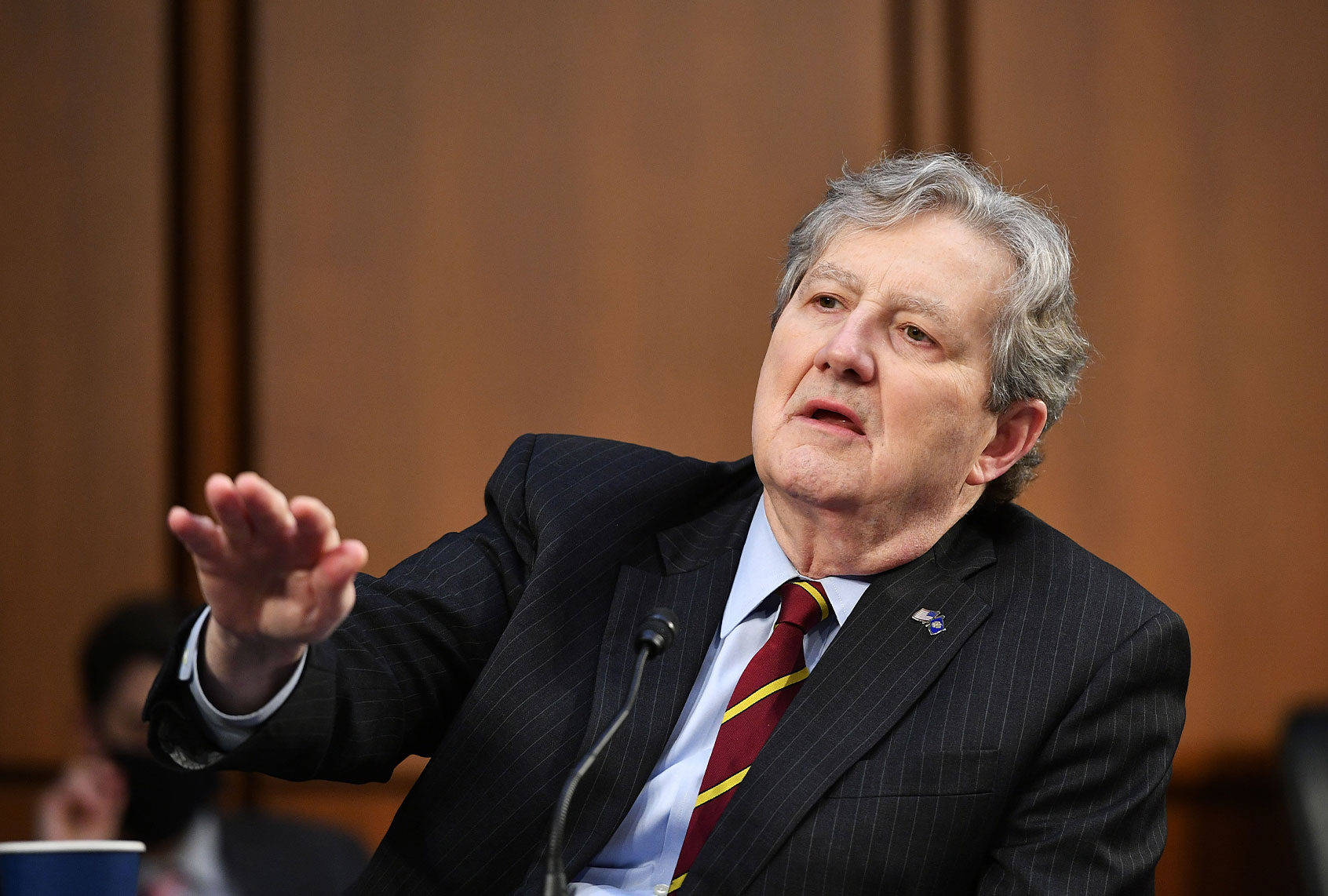
Kennedy listened without interrupting.
Then he opened a thick folder containing federal budget reports, spending summaries, and a timeline of major congressional decisions.
“Congresswoman, I have one question,” he said.
“Who actually voted for the spending, approved the borrowing, and signed the legislation that brought us here?”
The room grew quiet.
Ocasio-Cortez leaned toward her microphone, apparently ready to defend her criticism.
But Kennedy had not finished.
He turned to a page displaying federal deficits across several presidential administrations, followed by another showing the rapidly expanding cost of interest payments.
The records suggested that America’s fiscal problems could not be explained by blaming one generation or one political party.
And a final document contained a question that would force both lawmakers to confront their own arguments.
AOC Opens With a Generational Accusation
Ocasio-Cortez began by describing the economic pressures facing younger Americans.
She argued that previous generations had benefited from relatively affordable housing, greater access to public investment, and economic opportunities that were increasingly difficult to obtain.
“Young people are being asked to pay for decisions they never had the opportunity to influence,” she said.
She connected those pressures to decades of fiscal and economic policies.
Tax preferences, insufficient investment in affordable housing, and rising education expenses had contributed to unequal opportunities, she argued.
Then she turned toward Kennedy.
“Your generation made decisions that shaped this economy, and now young Americans are expected to live with the consequences.”
Kennedy adjusted his glasses.
“Congresswoman, I appreciate your concern about young people,” he replied.
“But I want to separate the problems you’ve described from the people you’re blaming.”
Ocasio-Cortez challenged him immediately.
“Are you denying that younger generations face greater financial obstacles?”
Kennedy said he was not denying the existence of serious economic pressures.
Instead, he questioned whether assigning responsibility by age explained the policies responsible for those conditions.
“Being born in a particular decade doesn’t tell us how somebody voted,” Kennedy said.
“And it certainly doesn’t tell us which spending bill that person supported.”

Ocasio-Cortez responded that her argument concerned the political decisions made by leaders who had exercised authority over several decades.
Kennedy accepted that past decisions deserved examination.
Then he placed the first spending report on the table.
“Good,” he said.
“Because if we’re going to examine decisions, we ought to examine the actual decisions.”
Kennedy Produces the Federal Spending Records
The first document summarized federal borrowing and annual budget deficits.
Kennedy pointed to figures drawn from Congressional Budget Office reporting.
In fiscal year 2026, the federal deficit reached approximately $2 trillion.
That shortfall reflected the difference between federal revenue and spending during the fiscal year.
Kennedy emphasized that the figure was not the entire national debt.
It represented additional annual borrowing pressure.
The accumulated debt reflected a much longer history of fiscal decisions, interest costs, and financing obligations.
“That money didn’t appear because somebody celebrated a birthday,” Kennedy said.
“It came from decisions about how much the government would collect and how much it would spend.”
Ocasio-Cortez leaned forward.
“That includes decisions to reduce taxes without adequately addressing the revenue consequences.”
Kennedy nodded.
“Yes, it does.”
He turned another page.
“But it also includes decisions to increase spending without identifying sufficient revenue.”
Ocasio-Cortez replied that spending programs differed substantially in purpose and economic consequences.
Investments in infrastructure, education, and economic development could generate long-term benefits, she argued.
Kennedy agreed that federal expenditures should not all be treated as economically identical.
But he insisted that identifying potential benefits did not eliminate the need to examine financing.
“An investment can be worthwhile and still require a credible plan to pay for it,” he said.
Ocasio-Cortez challenged him to distinguish productive public investment from expenditures that produced limited public value.
That response moved the confrontation beyond a simple argument about total spending.
The lawmakers were now debating which expenditures deserved priority and how their costs should be distributed.
Kennedy returned to his original question.
“Then why blame an entire generation instead of identifying the lawmakers responsible for the policies you oppose?”
Ocasio-Cortez answered that generational language described the distribution of economic consequences, not the voting behavior of every older American.
Kennedy acknowledged the distinction.
But he insisted that political accountability required examining records rather than demographic categories.
The Debt Timeline Complicates Both Arguments
Kennedy opened the folder to a longer historical timeline.
It showed how federal borrowing had accumulated across periods controlled by different political coalitions.
The chart included economic recessions, tax legislation, military spending, emergency relief, and expansions of major federal programs.
No single entry explained the entire debt.
Kennedy drew attention to the timeline.
“Congresswoman, we’ve had Republicans and Democrats participating in these decisions for decades.”
Ocasio-Cortez agreed that both parties had shaped federal fiscal policy.
She argued, however, that acknowledging bipartisan responsibility did not mean every policy had contributed equally.
Kennedy asked her to explain.
“Different decisions have different effects,” she replied.
“A tax reduction that substantially lowers revenue isn’t economically identical to an investment that produces long-term public benefits.”
Kennedy responded that the same distinction applied to spending proposals supported by progressive lawmakers.
The real question was whether projected benefits justified their financing costs.
Ocasio-Cortez maintained that lawmakers needed to consider economic growth, distributional effects, and the consequences of refusing public investment.
Kennedy agreed those considerations were relevant.
Then he challenged her explanation of generational responsibility.
“If Congress keeps making decisions that increase borrowing, aren’t today’s lawmakers helping create tomorrow’s burden?”
Ocasio-Cortez answered that current lawmakers were responsible for their present decisions.
Kennedy followed immediately.
“Then wouldn’t it be more accurate to hold each Congress accountable for its actual votes?”
She replied that examining votes was essential but insufficient to understand the broader economic system younger Americans had inherited.
The disagreement remained substantial.
Kennedy was emphasizing individual legislative accountability.
Ocasio-Cortez was emphasizing structural economic conditions developed over several decades.
Neither approach completely answered the other.
But Kennedy’s next document introduced a financial obligation neither could easily attribute to just one policy.
The Interest Payment Figure Changes the Discussion
Kennedy placed another page in front of Ocasio-Cortez.
This document concerned the federal government’s interest payments on outstanding debt.
According to Congressional Budget Office projections published in February 2026, net interest costs were expected to rise substantially over the following decade.
Actual fiscal year 2026 results would subsequently show that interest remained a significant source of spending growth.
Kennedy pointed to the trend.
“Every dollar spent servicing old debt is a dollar Congress has to account for before making new commitments.”
Ocasio-Cortez examined the figures.

She responded that borrowing costs were influenced by interest rates, economic conditions, fiscal choices, and accumulated obligations.
Kennedy agreed.
“But none of those factors makes the bill disappear.”
He explained that rising interest costs could complicate efforts to finance other federal priorities.
Ocasio-Cortez argued that the government also needed to consider whether investments could improve long-term economic productivity.
She warned against assuming that every reduction in current spending would automatically improve economic conditions.
Kennedy challenged her to identify how proposed programs would affect deficits over time.
She answered that credible fiscal analysis should examine both spending and revenue, including potential economic effects.
Kennedy accepted the need for comprehensive analysis.
Then he returned to the generational argument.
“Those interest payments will affect young Americans long after many current lawmakers leave office.”
Ocasio-Cortez agreed that future generations would face financial consequences from present borrowing.
Kennedy tapped the page.
“Then shouldn’t we be asking who supported the decisions creating those obligations, regardless of age?”
She answered that legislative responsibility mattered, while maintaining that inherited economic conditions deserved scrutiny.
The discussion had reached a critical distinction.
America’s accumulated debt was not simply evidence of excessive spending by one political faction.
It reflected the continuing relationship between federal expenditures, tax revenue, economic conditions, and interest payments.
Kennedy’s records highlighted the financing problem.
Ocasio-Cortez’s response highlighted the competing priorities that made the financing decisions politically difficult.
AOC Challenges the Missing Side of Kennedy’s Ledger
Ocasio-Cortez requested the revenue figures accompanying Kennedy’s spending records.
“Senator, you’ve shown how much the federal government spends,” she said.
“But you haven’t explained which revenue decisions contributed to the deficits.”
Kennedy opened the corresponding section.
The figures illustrated the relationship between federal receipts and expenditures.
Ocasio-Cortez argued that long-term fiscal analysis had to include changes in tax policy.
She maintained that reducing government revenue without equivalent adjustments elsewhere could increase borrowing.
Kennedy acknowledged the arithmetic.
He challenged the assumption that higher taxes automatically produced better economic outcomes.
Tax policy could also affect incentives, investment decisions, and economic activity, he argued.
Ocasio-Cortez replied that those potential effects needed to be measured rather than presumed.
Kennedy agreed that estimates should be supported by analysis.
Then he pointed to another column.
“And spending proposals deserve the same examination.”
Ocasio-Cortez did not dispute that.
Instead, she questioned why political debates often treated spending cuts as inherently responsible while giving tax reductions a different standard.
Kennedy responded that neither spending increases nor tax reductions should be exempt from fiscal scrutiny.
The exchange became sharper when Ocasio-Cortez returned to younger Americans.
She argued that wages, housing affordability, and education expenses could not be understood exclusively through federal deficit figures.
A household struggling to afford rent might care about national borrowing while also needing immediate economic relief.
Kennedy accepted that fiscal indicators did not capture every financial hardship.
But he insisted that proposed solutions required examination of costs and results.
The two lawmakers had arrived at different measures of economic responsibility.
Ocasio-Cortez wanted policy evaluated partly by its effects on household opportunity.
Kennedy wanted financing obligations placed at the center of the discussion.
The final document would test whether either framework could stand alone.
Kennedy Reveals the Final Spending Question
Kennedy removed a single sheet from the back of the folder.
The page contained three columns.
The first described policies that increased federal spending.
The second described policies that reduced federal revenue.
The third described obligations that continued without requiring entirely new annual legislative decisions.
Below the columns appeared a question.
If both parties helped create the debt, what specific decisions would each be willing to change?
Kennedy placed the sheet between them.
“Congresswoman, this is what I want to know.”
He pointed toward the spending column.
“If you believe younger Americans are inheriting an unfair financial burden, which expenditures would you reduce or finance differently?”
Ocasio-Cortez answered that she would examine spending priorities while protecting programs she considered essential to economic opportunity.
Kennedy asked for a more precise principle.
She said policies should be evaluated through transparent budget estimates, distributional consequences, and long-term effectiveness.
Kennedy then pointed toward the revenue column.
“Would you also examine tax provisions you believe contribute to deficits?”
Ocasio-Cortez answered yes.
Then she turned the question back toward him.
“Senator, would you apply the same standard to tax reductions that increase projected deficits?”
Kennedy replied that their fiscal effects should be examined.
Ocasio-Cortez continued.
“And would you acknowledge that cutting services can shift costs from the federal government onto families?”
Kennedy answered that policymakers should consider such effects when evaluating spending reductions.
He warned, however, that preserving every existing commitment without adequate revenue could create other long-term costs.
The exchange revealed the central difficulty.
Reducing federal borrowing required decisions about spending, revenue, economic priorities, or some combination of those measures.
Each option carried consequences.
The document did not identify a single lawmaker responsible for the national debt.
Instead, it exposed how easily both parties could criticize the fiscal choices of their opponents while defending their own preferred policies.
Kennedy’s original question about who signed the legislation had become more complicated.
Responsibility extended beyond signing ceremonies.
Congressional votes, budget negotiations, executive decisions, economic developments, and previously enacted laws all contributed to fiscal outcomes.
That wider record required a more demanding form of accountability.
The Final Revelation Leaves Both With a Difficult Answer
Kennedy returned to the first page containing the generational accusation.
“Congresswoman, you began by blaming my generation for leaving young Americans with the bill.”
Ocasio-Cortez replied that she was describing the consequences of long-standing economic decisions.
Kennedy nodded.
“Then I think we should be precise about the decisions themselves.”
He emphasized that older Americans did not share identical political positions or voting records.
Nor did younger lawmakers necessarily support identical fiscal policies.
Ocasio-Cortez acknowledged that generations were not politically uniform.
But she maintained that younger households could experience financial consequences from decisions made before they were eligible to vote.
Kennedy did not dispute that possibility.
Instead, he asked whether current lawmakers also had a responsibility to prevent future burdens.
“Of course,” Ocasio-Cortez answered.
Kennedy pointed toward the final document.
“Then every decision we make now belongs in this discussion.”
Ocasio-Cortez agreed that present policy choices should face scrutiny.
But she challenged him to acknowledge another consequence.
Fiscal responsibility could not be measured solely by the size of government.
It also required considering the public benefits produced by spending and the economic effects of taxation.
Kennedy responded that benefits had to be weighed against real financing obligations.
Neither politician abandoned their priorities.
Yet the documentary record had established something neither opening argument adequately captured.
The national debt represented obligations accumulated through many years of policy decisions, not a single generation’s action or one party’s legislation.
The Congressional Budget Office’s November 2026 review placed the fiscal year 2026 deficit at approximately $2 trillion.
That result illustrated the magnitude of the immediate challenge.
But it did not establish that one politician, one legislative proposal, or one demographic group caused the shortfall.
The final revelation was the distinction between assigning political blame and demonstrating measurable fiscal responsibility.
Kennedy’s spending records showed why current borrowing decisions deserved serious examination.
Ocasio-Cortez’s questions about revenue and household pressures showed why spending totals alone could not explain every economic hardship.
The confrontation ended without a declaration of victory.
Kennedy closed his folder.
Ocasio-Cortez gathered the final page and examined the three columns once more.
The question remaining between them concerned the next federal budget, not merely the decisions of previous decades.
Future borrowing would be affected by legislation enacted today, revenue collected tomorrow, and obligations inherited from earlier years.
