
Trump’s 250-foot triumphal arch faces a federal court order after approval as a legal battle threatens his Washington landmark
President Donald Trump’s ambitious plan to build a towering triumphal arch near Arlington National Cemetery has entered a major constitutional and legal battle.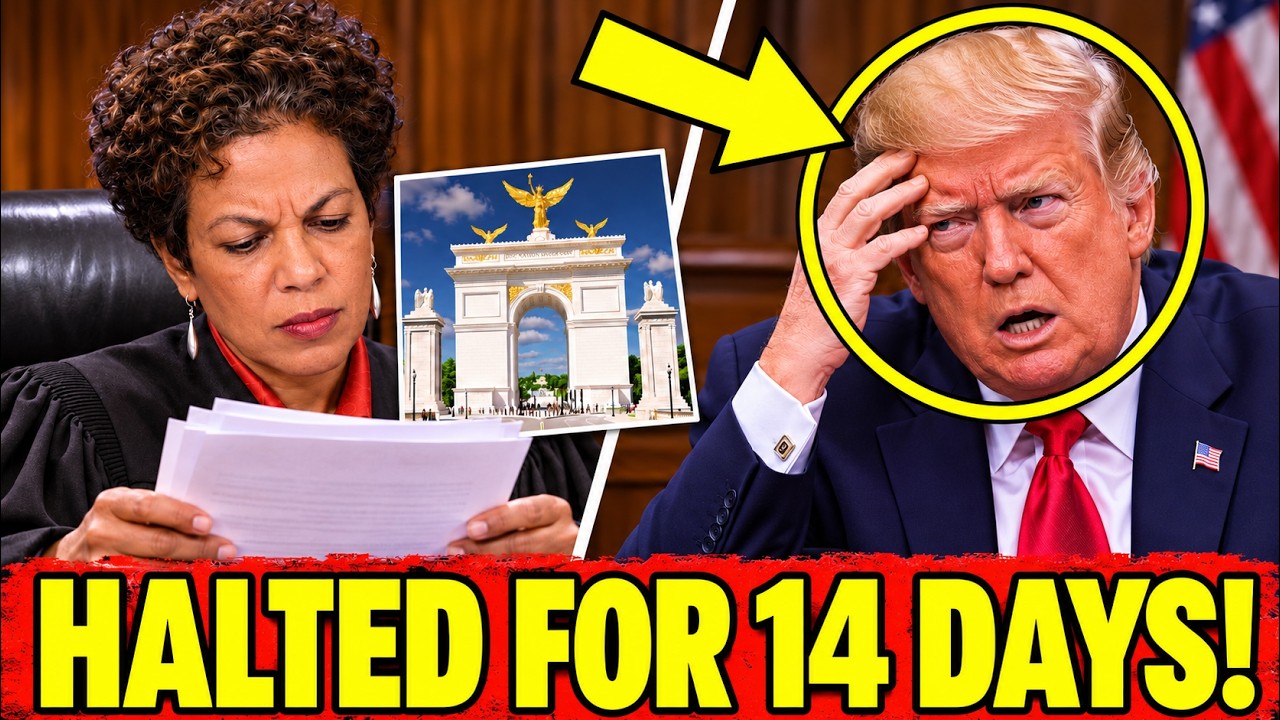
The proposed monument would rise 250 feet above Memorial Circle, transforming a historic landscape connecting Washington, the Potomac River, and Arlington National Cemetery.
Trump envisions a monumental structure celebrating American military service, national achievement, and the country’s 250th anniversary.
But on November 5, 2026, the project encountered an obstacle that architectural ambition and presidential support could not immediately overcome.
A federal judge temporarily blocked construction, only hours after a national planning commission approved the project.
The ruling by U.S. District Judge Tanya Chutkan prevented the administration from beginning construction-related activities for fourteen days.
Virginia and the District of Columbia had challenged the project, arguing that the administration lacked necessary congressional authorization and had disregarded legal requirements.
Their lawsuit joined an existing challenge brought by Vietnam War veterans and an architectural historian concerned about the monument’s impact on sacred ground.
The administration insisted that historical legislation already provided authority for the structure and that federal agencies had completed the necessary reviews.
The conflict created a consequential question extending far beyond the monument’s unusual scale.
Can presidential approval and federal agency authorization substitute for congressional permission when constructing a permanent national monument?
The answer could determine whether Trump’s arch moves forward, undergoes substantial changes, or remains stalled in federal court.
And a new development involving the Kennedy family has expanded the dispute over what the proposed structure might mean for Arlington’s historic landscape.
Reuters+2
1. Trump’s 250-foot arch would transform one of Washington’s most symbolic locations
The proposed structure would stand at Memorial Circle, a landscaped traffic roundabout near the entrance to Arlington National Cemetery.
The site occupies a significant position along the ceremonial axis connecting the Lincoln Memorial, Arlington Memorial Bridge, and Arlington House.
That relationship was developed to symbolize national unity and reconciliation following the American Civil War.
For decades, the open space has preserved views between important memorials on opposite sides of the Potomac River.
Trump’s proposal would introduce a monumental structure into that historically open landscape.
The design includes an arch approximately 166 feet tall, with sculptural elements bringing the overall height to 250 feet.
Planned decorative features include gilded figures, eagles, ornamental doors, and an eternal flame.
The monument would also incorporate an observation area offering views of the surrounding national landmarks.
Administration materials describe additional security-related functions, including facilities connected to military observation and protective operations.
Trump has compared the project with the Arc de Triomphe in Paris, a monument approximately 164 feet high.
His proposed American structure would surpass that landmark in height.
Supporters argue that the project would provide a prominent tribute to military service and create a new ceremonial landmark.
They also view it as an opportunity to enhance a prominent entrance to the nation’s capital.
Critics question whether its scale would overwhelm the surrounding memorials and alter views preserved for generations.
They argue that the open landscape itself carries historical meaning that should not be displaced without extensive examination.
The location also presents practical challenges beyond architectural appearance.
Memorial Circle connects important roadways near Arlington National Cemetery and Ronald Reagan Washington National Airport.
Construction would require substantial excavation and could interfere with traffic, transportation access, and emergency planning.
These concerns became central to litigation because they involve potential harm extending beyond disagreements over architectural taste.
The dispute therefore concerns both the monument’s symbolic purpose and the consequences of placing such a large structure at that location.
What began as a presidential vision for a new national landmark has become a debate about the preservation and lawful use of federal land.
CBS News+2
2. A lawsuit by veterans challenges the legal foundation of the project
The controversy entered federal court well before the final planning approval in November.
On February 19, 2026, three Vietnam War veterans and an architectural historian filed a lawsuit seeking to stop construction.
The case, Lemmon v. Trump, challenged the administration’s authority to erect the monument without authorization from Congress.
The plaintiffs argued that federal law imposes specific requirements for constructing commemorative works in the nation’s capital.
They also contended that the proposal threatened historical views and the ceremonial significance of the Arlington landscape.
Their legal challenge relied on several statutory frameworks governing federal construction, environmental review, and historic preservation.
Among the laws cited were the Commemorative Works Act, the National Environmental Policy Act, and the National Historic Preservation Act.
The plaintiffs also argued that the administration’s actions exceeded the authority legally available to executive officials.
Their position was not simply that the monument would be visually inappropriate.
They maintained that the president and federal agencies could not lawfully proceed without satisfying requirements imposed by Congress.
The administration disputed that interpretation.
Government lawyers argued that the project had an existing legal foundation and that federal officials were authorized to advance the proposal.
A central point of disagreement concerned legislation passed more than a century earlier in connection with the Arlington Memorial Bridge project.
The administration maintained that the historical authorization supported construction of an arch within the memorial landscape.
Opponents challenged whether that legislation could legally authorize the substantially different project being proposed in 2026.
This disagreement became one of the most consequential questions in the litigation.
A general historical authorization does not necessarily settle whether a specific modern project satisfies every subsequent legal requirement.
Conversely, the existence of contemporary review procedures does not automatically establish that earlier congressional authorization has no legal effect.
The court would need to evaluate the relevant statutes and determine how they applied to the actual proposal.
Meanwhile, the plaintiffs sought to prevent construction from beginning before those questions could receive meaningful judicial examination.
That concern intensified when the administration began discussing immediate excavation work.
Midpage+2
3. Final agency approval creates a dramatic confrontation with the federal court
On November 5, the National Capital Planning Commission considered final approval for the arch.
The commission serves an important role in reviewing planning and development projects affecting the federal capital region.
Its responsibilities include evaluating proposed federal construction and considering effects on Washington’s broader architectural and planning framework.
After extensive public discussion, the commission voted eight to four to approve the project.
That decision represented a significant administrative victory for the Trump administration.
The National Park Service also issued a final decision approving construction after completing its review process.
Together, those approvals brought the administration closer to beginning work on the monument.
But opponents argued that agency decisions could not overcome the absence of required congressional authorization.
Their lawsuits also challenged the adequacy of the government’s review of transportation, environmental, and historic preservation concerns.
The timing made the dispute especially urgent.
Government lawyers had indicated that foundation work could begin immediately once the relevant approvals were secured.
The administration estimated that construction could take approximately 33 to 39 months.
That timeline raised the possibility that excavation could begin long before a court reached a final judgment on the project’s legality.
For opponents, allowing construction to proceed risked changing the site before the legal dispute could be resolved.
For the administration, additional delays threatened a project that had already passed through several federal review stages.
The disagreement reached Judge Chutkan on the same day the planning commission approved the proposal.
Hours later, she granted a temporary restraining order.
The ruling barred construction-related activities for fourteen days, preventing the administration from immediately acting on its new approvals.
The decision established a concrete legal limitation on the project, but it did not permanently prohibit construction.
A temporary restraining order preserves the situation while a court considers urgent legal and factual questions.
The distinction matters because the administration still has opportunities to defend its interpretation of federal law.
Nevertheless, the ruling changed the project’s immediate future.
Despite securing federal agency approvals, the administration could not begin construction during the period covered by the order.
The result demonstrated that administrative approval and judicial authorization are not necessarily the same thing.
Reuters+2
4. The judge identifies legal problems that could determine the project’s fate
Judge Chutkan’s November 5 ruling addressed more than the immediate inconvenience of construction beginning during litigation.
In her written opinion, she examined whether the plaintiffs had demonstrated a sufficient basis for urgent judicial protection.
The court considered the government’s legal authority, the potential injuries to surrounding jurisdictions, and the consequences of allowing work to proceed.
Virginia and the District of Columbia argued that construction could disrupt transportation systems and interfere with emergency planning.
They also raised concerns about environmental effects, historic preservation, and the permanent alteration of a nationally significant landscape.
The judge concluded that the jurisdictions had presented substantial arguments supporting their ability to bring the lawsuit.
Their concerns involved tangible consequences rather than a general disagreement with the president’s architectural preferences.
The court also questioned whether the administration had complied with the statutory procedures governing construction of the monument.
Chutkan found that the plaintiffs had demonstrated a likelihood of success on important legal arguments concerning the government’s process.
That finding supported temporary relief while the court considered the litigation further.
It was not, however, a final ruling that every part of the project violated federal law.
A preliminary judicial assessment differs from a final judgment issued after the court has resolved the underlying claims.
The administration remains entitled to present its legal arguments and challenge the plaintiffs’ interpretation of the applicable statutes.
The judge’s ruling nevertheless exposed a major vulnerability in the administration’s strategy.
Receiving approval from federal planning agencies did not necessarily establish that Congress had authorized the monument’s construction.
The distinction matters because executive agencies exercise powers granted and limited by federal law.
They cannot automatically create new statutory authority simply by approving a project that falls within their review responsibilities.
If the applicable laws require specific congressional authorization, administrative approval alone may not satisfy that obligation.
On the other hand, if existing legislation validly authorizes the structure, the court must determine whether other procedural requirements were adequately fulfilled.
Those competing interpretations remain central to the dispute.
The temporary order also created a defined legal deadline.
As of November 13, construction was paused under an order scheduled to run through November 19, absent further court action.
The project’s immediate future therefore depended on the next judicial decisions, not simply the administration’s preferred construction schedule.
Midpage+2
5. The Kennedy family enters the dispute over Arlington’s historic landscape
The controversy gained another dimension on November 11 when several members of the Kennedy family sought to participate in litigation opposing the arch.
Their concerns focused on the proposed monument’s proximity to Arlington National Cemetery and its effect on the cemetery’s historic character.
The cemetery contains the graves of President John F. Kennedy and other members of his family.
It also serves as the resting place of generations of American service members and their relatives.
The Kennedy family’s legal intervention raised concerns about the proposed arch obstructing important views and affecting the atmosphere surrounding memorials.
They argued that the monument’s scale could interfere with the visual relationship between the cemetery and the surrounding national landmarks.
The proposed structure would also cast shadows over portions of the cemetery at certain times.
Those objections introduced the interests of families whose relatives are buried in Arlington into an already complex legal dispute.
The family’s involvement did not independently prove that construction was unlawful.
It added another perspective on the potential consequences of altering the historic landscape.
The administration rejected the criticism and continued emphasizing its intention to honor veterans through the proposed structure.
White House officials argued that the project would celebrate military sacrifice rather than diminish the dignity of Arlington.
The disagreement revealed two different approaches to commemorating military service.
Supporters envisioned a prominent architectural tribute capable of attracting visitors and becoming a recognizable national landmark.
Opponents emphasized preserving the memorial landscape, including its existing open spaces and historical views.
Both approaches invoked respect for military service, but they led to very different conclusions about the proposed construction.
The legal question remained whether the project satisfied federal requirements, regardless of the competing views about its symbolic value.
The Kennedy family’s participation also increased attention to how the monument might affect existing memorials rather than only its appearance from Washington.
That expanded the dispute beyond presidential authority into the responsibilities involved in preserving nationally significant historic sites.
The monument was intended to honor military sacrifice, but its location beside Arlington became one of the strongest sources of opposition.
Reuters+1
6. Traffic, aviation safety, and construction costs introduce practical obstacles
The lawsuits also highlighted concerns that could affect the project even if the administration ultimately established sufficient legal authority.
Memorial Circle is part of a transportation network serving Arlington National Cemetery and major routes into Washington.
Large-scale construction could interfere with traffic patterns, access to the cemetery, and movement between Virginia and the District.
The planned project would require extensive excavation and substantial building activity over several years.
Virginia and District officials argued that those disruptions could create economic and public safety consequences for surrounding communities.
Emergency evacuation routes and access for public safety personnel were among the issues raised in the litigation.
The monument’s proximity to Ronald Reagan Washington National Airport also required specialized aviation review.
The Federal Aviation Administration determined that the structure would not constitute a hazard to air navigation, subject to specified safety-lighting conditions.
That determination addressed a particular aviation safety requirement rather than the full range of legal challenges facing the project.
The planned eternal flame, illuminated architectural features, and substantial height also required consideration of the surrounding environment.
Another unresolved concern involved the project’s total cost.
Administration materials promoted an elaborate monument with decorative features, visitor facilities, and security-related infrastructure.
Public reporting indicated that estimates had approached $100 million, although a complete funding plan was not clearly established in the promotional materials.
The absence of a fully publicized financial explanation raised further questions about how construction and ongoing maintenance would be funded.
The administration maintained that the monument would provide long-term public value by honoring veterans and strengthening the capital’s ceremonial landscape.
Critics questioned whether that benefit justified the financial commitments and changes to a historic site.
These competing views would require examination alongside the legal requirements governing federal construction and public expenditures.
The monument’s projected timeline added another complication.
A construction period of roughly three years would extend well beyond the immediate legal proceedings and into a different congressional environment.
With Democrats preparing to control Congress in January 2027, the project could face additional scrutiny through legislative hearings and spending decisions.
That possibility did not automatically cancel existing approvals or determine the outcome of the lawsuits.
It demonstrated that the project faced several independent forms of review.
Even a favorable court ruling would not eliminate every question concerning transportation, preservation, financing, and future congressional oversight.
AP News+2
7. The final consequence: Trump has approval for the arch, but not a clear legal path to construction
By November 13, 2026, the proposed triumphal arch had reached a significant turning point.
The administration had secured final approval from the National Capital Planning Commission and a supporting decision from the National Park Service.
Trump had publicly reaffirmed his intention to complete the monument, including during remarks associated with Veterans Day.
Yet federal litigation prevented the administration from immediately beginning construction.
The temporary restraining order issued by Judge Chutkan remained the central obstacle to moving forward.
Its significance lay in the fact that the government could not rely solely on planning approval to proceed.
The court was examining whether the administration possessed the necessary legal authority and had satisfied the procedures governing construction.
Opponents maintained that Congress had not approved the modern proposal and that federal agencies had failed to meet important statutory obligations.
The administration argued that historical congressional authorization and contemporary agency decisions supported the project.
Those interpretations presented a dispute requiring judicial evaluation rather than resolution through presidential preference alone.
The November 5 ruling provided temporary protection against construction while the court considered the next steps.
It did not permanently invalidate the project, establish that every allegation was correct, or determine the final outcome.
However, it required the administration to confront legal questions before excavation could begin.
The Kennedy family’s subsequent attempt to join the litigation further intensified attention to the proposed structure’s effects on Arlington.
Concerns about historic views, cemetery grounds, traffic, environmental impact, and public financing remained part of the broader controversy.
The project’s fate also depended on political developments beyond the courtroom.
An incoming Democratic Congress could review federal spending and administration decisions affecting the proposed monument.
Whether lawmakers would pursue measures capable of stopping or modifying construction remained an open question.
The immediate legal process, however, had already changed the administration’s options.
A project that appeared ready to begin after receiving final agency approval was instead frozen by judicial order.
That was the decisive development behind the controversy.
Trump had obtained important administrative endorsements, but the courts had not accepted those approvals as sufficient reason to allow immediate construction.
The next significant question concerned whether the government could demonstrate that the arch complied with the laws governing federal monuments.
Until that issue was resolved or the court’s restriction changed, the monument could not proceed under the existing order.
The dispute also raised a broader institutional issue about the limits of presidential discretion.
Presidents can propose major changes to federal property and direct executive agencies within their lawful authority.
But proposals involving congressionally regulated land, national memorials, and federal construction can require compliance with statutes beyond ordinary executive preferences.
Those requirements remain relevant regardless of the president’s political affiliation or the artistic merits of a proposed landmark.
For supporters, the arch represents an opportunity to create a lasting tribute to American military service.
For opponents, it raises concerns about the protection of existing memorials and the importance of congressional authorization.
The court must evaluate the legal dispute without substituting either side’s architectural preferences for the applicable law.
The most consequential fact is that the administration secured approval for a 250-foot monument, only to face a federal order stopping construction that same day.
The next decision could determine whether work resumes, remains suspended, or faces additional legal restrictions.
And although the administration has continued promoting the project, construction remains dependent on the outcome of the judicial process.
Trump’s triumphal arch may have received its architectural approvals, but the question of legal authority remains unanswered—and that question now controls its immediate future.
