
“FOLKS, LET’S FOLLOW THE DARK MONEY”: SHELDON WHITEHOUSE’S FIERY SENATE SHOWDOWN LEAVES TED CRUZ FACING UNCOMFORTABLE QUESTIONS
“Folks, let’s follow the dark money.”
Sheldon Whitehouse delivered the opening words with deliberate calm, but the subject immediately placed the Senate chamber at the center of a fierce political confrontation.
Across the room, Ted Cruz appeared ready to challenge every accusation, every implication, and every suggestion that Republican lawmakers had benefited from an opaque system of political influence.
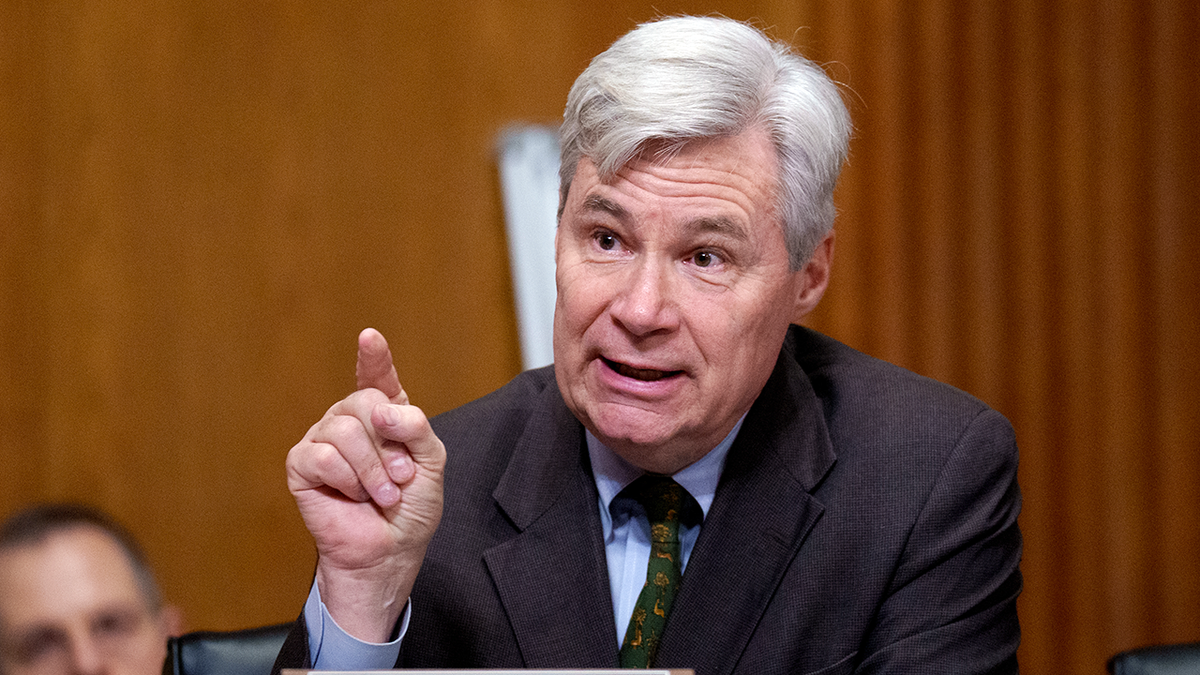
Whitehouse did not rush.
He adjusted his glasses, glanced down at his notes, and slowly returned his attention to the Republican senator.
“Because if we’re going to talk about political accountability, Senator Cruz, let’s make sure we’re talking about the entire system, not just the parts that are politically convenient.”
Cruz leaned toward his microphone.
“Senator, what you’re describing is a partisan narrative. You want Americans to believe that every conservative organization, every Republican donor, and every outside political group is somehow involved in corruption.”
Whitehouse immediately shook his head.
“No. I want Americans to know who is spending money to influence their elections. That’s a very different proposition.”
Cruz interrupted.
“Then why don’t you apply the same standard to everybody?”
“That’s exactly what I’m proposing,” Whitehouse answered. “Everybody. Democrats, Republicans, corporations, wealthy individuals, and organizations spending enormous amounts of money to influence public policy.”
The exchange had reached the central question behind Whitehouse’s long-running campaign against undisclosed political spending.
Who should be required to reveal the sources of money being used to influence American elections?
And why should ordinary voters have to navigate a maze of organizations before discovering who is financing the political messages reaching their television screens?
Cruz was not prepared to accept Whitehouse’s framing.
“You keep using the phrase dark money as though it automatically proves something illegal,” he argued. “But political organizations have constitutional rights. People have the right to participate in public debate without having every association turned into a political investigation.”
Whitehouse nodded.
“Of course constitutional rights matter. Nobody is suggesting otherwise. But transparency matters too. The public has a legitimate interest in knowing who is financing political campaigns and influencing elections.”
Cruz leaned back.

“Then explain why your proposal doesn’t become another government mechanism for intimidating people who disagree with you.”
Whitehouse looked directly at him.
“Because disclosure and intimidation are not the same thing. The question is whether voters should have access to meaningful information about the money influencing their elections.”
A brief silence followed.
Then Whitehouse continued.
“Senator Cruz, imagine an organization spends millions of dollars attacking a candidate. The advertisement appears everywhere. People see it repeatedly. It shapes the political conversation. But the organization does not necessarily reveal the original source of the money.”
Cruz responded immediately.
“And you believe the government should decide which donors become public?”
“I believe the law should establish reasonable disclosure requirements,” Whitehouse replied. “That’s what legislation is for. We debate the rules, examine constitutional boundaries, and decide what transparency should look like.”
The argument was no longer simply about Republican and Democratic political strategies.
It was about the relationship between money, constitutional protections, and the public’s right to understand who was attempting to influence its government.
Whitehouse had spent years advancing legislation designed to address precisely that issue.
The DISCLOSE Act, which he repeatedly championed, sought greater transparency from organizations spending money in elections, including certain nonprofit groups and political committees.
Its proposals included disclosure of significant donors, restrictions on organizational transfers designed to conceal original funding sources, and additional transparency requirements for political advertising.
The legislation had encountered substantial Republican opposition in previous Senate votes.
In September 2022, the measure received 49 votes in favor and 49 against, falling short of the 60 votes needed to advance.
For Whitehouse, that outcome represented a major obstacle to his transparency agenda.
For Republican opponents, the legislation raised questions about the appropriate boundaries between disclosure requirements and political association.
And that disagreement provided the backdrop for the fictional confrontation.
Cruz returned to the microphone.
“Let’s be honest about something. You don’t like the people supporting conservative causes. You don’t like the organizations challenging your political agenda. So now you’re trying to create a system that makes their participation more difficult.”
Whitehouse did not raise his voice.
“Senator, you’re making this about personalities. I’m talking about a principle. If an organization spends millions influencing an election, why shouldn’t voters have meaningful information about who is financing that spending?”
“Because the Constitution protects political participation,” Cruz replied.
“And transparency can coexist with constitutional protections,” Whitehouse answered. “The challenge is writing the law correctly. That’s what we’re supposed to do here.”
Cruz appeared determined to return the discussion to the Democrats’ political motivations.
“Then let’s talk about your party. Are you prepared to investigate every organization that supports Democrats? Every wealthy donor? Every political consultant? Every nonprofit?”
Whitehouse responded without hesitation.
“Yes. If the same disclosure standards apply, they should apply regardless of political affiliation.”
He paused before continuing.
“That is the point you keep avoiding. I’m not asking for a special rule for Republicans. I’m asking for a rule that applies to everybody.”
The room’s attention returned to the two senators.
Cruz had challenged the proposal as potentially partisan.
Whitehouse was insisting that the principle behind it should be universal.
But then the discussion turned toward a more uncomfortable subject: the relationship between campaign finance, lobbying, and the private interests seeking access to government officials.
Whitehouse leaned closer to his microphone.
“Let’s discuss influence. Because campaign spending is only one part of this conversation. There are lobbying organizations, privately sponsored events, political networks, and financial relationships that deserve public scrutiny.”
Cruz interrupted.
“Are you accusing me of something?”
“I’m asking about the standards that should govern public officials,” Whitehouse answered. “If there is a specific allegation, it should be supported by evidence. But we should not pretend that the broader issue doesn’t exist.”
Cruz looked toward him.
“Then bring the evidence. Don’t throw around insinuations and expect people to accept them.”
Whitehouse nodded.
“Agreed. Bring the records. Examine the disclosures. Check the rules. If something is improper, establish that through the appropriate process. If it is permitted, explain why the rules allow it.”
That answer was important because privately sponsored congressional travel is governed by specific Senate ethics requirements.
Those rules restrict sponsorship and planning by lobbyists and foreign agents, while establishing disclosure and certification requirements for permitted travel.
The existence of privately sponsored travel does not, by itself, establish misconduct.
But the public record and the applicable ethics rules can provide a basis for examining whether a particular arrangement complied with those requirements.
Cruz returned to the political argument.
“You want to create the impression that every relationship between a senator and an outside organization is suspicious.”
Whitehouse answered:
“No. I want people to understand the difference between a legitimate policy discussion and an arrangement that creates an appearance of improper influence. Those are questions we should be able to examine without turning every inquiry into a partisan fight.”
The confrontation had become increasingly focused.
Instead of exchanging accusations about political motives, the senators were now discussing what evidence should be examined and which standards should apply.
Whitehouse turned another page in his notes.
“Senator Cruz, let me ask you something directly. If you believe disclosure is important when Democrats receive political support, shouldn’t it also be important when Republicans receive political support?”
Cruz replied sharply.
“Of course disclosure is important when the law requires it. But you cannot use the word transparency as an excuse to attack political opponents.”
“Then we agree on the principle,” Whitehouse said. “The disagreement is about how the rules should work.”
Cruz shook his head.
“No. The disagreement is about whether your legislation protects the Constitution or creates another political weapon.”
Whitehouse looked toward him.
“Then let’s debate the actual language. Let’s examine the requirements. Let’s identify legitimate privacy concerns and address them. But don’t tell the American people that asking who finances political influence is somehow an unreasonable question.”
The argument had reached the point where neither senator could simply dismiss the other’s position without addressing the underlying issue.
And that was where Whitehouse wanted the discussion to remain.
He had repeatedly argued that undisclosed political spending creates an accountability problem because voters may not know which wealthy individuals or organizations are financing campaigns and political advertisements.
Republicans have challenged his proposals on constitutional and political grounds, arguing that disclosure requirements must not undermine legitimate privacy protections or discourage lawful political participation.
Both arguments raise questions that deserve careful examination.
But Whitehouse was not finished.
“There’s another issue here,” he continued. “The American people pay their elected officials to represent them. They expect their senators to exercise independent judgment. They expect decisions to be made in the public interest.”
Cruz responded.
“And that’s exactly what I do. I represent the people who elected me, not your interpretation of their interests.”
Whitehouse answered.
“Then you should welcome scrutiny. Every senator should.”
Cruz leaned toward the microphone again.
“I don’t object to scrutiny. I object to politically motivated accusations disguised as ethics reform.”
Whitehouse’s response was immediate.
“Then let’s remove the politics from it. Let’s examine the documents. Let’s examine the financial disclosures. Let’s examine the lobbying records. And let’s apply the same standards to everyone.”
For several seconds, the fictional exchange became unusually quiet.
The confrontation had started with a familiar political accusation: one side claimed the other was protecting wealthy interests, while the other accused its opponent of weaponizing government oversight.
But the underlying question remained.
Could the United States establish stronger transparency requirements without violating legitimate constitutional protections?
Could voters obtain meaningful information about political spending without exposing ordinary citizens to unnecessary risks?
And could lawmakers agree to standards that applied equally to both parties?
Those questions are considerably more complicated than the slogans dominating Washington’s political battles.
They also explain why Whitehouse has continued pressing the issue across multiple congressional sessions.
In March 2026, Whitehouse and Democratic colleagues reintroduced an updated DISCLOSE Act, proposing additional disclosure requirements that included payments to digital influencers promoting political candidates.
The proposal also addressed organizational transfers, foreign participation in election spending, and political advertising disclosures.
Its supporters described the legislation as a transparency measure.
Its critics would need to evaluate whether the proposed requirements adequately protect constitutional rights and legitimate privacy interests.
The debate was far from settled.
Cruz, meanwhile, would have an opportunity to challenge the specific provisions rather than simply the political message surrounding them.
And that is what makes the fictional exchange particularly revealing.
Whitehouse was not asking for applause.
He was demanding that the argument be examined.
Cruz was not conceding the underlying criticism.
He was challenging the assumptions behind the proposed solution.
Neither position could be resolved through a dramatic television moment.
But the confrontation exposed a question that American voters have repeatedly raised about their political institutions.
When enormous amounts of private money enter public elections, how much should voters be allowed to know about the people and organizations behind it?
Whitehouse gathered his papers.
Cruz remained at his microphone.
The disagreement was unresolved, the legislation still faced political obstacles, and neither senator had withdrawn his position.
But the final question lingered beyond the imagined exchange.
If transparency is important enough to demand from political opponents, should it not be equally important when the spotlight turns toward one’s own political allies?
And when the next major political spending network emerges from behind an unfamiliar nonprofit, a shell organization, or an outside lobbying group, will Washington finally agree to follow the money all the way to its source?
Because the most consequential question in this debate may not be who is funding American politics. It may be why so many lawmakers remain divided over how much the American people deserve to know.
