
John Kennedy wanted Republicans to learn from their election defeat. Unfortunately for him, the lesson arrived wrapped in one of Washington’s most spectacular bathroom metaphors.
After Democrats captured Congress in the 2026 midterms, the Louisiana senator warned Republicans against repeating the mistakes that had helped cost them power.
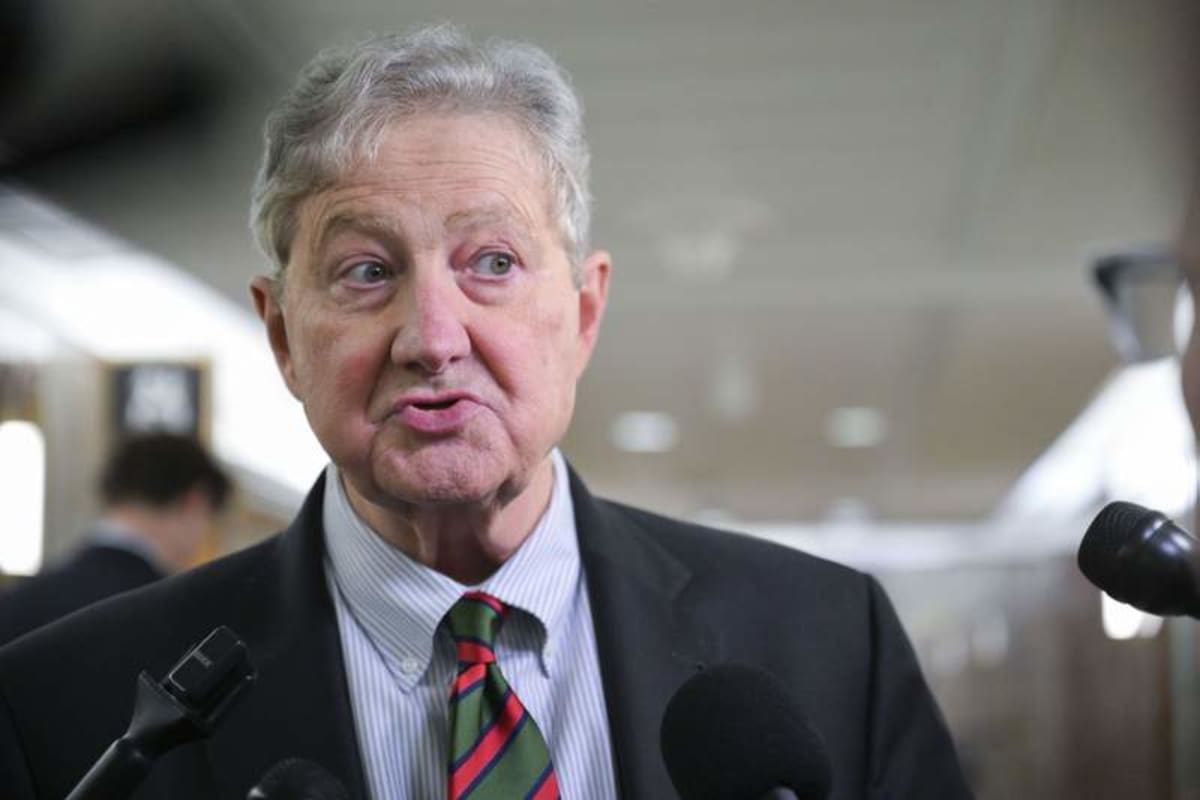
“A wise man doesn’t urinate on his hands,” Kennedy said, before urging his colleagues to stop doing exactly that.
The comparison was designed to sting. Kennedy wasn’t defending the GOP’s performance. He was telling Republicans to quit congratulating themselves for a disaster.
But the image was so bizarre that it handed political critics a gift before anyone had even reached the serious argument.
On the IHIP News podcast, Angie Sullivan heard the clip and struggled to believe a United States senator was discussing such matters on the Senate floor.
She called the spectacle a “clown show.” Jennifer Welch agreed, then moved past the absurd language to the larger political problem.
Welch argued that Republican lawmakers had witnessed a public rejection of their direction yet remained committed to Donald Trump and his agenda.
That was the real point beneath the laughter. The metaphor was ridiculous, but Welch was asking why electoral defeat hadn’t produced meaningful change.
And the critique intersects with an argument Alexandria Ocasio-Cortez has been making throughout the year: working families need relief, not better political excuses.
AOC’s message has focused on the grocery bill, housing costs, healthcare expenses, and the gap between political promises and ordinary economic reality.
In an August interview, AOC accused Republicans of making life more expensive, arguing that Democrats should focus on improving people’s lives.
Put that argument beside Kennedy’s Senate speech and the contrast almost writes itself. Washington discusses bathroom etiquette; Americans calculate what remains after rent.
There is a sharp difference between identifying a political mess and actually cleaning it up. Kennedy acknowledged the former. Welch questioned the latter.
AOC’s economic critique presses the same uncomfortable practical test: what happens to people outside Washington after the microphones are turned off?
A parent facing another medical bill doesn’t particularly care whether a senator’s metaphor wins the internet. They care whether the bill can be paid.
And the GOP’s midterm defeat made that distance between political messaging and lived experience impossible to ignore.
Kennedy insisted this wasn’t a routine setback for the party controlling the White House. He argued that Republican voters had actively crossed over.
He wasn’t simply complaining about turnout or blaming hostile coverage. He was warning that people who once supported Republicans had voted for Democrats.
That admission deserves attention, because a party cannot win people back by explaining why it should not have lost them.
Welch’s criticism added another complication: if Republican leaders understood that voters had rejected their direction, why were they still standing by it?
The question wasn’t whether Kennedy could produce another memorable line. By now, anyone familiar with him knows the Louisiana senator can do that.
It was whether his party could offer anything more persuasive than a new explanation for an old sense of economic frustration.
Kennedy had ideas. He urged Republicans to use their remaining control of Congress to advance legislation before Democrats assumed power in January.
His agenda included military funding, anti-fraud measures, and other policy proposals that he argued would demonstrate Republicans were still trying.
He also recognized the difficulty. Senate rules, narrow margins, and his own party’s leadership could prevent a last-minute legislative rescue.
That helps explain why his appeal sounded desperate. The time remaining was short, the political damage was real, and agreement was far from guaranteed.
Yet effort alone is not a policy outcome. A dramatic speech cannot lower insurance premiums, deliver affordable housing, or put money back into paychecks.
That’s where AOC’s emphasis on economic outcomes becomes a more powerful counterpoint than another joke about Kennedy’s choice of words.
She has argued that healthcare costs are a fundamental challenge for working families, supporting policies intended to expand access and reduce financial pressure.
The Republican and progressive answers to those problems differ substantially. Kennedy favors conservative legislation; AOC advocates a much larger government role.
Neither side gets a free pass. Voters have every reason to demand results rather than accept either party’s preferred description of its good intentions.
The podcast reaction, however, made one political weakness particularly visible. A senator’s attempt to deliver tough love became a public spectacle.
And that spectacle risks swallowing the actual warning. People may remember the bathroom joke longer than they remember the bills Kennedy wanted passed.
There is a cruel irony in that. Kennedy wanted Republicans to stop making foolish mistakes. The way he said it became another distraction.
Welch understood the opening. Her argument was less about manners than about whether party loyalty had become stronger than the instinct for political survival.
AOC’s broader message makes the problem harder to escape: even the sharpest critique means little unless voters see material change.
That standard applies to Democrats too. Taking control of Congress doesn’t make groceries cheaper, guarantee medical coverage, or settle the country’s affordability crisis.
If Democrats promise relief and fail to deliver, their own speeches may become the next set of clips inviting public ridicule.
But for the moment, it was Kennedy’s party confronting the question. Had Republicans misread the electorate, or simply chosen not to hear it?
Kennedy clearly thought the answer required urgency. Welch saw stubbornness. AOC’s stated priorities point toward an even tougher measurement: affordability itself.
That leaves three distinctly different ways to understand the same extraordinary spectacle: a Republican warning, a podcaster’s ridicule, and a progressive economic challenge.
All three converge on the one thing Washington cannot talk its way around. Voters can listen to speeches and still reject the people delivering them.
The senator’s metaphor may have been awkward, but its intended warning was plain: stop repeating behavior that guarantees another defeat.
The unanswered question is whether anyone in Republican leadership will change course before Kennedy has to reach for yet another analogy.
Because Americans may laugh at a senator talking about his hands. They are less likely to laugh when Washington keeps mishandling their future.
