
Senator John K.e.n.n.e.d.y was already leaning toward his microphone when the argument began spiraling beyond the committee chairman’s control.

Across the hearing table, Senator Sheld0n Whitehouse sat quietly, examining a financial report that had suddenly become the most contested document in the room.
The hearing concerned a troubling discrepancy involving millions of dollars in federal program funding.
K.e.n.n.e.d.y believed the numbers being presented were misleading.
Whitehouse believed the senator had overlooked something buried inside the supporting records.
Neither man appeared willing to abandon his position.
Then K.e.n.n.e.d.y pointed toward Whitehouse and delivered an accusation that silenced several conversations around the chamber.
“He’s fabricating the data!”
The chairman immediately called for order.
K.e.n.n.e.d.y continued challenging the figures, demanding an explanation for numbers he considered inconsistent with the official accounting records.
Whitehouse did not interrupt.
Instead, he adjusted his glasses, studied the document one final time, and waited for the chairman to recognize him.
What followed would transform the hearing from an argument over political accusations into a confrontation about documentary evidence.
And the most important evidence was not hidden inside Whitehouse’s folder.
It was already sitting in front of K.e.n.n.e.d.y.
The controversy had started earlier that morning, when committee staff distributed a preliminary financial reconciliation report.
The report examined funding allocated to a federal infrastructure oversight program.
According to the accounting summary, approximately $48 million had been authorized for activities spread across several fiscal periods.
However, an initial review identified a $12.6 million difference between two financial tracking systems.
One system recorded approved funding obligations.
The other reflected payments that had actually been disbursed.
The difference immediately attracted attention.
Some lawmakers questioned whether the money had been transferred improperly.
Others suspected delays in reporting, incomplete records, or inconsistent accounting classifications.
The distinction was critical.
A discrepancy between obligations and disbursements does not automatically mean money has disappeared.
Federal agencies may legally commit funds before issuing payments, producing different totals across reporting systems.
Nevertheless, the committee needed to determine exactly what the records showed.
K.e.n.n.e.d.y was particularly concerned about the possibility that officials had failed to explain the discrepancy clearly.
He believed the presentation minimized legitimate questions about public spending.
Whitehouse approached the same material from a different direction.
He wanted the committee to separate documented transactions from conclusions that the evidence could not yet support.
Those competing approaches became increasingly difficult to reconcile as the hearing progressed.
K.e.n.n.e.d.y opened with a pointed question about the missing amount.
“Are you telling the American people that twelve million dollars can disappear between two reports without anybody noticing?”
A senior budget analyst seated at the witness table immediately clarified the terminology.
The money had not been established as missing.
The $12.6 million represented a difference between recorded financial categories.
K.e.n.n.e.d.y challenged that explanation.
He argued that a properly managed program should allow auditors to follow every dollar through the system.
The analyst agreed that complete reconciliation was necessary.
But the analyst resisted K.e.n.n.e.d.y’s characterization of the amount as stolen, lost, or improperly transferred.
No such finding appeared in the material presented.
K.e.n.n.e.d.y leaned back.
For several seconds, he studied a highlighted table.
Then he turned toward Whitehouse.
“You keep telling us these numbers are understandable,” K.e.n.n.e.d.y said.
“But the taxpayers deserve something better than a complicated explanation that never answers the question.”
Whitehouse responded that the question could not be answered responsibly without understanding what each number measured.
K.e.n.n.e.d.y shook his head.
The exchange was becoming more contentious.
And neither senator had yet examined the attachment that would eventually change the discussion.
Whitehouse requested permission to display a separate reconciliation table.
The chairman agreed.
Committee staff distributed a second exhibit containing a transaction-by-transaction comparison.
It listed approved obligations, scheduled payments, completed disbursements, and adjustments recorded after the original reporting date.
The table revealed an important detail.
Of the disputed $12.6 million, a substantial portion involved obligations that had not yet resulted in completed payments.
Another portion reflected transactions recorded in different reporting periods.
The remaining balance required additional documentation.
That last category presented a legitimate unresolved question.
But it was far smaller than the original discrepancy.
Whitehouse asked the budget analyst to explain the difference between an outstanding obligation and an unexplained expenditure.
The analyst described the distinction using a construction contract.
An agency might approve funding for a project before the contractor completed the work.
The government’s obligation would appear in one record.
The actual payment might not appear until months later.
Those two records could therefore show different amounts without indicating wrongdoing.
K.e.n.n.e.d.y interrupted.
“Then why wasn’t that made clear in the first report?”
The analyst acknowledged that the initial summary could have explained the categories more effectively.
That answer gave K.e.n.n.e.d.y a legitimate point.
The reporting had created confusion.
However, it did not establish that the underlying money had been misappropriated.
Whitehouse returned to the reconciliation table.
He argued that confusing presentation should be corrected without transforming uncertainty into a criminal accusation.
K.e.n.n.e.d.y immediately challenged the implication.
“Nobody here is suggesting we stop asking questions.”
Whitehouse replied that asking questions and declaring conclusions were different things.
The disagreement was no longer merely about accounting.
It concerned the standard of evidence lawmakers should apply before accusing public officials of financial misconduct.
Then K.e.n.n.e.d.y noticed a figure on the second page.
He believed one of the totals contradicted the testimony.
His voice rose.
“That figure doesn’t match what we were told earlier.”
Whitehouse checked the corresponding column.
“It matches the supporting schedule,” he replied.
K.e.n.n.e.d.y pointed toward the analyst’s testimony.
“Then somebody needs to explain which number we’re supposed to believe.”
The chairman asked both senators to address their remarks through the chair.
K.e.n.n.e.d.y continued examining the figures.
His concern centered on the relationship between the original $48 million authorization and the amounts reported as obligated or disbursed.
Whitehouse attempted to identify the accounting periods involved.
But K.e.n.n.e.d.y interrupted again.
He argued that the latest explanation introduced figures not clearly displayed in the first summary.
Whitehouse insisted that the figures came from the underlying records.
K.e.n.n.e.d.y turned toward the chairman.
“I want the accuracy of this material established before we go another inch.”
The chairman agreed that the documents needed to be examined carefully.
Then K.e.n.n.e.d.y made the accusation that changed the atmosphere.
“He’s fabricating the data!”
Several people in the audience looked toward the witness table.
The chairman immediately called for order.
Whitehouse remained seated.
K.e.n.n.e.d.y demanded that the disputed figures be checked against the original committee exhibits.
He also objected to Whitehouse continuing his explanation before that comparison was completed.
The chairman declined to terminate the exchange.
Instead, he directed staff to identify the relevant exhibits and their supporting schedules.
That decision would become the turning point.
Whitehouse quietly opened a folder containing the same financial summary K.e.n.n.e.d.y had referenced earlier.
He placed two documents beside each other.
The first was the reconciliation table he had presented.
The second was an exhibit previously submitted for the committee’s consideration.
Both contained a column identifying the total authorized funding.
Both listed the original $12.6 million discrepancy.
Both separated outstanding obligations from completed disbursements.

And both relied on the same underlying reporting dates.
The numbers were not independently manufactured by Whitehouse during the hearing.
They came from financial information already included in the committee materials.
That did not automatically establish that every figure was accurate.
But it directly challenged the allegation that Whitehouse had simply created the numbers.
The chairman asked K.e.n.n.e.d.y to identify the specific figure he believed had been fabricated.
K.e.n.n.e.d.y pointed to the disputed amount again.
Whitehouse turned the committee exhibit toward him.
“Is this the number you’re questioning?”
K.e.n.n.e.d.y examined the page.
“Yes.”
Whitehouse pointed to the corresponding entry in the earlier submission.
“Then look at this column.”
The two entries matched.
A staff member confirmed that the earlier exhibit had been received before the hearing began.
The chairman asked whether the matching numbers had been altered after submission.
Staff reported no indication of a change in the copies under examination.
K.e.n.n.e.d.y studied the documents.
The accusation now faced an obvious evidentiary problem.
The same number appeared in the material K.e.n.n.e.d.y himself had been using to challenge the financial reporting.
Whitehouse removed his glasses.
He waited until the chairman recognized him.
Then he delivered exactly fifteen words.
“If these numbers are fabricated, Senator, why does your own committee exhibit repeat them exactly?”
The question was simple.
Its consequences were not.
K.e.n.n.e.d.y could still challenge whether the figures accurately represented the program’s finances.
He could question the methods used to prepare the reports.
He could demand additional supporting records.
But the matching exhibit made it harder to sustain the narrower allegation that Whitehouse had personally fabricated the figures.
K.e.n.n.e.d.y looked back at the table.
The chairman asked him to clarify his objection.
For several moments, the discussion focused entirely on the two documents.
K.e.n.n.e.d.y then explained that his broader concern was the reliability of the financial reporting.
He wanted the committee to investigate whether the figures had been classified properly.
Whitehouse acknowledged that accounting classifications deserved scrutiny.
But he emphasized that the accuracy of a figure and its presence in an existing report were separate issues.
The committee had established where the disputed number came from.
It had not completed the underlying audit.
The distinction prevented either senator from claiming a final resolution.
Still, the accusation against Whitehouse had materially changed.
The hearing could now proceed on a narrower and more substantive question.
Why did the federal program’s financial records initially appear to disagree?
The budget analyst returned to the transaction schedule.
The analyst divided the $12.6 million difference into three categories.
The first contained approved commitments awaiting payment.
The second contained transactions affected by reporting-period adjustments.
The third remained unsupported by documentation sufficient for immediate reconciliation.
That third category became the most important unresolved issue.
It represented approximately $840,000 in the hearing’s working example.
The amount did not establish theft or fraud.
It identified transactions requiring further verification.
Whitehouse asked whether the committee could determine how those transactions had been processed.
The analyst replied that additional records were necessary.
K.e.n.n.e.d.y immediately requested those records.
For the first time in several minutes, the senators were concentrating on the same specific discrepancy.
The disagreement had produced a concrete investigative task.
The chairman instructed staff to identify the supporting transaction records necessary to reconcile the remaining balance.
The proposed review would include payment authorizations, transaction dates, obligation identifiers, and relevant accounting adjustments.
Those records could show whether the remaining difference resulted from timing, classification errors, missing documentation, or improper activity.
The committee would not assume the answer in advance.
K.e.n.n.e.d.y emphasized that the government had an obligation to account for public money.
Whitehouse agreed that the unresolved entries required examination.
But the earlier accusation remained part of the hearing’s record.
Whitehouse returned to that issue before the discussion concluded.
He asked K.e.n.n.e.d.y to distinguish his concerns about the financial records from his accusation that the senator had fabricated data.
K.e.n.n.e.d.y replied that he was questioning the presentation and reliability of the numbers.
Whitehouse noted that those concerns were not equivalent to proving fabrication.
The chairman intervened.
He stated that the committee had identified a legitimate accounting discrepancy and a need for additional documentation.
It had not established that Whitehouse had manufactured the figures.
Nor had it established that federal funds were stolen or intentionally concealed.
The clarification narrowed the conclusions that could reasonably be drawn from the hearing.
That mattered because the public confrontation had begun with language suggesting deliberate deception.
The documents had supported a different conclusion.
The disputed figures were part of the existing record, while their financial interpretation still required scrutiny.
K.e.n.n.e.d.y’s original concern about accountability therefore remained relevant.
But Whitehouse’s challenge had exposed a weakness in how K.e.n.n.e.d.y initially presented the disagreement.
The committee could not treat the existence of a reporting discrepancy as proof of misconduct.
And it could not treat a disagreement over interpretation as proof that another senator had fabricated evidence.
The next development came from the supporting transaction schedule.
A committee accountant identified a reporting adjustment that had been entered after one summary was generated.
The adjustment changed the timing classification of several payments.
It did not change the total amount authorized for the program.
However, it explained why some entries appeared in different categories across the two reports.
That discovery reduced the scope of the unresolved accounting problem.
It also showed why comparing headline totals without examining transaction dates could produce misleading conclusions.
K.e.n.n.e.d.y asked whether the adjustment had been disclosed clearly in the original summary.
The accountant answered that the explanation was incomplete.
K.e.n.n.e.d.y pressed for the reporting process to be corrected.
Whitehouse supported obtaining the complete adjustment history.
The two senators continued to disagree about the severity of the initial reporting failure.
But the committee now had a specific factual issue to investigate.
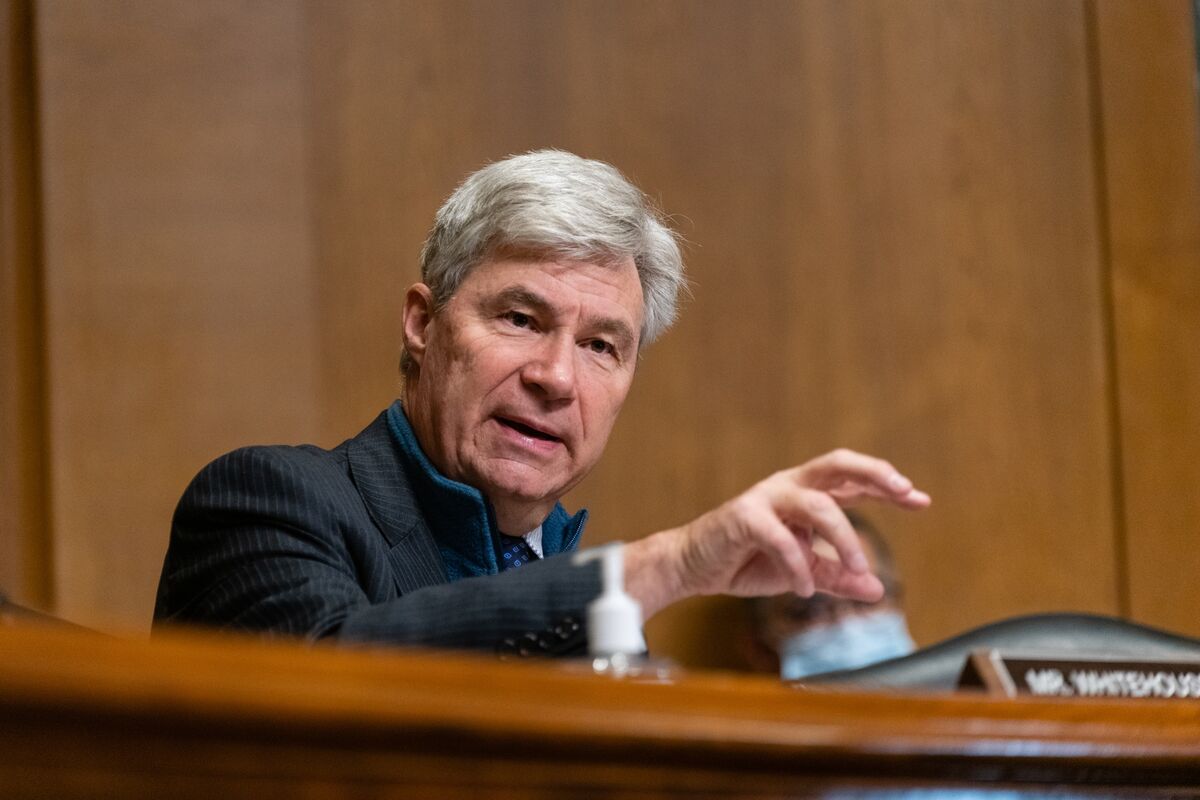
Instead of debating whether one politician had fabricated numbers, investigators could examine the actual transactions.
The chairman proposed that the committee’s next review focus on the remaining unreconciled entries.
Staff would request the relevant financial records and assess whether the differences represented administrative errors or substantive irregularities.
The decision did not resolve the entire financial dispute.
It did identify what evidence was missing.
And it prevented the hearing from ending with a personal accusation unsupported by the documents then available.
K.e.n.n.e.d.y gathered his papers.
Whitehouse returned the reconciliation table to his folder.
The chairman prepared to close the session.
One final exchange brought the argument back to its central issue.
K.e.n.n.e.d.y insisted that accounting explanations should never become excuses for avoiding oversight.
Whitehouse responded that effective oversight depended on distinguishing established facts from allegations.
Neither statement eliminated the other’s concern.
The government still needed to account for its financial records.
And senators still needed to describe those records accurately.
The chairman struck the gavel.
The hearing ended without a finding that the disputed money had been stolen.
It also ended without evidence establishing that Whitehouse had fabricated the financial figures.
The final review had established something more precise.
The original discrepancy included transactions recorded under different categories and reporting periods.
A smaller balance still required supporting documentation.
The committee had identified the records necessary to investigate that balance.
And the matching exhibits had undermined the accusation that Whitehouse had simply invented the numbers.
The fifteen-word question had mattered because it forced the argument back to evidence already available to everyone in the room.
K.e.n.n.e.d.y had demanded accountability.
Whitehouse had demanded documentary consistency.
The confrontation showed why those principles must operate together.
A financial discrepancy can justify investigation without establishing criminal misconduct.
A disputed figure can require verification without being fabricated.
And a dramatic accusation can lose its force when the documents fail to support it.
The hearing’s most consequential outcome was not a shouted insult or an embarrassed reaction.
It was the decision to narrow a sweeping allegation into a specific, verifiable accounting question.
That left investigators with actual work to perform.
The unanswered transactions would have to be traced.
The reporting adjustments would have to be documented.
And any future allegation would have to follow the evidence rather than precede it.
Whitehouse’s fifteen words did not make the missing documentation appear. They exposed why the committee needed proof before deciding whom to blame.
