
“What is the rent in Parkchester?” — Senator John Kennedy challenges AOC with district statistics and turns a heated town hall into a debate over political accountability
The atmosphere changed when Senator John Neely Kennedy placed a folder on the table and directed his next question toward Alexandria Ocasio-Cortez.
The New York congresswoman had opened the televised discussion by criticizing economic policies she believed favored billionaires over working Americans.
Kennedy listened without interrupting, then suggested that the discussion should begin with the living conditions of people in her own congressional district.
He opened his folder, examined a housing report, and asked a question concerning Parkchester, the Bronx neighborhood associated with Ocasio-Cortez’s upbringing.
“Congresswoman, what is the average rent in Parkchester right now?”
Ocasio-Cortez hesitated before asking whether he meant existing leases, advertised apartments, or housing subject to rent stabilization.
Kennedy pressed for a straightforward number, arguing that affordability should be familiar territory for someone who frequently discussed working-class struggles.
He allowed the silence to linger before continuing.
But the confrontation was far from over.
Kennedy introduced figures showing high renter occupancy, widespread economic hardship, and a severe shortage of housing affordable to low-income families.
Then he shifted toward the canceled Amazon headquarters proposal in Long Island City, an economic development dispute that had attracted national attention in 2019.
Finally, he raised questions about political campaign spending and the consistency of criticizing wealthy interests while participating in expensive political events.
Ocasio-Cortez challenged his assumptions, arguing that statistics could identify problems without proving that one elected representative had created them.
The central disagreement was no longer about remembering a rental price but about the difference between political promises and measurable outcomes.
And the document Kennedy introduced near the end would force both participants to confront the limitations of their arguments.
1. Kennedy’s opening question puts Parkchester’s housing costs at the center
Kennedy began by arguing that national politicians frequently discussed economic inequality without explaining how their proposed solutions affected individual communities.
He pointed toward Parkchester as a neighborhood where renters faced substantial financial pressures within New York City’s expensive housing market.
Ocasio-Cortez responded that housing affordability had been one of her principal concerns throughout her congressional career.
She described the challenges facing working families who must balance rent, transportation, food, child care, and medical expenses.
Kennedy acknowledged those concerns but returned to the question he believed should have an immediate answer.
What did an ordinary household actually pay for an apartment in Parkchester?
Ocasio-Cortez asked him to specify the housing category, explaining that rental prices differed across apartment sizes and lease arrangements.
A longstanding rent-stabilized tenancy could have a substantially different monthly cost from a newly advertised apartment.
Kennedy argued that those distinctions should not prevent a representative from understanding the general affordability pressures facing constituents.
She countered that an inaccurate average could mislead viewers about the circumstances of families living in different housing arrangements.
The argument exposed a genuine statistical challenge.
Rental listing websites often measure the asking prices of available apartments rather than the rent paid by every existing household.
Government surveys may examine actual occupied homes, creating different averages from those reported by commercial listing services.
A single number cannot automatically describe both markets.
Kennedy nevertheless argued that the underlying concern remained straightforward.
Families needed to know whether wages were keeping pace with the price of housing.
Ocasio-Cortez agreed that affordability was an urgent problem but disputed the suggestion that congressional representatives directly controlled neighborhood rental rates.
She emphasized the influence of housing construction, municipal regulations, financing costs, and regional demand.
The disagreement sharpened when Kennedy introduced a districtwide housing report rather than an unverified neighborhood average.
That document provided a more reliable foundation for discussing the economic difficulties facing her constituents.
And the figures were substantial.
2. The housing statistics reveal pressures that neither politician can dismiss
Kennedy opened a congressional housing profile and highlighted the scale of rental affordability problems in New York’s 14th District.
The National Low Income Housing Coalition’s 2026 profile estimated a shortage of 41,081 affordable and available homes for extremely low-income renter households.
It also reported that 34 percent of renter households fell into the extremely low-income category.
These findings showed why rental affordability occupied such an important place in discussions about the district’s economic conditions.
The report estimated that a household needed approximately $106,688 annually to afford a two-bedroom apartment at HUD’s fair market rent.
That figure represented an affordability calculation rather than the actual average annual income of every household in the district.
Kennedy argued that the gap between housing costs and household resources illustrated the need for more effective economic policies.
Ocasio-Cortez agreed that the shortage was severe but argued that the report supported additional affordable housing investment rather than disproving her position.
Kennedy then introduced Census information showing that approximately 72 percent of occupied housing units were renter-occupied.
He questioned whether existing policies had adequately addressed the financial vulnerability of such a large renter population.
Ocasio-Cortez responded that the district’s housing structure reflected decades of economic and development decisions predating her time in Congress.
The figures were real indicators of housing difficulty, but they did not independently establish responsibility for the underlying conditions.
Kennedy acknowledged that distinction while insisting that elected officials should still explain what their policies were accomplishing.
She replied that measuring congressional performance required examining legislation, funding, constituent assistance, and the limits of federal authority.
Both recognized that the data identified a serious problem.
Their disagreement concerned which actions could reasonably be attributed to one congressional representative.
The report also contained another revealing figure.
Only 36 affordable and available homes existed for every 100 extremely low-income renter households in the district.
That statistic shifted attention from political rhetoric toward the shortage of affordable housing itself.
National Low Income Housing Coalition+1
3. Kennedy raises poverty and crime, but the numbers create another confrontation
Kennedy turned to economic hardship, presenting a figure of 19.8 percent for the district’s poverty rate.
Ocasio-Cortez challenged him to identify the reporting period and dataset behind the estimate.
The Census Reporter profile available for the district showed approximately 20.7 percent of residents below the poverty line.
The difference did not eliminate the underlying concern, but it demonstrated why the source and reporting year mattered.
Kennedy acknowledged that poverty estimates could vary depending on the survey and period being examined.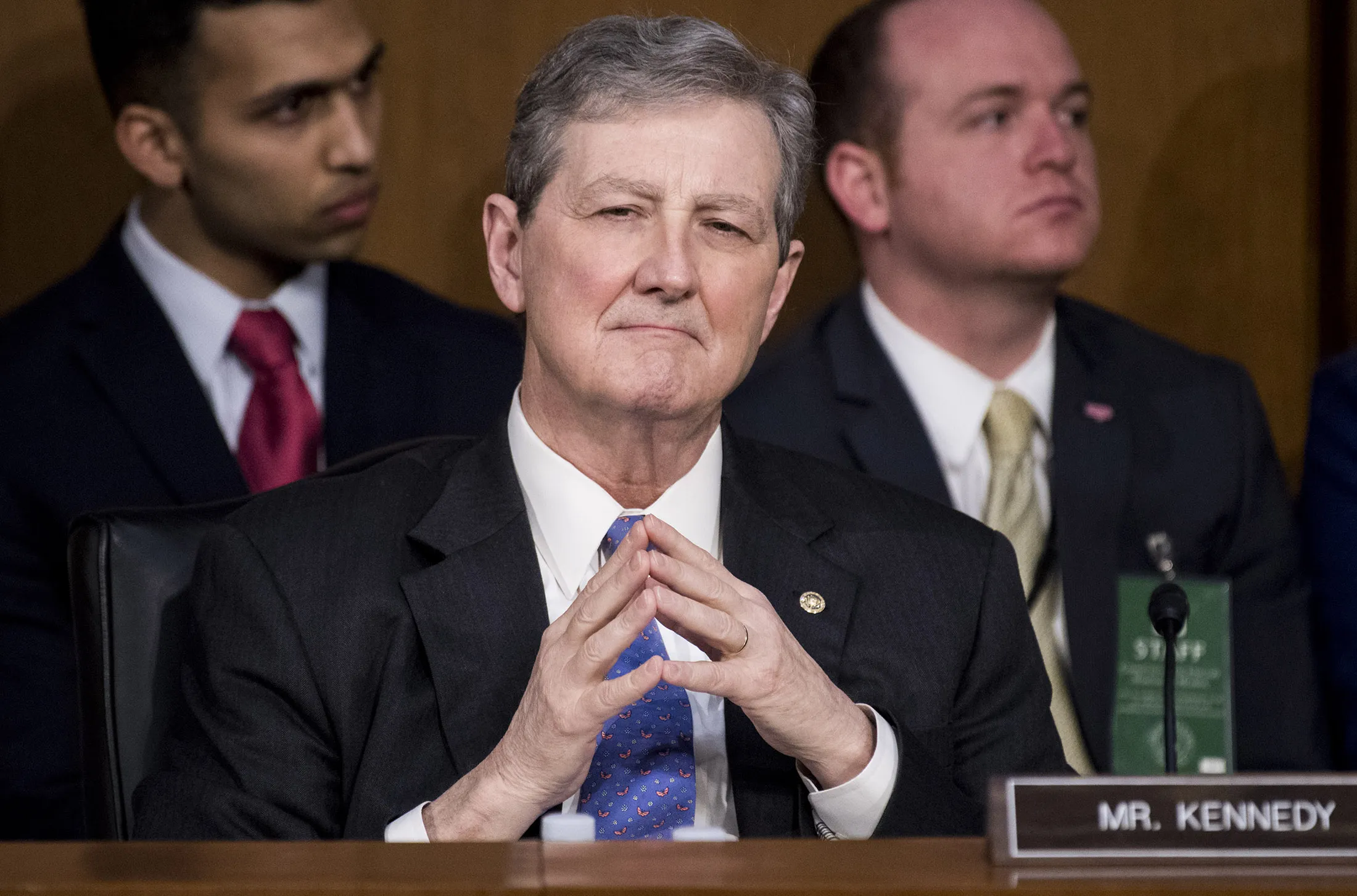
He maintained that a rate near one-fifth of residents represented a substantial challenge requiring serious political attention.
Ocasio-Cortez agreed but argued that poverty could not be evaluated independently of housing costs, employment opportunities, and public services.
Then Kennedy raised the claim that crime had increased 70 percent during her congressional tenure.
The accusation immediately produced another evidentiary dispute.
Ocasio-Cortez asked which criminal offenses, police precincts, and years were included in the calculation.
She pointed out that New York City police precinct boundaries do not perfectly match congressional district boundaries.
A rise in one category of reported crime would not automatically establish an identical increase in total crime across the entire district.
Kennedy argued that residents’ concerns about safety deserved attention even when a particular statistic required further verification.
Ocasio-Cortez agreed that crime victims needed protection but insisted that public claims should accurately reflect police records.
The proposed 70 percent increase could not be established through the evidence Kennedy had supplied.
He therefore set the disputed percentage aside while continuing to question the district’s public safety challenges.
That decision changed the direction of the discussion.
A figure introduced as evidence of political failure could not withstand a request for its exact source and methodology.
Kennedy responded that factual precision should apply equally to claims made by both political parties.
Ocasio-Cortez agreed and asked him to maintain that standard as the discussion continued.
The audience had now seen two different problems emerge from the statistics.
Some numbers documented genuine economic hardship, while others required more careful verification before supporting broader conclusions.
The distinction mattered because a difficult statistic does not automatically prove misconduct, incompetence, or a failed public policy.
4. The Amazon headquarters dispute becomes the next major turning point
Kennedy moved to another economic controversy, introducing Amazon’s abandoned plan to establish a headquarters in Long Island City.
In November 2018, Amazon announced that the proposed New York development would create at least 25,000 jobs over approximately ten years.
The company also projected substantial investment and employment opportunities extending beyond software engineering.
Supporters believed the project could generate tax revenue, attract additional businesses, and provide new employment opportunities.
Opponents questioned the proposed incentives, potential effects on housing costs, and whether public resources should subsidize a highly profitable corporation.
Ocasio-Cortez had been a prominent critic of the agreement.
On February 14, 2019, Amazon announced that it would not proceed with its Long Island City headquarters.
Kennedy argued that the withdrawal represented a lost opportunity for workers who might have benefited from additional employment.
He asked whether opposing the agreement had adequately considered people seeking better-paying jobs.
Ocasio-Cortez replied that the original proposal was not a guarantee that every promised position would materialize.
She also argued that the agreement required scrutiny of public incentives and the potential financial consequences for existing communities.
Kennedy acknowledged those concerns but questioned whether rejecting the negotiated deal had produced a better alternative.
He introduced Carmen Reyes, a fictional nurse’s aide representing the type of worker who might have hoped for expanded economic opportunity.
Rather than presenting Carmen as a verified person who lost a promised job, he used her circumstances to illustrate an unanswered policy question.
Would the proposed headquarters have created opportunities for workers whose existing wages struggled to cover housing and family expenses?
Ocasio-Cortez responded that employment projections did not establish which individual workers would have received the positions.
She also noted that the proposed site was in Long Island City, outside the 14th Congressional District she represented.
That geographical distinction did not remove the project’s regional importance, but it challenged the suggestion that the site was directly within her district.
The economic debate remained unresolved because both sides emphasized different potential consequences.
Kennedy focused on jobs and economic activity that might have materialized.
Ocasio-Cortez focused on public incentives, community impact, and uncertainty surrounding the promised benefits.
The actual record establishes that Amazon withdrew its proposal amid opposition from several political and community groups.
It does not establish precisely how many jobs would have materialized or which individuals would have obtained them.
Amazon News+2
5. Questions about campaign spending introduce a new evidentiary test
Kennedy then shifted toward political campaign spending and the consistency of criticizing wealthy interests while participating in expensive political activities.
He questioned whether leaders who emphasized working-class economic struggles should apply particularly demanding standards to their own campaign expenditures.
Ocasio-Cortez challenged him to identify the specific transactions behind allegations involving private aviation and luxury accommodations.
Kennedy acknowledged that the documents on his table did not establish the claimed spending on private jets.
He instead focused on the broader principle of transparency in political finance.
Campaign committees frequently incur expenses involving travel, accommodations, consultants, events, and fundraising operations.
Those expenses must be assessed according to their actual purpose, reporting requirements, and applicable election laws.
A large expenditure does not automatically prove personal luxury or unlawful conduct.
Likewise, the legality of an expense does not prevent voters from questioning whether campaign resources were used appropriately.
Ocasio-Cortez argued that allegations should identify exact expenditures before attributing extravagant behavior to an individual politician.
Kennedy agreed that verified records mattered, but maintained that elected officials should be prepared to explain significant campaign costs.
She responded that the same standard should apply to every member of Congress, including Republicans.
The discussion became less personal as both participants examined what reliable financial reporting could establish.
Federal Election Commission filings can disclose payments, recipients, dates, and reported purposes.
However, interpreting individual expenditures may require additional context about contracts, shared costs, and event arrangements.
Kennedy suggested that voters deserved explanations for unusual spending patterns.
Ocasio-Cortez agreed while opposing accusations that lacked supporting documentation.
The disagreement produced another limitation on the original allegation.
Without verified expenditure records, the claim that Ocasio-Cortez personally relied on private jets and luxury hotels could not be treated as established fact.
But the broader question about transparent political spending remained relevant.
6. Kennedy’s final question changes the debate from slogans to measurable responsibility
As the discussion approached its conclusion, Kennedy returned to the folder containing housing and economic data.
He placed the affordability report beside the earlier Census figures and asked Ocasio-Cortez to address the underlying hardship directly.
The shortage of affordable housing was documented.
The high proportion of renters was documented.
The poverty data also demonstrated significant economic challenges.
Kennedy argued that voters deserved to know what measurable improvements elected officials were pursuing in response.
Ocasio-Cortez answered that representation should be evaluated through legislative work, public investment, constituent services, and accountability for government decisions.
She also emphasized that congressional representatives do not directly administer every housing or economic program affecting their districts.
Kennedy challenged her to identify measurable benchmarks rather than rely exclusively on legislative intentions.
She proposed examining changes in affordable housing availability, rent burden, health coverage, wages, and access to public services.
Kennedy agreed those were relevant measures but insisted that politicians should communicate progress and setbacks clearly.
Then he delivered the question that changed the atmosphere.
“How close are your promises to the lives your constituents actually live?”
The question was not a statistical finding.
It was a challenge to connect political commitments with outcomes residents could recognize.
Ocasio-Cortez responded that the same question should apply to senators, presidents, governors, and local officials.
She argued that meaningful evaluation required recognizing both policy responsibility and the economic conditions inherited by officeholders.
Kennedy acknowledged that point while returning to the importance of transparent measurements.
The exchange revealed that the central disagreement was not whether district residents faced hardship.
Both participants had accepted that conclusion.
The unresolved issue was how responsibility should be assigned when many institutions influence the same outcomes.
And the next development would determine whether their confrontation produced anything more useful than a memorable television exchange.
7. The final document forces both politicians to confront what the evidence actually proves
The moderator introduced a final comparison summarizing the documented conditions and the claims that remained unsupported.
The housing figures established substantial rental pressure and a shortage of affordable homes.
The Census information demonstrated significant poverty and the district’s high proportion of renter-occupied households.
The Amazon record established a canceled development proposal and a projected employment opportunity, not a precise count of jobs actually lost.
The disputed crime statistic lacked a sufficiently defined source for the sweeping conclusion attached to it.
The campaign spending accusation likewise required specific financial records before supporting claims about personal conduct.
That distinction created the most consequential reversal of the evening.
Kennedy had successfully focused attention on measurable economic problems in Ocasio-Cortez’s district.
But some of the strongest accusations associated with his challenge required additional evidence before they could be accepted.
Ocasio-Cortez had defended her policy positions while acknowledging the significance of the district’s affordability problems.
Yet recognizing that economic conditions were influenced by multiple institutions did not eliminate the responsibility to explain policy outcomes.
The two politicians therefore faced different but related questions.
Kennedy needed to demonstrate that his strongest criticisms were supported by accurate, appropriately defined evidence.
Ocasio-Cortez needed to explain how her proposed policies addressed the conditions documented in her district.
The moderator asked each participant to identify one measurable improvement that residents should reasonably expect from federal leadership.
Kennedy emphasized expanding economic opportunity while reducing regulatory and financial barriers affecting employers and households.
Ocasio-Cortez emphasized increasing affordable housing availability and reducing the share of household income consumed by essential expenses.
Their approaches remained different, and neither accepted the other’s broader economic agenda.
But the discussion had produced a more precise understanding of what voters could examine.
Reliable comparisons would require clear starting figures, defined reporting periods, and an explanation of which government institutions possessed relevant authority.
The initial question about Parkchester rent had exposed a genuine difficulty in political accountability.
A politician may know a community well without being able to produce one universally meaningful rental average.
At the same time, representing a community involves understanding its measurable hardships and explaining what government can do about them.
The most important result was therefore not a seven-second pause or a dramatic declaration of personal victory.
It was the separation of documented economic conditions from accusations that the available evidence did not establish.
Kennedy’s challenge forced attention toward the district’s housing and poverty figures, while Ocasio-Cortez’s questions exposed weaknesses in several broader allegations.
The confrontation ended without an agreed political conclusion, but with a clearer standard for evaluating the claims made by both sides.
The real question was never simply whether AOC knew one rent figure; it was whether either politician could connect verified evidence to accountable public policy.
