
John Neely Kennedy has spent years turning Washington’s most uncomfortable questions into memorable political punchlines. Now the Louisiana Republican has raised one that could change his own future.
What if he ran for president of the United States?
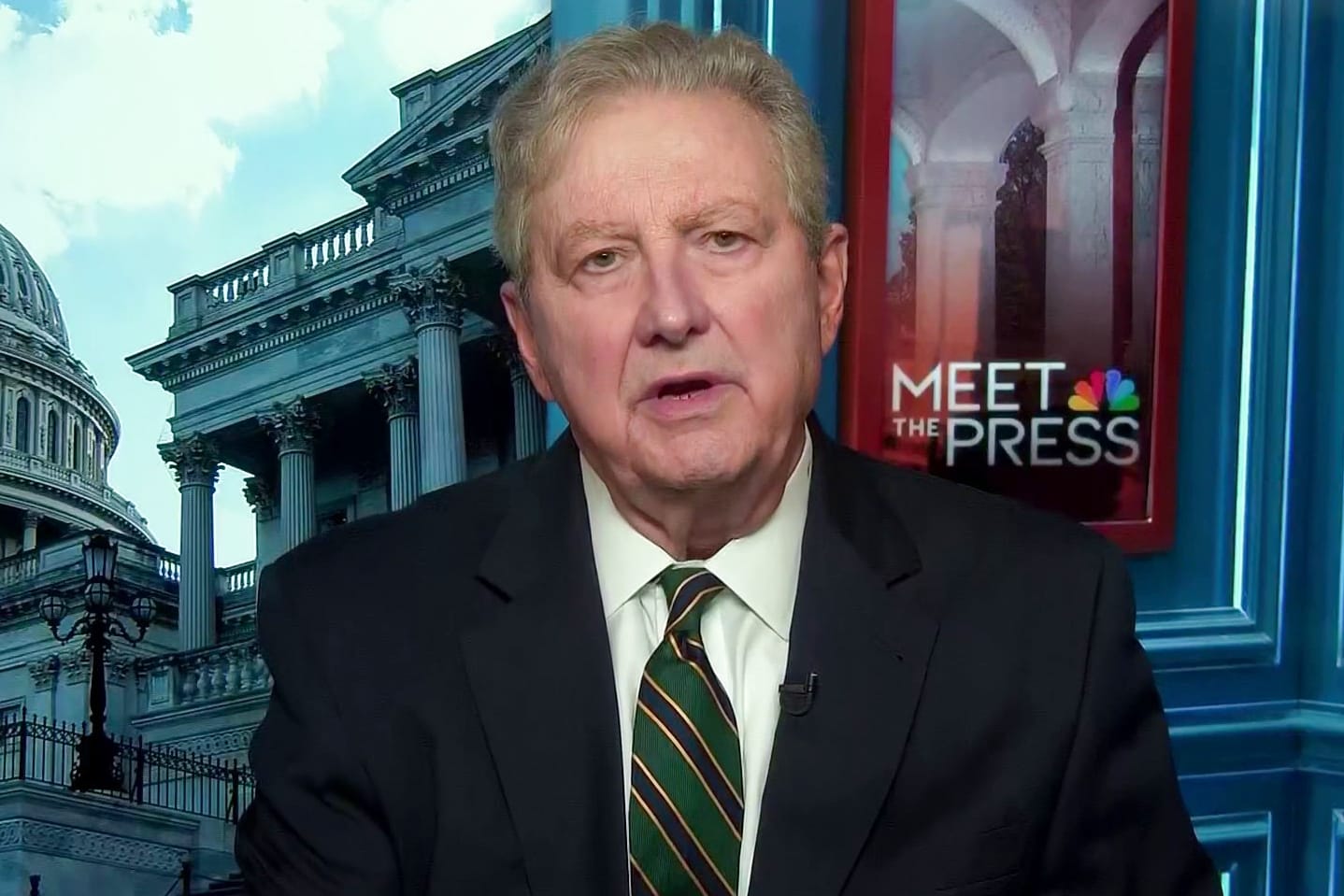
It wasn’t a joke invented by political commentators. Kennedy himself acknowledged the possibility during an October appearance on NBC’s Meet the Press.

Asked by Kristen Welker whether he was considering a 2028 presidential campaign, Kennedy gave an answer that immediately opened the door to speculation.
He wasn’t ready to announce a campaign. But he certainly wasn’t ready to rule one out, either.
Then came the kind of Southern-style political insult that has made Kennedy one of the Senate’s most recognizable personalities.
He explained that if a collection of “goobers” entered the Republican presidential race, he might consider running if he believed he could do better.
In other words, Kennedy was willing to contemplate the White House if the Republican field failed his personal competence test.
That is an extraordinary way to discuss a potential presidential campaign, particularly when your own party already has several nationally recognized politicians exploring their futures.
Most potential candidates promise unity, opportunity, and a brighter tomorrow. Kennedy appeared more interested in whether the competition would be worth taking seriously.
Washington’s political class spends considerable time polishing presidential ambitions into inspirational speeches. Kennedy managed to introduce the possibility with something resembling a Southern insult.
And the timing made his remarks particularly interesting.
The conversation arrived before Republicans suffered substantial losses in the November 2026 midterm elections, a defeat that intensified questions about the party’s future.
Vice President JD Vance has been widely discussed as a potential Republican presidential front-runner. Other established conservatives have also attracted speculation about entering the race.
Kennedy did not identify Vance as one of his supposed “goobers.” But his willingness to criticize an unsatisfactory field created an unmistakable political opening.
His argument raised an uncomfortable question for Republican voters: what happens if the party’s best-known potential candidates fail to inspire confidence?
It also suggested that Kennedy sees political experience and governing ability as more important than merely possessing a famous name or impressive campaign operation.
Yet Kennedy’s actual plans remain more conventional than the headline might suggest.
He has repeatedly said his immediate intention is to seek another term representing Louisiana in the United States Senate.
A presidential run, he explained, would depend partly on whether he still believed he could be effective in his current position.
That condition matters. Kennedy wasn’t promising to challenge Republican leadership simply because he enjoyed the attention surrounding presidential speculation.
He was leaving himself an escape hatch from the Senate—and a potential entrance into the most competitive Republican contest of 2028.
For a senator famous for asking blunt questions, the unresolved decision presents a fascinating test of his own political instincts.
Kennedy has cultivated a public personality very different from the standard Washington politician. His dry humor, folksy analogies, and sharp criticism often dominate interviews.
He can turn an elaborate policy argument into a short sentence that sounds like something overheard at a Louisiana diner.
That skill has obvious advantages in an era when presidential candidates compete for attention across television, podcasts, and social media.
A candidate who can produce a memorable line without a prepared script possesses something many expensive political consultants spend years trying to manufacture.
But presidential campaigns require considerably more than entertaining interviews.
Kennedy would need to assemble a national organization, raise enormous sums, survive ideological scrutiny, and persuade Republicans outside Louisiana to support his political vision.
He would also face questions about age. Kennedy would be approaching 77 by the 2028 presidential election, an issue likely to attract significant attention.
And his reputation for political humor would have to coexist with serious debates about economic policy, military commitments, immigration, and constitutional authority.
The question is whether voters would see Kennedy’s style as refreshing authenticity—or worry that memorable one-liners cannot substitute for presidential leadership.
His supporters could point to experience in government, years in the Senate, and a willingness to challenge fellow Republicans when he believes they are mistaken.
Critics could question whether his nationally recognized personality translates into the broad electoral coalition needed to win a presidential nomination.
That tension makes his possible candidacy more interesting than a simple celebrity-style political surprise.
Kennedy would not be arriving as an unknown outsider. He would be entering a contest where his public identity was already firmly established.
And unlike politicians who carefully avoid offending future rivals, he has already suggested some potential candidates might fail his test of competence.
That is a risky argument. It attracts attention, but it also invites competitors to question whether Kennedy himself could meet the standard.
His recent criticism of Republican leaders after the midterms added another complication.
Kennedy warned that his party should not dismiss the election as an ordinary defeat. He argued that some Republican voters had actually crossed over to Democrats.
He also urged colleagues to pursue major legislation before Democrats assumed control of Congress, complaining that Republican leadership had not embraced his proposed approach.
Those remarks demonstrated that Kennedy was willing to criticize his own party publicly, even when Republicans were already dealing with an embarrassing electoral setback.
But challenging leadership from the Senate floor is different from persuading an entire party to nominate you for president.
A candidate must offer a convincing answer to what should change, not merely deliver an entertaining description of what went wrong.
For Kennedy, that distinction would determine whether his potential White House ambitions became a serious campaign or remained an intriguing political possibility.
There is also the matter of timing. A decision about a presidential run could affect his plans for Senate reelection.
Running for another Senate term would offer political familiarity. Pursuing the presidency would mean entering a much larger and less predictable contest.
And Kennedy has not committed to abandoning one opportunity for the other.
His October comments, however, ensured that his name would remain part of the conversation whenever Republicans discussed their next generation of presidential contenders.
The most striking aspect wasn’t that he considered running. Experienced senators have entertained presidential ambitions throughout American history.
It was the suggestion that Kennedy might enter because he considered the alternatives inadequate.
That transforms a personal political decision into an implicit challenge to the Republican field, without requiring him to name a single rival.
For now, Kennedy continues to present Senate reelection as his plan while refusing to close the White House door.
But if the Republican presidential contest becomes crowded, divided, or disappointing, his own words could return with extraordinary political force.
And the question Washington may eventually have to answer is simple: If Kennedy thinks the other candidates are “goobers,” will he actually step forward to prove he can do better?
