
Senator John K.e.n.n.e.d.y was halfway through another sarcastic remark when Sheldon W.h.i.t.e.h.o.u.s.e quietly placed a thick financial ledger on the Senate hearing table.
The Louisiana Republican had spent the morning questioning accusations concerning wealthy donors, political influence, and the independence of America’s judicial system.
K.e.n.n.e.d.y appeared unimpressed by the suggestion that complicated financial relationships automatically established corruption.
W.h.i.t.e.h.o.u.s.e had prepared a different approach.
He carried a folder containing organizational charts, expenditure records, and a financial diagram connecting advocacy groups to campaigns concerning judicial appointments.
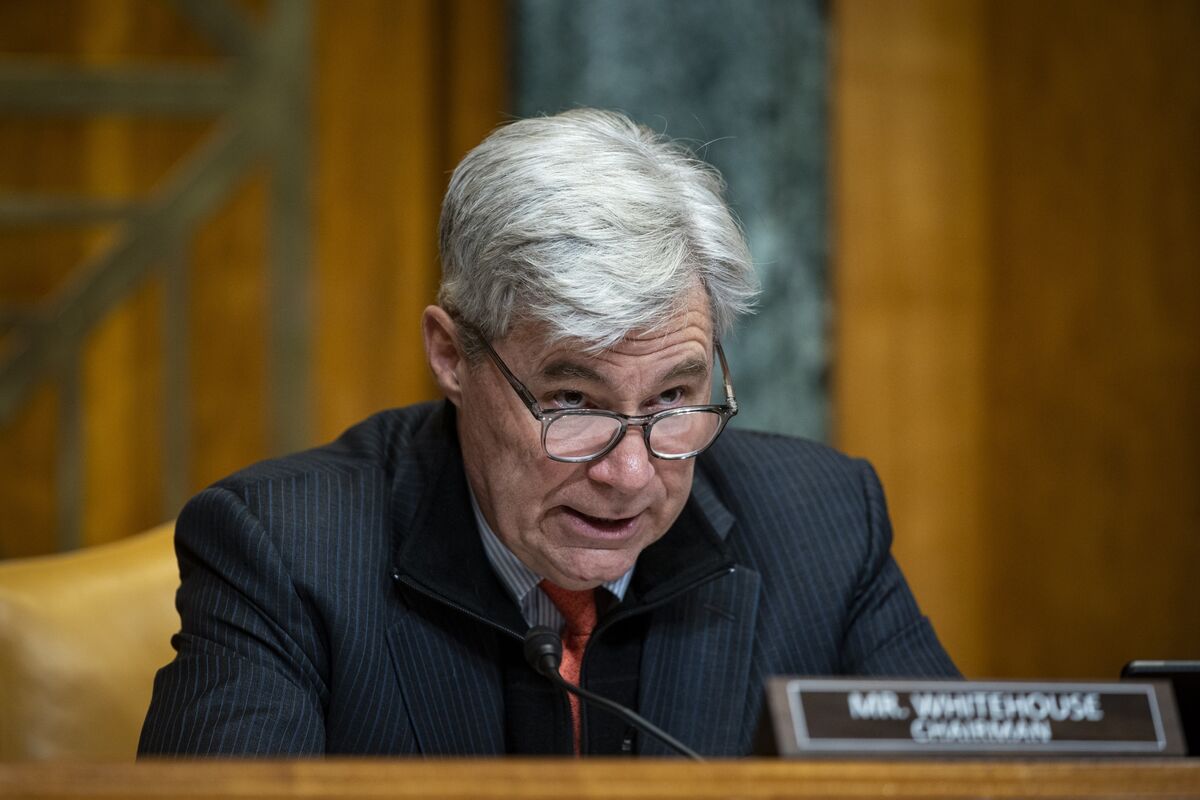
K.e.n.n.e.d.y looked toward the papers.
“Senator, I’ve seen spaghetti dinners with fewer tangled strings than that chart.”
A few people laughed.
W.h.i.t.e.h.o.u.s.e did not.
Instead, he removed his glasses and examined the final page of his folder.
“Then perhaps we should find out what those strings actually connect.”
The chairman recognized him.
W.h.i.t.e.h.o.u.s.e directed everyone’s attention toward the central screen.
A complicated financial network appeared.
At its center was a highlighted figure.
$18,750,000.
The amount represented spending within a constructed financial case study, not an authenticated payment involving K.e.n.n.e.d.y.
But the records raised an important question.
Could millions spent influencing debates about judicial appointments create transparency concerns even without evidence of illegal conduct?
K.e.n.n.e.d.y leaned toward his microphone.
“If somebody broke the law, Senator, show us where.”
W.h.i.t.e.h.o.u.s.e looked directly at him.
“That’s precisely why we’re examining the documents.”
The disagreement had begun with a broader discussion about the influence of wealthy donors on judicial politics.
W.h.i.t.e.h.o.u.s.e argued that financial resources could shape public campaigns concerning judicial nominations and the legal system.
He believed Americans deserved to understand which organizations financed efforts to influence public opinion about the courts.
K.e.n.n.e.d.y challenged the assumption that financial participation necessarily compromised judicial independence.
He argued that organizations could advocate lawful positions without purchasing government decisions.
The disagreement was substantial.
One side emphasized the importance of tracing political influence.
The other emphasized the need to distinguish lawful advocacy from proven misconduct.
Neither principle automatically eliminated the other.
W.h.i.t.e.h.o.u.s.e opened the first financial summary.
It described an advocacy campaign supporting a particular approach to judicial selection.
The campaign financed advertisements, public events, policy research, and communications intended to influence political debate.
Several organizations participated.
Some operated as nonprofit advocacy groups.
Others purchased advertising or provided consulting services.
The ledger recorded payments between those entities.
W.h.i.t.e.h.o.u.s.e asked whether voters should know which financial interests supported campaigns surrounding judicial appointments.
K.e.n.n.e.d.y replied that political organizations should follow applicable disclosure laws.
W.h.i.t.e.h.o.u.s.e pressed further.
“What if those laws don’t provide enough information to identify the original funding source?”
K.e.n.n.e.d.y leaned back.
“Then Congress can debate changing the laws.”
He paused.
“But we shouldn’t pretend a legal transaction becomes corruption just because somebody dislikes the donor.”
W.h.i.t.e.h.o.u.s.e acknowledged the distinction.
Then he turned toward the screen.
The diagram showed an initial payment from a private advocacy organization.
That money moved into a separate entity responsible for coordinating public communications.
A portion was subsequently transferred to advertising and research vendors.
W.h.i.t.e.h.o.u.s.e traced the transactions.
He explained that each transfer could introduce additional questions about the purpose and ultimate use of the funds.
K.e.n.n.e.d.y examined the chart.
“Are these actual findings about me?”
W.h.i.t.e.h.o.u.s.e answered that the diagram illustrated a financial structure.
It did not establish that K.e.n.n.e.d.y had received or directed the money.
K.e.n.n.e.d.y nodded.
“Then let’s keep that distinction clear.”
The chairman agreed.
The record would distinguish illustrative transactions from authenticated evidence concerning identifiable officials.
W.h.i.t.e.h.o.u.s.e continued.
He argued that the absence of proven illegality did not eliminate legitimate questions about transparency.
A financial arrangement could comply with existing disclosure requirements while leaving voters uncertain about its original sources.
K.e.n.n.e.d.y responded that privacy and lawful political association also deserved consideration.
W.h.i.t.e.h.o.u.s.e acknowledged those interests.
But he questioned whether the balance always provided sufficient public accountability.
The chairman asked the committee’s financial analyst to explain the relevant categories.
The analyst described differences among political contributions, independent expenditures, and broader advocacy spending.
Different transactions could trigger different legal requirements.
A payment to an organization supporting judicial appointments did not automatically represent a payment to a judge or senator.
Nor did an intermediary organization necessarily establish concealment.
The actual legal significance depended on the facts.
W.h.i.t.e.h.o.u.s.e returned to the ledger.
The first entries were ordinary operating expenses.
They described advertising purchases, research contracts, and public communications.
Then W.h.i.t.e.h.o.u.s.e highlighted a larger transfer.
The payment totaled $6.2 million.
It had been recorded under the description Judicial Education and Public Outreach.
W.h.i.t.e.h.o.u.s.e asked the analyst whether that phrase identified the precise activities financed.
The analyst answered that additional records would be necessary.
An invoice, contract, or detailed expenditure report could provide clarification.
K.e.n.n.e.d.y looked toward W.h.i.t.e.h.o.u.s.e.
“So we’ve established that a broad description requires more information.”
W.h.i.t.e.h.o.u.s.e agreed.
K.e.n.n.e.d.y continued.
“That doesn’t tell us somebody bought a judge.”
W.h.i.t.e.h.o.u.s.e replied that he had not established such a transaction.
But he argued that public confidence could suffer when major advocacy efforts lacked sufficient financial clarity.
The confrontation intensified.
K.e.n.n.e.d.y questioned whether W.h.i.t.e.h.o.u.s.e was presenting the financial network in a way that encouraged viewers to assume wrongdoing.
W.h.i.t.e.h.o.u.s.e rejected the suggestion that he was declaring criminal guilt.
He said the committee should examine how financial disclosure operated in practice.
K.e.n.n.e.d.y glanced toward the massive diagram.
“Then maybe we ought to start with the facts instead of a picture designed to frighten everybody.”
W.h.i.t.e.h.o.u.s.e remained calm.
“Senator, the records are the facts we’re trying to examine.”
He turned toward another attachment.
This document contained a supplemental expenditure schedule.
It separated the original $6.2 million transfer into several categories.
Some money financed advertising campaigns.
Other funds supported legal research.
Additional payments covered consulting services and administrative expenses.
The breakdown changed the meaning of the original entry.
The payment was not one undifferentiated transaction.
It represented several categories of activity.
W.h.i.t.e.h.o.u.s.e asked whether the public should receive similarly detailed information when appropriate under the law.
K.e.n.n.e.d.y responded that disclosure standards should reflect the nature of the transactions and applicable constitutional protections.
Then he asked a direct question.
“Do these expenditures establish that any judge changed a decision because of this money?”
W.h.i.t.e.h.o.u.s.e answered that they did not.
K.e.n.n.e.d.y continued.
“Do they establish that I received an improper payment?”
W.h.i.t.e.h.o.u.s.e again answered no.
“Then we ought to be careful about what conclusions we’re inviting people to draw.”

The chairman recognized the concern.
But W.h.i.t.e.h.o.u.s.e had another document.
He argued that the broader transparency issue remained unresolved even after individual transactions received clarification.
The next attachment described how several organizations could support overlapping policy objectives without sharing a formal operational structure.
Their advertisements might promote similar messages.
Their research could reach comparable conclusions.
And their public statements could advocate similar judicial philosophies.
W.h.i.t.e.h.o.u.s.e asked whether such overlap warranted examination when significant financial resources were involved.
The analyst explained that similar messaging alone did not establish coordination.
Political groups could independently support the same ideas.
The committee would need actual evidence of communication, shared decision-making, or legally relevant coordination before making stronger claims.
K.e.n.n.e.d.y leaned forward.
“Now we’re getting somewhere.”
W.h.i.t.e.h.o.u.s.e looked toward him.
“Because you agree that coordination needs proof?”
K.e.n.n.e.d.y nodded.
“And because disagreeing with someone’s politics doesn’t establish a criminal conspiracy.”
W.h.i.t.e.h.o.u.s.e accepted the distinction.
Then he introduced another question.
What if the existing disclosure system made potentially relevant financial relationships difficult to identify?
The analyst replied that reporting limitations could complicate investigations.
However, those limitations did not justify treating unknown relationships as established facts.
W.h.i.t.e.h.o.u.s.e pointed toward the diagram.
“That is the difficulty.”
He explained that financial opacity could make it harder to establish where money originated.
It could also make it harder to determine whether different organizations had operated independently.
K.e.n.n.e.d.y responded that an inability to identify a relationship was not evidence that the relationship existed.
W.h.i.t.e.h.o.u.s.e agreed.
The discussion had reached an important turning point.
Both senators recognized that financial records needed careful interpretation.
But they disagreed about the changes necessary to improve transparency.
W.h.i.t.e.h.o.u.s.e favored greater clarity about funding sources and organizational relationships.
K.e.n.n.e.d.y questioned whether additional requirements could impose unnecessary burdens on lawful participation.
The chairman asked for a concrete example of the information the existing documents lacked.
W.h.i.t.e.h.o.u.s.e opened the final ledger.
It contained the original $18,750,000 total.
The amount represented aggregate spending across several organizations involved in the illustrative judicial advocacy campaign.
But the supporting schedule revealed a problem.
Some transfers between participating organizations had been included alongside payments to outside vendors.
That meant the headline total could count certain funds more than once.
W.h.i.t.e.h.o.u.s.e asked the analyst to explain.
The analyst described the difference between internal transfers and final expenditures.
When one organization transferred money to another, the transaction appeared in both entities’ financial records.
Adding every entry without adjustment could exaggerate the total amount ultimately spent on external services.
K.e.n.n.e.d.y examined the figures.
“So that eighteen-million-dollar number might not represent eighteen million dollars in separate spending.”
The analyst confirmed that possibility.
W.h.i.t.e.h.o.u.s.e requested a reconciliation.
Staff compared the ledger entries and identified several transfers appearing in multiple categories.
The revised schedule separated internal movements from payments to outside recipients.
The correction reduced the amount attributable to distinct external expenditures.
W.h.i.t.e.h.o.u.s.e studied the updated figures.
The initial headline number no longer supported the interpretation some observers might have assumed.
K.e.n.n.e.d.y looked toward him.
“That’s why accountants don’t just add every number they see.”
A few people laughed.
W.h.i.t.e.h.o.u.s.e did not object.
He acknowledged that the corrected accounting provided a more reliable description.
Then he asked whether the revised records resolved every transparency question.
The analyst answered that they did not.
Several payments still lacked detailed supporting documentation.
Those entries required clarification before investigators could determine their purposes.
W.h.i.t.e.h.o.u.s.e pointed toward one unresolved item.
Its value was $1.35 million.
The payment was listed as consulting and research services.
The receiving organization was identified.
But the available materials did not fully explain the services performed.
W.h.i.t.e.h.o.u.s.e asked whether investigators should request additional records.
The analyst answered that doing so would be reasonable.
K.e.n.n.e.d.y agreed.
Then he added an important qualification.
The missing details did not establish that the money had purchased political favors.
They established that the committee lacked sufficient information to classify the transaction precisely.
W.h.i.t.e.h.o.u.s.e accepted the distinction.
But he argued that better disclosure could reduce the need for speculation.
The hearing had now reached its central question.
Could lawmakers investigate financial influence without transforming incomplete records into accusations of personal corruption?
W.h.i.t.e.h.o.u.s.e believed transparent documentation was essential.
K.e.n.n.e.d.y believed the burden of proof was equally important.
The chairman asked both senators to propose a practical response.
W.h.i.t.e.h.o.u.s.e recommended examining disclosure standards for organizations financing judicial advocacy.
He wanted the review to consider beneficial ownership, major funding relationships, and the clarity of expenditure descriptions.
K.e.n.n.e.d.y urged the committee to distinguish political advocacy from legally prohibited conduct.
He also wanted safeguards against public accusations unsupported by authenticated evidence.
The financial analyst recommended that any review use consistent accounting categories.
Internal transfers should be distinguished from final expenditures.
Funding sources should be identified where legally required.
And unresolved transactions should be labeled as questions rather than findings.
The proposal gave the committee a concrete path forward.
But W.h.i.t.e.h.o.u.s.e was not finished.
He returned to the highlighted $1.35 million entry.
Then he leaned toward K.e.n.n.e.d.y.
“Senator, here’s the question I’d like you to answer.”
K.e.n.n.e.d.y looked across the table.
W.h.i.t.e.h.o.u.s.e continued.
“If the public cannot identify what the money purchased, how can anyone responsibly determine what influence it actually created?”
The room became quiet.
K.e.n.n.e.d.y studied the ledger.
Then he answered that the appropriate response was to obtain the missing records.
W.h.i.t.e.h.o.u.s.e nodded.
“And until those records exist?”
K.e.n.n.e.d.y replied that conclusions about wrongdoing would remain unsupported.
The exchange exposed the central tension.
Incomplete financial information could prevent meaningful public scrutiny.
But incomplete information could also encourage people to make allegations the available evidence did not justify.
W.h.i.t.e.h.o.u.s.e acknowledged both risks.
The chairman asked the analyst to summarize the findings.
The original diagram illustrated relationships among political advocacy organizations.
The initial $18,750,000 figure required adjustment because some transactions had been counted more than once.
The revised ledger identified several categories of legitimate organizational spending.
One consulting payment remained insufficiently documented for complete analysis.
No evidence presented established that K.e.n.n.e.d.y had secretly received funds.
Nor did the illustrative records prove that a judicial decision had been purchased or improperly influenced.
The chairman directed staff to preserve the corrected financial summary.
The committee would also consider whether existing reporting standards provided sufficient information for legitimate oversight.
That decision represented a meaningful development.
The hearing had produced a clearer accounting of the transactions.
It had also identified what additional documentation would be necessary before stronger conclusions could be reached.
W.h.i.t.e.h.o.u.s.e returned to his original argument.
He said public confidence in the courts depended partly on understanding the financial relationships surrounding judicial advocacy.
K.e.n.n.e.d.y responded that confidence also depended on refusing to accuse judges and lawmakers without evidence.
The chairman acknowledged both concerns.
Then he prepared to close the hearing.
W.h.i.t.e.h.o.u.s.e gathered his papers.
The enormous chart remained visible behind him.
But several of its original connections had been revised.
Internal transfers were now distinguished from external spending.
Unverified relationships were clearly identified.
And the unresolved consulting payment remained highlighted.
The diagram was less dramatic than it had been at the beginning.
It was also more accurate.
K.e.n.n.e.d.y looked toward the corrected ledger.
He delivered one final observation.
“Washington’s got plenty of people who can make a financial chart look scary.”
He paused.
“What we need are people who can explain exactly what the numbers mean.”
W.h.i.t.e.h.o.u.s.e responded that this was precisely why transparent records mattered.
The chairman struck the gavel.
The confrontation ended without establishing a corruption scandal involving K.e.n.n.e.d.y.
No authenticated evidence had shown that he received an improper payment.
The records did not establish that wealthy donors had purchased judicial decisions.
And the largest financial figure had required correction before it could be interpreted responsibly.
But the hearing had revealed a genuine problem.
Complex financial arrangements could make political influence difficult to examine.
Incomplete reporting could also create misleading impressions.
Both issues required careful documentation.
W.h.i.t.e.h.o.u.s.e’s final question had not established anyone’s guilt.
It had identified the information necessary for meaningful scrutiny.
K.e.n.n.e.d.y’s objections had reinforced the importance of separating evidence from speculation.
The committee’s corrected ledger reflected both concerns.
Its final page no longer presented an enormous number without explanation.
It separated verified spending, internal transfers, and unresolved entries.
The difference was consequential.
A complicated financial network could justify closer examination.
But its existence alone could not establish corruption.
And a large payment could not be described as the price of political influence without evidence showing what it actually purchased.
As the senators left the hearing room, the final document remained on the screen.
One number was still highlighted.
$1.35 million.
It was not proof of a secret payoff.
It was the amount requiring additional documentation in the committee’s constructed financial case study.
That distinction captured the central discovery.
The real investigative challenge was not finding the largest number on a ledger.
It was establishing the facts behind that number.

A financial chart can raise serious questions, but only verified records can turn those questions into defensible conclusions.
