
Senator Bernie Sanders has intensified his campaign to overhaul Social Security, drawing attention to a tax rule that allows America’s wealthiest individuals to avoid paying Social Security taxes on much of their income.
His argument centers on Elon Musk, whose enormous fortune has become a prominent example in the national debate over taxation and retirement security.
Sanders points to an extraordinary feature of the federal payroll tax system.

In 2026, a worker earning $184,500 reaches the maximum amount of annual earnings subject to Social Security taxation.
Someone earning millions of dollars in wages generally pays the same maximum Social Security payroll tax as that worker.
But for billionaires whose fortunes come largely from investments, the distinction becomes even more dramatic.
Stock appreciation, many capital gains, and other forms of investment income generally fall outside the Social Security payroll tax system altogether.
Sanders argues that this structure places an unfair burden on ordinary workers while shielding enormous amounts of high-income wealth.
His proposed solution would apply additional Social Security taxation to income exceeding $250,000 and increase annual benefits by $2,400.
Republican critics and some fiscal policy analysts warn that the changes could discourage investment, increase tax burdens, and create unintended economic consequences.
Yet the dispute contains an important detail frequently overlooked in political arguments.
The controversy is not simply about how much billionaires earn. It concerns which types of income Congress chooses to tax.
That distinction has become central to Sanders’ latest effort to reshape Social Security.
Sanders Challenges the Tax System on the Senate Floor
Sanders has repeatedly used speeches, congressional hearings, and public statements to highlight differences between the taxation of wages and investment income.
In April 2025, he delivered Senate floor remarks outlining his intention to introduce legislation expanding Social Security benefits.
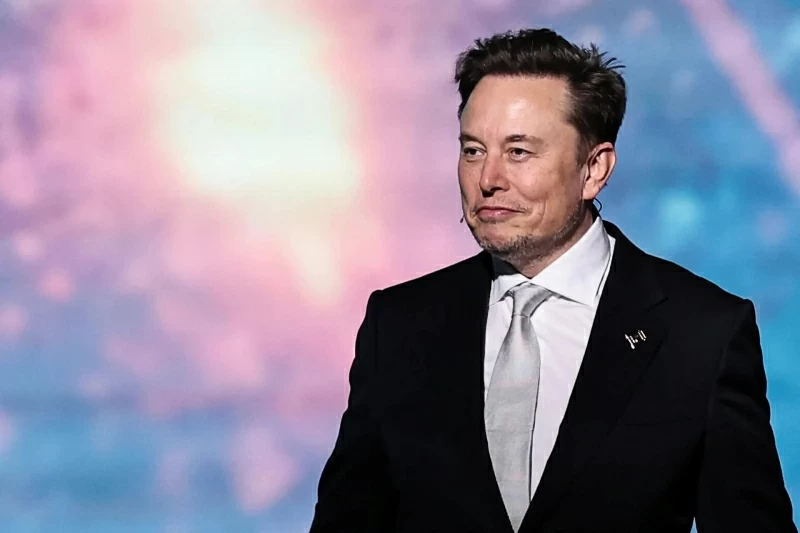
He argued that wealthy individuals should contribute a greater share of their income to support retirement security.
At the time, the annual Social Security taxable earnings maximum stood at $176,100.
Sanders cited Musk as an example of someone whose wealth far exceeded that of ordinary workers while remaining subject to the same wage-tax ceiling.
His argument was not that Musk had been proven to violate federal tax law.
Instead, Sanders maintained that the law itself allowed extremely wealthy individuals to limit their Social Security contributions.
By 2026, the taxable maximum had increased to $184,500.
Sanders renewed his criticism, emphasizing that even individuals with extraordinarily large fortunes remained protected by the same statutory earnings ceiling.
During an August 5, 2026, Senate Finance Committee hearing examining Social Security solvency, Sanders again raised Musk’s position.
He asked witness Rebecca Vallas whether it was appropriate for the world’s wealthiest individual to face the same Social Security wage-tax maximum as someone earning approximately $184,000 annually.
Vallas responded that many Americans questioned the fairness of the existing structure.
Her answer reinforced the broader debate over whether payroll taxation should reflect the concentration of wealth in modern financial markets.
However, the documented hearing does not establish the dramatic confrontation described in some online accounts.
There is no verified exchange in which Sanders revealed a secret document and left Musk’s defenders unable to answer.
The actual controversy concerns a publicly established feature of federal tax law.
And that feature creates a significant difference between income earned through employment and income generated through ownership of assets.
The $184,500 Rule Changes Everything
Social Security is financed primarily through payroll taxes imposed on workers and their employers.
Under the standard arrangement, employees contribute 6.2 percent of covered wages to Social Security.
Employers contribute an additional 6.2 percent.
Self-employed individuals generally pay a combined 12.4 percent, subject to applicable rules and adjustments.
However, these taxes apply only to earnings below an annually adjusted maximum.
For 2026, that maximum is $184,500.
A worker earning exactly that amount pays $11,439 in employee Social Security taxes.
The employer contributes another $11,439.
A worker earning $500,000 in covered wages generally faces the same maximum employee contribution.
Someone earning $5 million in covered wages also reaches the same ceiling.
Additional wages above the limit are not subject to the Social Security portion of payroll taxation.
This means the effective Social Security tax rate declines as wage income rises beyond the taxable maximum.
For someone earning $184,500, the employee contribution represents 6.2 percent of wages.
For someone earning $1 million, the same $11,439 represents approximately 1.14 percent of wages.
The percentage becomes progressively smaller as income increases.
That arithmetic forms the foundation of Sanders’ criticism.
He argues that the system should not stop collecting additional Social Security contributions from people whose earnings continue rising.
However, the existing cap has an important historical and structural purpose.
Social Security benefits are also calculated using earnings subject to the contribution system.

Workers do not receive unlimited retirement benefits simply because their salaries exceed the annual taxable maximum.
The program therefore has a connection between covered earnings, contributions, and future benefits.
Critics of removing the cap argue that eliminating it without proportionately increasing benefits would fundamentally change that relationship.
Sanders supports a more redistributive structure.
He believes that asking higher earners to contribute additional revenue is justified by the program’s financial needs.
The disagreement concerns the design of Social Security rather than a hidden accounting error.
The Investment Income Exclusion Is the Bigger Issue
The most consequential feature of Sanders’ argument extends beyond the wage ceiling.
Social Security payroll taxes generally apply to employment earnings rather than investment profits.
That distinction matters because America’s wealthiest individuals frequently receive substantial economic benefits through ownership of businesses and financial assets.
Ordinary workers typically earn most of their income through salaries and wages.
Those wages are usually subject to payroll withholding.
Wealthy investors may derive substantial income from capital gains, dividends, and other investment arrangements.
Many of those income streams are not subject to Social Security payroll taxes.
Consider someone who earns $100,000 annually through employment.
That person’s covered wages are subject to the standard employee Social Security tax.
Now consider an investor who realizes $10 million in capital gains from selling appreciated stock.
Those realized gains may be subject to capital gains taxes.
But they generally do not trigger the ordinary Social Security payroll tax.
The distinction becomes even more significant when considering unrealized stock appreciation.
A billionaire’s wealth can rise by billions of dollars because shares in a company increase in value.
That increase does not ordinarily constitute taxable wage income.
It also generally does not produce an immediate federal income tax liability simply because the stock price rises.
The investor may eventually owe capital gains taxes when appreciated assets are sold.
But the increase itself is not subject to Social Security payroll taxes.
There is another important limitation.
Borrowing money against valuable stock does not ordinarily create taxable income merely because the loan provides access to cash.
The individual must repay the debt under the applicable agreement.
Yet the borrowing arrangement can provide liquidity without requiring an immediate sale of appreciated shares.
This combination of wage limits, investment income rules, and asset ownership is central to Sanders’ criticism.
The issue is broader than whether a single billionaire receives a large salary.
It concerns whether retirement financing should draw revenue from investment income as well as employment income.
Why Elon Musk Became the Center of the Debate
Musk’s compensation structure makes him an unusual example of the difference between personal wealth and ordinary employment income.
Much of his fortune is connected to ownership interests in companies including Tesla and SpaceX.
The value of those holdings can fluctuate dramatically as market conditions and company valuations change.
But a change in net worth does not necessarily create an equivalent amount of taxable income.
Musk has also received compensation through stock-based arrangements rather than conventional salary payments.
Certain stock compensation can become taxable as wages when exercised or vested.
When that happens, Social Security taxes may apply up to the annual taxable maximum.
However, income above the cap remains outside the Social Security wage-tax calculation.
In other years, an individual with limited covered wages may contribute less than a worker earning the taxable maximum.
That is why Sanders’ comparison requires careful interpretation.
Musk is not necessarily paying exactly the same Social Security tax every year as someone earning $184,500.
His actual liability depends on the wages and qualifying compensation he receives during the relevant period.
Some years may involve significant taxable compensation.
Other years may involve comparatively little covered wage income.
The precise amount of Musk’s annual Social Security contributions cannot be established from his net worth alone.
Nevertheless, the broader structural point remains valid.
Once covered wages reach the statutory maximum, additional wage earnings do not generate additional Social Security payroll taxes.
Meanwhile, substantial investment gains generally remain outside the system.
A June 2026 fact-check found that Sanders’ comparison accurately identified this tax structure, while noting uncertainty about Musk’s actual annual contributions.
That distinction does not eliminate Sanders’ argument.
It makes the argument more precise.
The controversy concerns how federal law defines the income used to support Social Security.
Sanders Wants an Additional $2,400 for Beneficiaries
Sanders’ proposal goes beyond increasing contributions from wealthy Americans.
His Social Security Expansion Act would also increase benefits by approximately $2,400 annually.
That represents an additional $200 per month for qualifying beneficiaries.
The legislation aims to improve retirement income while strengthening the program’s long-term finances.
Sanders argues that Social Security benefits have become inadequate for many retirees struggling with housing, food, medical care, and other expenses.
He has emphasized the financial vulnerability of older Americans who depend heavily on monthly benefits.
The proposal would apply Social Security taxation to income above $250,000.
It would also extend the tax base to certain forms of investment income.
Under the legislation’s structure, the ordinary taxable earnings maximum would continue to apply to the existing wage-tax system.
An additional tax would then apply to covered income above the proposed high-income threshold.
The arrangement is intended to avoid increasing Social Security taxes on most lower- and middle-income households.
Sanders has argued that the proposal would protect Americans earning below $250,000 while requiring larger contributions from wealthy individuals.
The legislation also seeks to adjust cost-of-living calculations to better reflect the expenses faced by older beneficiaries.
Supporters believe the combined reforms could reduce financial insecurity among retirees.
They also argue that higher contributions from wealthy households could improve the program’s ability to pay scheduled benefits.
But the $2,400 increase is a legislative proposal, not an enacted benefit.
Current beneficiaries have not automatically received an additional $200 monthly payment because Sanders introduced the legislation.
Congress would need to approve the necessary changes before they could become law.
That distinction matters for retirees making financial plans.
An announced proposal is not the same as a guaranteed future payment.
Republicans Challenge the Economic Consequences
Opponents of Sanders’ approach argue that substantially increasing taxes on high earners could produce economic costs.
Their concerns focus on investment incentives, business development, and the potential effects of taxing capital income more heavily.
Republican Senator Bill Cassidy has criticized proposals that rely heavily on increasing payroll taxes.
He has argued that some households with relatively high combined earnings may not consider themselves wealthy.
For example, two professionals with substantial wages could cross a household income threshold without possessing extraordinary accumulated wealth.
The treatment of those households depends on the precise language of the proposed legislation.
Critics also argue that additional taxes on investment income could influence decisions about selling assets and making new investments.
Investors may respond to higher tax rates by delaying transactions or changing how they structure financial activity.
Such changes could affect projected government revenue.
Fiscal policy analysts have also questioned whether Sanders’ proposal would achieve its advertised long-term financing results under different economic assumptions.
Marc Goldwein, a senior policy director at the Committee for a Responsible Federal Budget, has expressed concerns about the interaction between higher capital gains taxes and federal revenue.
He has argued that raising taxes on investment income can produce behavioral responses that complicate revenue estimates.
In October 2026, he challenged the assumption that increasing high-income taxes would necessarily finance every proposed benefit expansion without meaningful trade-offs.
Sanders’ supporters disagree.
They argue that the existing tax system allows large amounts of economic income to avoid contributing to Social Security.
They also maintain that concentrated wealth provides a substantial potential revenue source.
The disagreement therefore involves both economic assumptions and political priorities.
One side emphasizes greater contributions from high-income households.
The other emphasizes potential effects on investment, tax collections, and the program’s financing structure.
Neither position eliminates the need to evaluate the legislation’s detailed provisions.
Social Security Faces a Larger Financial Challenge
The debate comes as Social Security confronts long-term funding pressure.
The program supports tens of millions of retired workers, people with disabilities, survivors, and qualifying family members.
Its finances depend on payroll tax revenue, trust fund reserves, and other income sources established under federal law.
Demographic changes have increased pressure on the system.
Americans are living longer, and the number of beneficiaries has grown relative to the number of covered workers.
That creates a financing challenge as scheduled benefit payments rise.
Current projections indicate that the retirement trust fund faces depletion of its reserves in the early 2030s.
Trust fund depletion would not mean that Social Security immediately stops paying all benefits.
Continuing payroll tax revenue would still finance a substantial portion of scheduled payments.
However, without legislative changes, the program could face significant automatic benefit reductions.
That possibility explains why proposals to increase revenue have attracted renewed attention.
Sanders argues that taxing more high-income earnings and investment income would improve solvency while permitting benefit expansion.
Other lawmakers favor different combinations of revenue measures, investment strategies, benefit changes, and eligibility adjustments.
Some proposals would change how benefits grow for higher-income retirees.
Others would revise payroll tax thresholds or alter the program’s financing structure.
Each approach involves financial consequences for different groups of Americans.
A proposal can increase revenue while also changing incentives.
A proposal can reduce spending while affecting future beneficiaries.
The central challenge is designing reforms that address the funding gap while balancing those competing effects.
Sanders has chosen an approach focused on expanding benefits and increasing contributions from wealthy households.
His opponents question whether that approach creates too great an additional tax burden.
The resulting debate concerns the future structure of America’s largest retirement program.
The Final Question Sanders Wants Congress to Answer
Sanders’ most important argument is that the current Social Security tax system treats different forms of income differently.
A worker earning a conventional salary generally pays Social Security taxes on covered wages up to the annual maximum.
An investor receiving substantial capital gains generally does not pay Social Security taxes on those gains.
Someone whose fortune increases through unrealized stock appreciation also generally owes no immediate Social Security payroll tax on that increase.
Those differences are established features of the tax code.
They do not, by themselves, indicate illegal conduct by wealthy taxpayers.
Musk and other investors can benefit from existing rules without violating the law.
Sanders wants Congress to change those rules.
He argues that retirement financing should reflect the economic resources available to the wealthiest Americans, not merely their conventional wages.
Republican critics and fiscal analysts question whether the proposed taxes would create costs that undermine their intended benefits.
That disagreement remains unresolved.
The documented Senate hearings and public statements establish that Sanders has repeatedly raised the issue.
They do not confirm the viral account’s dramatic ending, in which he revealed a secret loophole and left opponents speechless.
The most consequential information was never secret.
It appears directly in the Social Security Administration’s published tax rules.
For 2026, the taxable earnings maximum is $184,500.
For 2027, that maximum is scheduled to rise to $192,300.
Those limits explain why Social Security contributions stop increasing after covered wages reach a particular threshold.
They also show why changes to the program require congressional action.
Sanders’ proposal would significantly alter that system while increasing benefits for qualifying recipients.
Its fiscal effects would depend on the final legislation, taxpayer behavior, and the assumptions used to estimate future revenue.
The immediate issue is therefore not whether Musk has been secretly evading Social Security taxes.
There is no evidence in the discussed record that he illegally avoided payroll taxes.
The issue is whether Congress should continue exempting earnings above the wage ceiling and many forms of investment income from Social Security contributions.
For workers approaching retirement, the answer could affect the program’s long-term financing.
For wealthy investors, it could change the taxation of future income.
For lawmakers, it presents a consequential choice about how the burden of supporting Social Security should be distributed.
