
Vice President JD Vance traveled repeatedly to Michigan during the final weeks of the 2026 midterm campaign, urging working-class voters to support Republican candidates and reject Democratic economic policies.
But Senator Bernie Sanders delivered a competing message, challenging Republicans over corporate tax policies, labor protections, and the economic pressures facing American families.

The confrontation became particularly significant in Michigan, where the automobile industry remains central to the state’s economy and political identity.
Vance argued that Republican policies would protect manufacturing jobs, reduce energy costs, and restore economic opportunity to communities struggling with industrial decline.
Sanders countered that Republicans could not credibly claim to defend working families while supporting policies he believes disproportionately benefit wealthy corporations.
Their disagreement unfolded during a closely watched Senate campaign between Republican Mike Rogers and Democrat Abdul El-Sayed.
Both parties devoted considerable resources to winning Michigan’s industrial communities, where union voters have become an increasingly important political constituency.
But the decisive development was not a secret internal polling memorandum.
It was the November 3 election result, which showed El-Sayed defeating Rogers after an intensely contested campaign.
The outcome followed months of debate about manufacturing, inflation, union protections, and the political loyalties of working-class voters.
And while the viral narrative describes a confidential polling document exposing Republican weakness, no authenticated memorandum matching that description has been publicly established.
The available evidence reveals something more concrete: Michigan’s labor movement was politically divided, both campaigns recognized its importance, and the election ultimately produced a Democratic Senate victory.
JD Vance Makes Michigan a Central Campaign Battleground
On October 15, 2026, Vance appeared at a Republican campaign rally in Monroe, Michigan.
His visit was designed to strengthen support for Mike Rogers and other Republican candidates before the November elections.
Vance presented Michigan as an important test of whether Republican economic policies could attract working-class voters.
He emphasized manufacturing employment, lower taxes, affordable housing, and domestic industrial production.
The vice president argued that Republicans understood the challenges facing communities whose prosperity had historically depended on manufacturing.
His message drew heavily from his own background in Ohio.
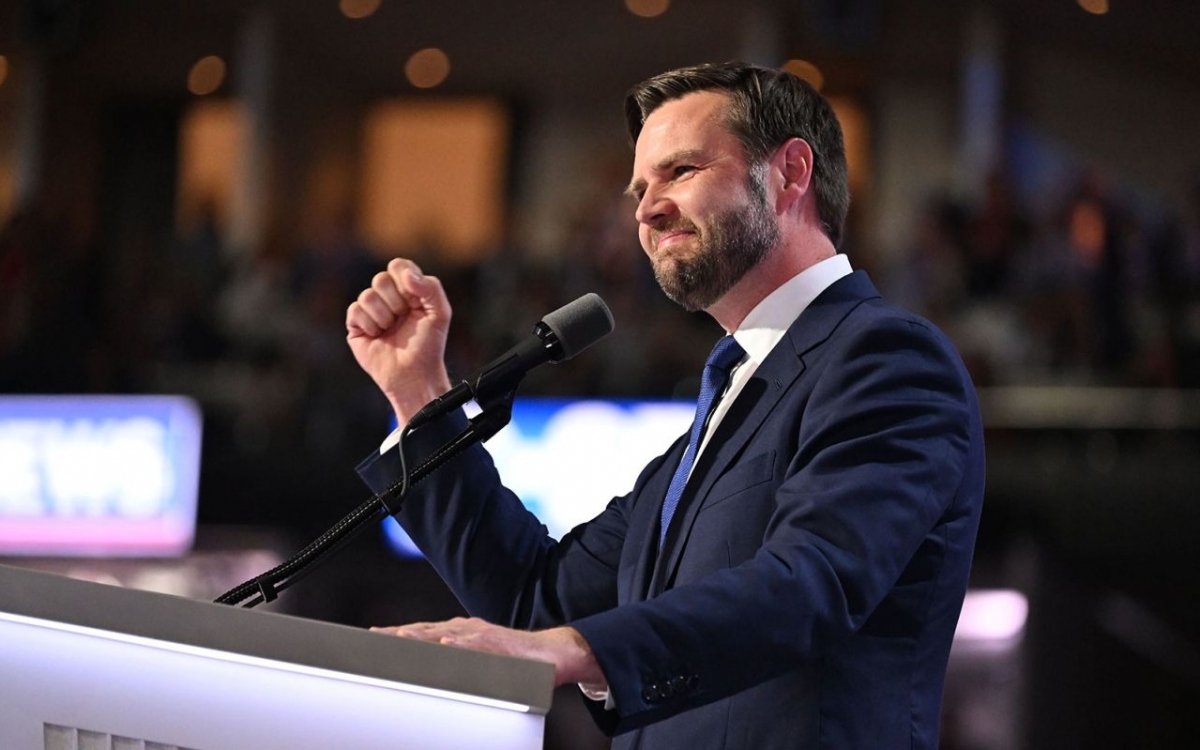
Vance described the economic difficulties experienced by Midwestern communities after decades of industrial restructuring.
He argued that political leaders had allowed those communities to lose influence over national economic decisions.
The speech positioned Republicans as advocates for workers concerned about employment security and rising household expenses.
Vance also criticized Democratic approaches to energy and environmental regulation.
He suggested that policies favoring electric vehicles and restricting fossil fuel development could impose additional costs on manufacturers.
Republicans have argued that excessive regulation can make American manufacturing less competitive.
They also contend that expensive energy and restrictive industrial policies threaten jobs in automobile production and related industries.
Those arguments became central to the party’s Michigan campaign.
However, Democrats challenged the assumption that Republican economic policies would automatically produce lower costs or stronger employment.
They pointed toward the consequences of tariffs, federal spending decisions, and changes to labor protections.
That disagreement created a direct contest over which party could more effectively represent the interests of Michigan workers.
The campaign therefore involved more than conventional partisan loyalty.
It concerned competing interpretations of the economic future of American manufacturing.
Sanders Answers With a Working-Class Economic Message
Sanders traveled to Michigan during the final phase of the campaign to support El-Sayed.
On October 26, the Vermont senator appeared alongside the Democratic candidate at an event in Ann Arbor.
His message emphasized economic inequality, healthcare affordability, and the influence of wealthy individuals over federal policy.
Sanders argued that Democrats needed to focus on issues affecting workers rather than rely exclusively on criticism of Republican political figures.
He repeatedly challenged corporate tax policies that he believes allow wealthy Americans to accumulate financial advantages unavailable to ordinary households.
His criticism also extended to companies opposing union organizing and collective bargaining.
Sanders has long supported stronger labor protections and expanded bargaining rights.
He argues that unions can help workers negotiate higher wages, improve working conditions, and obtain more predictable benefits.
Those priorities placed him in direct disagreement with Republican proposals emphasizing lower business taxes and reduced regulation.
Vance presented business-friendly policies as potential sources of investment and job creation.
Sanders argued that tax reductions benefiting corporations do not necessarily translate into higher wages for employees.
Both positions concern economic relationships that can vary across industries and periods.
Lower business taxes can affect investment incentives.
Union bargaining can affect wages, benefits, and workplace rules.
But the final consequences depend on how employers, workers, and markets respond.
Sanders sought to make those differences central to Michigan’s election.
His campaign appearances also connected the Senate race to the broader political influence of wealthy donors.
He argued that voters should demand candidates who prioritize ordinary workers over concentrated economic power.
El-Sayed adopted a similar message.
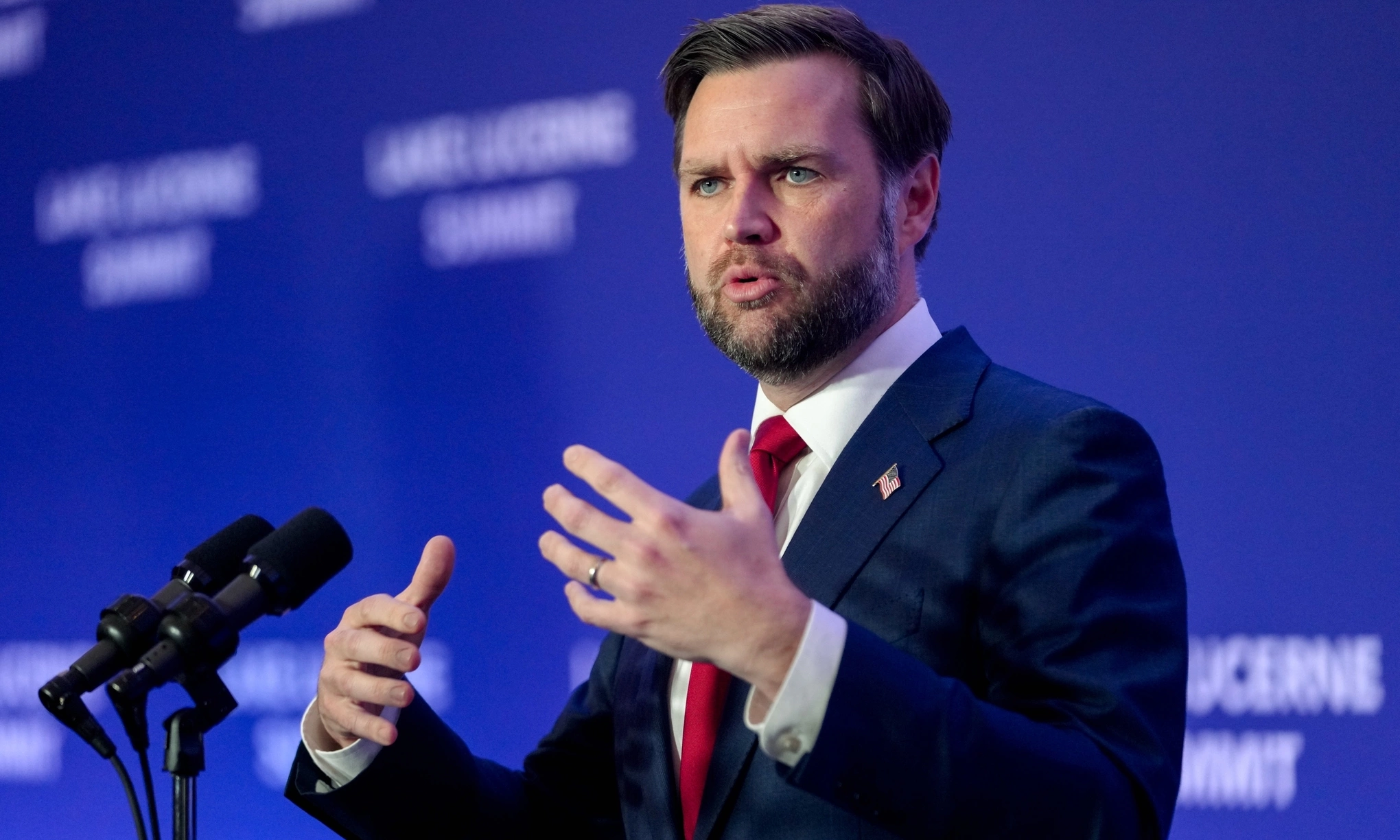
The Democratic candidate emphasized healthcare, labor rights, and reducing corporate influence in politics.
Together, Sanders and El-Sayed attempted to build support among progressive voters and working families dissatisfied with existing economic conditions.
The UAW Became a Major Political Force
The United Auto Workers played an important role in Michigan’s midterm campaign.
The union represents workers across automobile manufacturing and other industries.
Its political influence extends beyond the workplace because members participate in elections, community organizing, and policy debates.
During the 2026 campaign, UAW organizers conducted extensive voter outreach.
Their efforts included door-to-door canvassing and direct conversations with current and retired union members.
Many union leaders supported Democratic candidates.
However, the membership was not politically uniform.
Some workers remained loyal to Democrats because of the party’s support for collective bargaining and labor protections.
Others favored Republicans because of concerns involving immigration, trade, energy policy, and the direction of the Democratic Party.
That division was visible in Macomb County and other industrial communities.
In October, reporting described UAW canvassers encountering retired workers who supported the union’s Democratic endorsements.
But some of those same workers expressed uncertainty about whether former colleagues would vote similarly.
One longtime Ford employee said he knew many workers who had supported Donald Trump.
The situation highlighted a longstanding challenge for organized labor.
Union leadership may endorse a candidate without securing the votes of every member.
Political loyalties can reflect economic interests, cultural issues, community identity, and perceptions of party leadership.
For Republicans, that created an opportunity to compete for voters historically associated with Democratic labor coalitions.
For Democrats, it increased the importance of maintaining relationships with workers concerned about manufacturing and employment security.
The UAW’s organizing efforts sought to influence that competition.
But the union also faced internal challenges involving membership decline, institutional trust, and differing political priorities.
Those factors complicated assumptions about how union households would vote.
Michigan’s Auto Industry Was at the Center of the Argument
Michigan’s automobile industry gave the campaign particular economic significance.
The state remains home to major manufacturing facilities, engineering operations, suppliers, and thousands of workers connected to vehicle production.
Changes in consumer demand, international trade, and industrial technology directly affect those communities.
Republicans argued that Democratic environmental policies placed unnecessary pressure on conventional automobile manufacturing.
They criticized policies encouraging electric-vehicle adoption and questioned whether federal incentives would protect existing jobs.
Vance also emphasized the importance of domestic energy production.
He argued that affordable electricity and fuel were essential to maintaining competitive manufacturing operations.
Democrats responded that investment in new automotive technologies could create employment opportunities and help American manufacturers remain competitive internationally.
They warned that abandoning advanced manufacturing investment could allow foreign competitors to gain market share.
The debate involved genuine uncertainty.
Electric-vehicle production requires different components and manufacturing processes from traditional internal-combustion vehicles.
Those changes can create jobs in some facilities while reducing demand for certain existing occupations.
Battery production and software development may expand employment in newer sectors.
At the same time, workers in established engine and transmission plants may face difficult transitions.
Labor unions have sought guarantees concerning wages, employment security, and organizing rights during these changes.
That explains why automotive policy cannot be evaluated solely through the number of vehicles produced.
The quality and location of employment also matter.
A new manufacturing investment may benefit one community while another faces layoffs.
Similarly, policies encouraging domestic production may create opportunities while raising costs elsewhere.
Sanders argued that industrial transitions should protect workers rather than simply increase corporate profits.
Republicans emphasized the importance of market conditions, energy affordability, and reducing government intervention.
Those competing approaches became central to the campaign.
The Campaign Takes a Sharper Political Turn
As Election Day approached, the Michigan Senate race became increasingly contentious.
Republican attacks focused on El-Sayed’s political positions and his background.
Some campaign statements also raised allegations involving his Muslim identity and supposed associations with extremist organizations.
El-Sayed rejected those claims.
Sanders publicly condemned the rhetoric during a November 1 television interview.
He argued that criticism of a candidate’s religion or ethnicity should not replace debate over economic policy.
Sanders specifically criticized remarks by prominent Republican figures, including Trump, Vance, and Senator Ted Cruz.
He described some of the campaign rhetoric as discriminatory and deeply inappropriate.
Republicans maintained that their concerns involved El-Sayed’s political positions and statements.
The disagreement became a significant part of the campaign’s final days.
But the race also remained focused on household expenses, manufacturing employment, and healthcare.
Both parties understood that Michigan voters were weighing multiple concerns.
Some prioritized economic conditions.
Others focused on national security, immigration, or broader political values.
The campaign’s intensity reflected the importance of the Senate seat.
With control of Congress at stake, neither party treated Michigan as a secondary contest.
Vance’s repeated visits demonstrated the Republican commitment to Rogers.
Sanders’ appearances showed the significance Democrats attached to El-Sayed’s campaign.
The resulting confrontation became one of the most closely watched political battles of the midterm elections.
The Internal Polling Memo Remains Unverified
The most dramatic claim in the circulating narrative concerns an alleged internal polling memorandum.
According to the story, Sanders’ team obtained private research showing union voters in Michigan’s automobile-producing counties turning against Republican economic messaging.
The memorandum supposedly created concern among Republican campaign operatives.
However, no authenticated copy of such a document has been publicly established.
The available account does not identify a polling organization, fieldwork dates, sample size, or methodology.
It also provides no verifiable figures describing the alleged change in union voter preferences.
Those details are essential for evaluating polling evidence.
A survey involving union households would need to identify how respondents were selected.
It would also need to explain whether participants were current union members, retirees, or individuals living in union households.
The geographic scope would matter.
Michigan’s industrial counties do not have identical economic conditions or political histories.
Macomb County, Wayne County, and other manufacturing communities contain different populations and voting patterns.
A statewide survey could produce conclusions that differ from individual county results.
Similarly, a poll conducted several weeks before Election Day might not accurately reflect preferences after late campaign developments.
Internal campaign surveys can provide useful information.
But they are not automatically reliable simply because they are described as confidential.
Without the underlying data, the alleged memorandum cannot establish that union voters were abandoning Republicans.
Nor can it demonstrate that Republican operatives privately acknowledged such a trend.
The claim remains an unverified element of the viral narrative.
The actual election result, however, provides a separate basis for examining Michigan’s political direction.
Election Night Delivers a Clear Result
On November 3, 2026, Michigan voters elected Abdul El-Sayed to the United States Senate.
He defeated Republican Mike Rogers by approximately seven percentage points.
Reported results showed El-Sayed receiving roughly 52.5 percent of the vote.
Rogers received approximately 45.5 percent.
The outcome represented a significant Democratic victory in a closely contested state.
It also established that the Republican campaign had failed to secure enough statewide support despite major appearances by Vance and Trump.
But the statewide result does not prove that any particular group of union voters changed its political preferences.
Determining that would require reliable voter surveys, demographic analysis, or other evidence focused on union households.
County results can reveal geographic changes.
They cannot automatically identify the occupation or union membership of individual voters.
Similarly, a Democratic victory does not establish that every Republican economic argument was rejected.
Voters may select candidates for many reasons.
Some may prioritize economic issues while others focus on political rhetoric, healthcare, or candidate qualifications.
El-Sayed interpreted his victory as a rejection of the negative campaigning directed against him.
He also emphasized the importance of grassroots organizing.
His campaign had faced substantial financial and political opposition.
Yet it succeeded in building a winning statewide coalition.
Sanders’ support formed part of that broader campaign effort.
The UAW’s organizing operation also represented a significant element of Democratic voter outreach.
However, neither the result nor the available reporting establishes that Sanders personally introduced a decisive internal polling memorandum.
The actual outcome was the election itself.
UAW Leadership Sends Democrats a Warning
Following the election, UAW President Shawn Fain offered a significant warning to Democratic leaders.
He celebrated the party’s victories but cautioned against assuming that voters had provided unconditional support.
Fain argued that public dissatisfaction with existing policies had played an important role in the result.
He warned that newly elected Democrats could face political consequences if they failed to deliver meaningful improvements.
His remarks complicated the idea that the election represented a permanent shift in working-class loyalty.
Union leaders wanted policy results.
They were concerned about wages, job security, healthcare, and the economic future of manufacturing communities.
Fain’s comments suggested that electoral victories created responsibilities rather than guarantees.
That message was consistent with Sanders’ broader argument about the importance of economic policy.
Sanders has repeatedly maintained that political parties must demonstrate tangible benefits for working families.
He argues that speeches and campaign promises cannot substitute for legislative achievements.
For Michigan, the next phase involves evaluating how elected officials address the concerns raised during the campaign.
Workers will continue facing challenges involving industrial technology, international competition, and household expenses.
Automakers will continue making investment decisions influenced by energy prices, regulations, and consumer demand.
Unions will continue negotiating over wages, benefits, and employment conditions.
Those developments will shape public perceptions of both parties.
The election resolved which candidate would represent Michigan in the Senate.
It did not resolve every economic disagreement that dominated the campaign.
Sanders’ Challenge Leaves Both Parties With Unfinished Business
The confrontation between Sanders and Vance illustrates the changing political competition for American working-class voters.
Vance presented Republicans as defenders of manufacturing communities harmed by economic decline and excessive regulation.
Sanders argued that Republican policies disproportionately favored corporations and wealthy individuals while leaving ordinary workers vulnerable.
Both messages sought to address real concerns about wages, inflation, and job security.
Their disagreement involved the policies most likely to address those concerns.
Michigan’s election result demonstrated that El-Sayed secured sufficient support to defeat Rogers.
It did not establish that all union voters had shifted toward Democrats.
Nor did it prove the existence of a secret polling document capable of predicting the outcome.
The available evidence supports a more specific conclusion.
Republicans invested heavily in Michigan and emphasized manufacturing, energy, and economic affordability.
Sanders campaigned for El-Sayed and challenged the Republican approach to workers’ economic interests.
The UAW organized voters while facing political divisions within its membership.
And the Democratic candidate won the statewide Senate contest.
Those events form the documented record.
The alleged internal polling memorandum remains unsupported.
That distinction matters because the election itself provides measurable information about political support.
It also reveals the limits of treating one campaign narrative as a complete explanation for voter behavior.
Michigan’s economic future will continue to depend on decisions involving manufacturing investment, labor protections, trade policy, and technological change.
Both parties will face pressure to explain how their proposals affect workers and employers.
For Sanders and El-Sayed, the electoral victory creates an opportunity to advance their economic priorities.
For Vance and Republicans, the result provides information about where their campaign arguments failed to secure sufficient support.
Neither development guarantees future political outcomes.
The next meaningful test will involve actual policy decisions and their effects on Michigan households.
