
Sheldon Whitehouse traces dark money and Supreme Court luxury trips, but the alleged John Kennedy showdown lacks public documented proof
A political story circulating online describes Senator Sheldon Whitehouse confronting John Neely Kennedy with a financial chart that allegedly exposes secret influence over America’s highest court.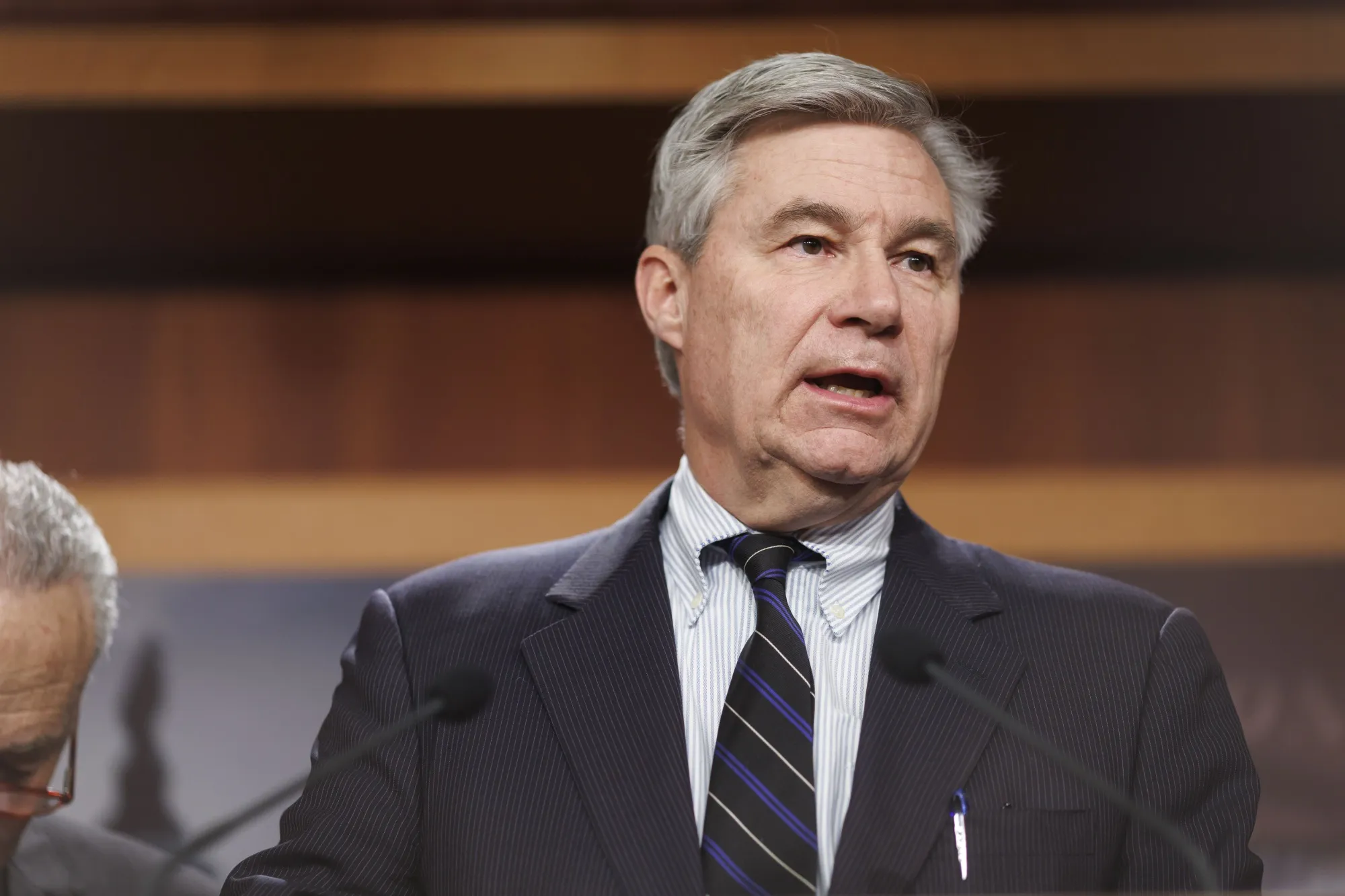
The account promises a dramatic congressional exchange, a network of wealthy donors, and evidence of undisclosed luxury vacations involving Supreme Court justices.
According to the narrative, Kennedy attempts to dismiss concerns about conservative political financing before Whitehouse produces documents that leave the committee stunned.
But the most significant evidence is not an authenticated recording of that supposed confrontation.
It is a collection of financial disclosures, investigative reports, and documented transactions involving powerful donors and members of the Supreme Court.
The public record does not establish that Whitehouse delivered the specific confrontation with Kennedy or produced the alleged document during that exchange.
What it does establish is that Whitehouse has spent years investigating financial networks that influence judicial nominations, legal advocacy, and public policy.
Independent reporting has also uncovered expensive travel and other benefits provided to Supreme Court justices by wealthy individuals.
One investigation documented Justice Clarence Thomas’s previously undisclosed trips aboard a private aircraft and a luxury yacht owned by billionaire Harlan Crow.
Another revealed how an approximately $1.6 billion contribution placed enormous financial resources under the control of conservative legal activist Leonard Leo.
And in December 2024, the Senate Judiciary Committee released a report examining ethical concerns at the Supreme Court following a lengthy investigation.
These developments raise questions that go beyond a single senator’s rhetorical performance.
How can Americans evaluate the independence of their courts when important relationships and financial arrangements remain difficult to examine?
The answer begins with the actual documents, the people involved, and the distinction between financial influence and proven judicial misconduct.
1. Whitehouse’s investigation begins with an unusual financial network
Whitehouse has used a long-running series of Senate speeches to examine what he describes as the influence of wealthy conservative donors over the federal judiciary.
His series, known as The Scheme, focuses on political spending, judicial nominations, advocacy organizations, and the relationship between money and constitutional litigation.
The senator argues that networks of nonprofit organizations can influence public debates while shielding the identities of some important financial supporters.
Such organizations may engage in legally permitted advocacy, research, advertising, and public education.
However, certain nonprofit structures allow donors to remain undisclosed even when their contributions support substantial political and ideological activity.
Whitehouse considers this lack of transparency especially consequential when the spending affects judicial confirmation campaigns and litigation before federal courts.
His criticism frequently centers on Leonard Leo, a prominent conservative legal activist with longstanding ties to the Federalist Society.
Leo played an important role in the conservative legal movement and advised Donald Trump during his first administration’s judicial selection process.
Conservative supporters describe those activities as legitimate efforts to advance originalist and textualist approaches to constitutional interpretation.
Whitehouse argues that concentrated, insufficiently transparent funding creates opportunities for wealthy interests to influence institutions intended to exercise independent judgment.
The competing interpretations concern the relationship between constitutionally protected political advocacy and public confidence in judicial independence.
A wealthy donor supporting judicial candidates or legal scholarship does not automatically establish corruption.
Likewise, the legality of a financial arrangement does not eliminate questions about its scale, transparency, or potential influence.
The evidence became particularly significant when investigators examined the finances of organizations connected to Leo.
What emerged was a series of transactions involving amounts far larger than ordinary political contributions.
Senator Sheldon Whitehouse+1
2. The $1.6 billion transaction becomes a central piece of the financial record
In August 2022, ProPublica and The Lever documented an extraordinary contribution involving wealthy businessman Barre Seid and the Marble Freedom Trust.
Seid had owned Tripp Lite, an electronics company that manufactured power-management equipment used in offices and data centers.
Through a series of transactions, he transferred ownership of the company to a nonprofit trust associated with Leonard Leo.
In March 2021, Eaton Corporation acquired Tripp Lite for approximately $1.65 billion.
The arrangement provided the Marble Freedom Trust with resources valued at roughly $1.6 billion.
The documented funding arrangement
Approximate trust funding
$1.6B
Reported company sale
$1.65B
These are related transaction values, not two separate donations. Sources: ProPublica and The Lever, August 22, 2022.
ProPublica
Leo became responsible for directing an enormous pool of money toward conservative advocacy and related initiatives.
The transaction was significant partly because it demonstrated how a single financial arrangement could transform an organization’s available resources.
The reporting also examined potential tax advantages arising from transferring ownership before the company’s sale.
Tax specialists estimated that the structure could have avoided as much as $400 million in capital gains taxes.
That estimate described potential taxes avoided through the arrangement, not a judicial finding that an unlawful tax offense occurred.
The nonprofit structure itself was not reported to violate the law.
Nevertheless, the transaction attracted scrutiny because the trust could direct enormous resources toward organizations involved in political and legal advocacy.
Leo defended his work as part of a broader competition over constitutional interpretation and the future of American institutions.
Whitehouse viewed the transaction as evidence of the extraordinary scale of concentrated political financing.
But the financial record also requires a distinction.
The $1.6 billion was not documented as a direct payment to a Supreme Court justice.
It was funding associated with a politically active nonprofit network.
Understanding that difference is necessary before examining the separate controversies involving gifts and travel provided directly to individual justices.
Those controversies involved different donors, different transactions, and different legal obligations.
The connection between them concerns transparency and judicial ethics, not proof that every financial relationship formed part of one criminal conspiracy.
ProPublica
3. Clarence Thomas’s luxury vacations introduce a separate ethics controversy
In April 2023, ProPublica published an investigation documenting Justice Clarence Thomas’s longstanding relationship with wealthy Republican donor Harlan Crow.
The reporting described trips involving Crow’s private aircraft, yacht, exclusive properties, and vacation destinations.
One example concerned a 2019 journey to Indonesia involving Crow’s private jet and a luxury yacht.
Investigators estimated that privately arranging comparable transportation and accommodations could have cost hundreds of thousands of dollars.
That estimate illustrated the potential value of the experience rather than establishing a cash payment to Thomas.
The investigation also documented stays at Crow’s properties and additional travel that had not appeared in earlier public financial disclosures.
Thomas defended the relationship, describing Crow and his wife as close personal friends.
He maintained that he had understood certain personal hospitality to be exempt from disclosure requirements under guidance available at the time.
Crow similarly described the hospitality as part of a longstanding friendship rather than an effort to influence judicial decisions.
Legal ethics specialists disagreed about whether some of the undisclosed transportation was exempt from reporting requirements.
They emphasized that travel aboard private aircraft could involve disclosure obligations distinct from ordinary hospitality at a friend’s home.
The controversy therefore involved both the acceptance of benefits and the accuracy of public financial disclosures.
It did not establish that Thomas changed a judicial decision in exchange for a specific trip.
Proving bribery or an unlawful quid pro quo would require evidence of elements not established merely by the existence of a friendship or gift.
Nevertheless, the omissions raised substantial questions about transparency and public confidence.
In June 2024, Thomas amended financial disclosures concerning trips provided by Crow.
The corrections demonstrated that certain benefits previously absent from his reports should have been disclosed.
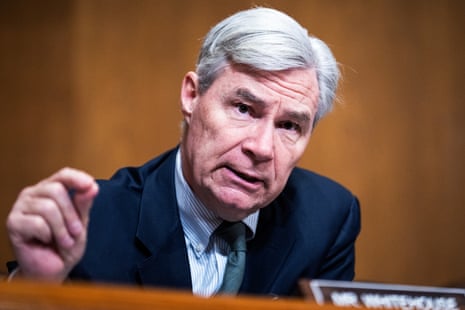
The disclosure record, rather than an alleged dramatic exchange between senators, became a concrete basis for examining judicial ethics.
4. Senate investigators uncover additional travel records
Following ProPublica’s reporting, Senate Judiciary Committee Democrats sought additional information about travel and benefits received by Supreme Court justices.
The inquiry involved requests to wealthy donors and examination of financial records that were not previously available to the public.
In June 2024, investigators disclosed evidence of at least three additional private jet trips provided to Thomas by Crow.
The information emerged from correspondence supplied by Crow’s attorney during the committee investigation.
Some flights involved destinations in Montana and Georgia, adding details to the already substantial record of travel benefits.
The discovery mattered because it illustrated why investigators had sought information beyond the justices’ original financial disclosure forms.
A public disclosure system is only as useful as the completeness and accuracy of the information entered into it.
When benefits are omitted, outside investigators may need independent records to establish what occurred.
That process can involve travel logs, correspondence, business records, and information supplied by third parties.
But obtaining those records does not automatically demonstrate that the underlying travel violated criminal law.
The committee’s investigation concerned disclosure obligations, ethical standards, and the adequacy of the Supreme Court’s accountability mechanisms.
Thomas continued defending his conduct and maintaining that his relationship with Crow was personal.
Supporters questioned whether the investigation applied ethical concerns consistently across the judiciary.
Critics argued that the value and frequency of the benefits required stronger oversight.
Both positions can be evaluated against the financial disclosure requirements applicable to federal judges.
The central question is whether the rules provide sufficient transparency to identify relationships that could create actual or perceived conflicts of interest.
The additional flight records strengthened the documented account of undisclosed benefits without establishing an exchange of favors for judicial rulings.
ProPublica
5. The controversy extends beyond one justice and one billionaire
The reporting did not stop with Thomas and Crow.
In June 2023, ProPublica documented a luxury fishing trip involving Justice Samuel Alito and billionaire hedge fund manager Paul Singer.
The trip occurred in 2008 and included travel on a private jet to Alaska.
Singer’s business interests subsequently appeared in matters before the Supreme Court, where Alito participated without recusing himself.
That connection raised questions about disclosure requirements and the standards governing judicial participation in cases involving wealthy acquaintances.
Alito defended his conduct and rejected the suggestion that the trip created an improper relationship.
He argued that the applicable disclosure rules did not require reporting the travel under his understanding of the requirements.
The dispute again concerned whether a valuable personal benefit created obligations that had not been adequately addressed.
It also highlighted differences between ethical appearance, disclosure compliance, and proof of unlawful influence.
A justice’s participation in a case involving someone connected through prior hospitality can raise recusal questions.
But participation alone does not prove that the justice decided the case because of the relationship.
Determining an ethical violation requires examining the governing rules and the particular circumstances.
The Supreme Court adopted its first formal Code of Conduct for Justices in November 2023.
The code described expectations concerning impartiality, conflicts of interest, outside activities, and financial relationships.
Supporters viewed the code as an acknowledgment that public confidence required clearer standards.
Critics argued that the absence of an independent enforcement mechanism limited its practical effect.
Whitehouse supported legislative proposals seeking stronger disclosure requirements and additional accountability mechanisms.
Those efforts reflected his broader argument that judicial independence requires more than protection from direct political interference.
It also requires public confidence that judges are not improperly influenced by private financial relationships.
The challenge is designing oversight that increases transparency without enabling elected officials to retaliate against judges for unpopular decisions.
ProPublica+1
6. The Senate Judiciary Committee releases a substantial investigative report
On December 21, 2024, the Senate Judiciary Committee released a majority staff report examining ethical controversies involving the Supreme Court.
The document followed approximately twenty months of investigation, including inquiries into benefits provided by wealthy individuals.
The committee examined financial disclosures, travel arrangements, relationships with donors, and the Court’s mechanisms for addressing potential conflicts.
Its findings represented a formal legislative investigation rather than a social media allegation.
The report addressed concerns about the Court’s ethical standards and the extent to which justices had disclosed valuable benefits.
Committee Democrats argued that the findings demonstrated the need for stronger enforceable rules and more effective public oversight.
Republican critics questioned the investigation’s focus and argued that some allegations unfairly targeted conservative justices.
The report did not establish that Kennedy personally participated in a concealed funding operation.
It also did not document the supposed exchange in which Whitehouse confronted Kennedy with a decisive financial chart.
That distinction matters because Senate investigations and viral political narratives carry different evidentiary weight.
A committee report can identify documents, witnesses, legal issues, and investigative conclusions that readers may examine.
A circulating description of a dramatic confrontation provides no equivalent proof unless supported by an authenticated recording or transcript.
The actual report therefore offers a stronger foundation for evaluating the controversy.
It establishes that lawmakers investigated the relationships and benefits that generated public concern.
It also demonstrates that the dispute extended beyond a single undisclosed vacation.
Questions concerning transparency, reporting requirements, and judicial oversight had become the subject of formal congressional examination.
The report did not resolve every disagreement about how the Supreme Court should regulate its members.
But it created a documented record informing those disagreements.
The central evidentiary development was a published Senate investigation, not an authenticated exchange in which Kennedy’s reaction established anyone’s guilt.
Senate Judiciary Committee
7. Whitehouse’s financial diagrams raise a question about hidden influence
Whitehouse has frequently used diagrams and visual explanations to illustrate relationships among donors, advocacy groups, and organizations involved in judicial politics.
These presentations attempt to make complicated financial networks understandable to lawmakers and the public.
The diagrams may identify organizations sharing personnel, receiving related funding, or supporting overlapping political objectives.
Such relationships can be relevant when examining the transparency of judicial nomination campaigns and legal advocacy.
However, a financial connection does not automatically establish unlawful coordination.
Organizations may share policy goals, legal perspectives, or professional relationships without violating federal law.
The significance of the connection depends on the particular transaction and the legal requirements governing the activity.
Whitehouse’s position emphasizes the difficulty voters face when substantial advocacy funding passes through organizations that do not publicly identify all donors.
Conservative advocates maintain that donor privacy can protect political participation from intimidation and retaliation.
These arguments reflect a genuine tension between transparency and freedom of association.
The courts have recognized constitutional protections for political association, including circumstances where compelled donor disclosure may create serious risks.
Congress can nevertheless establish disclosure requirements within constitutional limits to address concerns about political influence.
The policy dispute therefore cannot be resolved simply by labeling every anonymous contribution suspicious.
Nor can concerns about donor privacy automatically eliminate the public interest in understanding substantial influence over government institutions.
The most useful evidence identifies specific transactions, their amounts, the organizations involved, and the activities financed.
The $1.6 billion Marble Freedom Trust arrangement is one such documented transaction.
The previously undisclosed trips involving Thomas and Crow represent another category of evidence.
The Senate investigation provides a separate source of findings concerning judicial ethics.
Together, these records illuminate important questions about concentrated influence and public accountability.
They do not establish that Kennedy personally participated in unlawful conduct or that Whitehouse proved such an allegation during an unverified confrontation.
Senator Sheldon Whitehouse+2
8. The documented paper trail reveals what remains unanswered
The circulating story promises a moment when Whitehouse presents a final document that supposedly proves corruption and leaves Kennedy unable to respond.
But no authenticated public record establishes the confrontation in the form described.
What the available evidence demonstrates is a series of consequential financial disclosures and investigations extending across several years.
In 2022, investigative reporters documented the approximately $1.6 billion funding arrangement involving Barre Seid and Leonard Leo’s nonprofit network.
In 2023, ProPublica revealed luxury travel benefits provided to Clarence Thomas by Harlan Crow that were absent from earlier disclosures.
Further reporting examined benefits involving other justices and wealthy individuals with interests connected to cases before the Court.
In 2024, Thomas amended financial disclosures concerning travel that had previously gone unreported.
Senate investigators also obtained additional records documenting private jet flights.
The Judiciary Committee subsequently released a substantial report describing its investigation into judicial ethics.
And in January 2026, Whitehouse continued his Senate speech series criticizing what he viewed as concentrated influence over the judiciary.
These developments are independently significant.
They demonstrate how investigative reporting and congressional oversight can uncover financial relationships that were previously difficult for the public to examine.
They also show why accurate descriptions of the evidence matter.
A documented gift is not automatically a bribe.
A political contribution is not automatically an illegal transaction.
A shared donor or organizational connection does not necessarily establish that a judicial outcome was purchased.
But the absence of proven criminal conduct does not automatically eliminate legitimate concerns about disclosure or conflicts of interest.
Those questions require separate evaluation under applicable law and ethical standards.
Whitehouse has argued that stronger transparency and independent oversight are necessary to maintain public trust.
Opponents of his approach have raised concerns about political interference, donor privacy, and the judiciary’s institutional independence.
The relevant challenge is determining which safeguards can address ethical risks without compromising constitutional protections.
That question remains meaningful regardless of whether any particular senator delivers a memorable speech.
The most important financial records can be examined without embellishing the reactions of lawmakers or attributing undocumented admissions to them.
They identify real transactions, real beneficiaries, and real disputes concerning disclosure obligations.
The available evidence therefore provides a different conclusion from the one promised by the viral headline.
Whitehouse’s investigations into judicial financing are documented, and the luxury travel revelations are documented, but the alleged Kennedy takedown is not.
The remaining issue is whether existing disclosure and oversight arrangements provide Americans with adequate information about relationships involving powerful donors and the nation’s highest court.
The consequential question is not who fell silent during a supposed Senate confrontation, but what financial relationships the public is entitled to know.
