
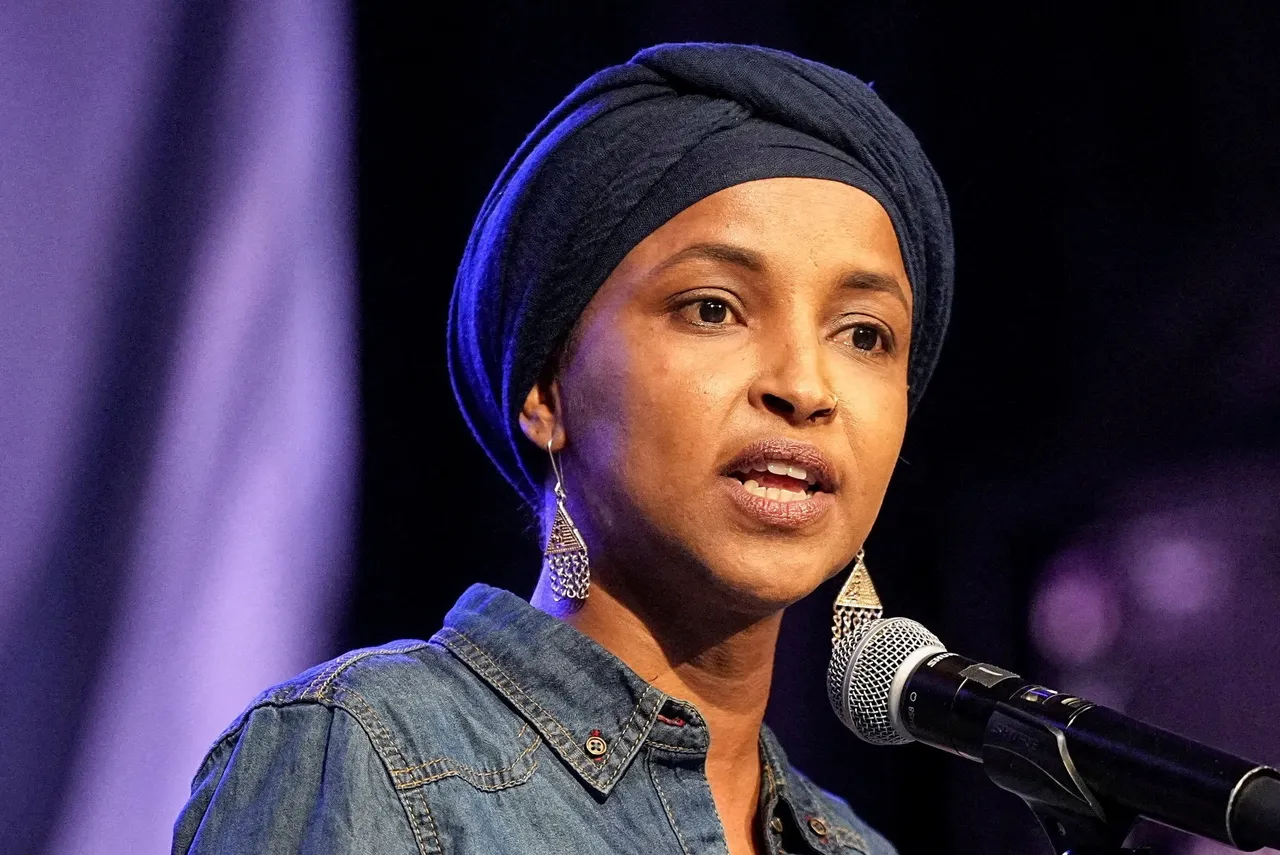
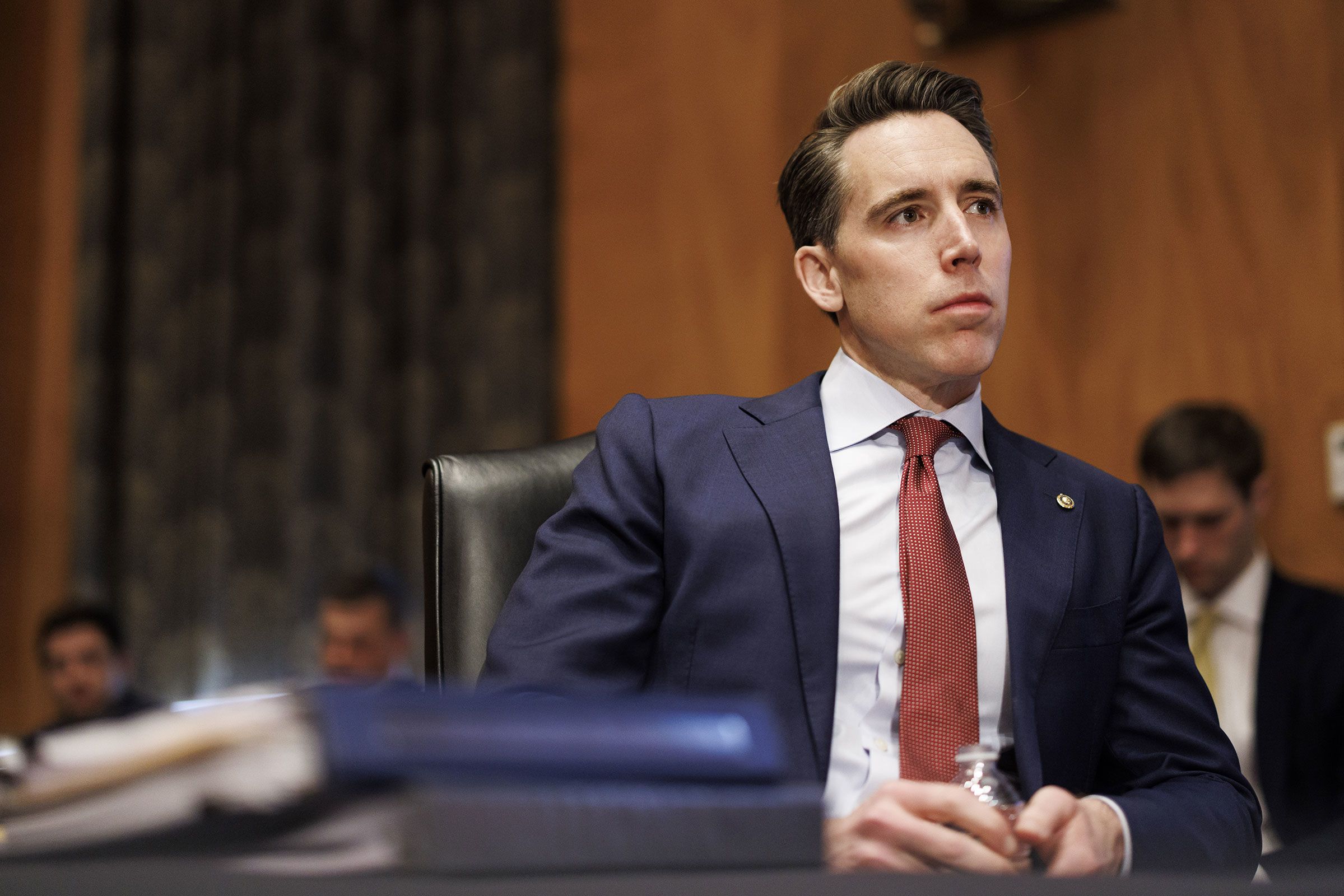
Senator JoshHa.w.l.e.y had barely finished displaying a timeline of Joe Biden’s presidential pardons when Representative Ilh.a.n 0mar noticed something unusual about the document resting beside his microphone.
Three pages were missing.
The Missouri Republican had spent the opening minutes of the televised congressional hearing questioning the procedures used to authorize presidential pardons.
He raised concerns about autopen signatures, presidential awareness, and whether officials had properly documented important decisions.
Omar listened without interrupting.
Then she leaned toward her microphone.
“SenatorHa.w.l.e.y, before you accuse anyone of hiding the truth, could you explain why your report is missing three pages?”
The hearing room became quiet.
Hawley looked toward the document.
“Congresswoman, the timeline contains the relevant information.”
Omar reached into her folder.
“Then you won’t mind if we examine the complete version.”
She placed another copy on the desk.
The chairman asked staff to compare the two documents.
Hawley insisted that the central question remained whether presidential authorization had been established.
Omar agreed that authorization mattered.
But she questioned whether the documentHa.w.l.e.y had presented accurately reflected the procedures being discussed.
Then she pointed toward a paragraph missing from his displayed excerpt.
It concerned the difference between a mechanically reproduced signature and a decision personally authorized by the president.
The distinction would change the entire confrontation.
And the final attachment contained an even more uncomfortable surprise.
It described an autopen procedure similar to one used for routine correspondence by congressional offices.
The hearing had begun with a broader discussion of the constitutional power to grant presidential pardons.
The Constitution gives the president substantial authority to issue pardons for federal offenses, subject to constitutional limitations.
Questions about the exercise of that power can involve the president’s intent, the authenticity of a decision, and the records documenting its authorization.
Hawley argued that Americans deserved clarity concerning significant actions taken during the final period of Biden’s presidency.
He questioned whether mechanical signatures had been used appropriately and whether the relevant decisions had received the president’s personal approval.
Omar responded that using an autopen did not, by itself, establish that a president had failed to authorize an action.
The disagreement centered on evidence.
Hawley wanted to know who had approved the pardons.
Omar wanted to know whether his presentation distinguished authorization from the method used to reproduce a signature.
The chairman asked both participants to examine the records.
Hawley raised his timeline.
It listed several pardon-related actions followed by references to administrative processing and signature procedures.
One entry contained the phrase “autopen execution.”
Hawley pointed toward it.
“Congresswoman, if the president personally approved these decisions, shouldn’t the government be able to document that approval?”
Omar answered immediately.
“Yes.”
Then she added another question.
“And if a mechanical signature was used after authorization, wouldn’t that be different from someone making the decision without presidential approval?”
Hawley acknowledged that the circumstances would matter.
But he argued that the public needed evidence establishing the president’s involvement.
Omar agreed.
Then she returned to the missing pages.
“That’s why I want the full report on the screen.”
The chairman directed staff to display the complete fictional case-study packet.
It had been prepared for the hearing to illustrate how investigators might examine disputed authorization procedures.
It was not an authenticated Department of Justice report establishing misconduct by Biden orHa.w.l.e.y.
The first section outlined the constitutional pardon power.
The second described document-processing methods.
The third examined the records needed to verify presidential authorization.
Hawley’s displayed excerpt included portions of the first two sections.
But it omitted several pages explaining the limitations of the evidence.
Omar pointed toward the missing material.
“Those pages matter because they explain what the timeline cannot establish.”
Hawley leaned toward his microphone.
“Then read them.”
Omar began with the first omitted paragraph.
It stated that the presence of an autopen signature did not independently establish whether the underlying decision had been personally authorized.
Additional records could be necessary.
Those records might include approval memoranda, contemporaneous communications, administrative instructions, and other reliable evidence.
Omar looked towardHa.w.l.e.y.
“So the signature method alone doesn’t answer the question.”
Hawley agreed.
“But it doesn’t eliminate the question either.”
Omar acknowledged that distinction.
The chairman asked the committee’s legal adviser to explain.
The adviser stated that authorization and signature mechanics were separate issues.
An autopen could reproduce a signature.
But the device itself did not determine whether the person whose signature appeared had approved the underlying action.
That question required evidence concerning the actual decision-making process.
The adviser also cautioned that ordinary administrative practices could not automatically resolve every constitutional question involving presidential action.
The facts and governing legal requirements mattered.
Hawley nodded.
“Then we need those records.”
Omar agreed.
“But we also need to stop pretending that the machine itself proves someone committed a crime.”
The exchange had produced its first important clarification.
A reproduced signature was not automatic proof of unauthorized decision-making.
But neither could its appearance establish that every relevant constitutional requirement had been satisfied.
The question remained whether the president had actually authorized the action.
Hawley turned toward the second document.
It contained a fictional administrative timeline describing how a pardon decision could move through several stages.
A recommendation might be prepared.
The president could review the recommendation.
An authorization could be recorded.
Administrative personnel could then prepare the final documentation.
Hawley asked whether each stage should be traceable.
The legal adviser answered that reliable records could be important in determining what occurred.
Omar agreed.
Then she pointed toward another omitted passage.
The paragraph explained that administrative staff could perform routine document-processing tasks without independently possessing the authority to make presidential decisions.
Hawley challenged her.
“Then how do we know the staff weren’t making the decisions themselves?”
Omar responded that the question required evidence.
An allegation of unauthorized action could not be established merely by showing that staff participated in preparing documents.
The chairman asked whether the fictional report contained proof that staff had independently granted pardons.
The adviser answered that it did not.
The report illustrated the need to investigate authorization.
It did not establish that the constitutional power had been exercised by someone other than the president.
Hawley looked toward the chairman.
“Then shouldn’t Congress seek the actual authorization records?”
Omar answered that legitimate oversight could examine the issue.
But she maintained that the inquiry should distinguish a request for records from a public declaration of wrongdoing.
Hawley argued that serious constitutional questions justified scrutiny.
Omar agreed.
The disagreement concerned how those questions should be presented before the evidence was complete.
ThenHa.w.l.e.y introduced the possibility of subpoenas.
He argued that Congress possessed oversight tools capable of obtaining relevant information, subject to applicable legal limitations.
Omar challenged him to explain what specific records the committee needed.
Hawley identified authorization memoranda, administrative instructions, and relevant communications.
The legal adviser explained that any compulsory demand would require appropriate authority and consideration of applicable privileges and legal protections.
The chairman asked whether the fictional case file itself justified assuming that wrongdoing had occurred.
The adviser answered no.
The materials identified questions requiring examination.
They did not establish criminal conduct.
Omar turned towardHa.w.l.e.y.
“Then let’s investigate questions without announcing answers we haven’t proved.”
Hawley replied that the public also deserved to know whether the White House had followed proper procedures.
Omar acknowledged that concern.
But she argued that selective presentation could be just as misleading as incomplete government records.
The chairman returned to the three omitted pages.
The second missing page described a hypothetical situation involving a president who expressly authorized a decision before an autopen signature was applied.
The third described a different situation.
In that scenario, staff members used a mechanically reproduced signature without obtaining the required presidential authorization.
The legal adviser explained that those scenarios presented materially different questions.
The first concerned an authorized decision followed by administrative execution.
The second raised concerns about whether the decision had been made by the constitutionally responsible official.
Hawley pointed toward the second example.
“That’s the possibility I’m concerned about.”
Omar acknowledged that it was a legitimate question if supported by evidence.
Then she asked whether the materials established that the second scenario had occurred during Biden’s presidency.
The adviser answered that they did not.
The case study contained hypothetical examples.
It was not a factual finding concerning a specific pardon.
Hawley requested clarification about what evidence would distinguish the two scenarios.
The adviser recommended examining original approval records and corroborating communications.
The committee could also review established processing procedures and testimony from relevant personnel.
But no single mechanical signature could establish the complete decision history.
The hearing room became quiet.
Then0mar opened the final attachment.
It was labeled “Administrative Signature Procedures.”
The document compared several routine uses of mechanically reproduced signatures.
Some involved mass correspondence.
Others concerned ceremonial letters or administrative acknowledgments.
The attachment included an illustrative congressional office procedure.
Omar placed the page besideHa.w.l.e.y’s timeline.
“Senator, would you agree that congressional offices sometimes use automated signature systems for routine correspondence?”
Hawley answered that such systems could be used for administrative purposes.
Omar nodded.
“Then the existence of an autopen isn’t automatically suspicious.”
Hawley responded that congressional correspondence and presidential pardons were not equivalent.
Omar agreed.
“That is exactly the distinction I’m making.”
She pointed toward the attachment.
“Using the same mechanical technology doesn’t mean the underlying legal authority is the same.”
The chairman asked the adviser to elaborate.
The adviser explained that different government documents served different legal purposes.
A routine congressional letter did not exercise the president’s constitutional pardon power.
A mechanical signature method might appear in both contexts.
But the requirements governing the underlying decisions could differ significantly.
The distinction prevented the comparison from becoming misleading.
Omar could question whetherHa.w.l.e.y was applying consistent standards when describing mechanical signatures.
But the existence of routine autopen use in congressional offices did not independently establish that a presidential pardon had been validly authorized.
Likewise, it did not prove that any particular congressional office had used an autopen improperly.
Hawley asked whether the attachment contained authenticated evidence that his office had used the device for a specific document.
The legal adviser answered that it did not.
The page described an illustrative procedure.
It was not a verified record demonstrating thatHa.w.l.e.y’s office had engaged in misconduct.
Omar acknowledged that limitation.
But she argued that the comparison revealed why the technical process should not be confused with the legal decision.
Hawley agreed that the legal significance depended on the document and authorization involved.
The confrontation had reached a turning point.
The original accusation treated the use of an autopen as potentially decisive.
The complete materials showed that the central issue was authorization.
The method of signing could be relevant evidence.
It could not substitute for establishing who actually approved the action.
Then the chairman requested that staff reconstruct the timeline using the complete case-study materials.
The revised presentation contained three categories.
The first identified decisions whose authorization was supported by records within the illustrative scenario.
The second identified entries requiring additional documentation.
The third described administrative processing steps that did not, by themselves, determine authorization.
The revised timeline looked different fromHa.w.l.e.y’s original presentation.
Several entries previously grouped under the same heading were now separated.
The categories made clear which questions had answers and which remained unresolved.
Hawley studied the revised document.
Then he asked whether additional evidence could change those classifications.
The legal adviser answered that it could.
A verified approval record could resolve an uncertainty.
Evidence demonstrating that required approval had not occurred could raise a different legal question.
The important point was that neither conclusion should be assumed.
Omar turned towardHa.w.l.e.y.
“Then why present the original timeline as though every autopen entry proves the same thing?”
Hawley responded that the timeline was intended to identify transactions warranting review.
Omar argued that the wording had not made that limitation sufficiently clear.
The chairman asked the adviser whether the revised version was more precise.
The adviser answered that it was.
It distinguished confirmed procedural facts from unresolved authorization questions.
The chairman directed staff to preserve the revised classification.
ThenHa.w.l.e.y returned to a broader constitutional concern.
He argued that significant presidential actions required clear accountability.
If officials could not establish who authorized a pardon, public confidence might suffer.
Omar agreed that accountability was important.
But she challenged the implication that missing records automatically established unauthorized action.
The legal adviser confirmed that an absence of documentation could create uncertainty without proving a particular explanation.
The committee would need to investigate further.
The dispute had now become more focused.
Hawley emphasized the importance of obtaining authorization records.
Omar emphasized the importance of accurately describing what those records established.
Both concerns could be addressed through careful oversight.
Then the host of the televised hearing coverage highlighted another detail.
The fictional case-study packet contained a proposed request for records.
The request sought information concerning the approval process, document preparation, and final execution of presidential actions.
It also asked agencies to distinguish between presidential decisions and subsequent administrative processing.
The chairman questioned whether the language could be revised to focus on specific factual uncertainties.
The legal adviser recommended narrowing the request.
Rather than broadly demanding every document mentioning an autopen, the committee could identify the relevant decisions and authorization questions.
Hawley supported obtaining records necessary to evaluate those decisions.
Omar supported a request grounded in specific questions rather than unsupported allegations.
The chairman asked both participants to identify a reasonable standard.
Hawley argued that the committee should have sufficient access to examine whether presidential approval occurred.
Omar agreed, subject to applicable legal protections and proper procedures.
Their disagreement over public rhetoric remained.
But the proposed inquiry now had a clearer evidentiary purpose.
Then0mar returned to the first missing page.
She pointed toward a sentence that had been omitted from the opening presentation.
The sentence explained that investigators should not treat an administrative signature method as a substitute for evidence concerning decision-making authority.
She read the passage.
Then she looked towardHa.w.l.e.y.
“Senator, isn’t that the standard we should have started with?”
Hawley considered the question.
He replied that the committee’s central concern had always been presidential authorization.
Omar challenged the way the original timeline had been framed.
The chairman asked whether the revised report better reflected the issues under examination.
The legal adviser answered that it did.
The complete materials made clear that the committee had not established that Biden’s pardons were unauthorized merely because an autopen was allegedly used.
They also did not resolve every question concerning the processing of those actions.
The distinction was important.
The hearing had not established an autopen conspiracy.
It had identified standards for investigating disputed authorization.
And the comparison with congressional correspondence illustrated why mechanical signatures could not be evaluated without considering the legal character of each document.
Hawley closed his timeline.
Omar placed the complete report beside it.
The chairman asked whether either participant wished to make a final statement.
Hawley emphasized that constitutional powers should be exercised by the officials entrusted with them.
He argued that the public deserved reliable records confirming significant presidential decisions.
Omar agreed.
Then she added that lawmakers had a responsibility to present evidence accurately.
Selective excerpts could create misleading impressions.
And allegations involving presidential authority should not become political verdicts before their factual foundations were established.
The chairman acknowledged both points.
Then0mar leaned toward her microphone.
“SenatorHa.w.l.e.y, I have one final question.”
Hawley looked toward her.
She continued.
“If the missing pages explain that an autopen doesn’t establish who authorized a decision, why weren’t those pages part of your presentation?”
The room became quiet.
Hawley answered that his presentation had focused on identifying questions about presidential authorization.
He acknowledged that the complete report provided additional context.
Omar responded that the context was essential to understanding the allegation.
The chairman agreed that future committee presentations should distinguish complete evidentiary records from selected excerpts.
The final recommendation required staff to identify omissions when summarizing material evidence.
It also called for consistent labeling of disputed facts, verified procedural details, and unresolved legal questions.
That decision became the hearing’s concrete outcome.
No authenticated finding established thatHa.w.l.e.y had personally manipulated the report.
No evidence presented proved that his office had improperly used an autopen.
And the case-study materials did not establish that Biden’s pardons were invalid.
But the discussion had clarified the central legal and factual questions.
Did the president authorize the relevant decisions?
What records documented that authorization?
What role did administrative staff play?
And how should the mechanical execution of a signature be evaluated in light of the underlying constitutional authority?
Those questions could not be answered by the appearance of an autopen alone.
The chairman struck the gavel.
Hawley gathered his papers.
Omar closed her folder.
The original timeline remained visible on one screen.
The revised version appeared beside it.
The contrast was striking.
The first presentation grouped several entries according to signature method.
The second separated authorization evidence, administrative processing, and unresolved questions.
That change made the inquiry more precise.
It also demonstrated how easily a complicated constitutional issue could be reduced to a misleading political argument.
Hawley’s concern about presidential accountability remained a legitimate subject for examination.
Omar’s concern about incomplete evidence remained equally relevant.
Neither position required dismissing the other.
And neither justified announcing an unproven criminal conspiracy.
The fictional confrontation had begun with accusations about hidden documents and secret procedures.
It ended with a narrower principle.
Government records should be complete enough to establish who made important decisions.
Investigators should examine those records using appropriate legal standards.
And politicians should not selectively present evidence in ways that conceal its limitations.
The final image on the studio screen showed the three pages that had changed the discussion.
They contained no dramatic confession.
They did not establish a hidden plot.
Instead, they explained the distinction the entire argument had initially overlooked.

An autopen can reproduce a signature. It cannot, by itself, prove who made the decision behind it.
