
Jasmine Crockett walked into a congressional hearing about government efficiency and delivered a confrontation that quickly became another defining example of her combative political style.
The Texas Democrat accused Republicans of manufacturing outrage over federal spending while overlooking the financial record of President Donald Trump.
But her strongest argument wasn’t simply that Republicans were hypocrites.
It was that lawmakers claiming to defend government accountability were potentially surrendering their own constitutional responsibilities to an unelected figure.
As Crockett challenged her Republican colleagues, she introduced evidence about federal debt and questioned Elon Musk’s growing influence over government operations.
Then came a cutting comparison about kings, queens, and political loyalty that transformed a spending debate into a confrontation over congressional power.
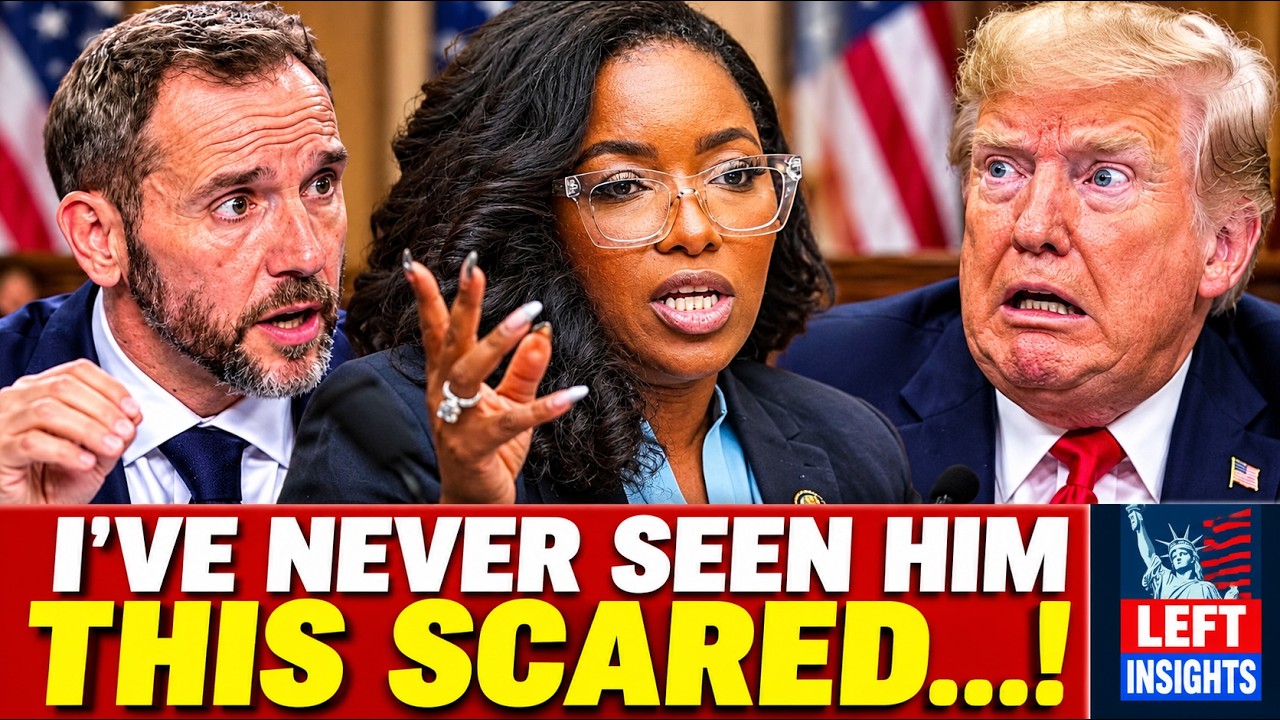
The exchange was real, although the viral account’s claims of a precisely timed insult and visibly panicked Republicans are not established by the available recording.
What actually happened inside that hearing reveals a political disagreement with consequences extending far beyond one explosive speech.
Crockett Opens Fire on Republican Outrage
On February 5, 2025, the House Oversight Committee examined government efficiency and waste during a hearing featuring Iowa Governor Kim Reynolds.
Republicans emphasized their commitment to controlling federal expenditures and improving government operations under Trump’s newly returned administration.
Crockett approached the discussion from a dramatically different direction.
Rather than accepting the Republican framing, she challenged the credibility of lawmakers presenting themselves as champions of fiscal responsibility.
“It’s the faux outrage for me,” Crockett declared, immediately identifying what she considered the central contradiction.
She argued that Republicans were attempting to portray themselves as rescuers from a fiscal emergency their own political leadership had helped create.
Her criticism targeted not only the administration’s spending priorities but also the political messaging surrounding Elon Musk’s government-efficiency initiative.
Musk had become a prominent figure in the administration’s campaign to reorganize federal agencies, reduce expenditures, and challenge established bureaucratic practices.
Republicans supporting the initiative argued that aggressive intervention was necessary to confront wasteful spending and institutional inefficiency.
Crockett disputed their underlying narrative, arguing that government reform could not be separated from the financial decisions made during Trump’s earlier presidency.
Her approach was confrontational, but the central challenge concerned numbers rather than insults.
If Republicans wanted to claim responsibility for restoring fiscal discipline, she argued, they needed to explain their own party’s spending record.
That demand set the stage for the evidence she introduced next.

The Debt Figures Become Her First Major Weapon
Crockett asked permission to introduce an article examining the expansion of federal debt during Trump’s first administration.
Committee Chairman James Comer permitted the material to enter the record without objection.
The article discussed how federal debt increased substantially during Trump’s presidency, including a significant rise before the COVID-19 pandemic.
Crockett cited an estimate of approximately $7.8 trillion in additional debt during his first term.
That figure became the foundation of her challenge to Republican claims about fiscal responsibility.
If Trump had presided over an enormous increase in federal borrowing, she asked, how could Republicans portray his administration as an uncomplicated solution?
The comparison drew attention to a genuine economic dispute about whether the president’s spending and tax policies were consistent with his party’s rhetoric.
However, the debt figure requires important context.
Presidential debt increases reflect legislation, economic conditions, interest expenses, congressional decisions, and policies inherited from previous administrations.
COVID-19 emergency spending also contributed substantially to borrowing during the final year of Trump’s first term.
Those qualifications do not erase Crockett’s argument, but they complicate any claim that one president personally created the entire increase.
Republicans have also argued that spending commitments, entitlement programs, and congressional negotiations contribute to the long-term federal debt problem.
The deeper issue was whether lawmakers applied their fiscal principles consistently when their own party controlled the White House.
Crockett’s confrontation forced that question into the hearing’s central discussion.
And she was not finished.

The Debate Shifts From Spending to Constitutional Power
Crockett then moved beyond budget figures to question the administration’s approach to reorganizing federal government operations.
Her concern centered on whether lawmakers were allowing executive-branch officials and outside advisers to exercise influence without sufficient congressional accountability.
Musk’s involvement became the focus of this portion of her remarks.
The administration defended its efficiency initiative as an effort to modernize government, identify waste, and reduce unnecessary expenditures.
Supporters argued that federal agencies had accumulated burdensome procedures that required aggressive management and independent examination.
Crockett acknowledged that reducing waste was a legitimate public objective.
Her objection concerned the methods used to achieve it and the authority being exercised by officials associated with the initiative.
She reminded the committee that Congress possesses constitutional responsibilities involving appropriations, legislation, and oversight of federal agencies.
Those responsibilities cannot simply disappear because lawmakers support the president or believe an efficiency initiative might produce desirable savings.
The separation of powers provides Congress with tools to investigate executive decisions, question government officials, and examine spending practices.
Whether particular restructuring actions violated those boundaries depends on the statutes involved and the specific decisions being challenged.
But Crockett’s criticism placed an institutional question directly before her colleagues.
Were lawmakers exercising independent judgment, or were they defending decisions primarily because those decisions originated with their political allies?
That challenge carried more significance than an ordinary argument about the size of the federal budget.
It questioned how Congress intended to protect its own authority.
The Sharpest Insult Arrives With a Warning About Kings
As her remarks continued, Crockett intensified her criticism of lawmakers who supported Musk’s involvement in federal government operations.
She argued that political endorsements and presidential approval did not automatically establish independent legal authority for every administrative action.
Her language became increasingly confrontational as she accused Republicans of neglecting their constitutional duties.
She invoked the idea of a monarchy to criticize what she believed was excessive deference to Trump and Musk.
The comparison culminated in a remark suggesting that Republicans had elevated the two men into royal positions within American government.
Her “king and queen” formulation was designed to ridicule that perceived relationship while emphasizing the Constitution’s rejection of unchecked personal power.
It also reflected Crockett’s broader approach to congressional debate.
She often combines constitutional arguments with blunt language that can dominate coverage of otherwise technical legislative proceedings.
The criticism was directed at an institutional concern, but its delivery was unmistakably personal.
For supporters, her approach demonstrated a willingness to challenge powerful figures without relying on the cautious language common in congressional hearings.
For opponents, the same performance illustrated how political confrontation can distract from substantive examination of government programs.
The available reporting does not establish that Republican lawmakers collectively panicked, turned pale, or became unable to answer.
Nor does it confirm the caption’s alleged thirty-second exchange containing the exact words “Y’all sound ridiculous!”
The documented ending was still significant because it challenged Republicans to reconcile support for administrative efficiency with their duty to oversee executive power.
The Republican Defense Presents a Serious Counterargument
Republicans supporting Trump’s government-efficiency agenda have argued that federal spending requires dramatic reform and that conventional approaches have failed to produce sufficient savings.
Their case rests partly on concerns about unnecessary programs, duplicative administrative functions, and government operations they consider financially unsustainable.
They also emphasize that executive agencies operate under presidential supervision and can legitimately undergo significant management changes.
From that perspective, Musk’s involvement was intended to accelerate reforms that traditional bureaucratic processes might otherwise delay.
The disagreement therefore involves more than whether federal spending should be reduced.
Both parties have publicly supported eliminating waste, although they often disagree about priorities, methods, and what constitutes unnecessary expenditure.
The difficult legal questions concern authority, implementation, and the distinction between advising government officials and exercising powers reserved for appointed officers.
For example, an efficiency recommendation does not automatically carry the same legal implications as a binding decision to withhold congressionally appropriated funds.
Likewise, identifying a questionable expenditure does not independently authorize an official to cancel programs established by federal law.
Those distinctions matter because a government can pursue efficiency while still facing legitimate questions about the legality of specific actions.
Crockett’s argument challenged Republicans to demonstrate that their proposed reforms respected those limits.
Republicans, meanwhile, could reasonably demand evidence supporting claims that particular reforms violated constitutional or statutory requirements.
That substantive dispute cannot be resolved simply by declaring one side foolish or celebrating a memorable insult.
The Overlooked Contradiction Behind the Political Theater
The most consequential feature of Crockett’s remarks was the connection she drew between federal debt and congressional oversight.
Her first argument questioned whether Republicans could credibly claim to be correcting a spending problem without acknowledging the fiscal record of their political leadership.
Her second argument questioned whether the proposed solution might weaken the institution constitutionally responsible for overseeing federal spending.
Together, those challenges created a more substantial criticism than the personal insults that circulated across social media.
They raised the possibility that lawmakers might strengthen presidential discretion while simultaneously presenting themselves as defenders of fiscal accountability.
That concern requires careful examination rather than automatic acceptance.
Congress can lawfully delegate certain administrative responsibilities, and presidents possess significant authority to supervise executive agencies.
But legislators also retain the ability to demand records, conduct investigations, question executive officials, and revise the laws governing federal programs.
The balance between those powers determines whether government reforms remain accountable to the institutions responsible for authorizing them.
Crockett’s challenge therefore turned on a practical question.
Could Congress defend an administration’s efficiency program while independently investigating its spending decisions, legal authority, and institutional consequences?
The answer depends on what lawmakers actually do when oversight demands become politically inconvenient.
That is where the hearing’s arguments moved beyond political theater.
The Final Reckoning Goes Beyond One Viral Insult
Crockett’s February confrontation offered a recognizable example of her communication style, combining aggressive partisan criticism with a challenge grounded in congressional authority.
The evidence she introduced did not establish that every Republican fiscal proposal was invalid.
Nor did her criticism prove that Musk’s entire government-efficiency initiative operated outside the law.
What it established was a demand for consistency between fiscal rhetoric, historical spending records, and constitutional oversight responsibilities.
The distinction is important because public officials can disagree sharply about economic policy while still being required to defend the legality of their actions.
Crockett’s memorable comparison involving kings and queens attracted attention because it reduced that institutional concern to a pointed political image.
But the more important consequence was the question her remarks placed into the hearing record.
Congressional oversight is not meaningful only when lawmakers investigate an opposing administration.
It becomes especially consequential when lawmakers must scrutinize officials whose policies they otherwise support.
Republicans defending government-efficiency measures can strengthen their position by demonstrating that reforms comply with the law and produce measurable public benefits.
Democrats questioning those reforms must likewise support accusations with evidence rather than treating political disagreement as proof of misconduct.
That standard applies regardless of which party controls the White House.
The available record does not show a chamber frozen in terror or a miraculous thirty-second defeat of every Republican argument.
It shows a fierce dispute over national debt, executive influence, and the willingness of Congress to maintain its institutional independence.
Crockett supplied the confrontation, the debt figures, and the constitutional challenge.
Republicans supplied the competing claim that aggressive restructuring was necessary to make government more efficient.
The larger issue remained unresolved after the hearing, but the confrontation exposed the question that would determine how those competing claims should be evaluated.
Would lawmakers demand the same accountability from their political allies that they expect from their opponents?
That question, not an unverified scene of Republican panic, was the lasting consequence of Crockett’s attack on what she called Republican outrage.
