
Senator Bernie Sanders delivered a forceful condemnation of Republican Senator Ted Cruz during the final days of Michigan’s intensely contested 2026 Senate campaign.
The Vermont independent accused prominent Republicans of using inflammatory rhetoric against Democratic candidate Abdul El-Sayed rather than confronting the economic concerns affecting working-class Americans.

His criticism followed a campaign appearance in Michigan where Cruz questioned El-Sayed’s alleged connections to the Muslim Brotherhood and raised concerns about national security.
El-Sayed, a physician and former public health official, repeatedly denied any association with the organization.
Sanders argued that political disagreements over healthcare, taxation, and foreign policy could not justify attacks directed at a candidate’s religious background.
During a November 1 interview on CBS’s Face the Nation, Sanders characterized the Republican rhetoric as racist and deeply troubling.
He specifically criticized Cruz, President Donald Trump, and Vice President JD Vance.
The exchange became a major talking point as Michigan prepared to choose its next United States senator.
But the most consequential development occurred two days later.
On November 3, Abdul El-Sayed defeated Republican Mike Rogers, becoming the first Muslim elected to the United States Senate.
The result followed weeks of aggressive campaigning, substantial outside spending, and disagreements over religion, national security, healthcare, and the economy.
Sanders had argued that voters would respond negatively to the personal attacks against El-Sayed.
The election subsequently produced a Democratic victory, although the result alone cannot establish which campaign issue determined individual voting decisions.
The episode illustrates how national political figures increasingly shape competitive statewide races through debates extending far beyond local policy.
Ted Cruz Escalates His Criticism During a Michigan Rally
On October 28, 2026, Ted Cruz appeared at a Republican campaign event in Grosse Pointe Woods, outside Detroit.
The Texas senator was supporting Mike Rogers, the Republican candidate competing for Michigan’s open Senate seat.
Rogers, a former congressman and former FBI agent, emphasized national security and criticized several positions taken by his Democratic opponent.
Cruz adopted an especially confrontational approach toward El-Sayed.
He attempted to connect the Democratic candidate to the Muslim Brotherhood, an international Islamist political movement with branches operating in different countries.
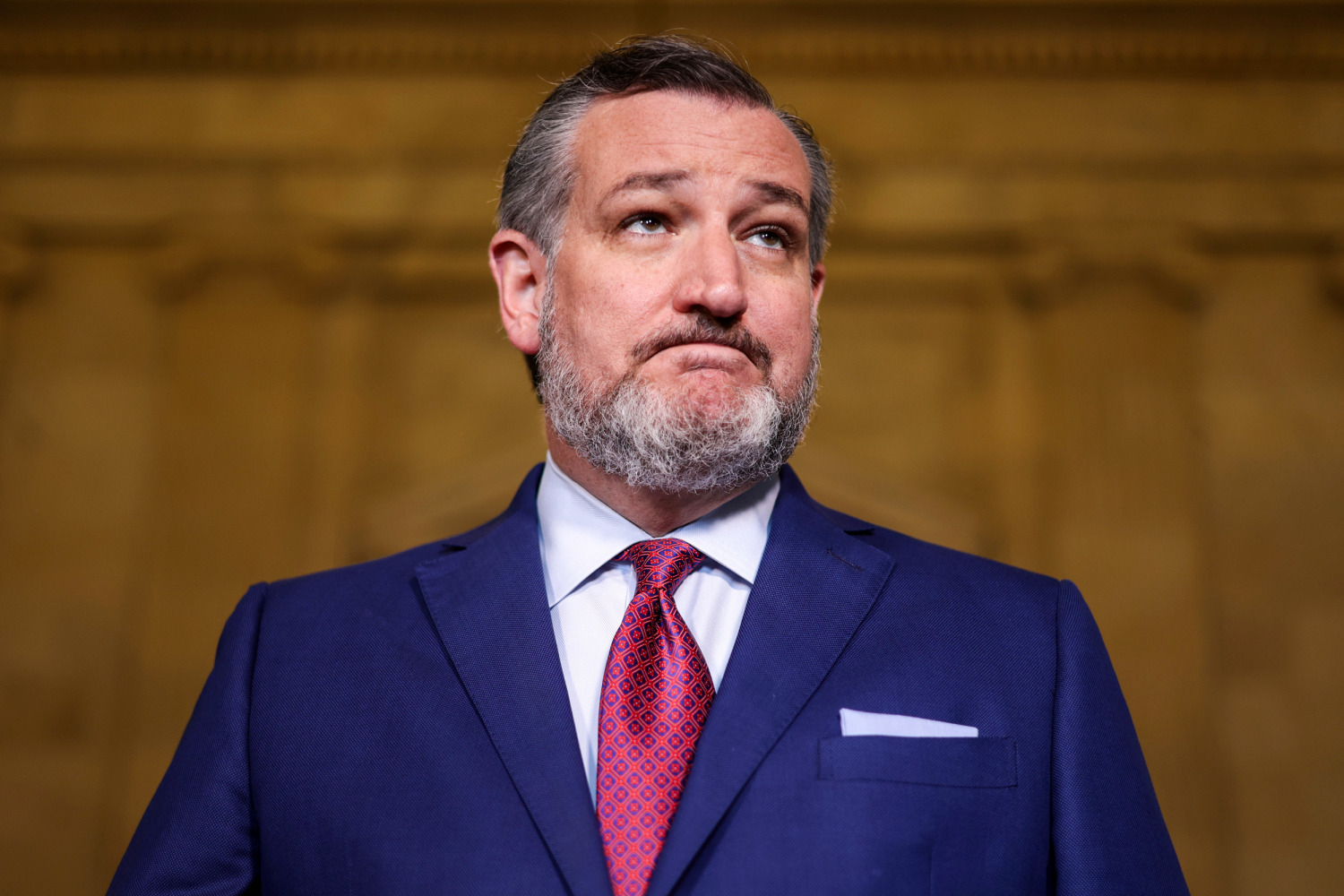
The Trump administration had designated certain branches of the organization as terrorist organizations earlier in 2026.
However, those designations did not establish that El-Sayed belonged to or supported the organization.
During the rally, Cruz used a derogatory nickname linking El-Sayed to jihadism.
He also argued that a senator with alleged ideological connections to the Muslim Brotherhood could present a national security risk.
Cruz specifically raised concerns about access to classified information and the possibility of El-Sayed serving on the Senate Intelligence Committee.
The allegations were serious.
Members of the Senate may encounter sensitive information while performing legislative and oversight responsibilities.
However, access to classified material is governed by institutional procedures and applicable security requirements.
A candidate’s religious identity does not establish an affiliation with an extremist organization.
Nor does political disagreement automatically demonstrate a national security threat.
When reporters questioned Cruz about whether he was suggesting that El-Sayed possessed divided loyalties, the Texas senator said his concerns involved ideology rather than religious worship.
He maintained that the relevant issue was support for an organization he considered dangerous.
El-Sayed rejected the accusations.
He stated publicly that he had never belonged to the Muslim Brotherhood and would never become a member.
No substantiated evidence was presented establishing the alleged affiliation.
The exchange placed religion and national security at the center of the campaign’s final days.
Sanders Responds With a Direct Condemnation
Four days after Cruz’s campaign appearance, Sanders discussed the controversy during his November 1 television interview.
Host Margaret Brennan played a series of statements from Republican political figures concerning El-Sayed.
The segment included Cruz’s warning about the consequences of electing a candidate he alleged supported the Muslim Brotherhood.
It also featured remarks from Trump and Republican Senator Bernie Moreno.
Sanders responded by criticizing the personal nature of those attacks.
He described the rhetoric as disgusting and said the accusations should deeply trouble Americans.
The Vermont senator drew a distinction between challenging political proposals and making accusations centered on a candidate’s identity.
He acknowledged that Republicans were entitled to oppose El-Sayed’s support for Medicare for All.
He also recognized that conservatives could disagree with the candidate’s proposals involving taxation of wealthy Americans.
But Sanders argued that those differences should be debated on their merits.
In his view, associating El-Sayed with terrorism without substantiated evidence crossed a different boundary.
Sanders called the rhetoric overt racism.
He also criticized campaign advertisements that, in his assessment, relied on fear surrounding El-Sayed’s Muslim identity.
His remarks reflected an increasingly prominent dispute over the limits of acceptable political criticism.
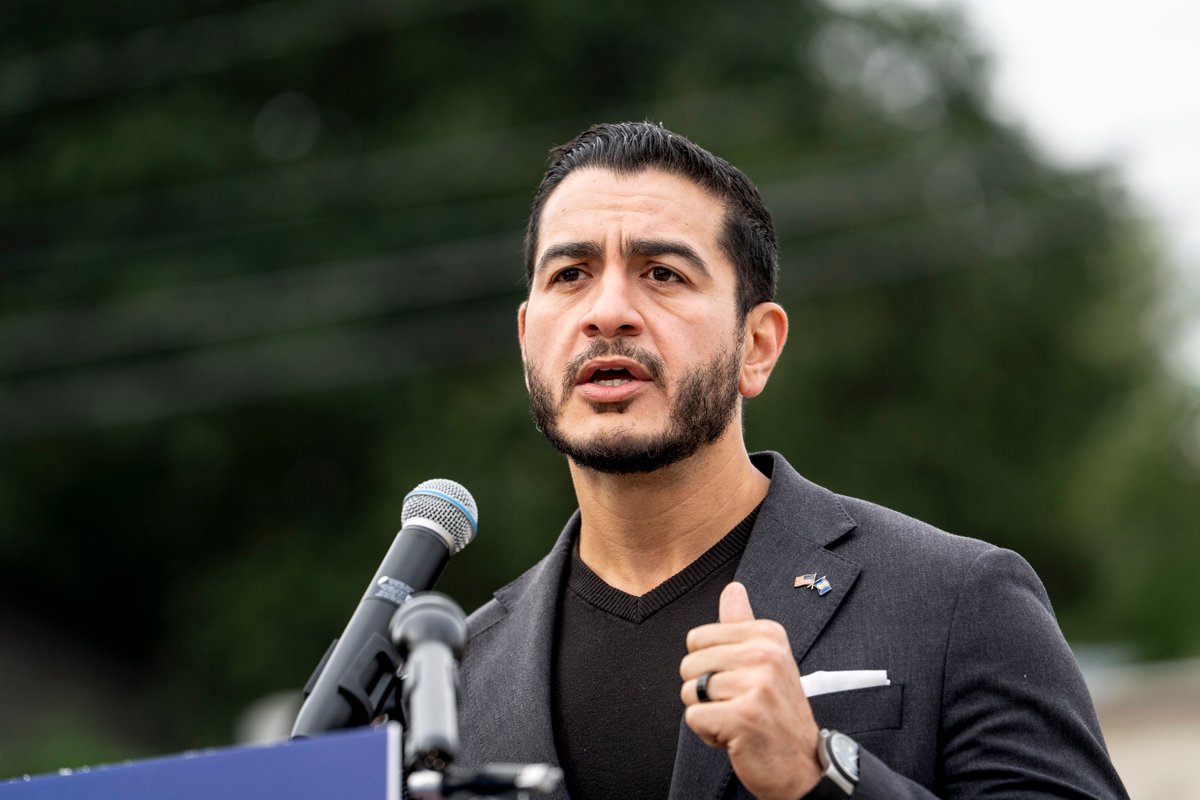
Republicans maintained that national security concerns were legitimate subjects of electoral debate.
Sanders responded that those arguments required evidence and should not rely on religious stereotypes.
The disagreement involved both political substance and the standards applied to campaign accusations.
The Muslim Brotherhood Allegation Becomes a Central Campaign Issue
The Muslim Brotherhood has a complicated history involving religious activism, political organization, and movements operating across national borders.
Its different branches have pursued different activities and relationships with national governments.
Some have participated in electoral politics.
Others have faced accusations or government designations involving extremism and violence.
In January 2026, the Trump administration designated certain branches as terrorist organizations.
Those decisions concerned particular entities and their activities.
They did not establish that every Muslim political figure supported the movement.
Nevertheless, Republicans repeatedly raised the issue during the Michigan campaign.
Cruz argued that the public should examine El-Sayed’s ideological commitments before electing him to a position of national authority.
Trump also used accusations linking El-Sayed to terrorism during the final campaign period.
Those statements intensified scrutiny of the Democratic candidate.
El-Sayed denied belonging to the Muslim Brotherhood and rejected the broader allegations.
His campaign characterized the attacks as an attempt to distract voters from economic issues.
The candidate also emphasized that Americans should evaluate his record and policy proposals rather than make assumptions based on his name or faith.
The disagreement became especially consequential because El-Sayed was seeking a historic position.
If elected, he would become the first Muslim member of the United States Senate.
That possibility brought additional attention to constitutional protections concerning religious freedom and public office.
The United States Constitution prohibits religious tests for federal office.
Candidates can be questioned about their policies, actions, associations, and qualifications.
But religious identity alone cannot legally disqualify someone from serving.
The distinction became central to the public debate surrounding the race.
Sanders Says Republicans Are Ignoring Working-Class Concerns
Sanders’ criticism extended beyond the language used by Cruz and other Republican figures.
He argued that the attacks reflected a broader failure to address voters’ economic priorities.
During a campaign event in Grand Rapids, Sanders emphasized the financial pressures experienced by working families.
His message focused on healthcare costs, grocery prices, gasoline expenses, and economic inequality.
Sanders maintained that voters wanted concrete proposals addressing those concerns.
He argued that personal attacks against El-Sayed diverted attention from issues affecting Michigan households.
The Vermont senator also criticized Republican positions on taxation and social programs.
He has consistently supported increasing taxes on wealthy Americans while expanding access to healthcare.
Those positions were closely aligned with El-Sayed’s campaign platform.
The Democratic candidate supported Medicare for All and argued for reducing the financial influence of wealthy donors.
He also advocated policies intended to address housing affordability and household expenses.
Republicans challenged those proposals.
Rogers and his allies argued that progressive economic policies could increase government spending and weaken economic growth.
They also criticized El-Sayed’s positions concerning Israel and broader foreign policy.
These were substantive disagreements that could be evaluated independently of the candidate’s religious identity.
Sanders argued that the campaign should focus on precisely those differences.
His criticism suggested that the national Republican message had become excessively focused on cultural and identity-related controversies.
For Sanders, the central political issue remained the economic condition of ordinary Americans.
Michigan’s Economic Struggles Shape the Senate Contest
Michigan’s economic history gave the campaign particular importance.
The state remains closely associated with automobile manufacturing, organized labor, and industrial production.
Communities across Michigan have experienced significant changes resulting from globalization, automation, and shifts in consumer demand.
Employment conditions in manufacturing have long influenced political attitudes.
Workers also face challenges involving healthcare expenses, housing costs, inflation, and retirement security.
Those concerns formed a central part of the Senate campaign.
El-Sayed attempted to connect his progressive economic agenda to voters dissatisfied with rising living costs.
Rogers presented himself as a candidate focused on national security, economic competitiveness, and protecting American industry.
His campaign emphasized the importance of manufacturing and criticized Democratic economic policies.
Republicans also argued that high prices and uncertainty surrounding energy policy had placed additional pressure on Michigan households.
Democrats responded that corporate interests and inadequate healthcare protections were contributing to economic insecurity.
Both campaigns sought support among working-class voters.
But their proposed solutions differed substantially.
El-Sayed favored a larger federal role in healthcare and economic redistribution.
Rogers emphasized a more conservative approach to government spending, taxation, and regulation.
These differences gave voters meaningful policy alternatives.
However, the campaign’s final stage became increasingly dominated by allegations surrounding El-Sayed’s religion and supposed associations.
Sanders argued that those attacks obscured the economic debate.
Republicans maintained that the candidate’s positions on national security and foreign policy deserved scrutiny.
The result was a contest involving several competing political themes.
A Complicated Democratic Primary Adds Another Challenge
El-Sayed’s path to the general election was not straightforward.
Before facing Rogers, he competed against Representative Haley Stevens in Michigan’s Democratic primary.
The contest exposed divisions between progressive and more moderate Democrats.
El-Sayed emphasized universal healthcare, economic inequality, and opposition to certain aspects of American foreign policy.
Stevens positioned herself closer to the Democratic Party’s established leadership.
The primary also attracted substantial outside spending.
Organizations involved in debates over Israel and American foreign policy invested heavily in the race.
El-Sayed ultimately secured the nomination despite facing significant financial opposition.
However, the divisions did not disappear immediately.
Democrats continued debating how to build a statewide coalition capable of competing in Michigan.
Some party officials questioned whether a strongly progressive candidate could attract enough moderate voters.
Others argued that El-Sayed’s economic platform could mobilize people who had become dissatisfied with conventional Democratic politics.
Sanders strongly supported the latter approach.
He believed the campaign could attract working-class voters by emphasizing healthcare and affordability.
The general election added another complication.
Republicans sought to portray El-Sayed’s policy positions as too far outside Michigan’s political mainstream.
They also highlighted controversies involving his public statements about Israel.
El-Sayed defended his positions while criticizing the personal attacks against him.
The campaign therefore involved disagreements within both parties, not simply a confrontation between Sanders and Cruz.
Sanders Draws a Line Between Religious Criticism and Policy Debate
During his November 1 interview, Sanders was also questioned about accusations of antisemitism involving criticism of Israel.
The subject was particularly relevant because El-Sayed had taken strong positions concerning Israeli government policy.
Sanders responded by emphasizing the distinction between criticizing government actions and attacking people because of their religion.
He discussed his Jewish background and his family’s experiences during the Holocaust.
He also condemned antisemitism as a dangerous ideology.
At the same time, Sanders defended the legitimacy of criticizing Israeli government policies.
His argument was that public officials should be judged by their decisions and political positions.
That principle, he suggested, should apply regardless of the religion involved.
The exchange broadened the conversation beyond Michigan.
It touched on national disagreements about religious prejudice, political speech, and international conflicts.
Some Republicans argued that El-Sayed’s statements about Israel deserved closer scrutiny.
Sanders maintained that criticism of a government should not automatically be treated as hostility toward an entire religious community.
The distinction has become increasingly important in American political discussions.
It requires evaluating the actual content of a statement rather than relying solely on the identity of the speaker.
Sanders applied a similar standard to Cruz’s criticism of El-Sayed.
He argued that claims involving terrorism or extremist affiliations should be supported by evidence.
Without such evidence, he considered the attacks an unacceptable part of electoral politics.
Election Night Brings a Historic Result
On November 3, 2026, Michigan voters delivered the final decision in the Senate contest.
Abdul El-Sayed defeated Republican Mike Rogers in the race for the seat being vacated by Democratic Senator Gary Peters.
The Associated Press called the race early on November 4.
Initial results showed El-Sayed receiving approximately 52 percent of the vote.
Rogers received about 46 percent.
The victory made El-Sayed the first Muslim elected to the United States Senate.
It also represented a significant achievement for the progressive wing of the Democratic Party.
El-Sayed had previously lost a Michigan gubernatorial primary in 2018.
Eight years later, he succeeded in winning statewide federal office.
His campaign combined grassroots organizing with an economic message focused on healthcare and affordability.
The result also reflected a broader political environment in which Democrats made substantial gains during the midterm elections.
However, the victory cannot be attributed to a single campaign controversy.
Voters considered multiple issues, including economic conditions, national politics, healthcare, and candidate qualifications.
Some may have objected to the Republican attacks on El-Sayed.
Others may have supported his economic policies or opposed the broader Republican agenda.
Determining the precise influence of each factor requires voter surveys and careful analysis.
Nevertheless, the result provided an important conclusion to the campaign confrontation.
The candidate subjected to weeks of allegations concerning his faith and alleged affiliations won the election.
That outcome gave Sanders’ earlier criticism additional political significance.
El-Sayed Responds to the Campaign Attacks
Following his victory, El-Sayed addressed the accusations that had dominated the closing weeks of the race.
In comments to the Associated Press, he said Michigan voters had rejected a campaign focused on his identity.
He argued that the attacks had failed to address the economic concerns of the electorate.
The senator-elect also reflected on the historic significance of his victory.
As the son of Egyptian immigrants, he would become the first Muslim to serve in the Senate.
That milestone represented a significant development in American political representation.
El-Sayed expressed appreciation for the voters who supported his campaign.
He also emphasized the responsibilities associated with representing a politically diverse state.
His victory did not eliminate disagreements over his policy positions.
Republicans continued to oppose his approach to healthcare, taxation, and foreign policy.
But the election resolved the immediate question of which candidate Michigan voters had selected.
Rogers conceded the race.
The result left Democrats holding the Senate seat previously occupied by Peters.
It also created expectations surrounding El-Sayed’s ability to translate his campaign promises into legislative priorities.
That task would require working within a Senate containing members with widely different political views.
The challenge of governing would therefore extend beyond the rhetoric of the election.
What Ted Cruz’s Remarks Reveal About Campaign Strategy
Cruz’s intervention in Michigan reflected the growing importance of national political figures in competitive Senate elections.
Although he represents Texas, his appearance was intended to influence voters in another state.
Such campaigning has become common in congressional races attracting national attention.
Party leaders and prominent lawmakers often travel to competitive states to mobilize supporters.
Their involvement can bring financial resources and media attention.
It can also shift a local campaign toward national political controversies.
Cruz emphasized national security and questioned El-Sayed’s ideological commitments.
He maintained that his criticism concerned political beliefs rather than religious identity.
However, his allegations relied on claimed connections that El-Sayed explicitly denied.
The campaign did not produce substantiated evidence establishing those connections.
This distinction matters when evaluating the exchange.
Candidates can legitimately face scrutiny over their associations, statements, and policy positions.
But serious allegations require reliable factual support.
Otherwise, voters may be asked to evaluate a candidate through claims that remain unproven.
Sanders argued that the attacks against El-Sayed crossed that boundary.
His condemnation was a political judgment, but it was directed at statements that were publicly documented.
The disagreement therefore concerned the standards applied to electoral criticism.
The Debate Over Political Rhetoric Continues
The confrontation between Sanders and Cruz illustrates a broader argument about the role of identity in American elections.
Religious background, ethnicity, and cultural heritage can become prominent when candidates break historical barriers.
Supporters may view such milestones as evidence of expanded political representation.
Opponents may focus on policy disagreements or questions about a candidate’s qualifications.
The challenge is ensuring that those debates remain grounded in factual claims.
A candidate’s religion does not determine an individual’s foreign policy position.
Likewise, disagreement with a political ideology does not automatically justify allegations of extremist affiliation.
These distinctions are especially important during high-profile campaigns.
Statements from national political figures can reach millions of voters.
They may influence public perceptions long before the underlying claims are examined.
Sanders’ response emphasized the need to debate economic policy rather than rely on accusations about identity.
Cruz defended his right to raise questions involving national security.
Both positions can be assessed by examining the actual statements and evidence involved.
The most serious allegations against El-Sayed remained unsubstantiated.
That fact is central to understanding the controversy.
What Sanders’ Final Warning Actually Meant
The circulating account suggests that Sanders delivered a mysterious final warning capable of transforming the election.
The documented November 1 interview reveals what he actually emphasized.
Sanders argued that voters would reject the personal attacks directed at El-Sayed.
He connected that argument to his broader belief that Americans were frustrated by political division and economic insecurity.
His message was not delivered during a face-to-face confrontation with Cruz.
It came during a televised interview examining Republican campaign rhetoric.
Sanders did not unveil secret documents or announce a previously unknown investigation.
Instead, he criticized public statements and explained why he considered them unacceptable.
He also expressed confidence in El-Sayed’s campaign.
Two days later, Michigan voters elected the Democratic candidate.
That sequence is documented.
However, the election result does not establish that Sanders’ warning caused the outcome.
It does show that the Republican campaign’s allegations did not prevent El-Sayed from securing a statewide victory.
The distinction matters because political outcomes are influenced by multiple factors.
The available evidence supports a clear account without requiring invented exchanges or dramatic revelations.
Michigan’s Result Leaves Both Parties With Important Questions
The Michigan Senate campaign brought together several major issues in American politics.
Healthcare affordability, economic inequality, national security, religion, and political representation all played prominent roles.
Sanders emphasized the need to confront economic problems affecting working families.
Cruz focused on allegations involving El-Sayed’s ideological associations and potential national security implications.
El-Sayed rejected those allegations and defended his policy platform.
Rogers presented a conservative alternative centered on different economic and security priorities.
Ultimately, voters selected El-Sayed.
The result established a historic milestone while preserving the state Senate seat for Democrats.
It also demonstrated that a progressive candidate could win a competitive statewide election despite substantial opposition.
But the campaign left broader questions unresolved.
How should candidates address concerns about national security without relying on unsupported allegations?
How can lawmakers debate controversial foreign policy positions while respecting religious freedom?
And how should political parties balance cultural issues with the economic concerns influencing everyday life?
Those questions extend beyond Michigan.
They concern the standards Americans apply to political campaigns and the information voters receive before casting ballots.
Sanders’ condemnation of Cruz was real, and the November 3 election produced a clear result: Abdul El-Sayed defeated Mike Rogers and became the first Muslim elected to the United States Senate.
The larger significance lies in the contest between competing political messages and the continuing debate over how candidates should be evaluated in American elections.
