
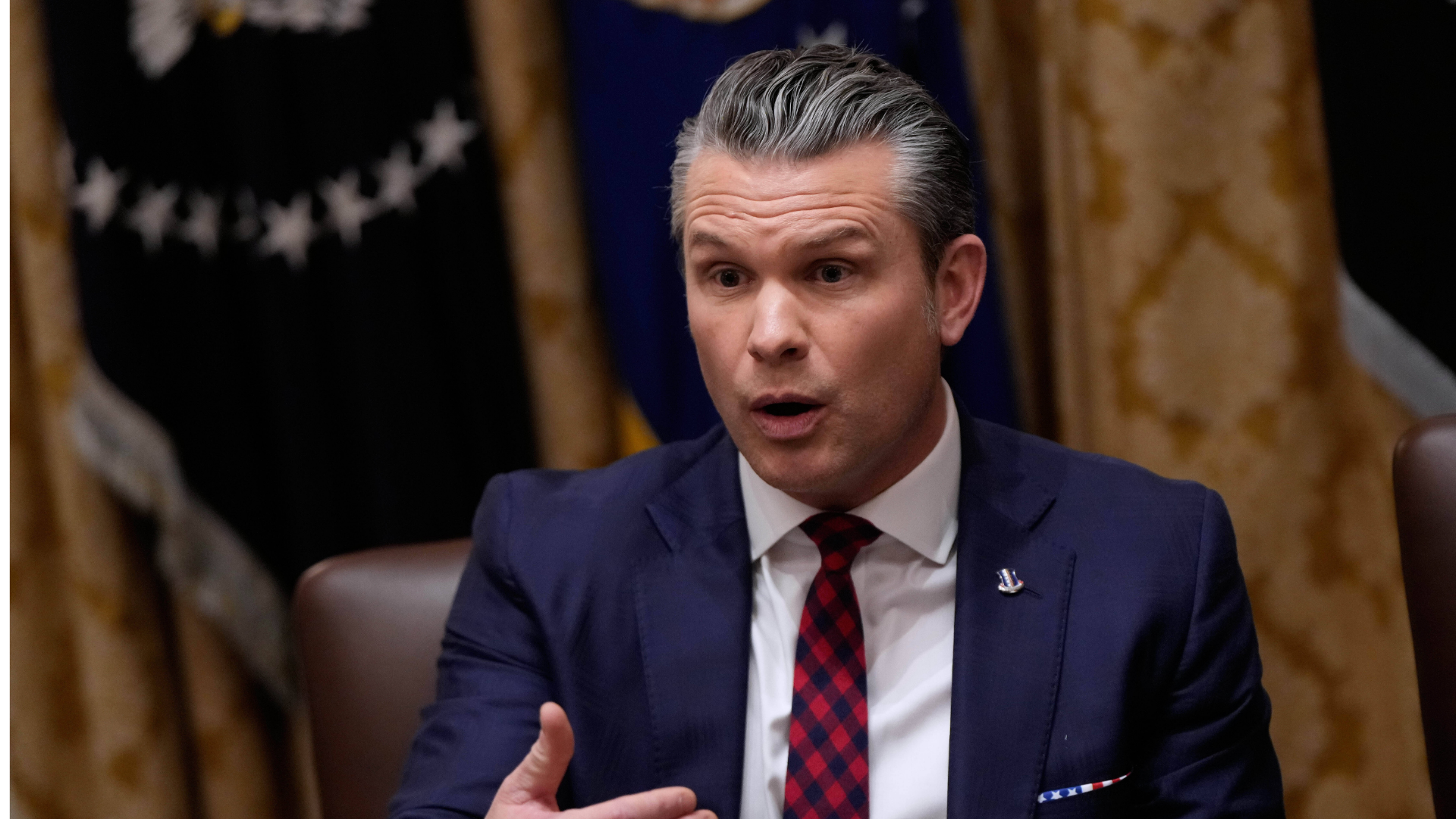
Defense Secretary Pete Hegseth faced a remarkable Veterans Day controversy after an Army soldier publicly reprimanded his group for laughing and talking near the Tomb of the Unknown Soldier at Arlington National Cemetery.
The confrontation, captured on video November 11, 2026, quickly attracted national attention because it involved one of the Pentagon’s most senior officials at one of America’s most solemn military memorials.
But the story took an unexpected turn the following day when Hegseth invited the soldier to the Pentagon and personally presented him with a military commendation medal.
The recognition transformed what initially appeared to be an embarrassing encounter into a broader discussion about military discipline, professional standards, and respect for fallen service members.
Army Specialist Thomas Iglesias, a member of the distinguished unit responsible for guarding the tomb, received the Joint Service Commendation Medal during the November 12 presentation.
Photographs released publicly showed Hegseth pinning the decoration onto Iglesias’s uniform and shaking his hand, providing clear evidence of the extraordinary follow-up.
The defense secretary also published a message praising the soldier, writing, “We love soldiers. We love standards. Well done, Specialist. Carry on Patriots.”
The announcement offered a striking contrast with the criticism Hegseth had faced after video of the original encounter circulated across social media and television news programs.
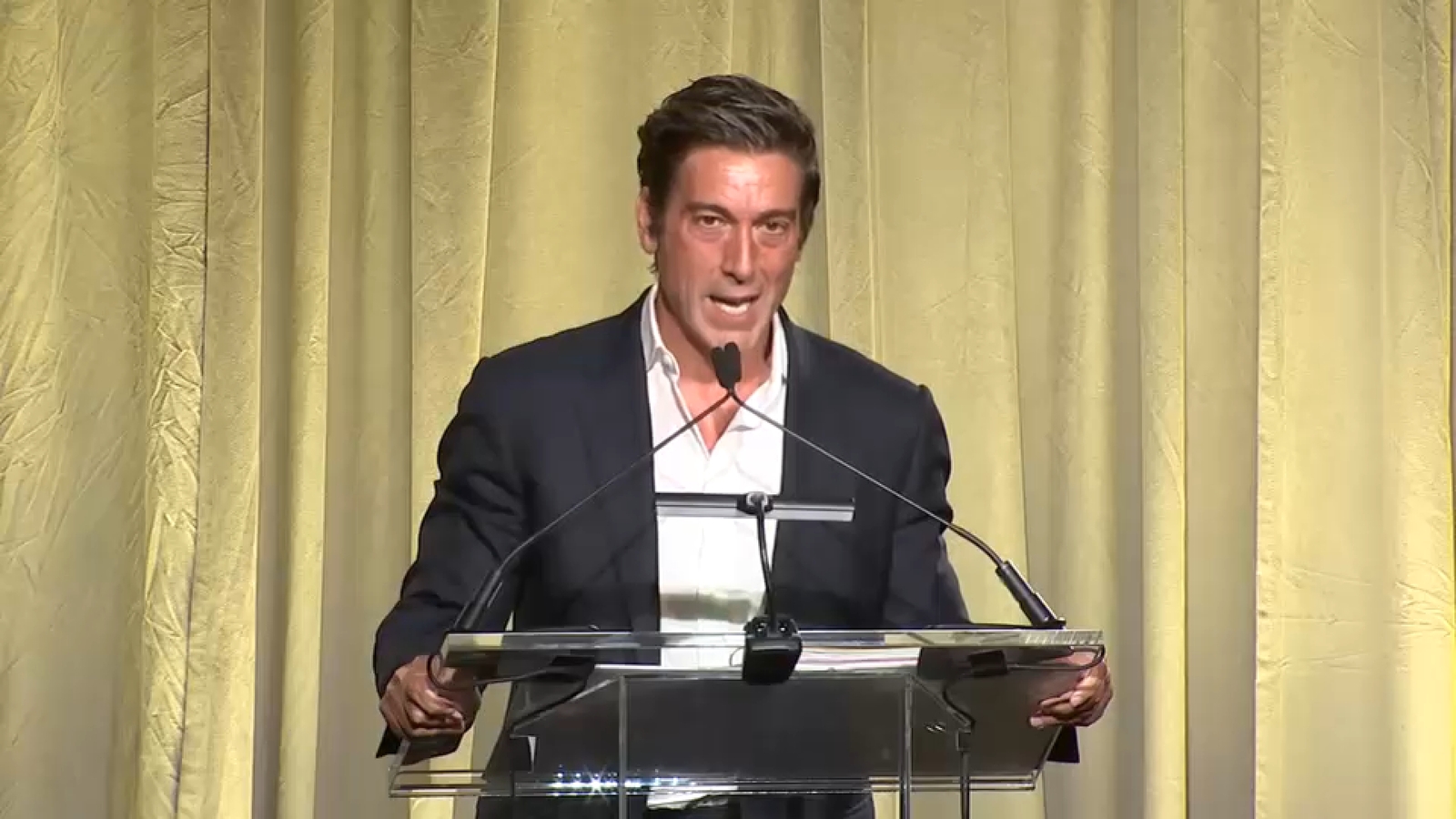
ABC News independently covered the medal presentation, although claims that David Muir delivered a mysterious unscripted statement that silenced his newsroom are not established by an authenticated broadcast transcript.
The documented story concerns the cemetery encounter, the soldier’s enforcement of established rules, and Hegseth’s decision to recognize that conduct rather than punish it.
The incident occurred following the annual Veterans Day observance at Arlington National Cemetery, attended by President Donald Trump, Vice President JD Vance, and senior military officials.
The ceremony honored Americans who served in the armed forces, with particular attention to those whose sacrifice is represented by the Tomb of the Unknown Soldier.
After the formal observance, Hegseth and members of his entourage gathered for photographs near the memorial’s steps.
The group included his wife, Jennifer Hegseth, chief of staff Ricky Buria, and other senior advisers accompanying the defense secretary during the visit.
Video showed members of the group talking and laughing as they finished posing and prepared to leave the area.
Iglesias, who was standing guard at the tomb, responded by turning toward the visitors and loudly delivering the standard instruction requiring silence and respect.
“All visitors will maintain an atmosphere of silence and respect at all times!” the soldier called out, directing attention toward the behavior expected at the memorial.
The command was delivered firmly, but it represented an established responsibility of soldiers assigned to protect the dignity of the tomb.
The sentinel did not accuse Hegseth of a crime, threaten disciplinary action, or engage in a personal political argument with the secretary.
He enforced the same standard applicable to members of the public, visiting dignitaries, senior officers, and civilian officials regardless of their position.
That distinction became essential to understanding why the Pentagon later praised the soldier rather than treating his intervention as an act of insubordination.
The footage showed the group moving away while Iglesias resumed his duties, leaving viewers to interpret the moment through the limited perspective provided by the recording.
The video did not establish which individual produced every audible remark, nor did it demonstrate that Hegseth personally intended to disrespect the memorial.
Nevertheless, the collective behavior prompted a correction, and the resulting footage quickly generated debate over the expectations imposed on senior Defense Department officials.
Critics argued that military leaders should demonstrate particular awareness of the solemn environment because they are responsible for reinforcing discipline throughout the armed forces.
Others observed that sentinels routinely correct visitors who become noisy and that the incident did not establish deliberate disrespect toward the fallen.
Both reactions concerned the significance of the behavior, but the central factual sequence was clear: the group became audible, and Iglesias instructed everyone to maintain decorum.
The Pentagon confirmed that the soldier acted appropriately, rejecting any implication that he had exceeded his authority by directing the warning toward senior officials.
Pentagon spokesman Sean Parnell stated that Iglesias had correctly and respectfully reminded those present to comply with the memorial’s standards.
The spokesman also emphasized that Hegseth and the department remained committed to honoring military personnel who sacrificed their lives for the country.
That response established the administration’s official position before the subsequent medal ceremony was announced, demonstrating that the department did not publicly condemn Iglesias.
The following day, however, Hegseth went beyond issuing a statement. He brought the soldier and members of his regiment to the Pentagon for formal recognition.
The department confirmed that Iglesias received the Joint Service Commendation Medal for performing his duties at the tomb during the November 11 incident.
The award was especially notable because the decoration recognizes meritorious achievement or service and is not routinely associated with junior enlisted personnel performing ordinary ceremonial responsibilities.
By presenting the medal personally, Hegseth publicly affirmed that a service member could enforce professional standards even when the people being corrected included the defense secretary.
The decision also gave the Pentagon a concrete response to the controversy, shifting attention from the original admonition toward recognition of the soldier’s conduct.
The resulting photographs confirmed that Hegseth and Iglesias met at the Pentagon, but they did not establish the secretary’s private reasoning beyond his publicly stated support for standards.
The distinction matters because the medal presentation can be documented without inventing a confidential conversation, sudden change of heart, or emotional reaction behind closed doors.
The extraordinary sequence was independently reported by the Associated Press, ABC News, CBS News, CNN, and military publication Stars and Stripes.
AP News+2
The Tomb of the Unknown Soldier occupies a distinctive place in American military tradition because it honors service members whose remains could not be identified after their deaths.
The memorial contains unidentified Americans from World War I, World War II, and the Korean War, symbolizing sacrifices made by individuals whose names remain unknown.
An unknown service member from the Vietnam War was also interred there, although those remains were identified in 1998 and subsequently returned to the family.
The tomb’s sentinels serve with the 3rd United States Infantry Regiment, known as The Old Guard, an organization entrusted with some of the military’s most solemn ceremonial duties.
Their responsibilities include guarding the memorial regardless of weather conditions, maintaining exacting standards of appearance, and ensuring visitors observe the required atmosphere of respect.
The guards are not simply ceremonial figures standing beside a monument. They are active-duty soldiers performing a highly visible responsibility under established military procedures.
Their duties also include correcting visitors who talk loudly, laugh, or otherwise disrupt the environment, regardless of whether those visitors occupy prominent positions.
A member of the regiment explained in an earlier Army interview that such corrections can occur several times a day during normal memorial operations.
That context is particularly relevant because Iglesias’s intervention, although directed toward an unusually prominent group, was not an unprecedented enforcement action.
He applied an established standard to circumstances in which he observed conduct inconsistent with the expectations imposed on everyone visiting the site.
The soldier’s commanding voice was intended to restore decorum, not to initiate a political confrontation or make a personal statement about Hegseth’s leadership.
Nevertheless, the incident attracted disproportionate attention because the defense secretary has made military discipline, professionalism, and institutional standards central themes of his administration.
Critics considered the footage an uncomfortable contrast between those public commitments and the behavior recorded near a sacred military memorial.
Supporters emphasized that Hegseth subsequently accepted the correction and recognized the soldier who delivered it, demonstrating respect for the enforcement of military standards.
The award presentation did not erase what viewers saw in the original footage, but it created an additional documented action relevant to evaluating the secretary’s response.
That distinction helps explain why the story developed beyond the original viral clip, which initially showed only the moment of admonition and the group’s departure.
By the following day, the public could examine photographs showing Iglesias receiving an official military decoration from the person whose group he had corrected.
The presentation was therefore more than an informal acknowledgment or brief social media compliment. It involved a recognized military award and a formal Pentagon ceremony.
According to the Pentagon, the decoration honored Iglesias for executing his duties during the November 11 incident, reinforcing the department’s public statement supporting his conduct.
The Joint Service Commendation Medal recognizes meritorious achievement or service connected to joint military responsibilities, making its presentation a meaningful form of official recognition.
The award is not reserved exclusively for senior officers, but its presentation to a relatively junior enlisted soldier for this incident attracted particular attention.
Military reporting characterized the event as unusual, especially because the recipient’s actions had directly involved one of the nation’s most senior civilian defense officials.
The ceremony also illustrated an important feature of military discipline: standards can carry authority independent of the relative rank or prominence of the individuals involved.
In this case, Iglesias was responsible for enforcing the memorial’s rules, and the defense secretary publicly recognized that responsibility rather than contesting it.
That does not mean every aspect of the incident was beyond criticism, nor does the medal independently establish that all participants behaved appropriately throughout the visit.
It does establish that the official response included endorsement of the sentinel’s actions, rather than punishment or public disagreement with the correction.
The distinction is especially important when examining claims that the soldier had embarrassed Hegseth so severely that his career or military position faced immediate consequences.
No verified reporting establishes that Iglesias was punished for the reprimand. The documented follow-up shows precisely the opposite: he received a formal commendation.
The episode also became entangled with Hegseth’s broader political difficulties, including a congressional impeachment attempt that had occurred only one day before the Veterans Day ceremony.
On November 10, the House blocked an effort led by Republican Representative Thomas Massie to advance eight impeachment articles against the defense secretary.
The accusations concerned military operations, constitutional war powers, and other matters unrelated to the Arlington incident, although both developments attracted scrutiny of Hegseth’s leadership.
Hegseth rejected the impeachment allegations, while most House Republicans supported referring the resolution to the Judiciary Committee rather than permitting immediate consideration.
That procedural result kept him in office and reflected substantial Republican support, but it did not resolve every policy disagreement underlying the impeachment proposal.
The Arlington incident arrived against that backdrop, encouraging critics to interpret the footage within their existing concerns about the Pentagon’s leadership.
However, the memorial reprimand and the impeachment articles remain separate matters, involving different facts and different standards of accountability.
A sentinel correcting noisy visitors is not equivalent to a finding of military misconduct, just as a congressional accusation does not independently establish an impeachable offense.
Responsible examination of Hegseth’s record requires distinguishing documented behavior from political interpretation and avoiding assumptions that one controversy proves unrelated allegations.
The involvement of David Muir adds another question about how television news coverage can be portrayed through dramatic narratives that exceed the authenticated record.
ABC News published reporting on November 12 documenting Iglesias’s reprimand, the award presentation, and the Pentagon’s explanation of the ceremony.
That coverage included the soldier’s identity and photographs confirming the medal presentation, providing a direct factual account of the development.
However, the available reporting does not authenticate a particular unscripted statement by Muir that supposedly overturned the controversy or stunned an entire newsroom.
Nor is there verified evidence that the ABC anchor abandoned his teleprompter, revealed secret information, or personally declared that the media’s interpretation had been destroyed.
Those additional descriptions should not be confused with ABC’s confirmed reporting about Hegseth’s decision to recognize the soldier.
ABC News+1
The difference between the two accounts is significant because the verified medal presentation is itself an unexpected development that does not require an invented television exchange.
Viewers initially encountered footage of a senior official’s group being corrected at a sacred memorial, followed by evidence that the same official had presented the soldier with an award.
The sequence naturally raises questions about respect, responsibility, and the public expectations placed on those holding senior government positions.
For Hegseth, the incident provided an opportunity to demonstrate that his emphasis on military standards extended to situations involving himself and his closest advisers.
For Iglesias, the episode highlighted the professional responsibilities entrusted to service members guarding the tomb, including correcting prominent visitors when circumstances require it.
For the Pentagon, the public statements and ceremony established an institutional position supporting the sentinel’s conduct and the established rules of the memorial.
For visitors to Arlington, the episode offered a widely reported reminder that silence and dignity remain essential parts of the experience, regardless of political status.
The incident also illustrates why short videos should be examined alongside subsequent actions, particularly when footage captures only a brief portion of a developing story.
The original recording established that the group was admonished. The Pentagon’s response established that the soldier’s correction was considered appropriate.
The medal presentation then provided a further documented action, showing that Hegseth chose to recognize the service member publicly.
Each fact contributes to understanding the event, but none independently reveals the private motivations of every participant or eliminates legitimate disagreement about the original conduct.
As of November 16, 2026, the verified story is that Iglesias performed his duty at Arlington on Veterans Day and received the Joint Service Commendation Medal the following day.
The dramatic claim of a mysterious Muir statement remains unsupported, while the Pentagon’s photographs and statements provide a clear record of what followed.
The lasting significance of the controversy lies in the relationship between military authority and professional responsibility, particularly when senior officials encounter rules enforced by junior personnel.
At Arlington National Cemetery, those rules exist to protect the dignity of Americans whose sacrifices are commemorated without regard to rank, political affiliation, or public recognition.
Iglesias’s command was not a policy speech or political judgment. It was an instruction rooted in the solemn obligations of his assignment.
Hegseth’s subsequent award publicly recognized that duty, creating a conclusion different from the one viewers might have anticipated after first encountering the footage.
The episode therefore ends not with an authenticated secret revelation or a television studio falling silent, but with a documented military ceremony.
A soldier enforced the rules at the Tomb of the Unknown Soldier. The defense secretary whose group received the warning later pinned a medal on that soldier.
And beneath the political arguments surrounding the video remains a principle central to the memorial itself: those entrusted with honoring the fallen must uphold its standards, whoever happens to be watching.
