
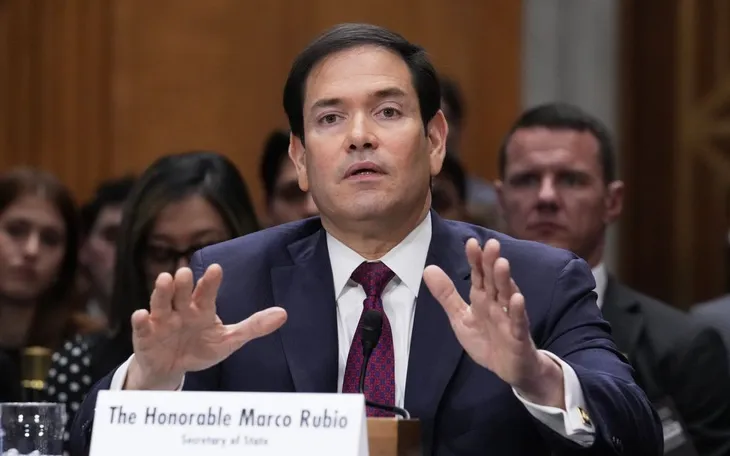
Secretary of State M@rco Rubi0 delivered an extraordinary public rebuke of Amnesty International, accusing the prominent human rights organization of misplaced outrage while describing horrific abuses committed by Iran’s government.
What began as a question about American military operations quickly escalated into a confrontation over human rights, international accountability, and whether Washington’s critics were applying consistent standards.
Rubio’s response was unusually blunt, turning a diplomatic press conference in Portugal into a contentious argument about the Iranian regime’s treatment of protesters, wounded civilians, and medical personnel.
The confrontation occurred October 8, during a joint appearance with Portuguese Foreign Minister Paulo Rangel in Lisbon, where discussions about military cooperation unexpectedly collided with allegations involving the war in Iran.
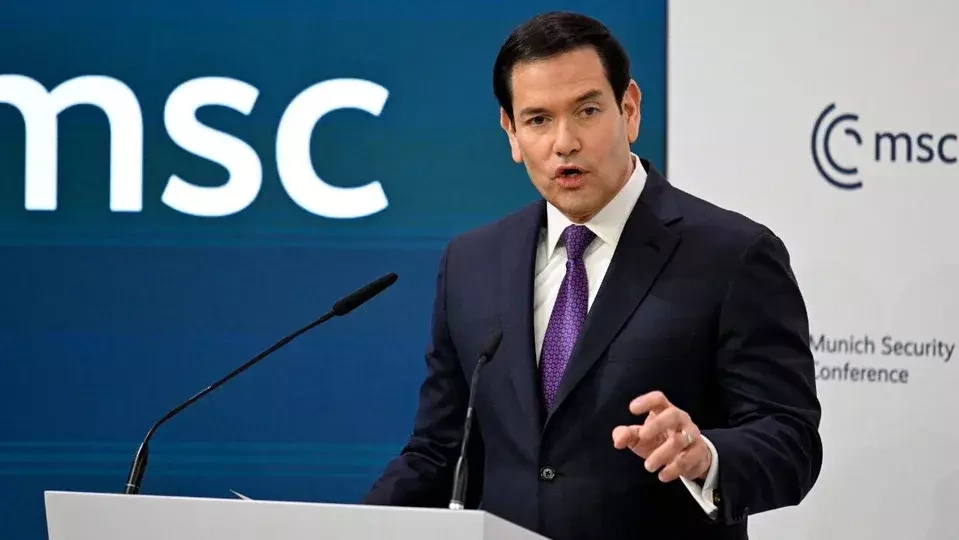
A journalist raised concerns associated with Amnesty International’s criticism of American military activity, particularly whether Portuguese facilities could support operations potentially involving violations of international law.
Rather than accept the organization’s assessment, Rubio challenged its credibility outright, delivering a condemnation that immediately shifted attention from American military conduct toward the Iranian government’s documented record of repression.
His opening declaration was unmistakable: “Amnesty International is a fraud.” It was not a carefully qualified diplomatic disagreement but a direct attack on an institution that has investigated human rights abuses worldwide.
Rubio then accused Iranian authorities of killing tens of thousands of people during protests, invoking the scale of the bloodshed to argue that Iran’s domestic repression deserved urgent international attention.
He also described Iranian security personnel entering hospitals to kill injured protesters, sometimes targeting the medical workers who had attempted to save their lives.
Those allegations formed the emotional center of Rubio’s response, transforming an exchange about military procedures into a broader dispute about mass killings, medical neutrality, and accountability for state violence.
Rubio characterized the abuses he described as war crimes and crimes against humanity, placing Iran’s treatment of its own citizens at the center of his criticism.
The remarks were recorded in the official account of the press conference, confirming the substance of Rubio’s unusually harsh language and his decision to confront Amnesty International publicly.
Yet the confrontation was more complicated than a simple disagreement about whether Iran had committed atrocities. Amnesty International had itself documented extensive evidence of Iranian government abuses.
That distinction became crucial because Rubio’s criticism suggested the organization should concentrate on Iran, while its published investigations demonstrated that it had already devoted substantial resources to precisely those violations.
The immediate dispute originated with questions about Lajes Air Base in the Azores, a strategically significant Portuguese military facility used in cooperation with American forces.
Amnesty’s Portuguese office had urged authorities to prevent the base from facilitating military operations that could contribute to unlawful attacks, including concerns surrounding a deadly strike on an Iranian elementary school.
The journalist’s question therefore raised a specific issue: what did Portuguese officials know about American military missions using the installation, and what obligations accompanied that cooperation?
Rubio did not provide operational details about the flights. Instead, he defended the established relationship between the United States and Portugal while directing his strongest criticism toward Amnesty International.
The contrast exposed two competing arguments. Rubio emphasized Iranian government atrocities as an urgent moral priority, while Amnesty maintained that possible violations by American forces also required investigation.
Neither position necessarily invalidated the underlying concern raised by the other. Iranian government crimes and potential violations during American military operations are separate questions requiring independent examination.
Nevertheless, Rubio’s language ensured that the argument would extend beyond military logistics and into a dispute about the credibility of organizations claiming authority to judge international conduct.
His description of Iran’s protest crackdowns drew upon a crisis that had already shocked international observers, particularly after demonstrations expanded across the country in late December 2025.
Protesters initially mobilized amid severe economic grievances, but the unrest developed into wider demands for political change and an end to longstanding government repression.
Iranian security forces responded with extensive violence, according to investigations documenting the use of firearms, metal pellets, arbitrary arrests, and lethal force against demonstrators and bystanders.
The most devastating phase came in January 2026, when security personnel carried out mass killings during nationwide protests, prompting urgent international demands for independent investigation and accountability.
Amnesty International concluded that thousands of protesters and bystanders were unlawfully killed during January 8 and 9, describing the crackdown as an unprecedented escalation of state violence.
Precise casualty totals remain difficult to establish because of restrictions on information, communications disruptions, and the Iranian authorities’ resistance to independent scrutiny of their actions.
Rubio’s reference to tens of thousands of deaths was a claim he made publicly; the available investigations establish mass killings but do not independently verify his precise numerical assertion.
Even with those uncertainties, the documented scale of the crackdown was sufficiently severe to generate widespread concern about possible crimes against humanity and systematic attacks against civilians.
The allegations involving hospitals added another disturbing dimension. Medical facilities should provide protection and treatment, yet reports from Iran described wounded demonstrators facing threats even after reaching medical care.
Human rights investigations have documented attacks on medical services, intimidation of healthcare workers, interference with treatment, and the targeting of individuals associated with antigovernment demonstrations.
However, Rubio’s specific descriptions of protesters being murdered in hospital beds and doctors being killed require examination against individual incidents rather than being treated as independently established in every detail.
The broader pattern of repression extended beyond the January demonstrations, reaching back to earlier waves of protest in which Iranian authorities had repeatedly used lethal force against civilians.
One defining example was the Woman, Life, Freedom uprising that followed the 2022 death of Mahsa Amini after her detention by Iran’s morality police.
Her death became a symbol of broader grievances involving women’s rights, political repression, arbitrary detention, and the Iranian government’s coercive enforcement of social restrictions.
Investigations into that uprising revealed shootings, torture, enforced disappearances, sexual violence, and other abuses against protesters, including children and members of minority communities.
In September 2026, Amnesty International published a major investigation identifying 87 Iranian officials whom it said should face criminal investigation for their alleged roles in crimes against humanity.
That report examined command structures, security organizations, and decisions associated with the violent suppression of protests, seeking to connect individual atrocities with the institutions responsible for ordering them.
The findings directly challenged any impression that Amnesty International had neglected the Iranian government’s conduct while concentrating exclusively on American or Western actions.
Indeed, Amnesty had repeatedly called for international criminal accountability over Iranian abuses, arguing that decades of impunity had encouraged increasingly deadly responses to public dissent.
Its investigators also warned that the absence of meaningful consequences for earlier crackdowns helped create conditions for the devastating violence witnessed in January 2026.
Amnesty International+1
This history became central to Amnesty’s response after Rubio’s remarks, because the organization rejected the suggestion that criticizing American actions amounted to overlooking atrocities committed by Tehran.
On October 14, Amnesty International USA published a response accusing Rubio of diverting attention from questions about American military conduct and the possibility of unlawful attacks against civilians.
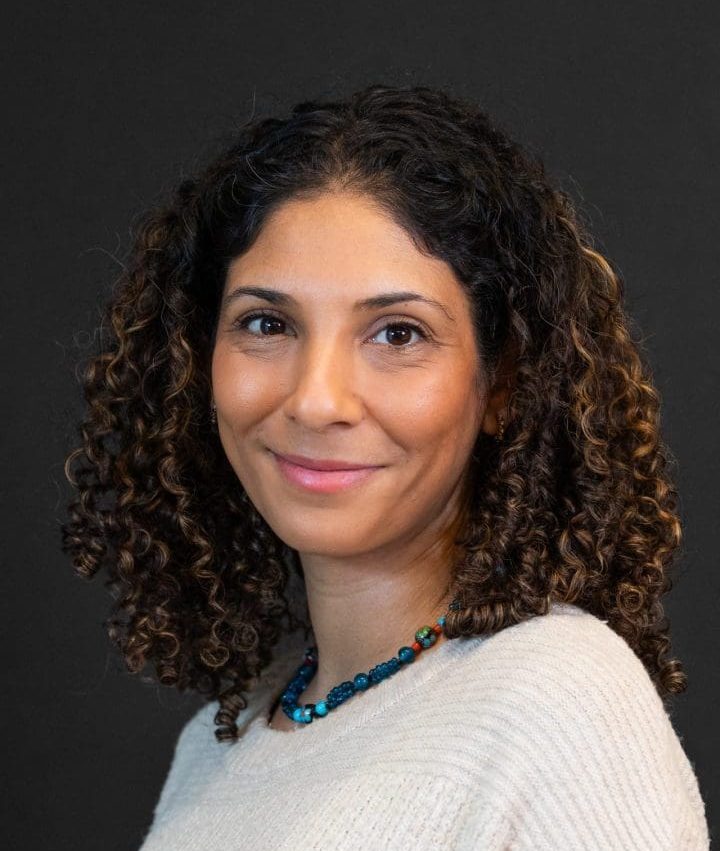
Amanda Klasing, the organization’s national director of government relations and advocacy, challenged the secretary’s characterization and highlighted Amnesty’s extensive published investigations into Iranian government crimes.
The organization emphasized its research on killings, torture, executions, and the security structures responsible for repressing dissent, arguing that its record contradicted Rubio’s implication.
Amnesty also noted that it had urged the United Nations to pursue accountability mechanisms targeting Iranian officials suspected of responsibility for grave human rights violations.
That response changed the character of the controversy. Rubio had attacked Amnesty’s credibility, but the organization countered with a documented history of investigating the very atrocities he had described.
The disagreement therefore became less about whether Iran had committed serious abuses and more about whether those abuses justified dismissing allegations involving American military operations.
For Rubio, the central question concerned the scale of the Iranian regime’s violence and the moral responsibility of international organizations to confront governments brutalizing their citizens.
For Amnesty, the principle was that human rights protections should apply universally, regardless of whether suspected perpetrators were American officials, Iranian authorities, or representatives of another government.
The organization also pointed to the elementary school strike in Minab, Iran, which had raised serious questions about civilian casualties and the legality of military targeting decisions.
Amnesty argued that those allegations warranted investigation and maintained that demanding answers about American conduct did not diminish its condemnation of Iran’s own government.
Its October response also criticized the broader Trump administration’s approach to international accountability institutions, presenting Rubio’s remarks as part of a larger disagreement over enforcement of international law.
Amnesty International USA+1
For American audiences, the exchange illustrated a persistent tension in foreign policy: the difference between condemning an adversary’s abuses and accepting scrutiny of military decisions made by Washington.
The United States has repeatedly defended its security interests and those of its allies while criticizing Iran’s treatment of dissidents and its use of violence against protesters.
Yet allegations involving civilian casualties during American operations demand separate factual and legal analysis, regardless of the Iranian government’s documented violations against its own population.
This is where Rubio’s argument carried both political force and an important limitation. His description of Iranian repression addressed genuine atrocities, but not every question originally posed.
The journalist had asked about the use of Portuguese facilities and the circumstances surrounding American military operations, matters that could not be resolved solely by discussing Tehran’s behavior.
Rubio subsequently defended the protocols governing American access to allied facilities, insisting that Washington respected Portugal’s sovereignty and complied with established bilateral arrangements.
He did not, however, disclose the specific missions or operational details that would conclusively answer the questions surrounding the flights mentioned during the press conference.
That unresolved point matters because international military cooperation involves responsibilities extending beyond diplomatic assurances, especially when installations may support operations during an armed conflict.
Portugal’s position also carried significance because its relationship with the United States combines longstanding security cooperation, NATO commitments, and domestic expectations concerning adherence to international law.
The Lisbon exchange placed those considerations in public view while illustrating how disputes about military accountability can rapidly become broader arguments over moral authority and geopolitical loyalty.
Rubio’s supporters could reasonably see his remarks as an emphatic defense of Iranian civilians whose suffering has too often been overshadowed by competing international crises.
Critics, however, could argue that directing attention toward another government’s atrocities does not establish whether American military operations complied with applicable legal obligations.
Both interpretations emerged from the same exchange, demonstrating how a forceful public statement can elevate one legitimate concern while leaving a separate question unresolved.
The controversy also revealed a fundamental distinction between political rhetoric and legal findings. Accusations of war crimes or crimes against humanity carry specific evidentiary requirements.
Determining legal responsibility requires more than public denunciations, particularly where casualty figures, individual incidents, command decisions, and the circumstances of military operations remain disputed or incompletely documented.
That requirement applies to Iranian authorities accused of massacring protesters and to military personnel or commanders whose actions are questioned during attacks resulting in civilian deaths.
Rubio’s strongest point concerned the overwhelming importance of confronting Iran’s documented repression, including violence against civilians demanding basic political rights and government accountability.
Amnesty’s strongest rebuttal concerned its substantial record of investigating those abuses, undermining the suggestion that its criticism of Washington reflected indifference toward victims in Iran.
There is no verified basis for describing the press conference as a direct face-to-face showdown between Rubio and Amnesty representatives, nor for claiming the organization was rendered speechless.
The recorded exchange was between Rubio and journalists, followed days later by a published response from Amnesty International defending its work and criticizing the secretary’s remarks.
That sequence does not diminish the confrontation’s significance. It establishes a clearer account of what happened, who challenged whom, and why the disagreement continued after Lisbon.
The unresolved questions are substantial: whether particular American operations violated international law, how military cooperation was authorized, and what accountability mechanisms could address alleged abuses.
Meanwhile, Iran’s victims continue to face the consequences of a system accused of employing imprisonment, lethal force, and persecution to suppress political demands for change.
The dispute ultimately exposed a deeper challenge facing American foreign policy: defending universal human rights while confronting allegations that the United States itself has failed to uphold them.
Rubio delivered an unmistakably aggressive condemnation of Amnesty International, but the organization’s documented investigations and subsequent rebuttal ensured his accusation would not go unanswered.
The lasting significance of the confrontation may therefore rest not on who delivered the harshest words, but on whether the serious allegations raised on both sides receive credible scrutiny.
Because behind the political rhetoric stand the victims of Iranian repression, families seeking answers about civilian deaths, and an unresolved question about accountability that neither side can simply dismiss.
