
A provocative political confrontation involving Vice President JD Vance and Representative Alexandria Ocasio-Cortez is circulating online, placing the soaring cost of housing in New York City at the center of a national argument.
The story describes Vance challenging the New York Democrat during a televised town hall, confronting her with Census data about housing costs in Parkchester, a Bronx neighborhood within her congressional district.
According to the account, Vance asked a pointed question: “What’s the average rent in Parkchester?”
The narrative then claims Ocasio-Cortez remained silent for seven seconds, unable to answer before Vance delivered a devastating criticism of her economic policies.
But the extraordinary televised confrontation has not been substantiated by an authenticated broadcast recording, official transcript, or reliable contemporary reporting.
There is no verified evidence that Vance posed that specific question to Ocasio-Cortez or that she became speechless during a live exchange.

What can be verified is a significant housing affordability problem in her district, alongside a genuine policy disagreement between the two politicians over its causes and potential solutions.
The documented figures from Parkchester reveal financial pressures that cannot be dismissed through political rhetoric, regardless of which party claims to represent working Americans.
The controversy also raises a broader question: how much responsibility should federal officials bear when families struggle to afford housing in the communities they represent?
Parkchester, located in the central Bronx, is a densely populated neighborhood known for its residential apartment complexes, diverse population, and longstanding working-class communities.
The neighborhood falls within New York’s 14th Congressional District, represented by Ocasio-Cortez since January 2019.
Her district includes portions of the Bronx and Queens, encompassing communities with substantial immigrant populations, public housing developments, and households facing persistent financial challenges.
Housing data demonstrate that the affordability problem is real, even though the alleged confrontation involving Vance has not been established.
According to the NYU Furman Center’s neighborhood data, the median monthly gross rent in the Parkchester/Soundview community district was approximately $1,480 in 2024.
That figure represents the median amount paid by existing renters, including utilities, rather than the price a new tenant would necessarily encounter while searching for an apartment.
For households that had recently moved, the median rent was substantially higher, reaching approximately $1,810 when expressed in 2025 dollars.
The distinction is important because long-term residents with regulated leases may pay significantly less than families entering the housing market for the first time.
A broader Census-based analysis of Parkchester’s neighborhood area estimated average monthly rent and utilities at approximately $1,703, with a median of approximately $1,743.
Those figures demonstrate why a question about average rent cannot be answered accurately without identifying the geographic area, reporting period, and statistical measure involved.
An advertised apartment price, an existing tenant’s monthly payment, and the Census estimate of gross rent describe different aspects of the housing market.
Using one number without explaining its meaning can create a misleading impression about what residents actually pay.
The neighborhood’s financial conditions become more revealing when rent is compared with household income.
The Furman Center reported that Parkchester/Soundview’s median household income in 2024 was approximately $43,790, substantially below New York City’s citywide median.
Its poverty rate reached approximately 30.4%, reflecting economic difficulties affecting a significant share of local residents.
These figures help explain why an apartment that appears relatively affordable compared with Manhattan can still impose a severe financial burden on a Bronx family.
A household earning approximately $44,000 annually has limited room for rent, groceries, transportation, healthcare, childcare, and other recurring expenses.
Even when a family occupies a rent-regulated apartment, rising utility bills and other living costs can reduce the money available for essential needs.
The situation is particularly difficult for households experiencing unstable employment, unexpected medical bills, or periods of reduced income.
Housing researchers generally describe a household as rent burdened when it spends more than 30 percent of income on housing.
A household is considered severely rent burdened when housing consumes more than half of its income, leaving substantially less money for other necessities.
In Parkchester/Soundview, approximately 34.4 percent of renter households were severely rent burdened in 2024, according to the Furman Center’s analysis.
That statistic is more revealing than a single apartment price because it connects housing expenses to the financial circumstances of the people paying them.
The neighborhood also experienced significant housing maintenance problems, including serious building-code violations and overcrowding.
These conditions demonstrate that housing affordability is not simply about whether residents can make monthly payments.
It also concerns whether homes remain safe, adequately maintained, and suitable for the families living in them.
The data create legitimate questions for public officials representing the area, but they do not establish that one member of Congress personally caused the problems.
New York’s housing market is shaped by federal policy, state regulations, city zoning, construction costs, landlord decisions, and broader economic conditions.
Ocasio-Cortez has advocated several housing proposals intended to address those problems, making her legislative record directly relevant to the debate.
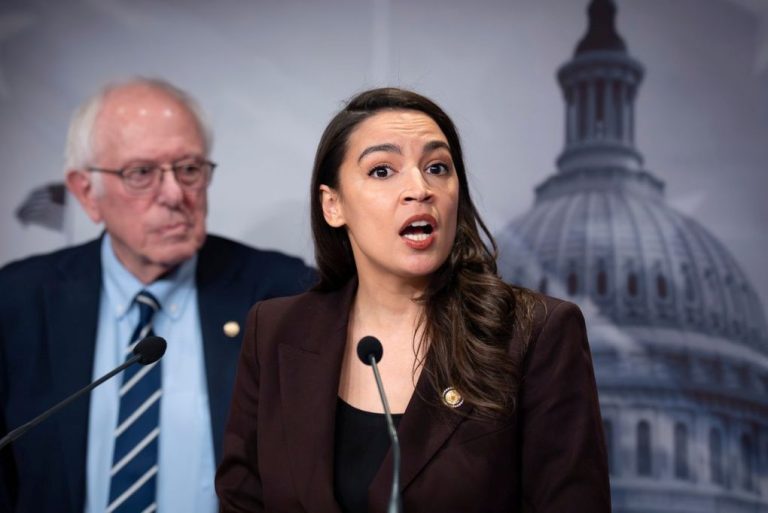
On August 6, 2026, she joined Senator Bernie Sanders and Representative Delia Ramirez in reintroducing the Green New Deal for Public Housing Act.
The legislation proposes substantial investment in modernizing public housing, addressing deteriorating infrastructure, improving energy efficiency, and creating employment opportunities.
Supporters argue that public housing has experienced decades of inadequate investment, leaving residents exposed to deteriorating buildings and costly maintenance problems.
The proposal would support renovations involving heating systems, water infrastructure, electrical equipment, weatherization, and other improvements.
It would also expand opportunities for residents to participate in projects affecting their homes and communities.
Ocasio-Cortez has described housing affordability as a fundamental economic issue, arguing that Americans should not face financial insecurity simply to obtain safe shelter.
Her legislative agenda also includes proposals to protect tenants, limit certain rent increases, and expand the availability of affordable housing.
Critics question whether large federal spending programs can address affordability efficiently without accompanying changes to local regulations and housing construction.
They also argue that additional subsidies may produce limited benefits in markets where restrictive zoning prevents developers from building enough homes.
Those objections highlight a central economic question: whether affordability should be addressed primarily through public investment, changes in housing supply, or a combination of both.
Vance has emphasized a different approach, particularly the relationship between housing construction, local zoning, and immigration.
During a March 10, 2025, appearance at the National League of Cities Congressional City Conference, the vice president discussed the rising cost of housing across the country.
He argued that Americans had experienced significant reductions in purchasing power as home prices increased faster than wages.
Vance called for local governments to reconsider zoning policies that make it difficult or expensive to construct additional homes.
He also acknowledged that federal authority over local zoning is limited, meaning city governments play an important role in determining housing supply.
That acknowledgment is relevant because housing construction decisions often depend on municipal rules governing building height, density, parking, and permitted residential uses.
When communities restrict construction, the number of available apartments may fail to keep pace with demand.
Housing economists frequently identify years of inadequate construction and restrictive land-use rules as major contributors to the national affordability crisis.
Vance’s argument included those concerns, but he also placed considerable emphasis on immigration.
He maintained that unauthorized immigration increased demand for housing, creating additional competition for homes and apartments already in limited supply.
The vice president argued that enforcing immigration laws could reduce some of that pressure while governments pursued policies encouraging construction.
His position reflects a broader administration argument that immigration policy has economic consequences extending beyond border security.
However, the magnitude of immigration’s impact on housing affordability remains contested.
Economists generally recognize that population growth increases demand for housing, but the effect depends on local supply, household formation, construction activity, and geographic patterns.
Immigrants also contribute labor to the construction industry, meaning immigration can affect both housing demand and the supply of workers needed to build homes.
A November 2025 PolitiFact examination challenged Vance’s claim that tens of millions of unauthorized immigrants were primarily responsible for the housing crisis.
The analysis found that his population estimates exceeded available research and that years of underbuilding remained a central explanation for high housing costs.
That finding does not mean immigration has no effect on local housing markets.
It means that assigning most of the national affordability crisis to unauthorized immigration is not supported by the available evidence.
This distinction matters when comparing Vance’s position with Ocasio-Cortez’s housing agenda.
The vice president emphasizes construction barriers, supply restrictions, and immigration-related demand.
The congresswoman emphasizes public investment, tenant protections, affordable housing development, and the rehabilitation of deteriorating public buildings.
Both approaches address aspects of the housing problem, but their potential effects depend on implementation and economic conditions.
A proposal to expand public housing requires funding, suitable locations, construction capacity, and long-term maintenance arrangements.
A proposal to relax zoning restrictions requires cooperation from local officials and consideration of infrastructure, transportation, and neighborhood impacts.
Efforts to change immigration enforcement may affect population movements, but those changes do not automatically eliminate shortages created through decades of inadequate construction.
For families in Parkchester, the most consequential question is whether any of these approaches will reduce housing costs relative to their incomes.
The district’s broader affordability statistics demonstrate the scale of the challenge.
According to the National Low Income Housing Coalition’s 2026 congressional district profile, New York’s 14th District contains approximately 64,005 extremely low-income renter households.
The organization estimates a shortage of approximately 41,081 rental homes that are both affordable and available to households in that income category.
Only 36 affordable and available homes exist for every 100 extremely low-income renter households, according to the same analysis.
The profile also indicates that approximately 71 percent of extremely low-income renter households face severe housing cost burdens.
These findings do not establish that every resident faces the same circumstances, but they reveal substantial pressure on households with limited financial resources.
The coalition’s report also estimates that a household would need an annual income exceeding $100,000 to afford a typical two-bedroom rental at the applicable fair-market benchmark.
That benchmark should not be confused with the median rent actually paid by existing Parkchester tenants.
The difference helps illustrate how housing research can produce several valid figures describing different parts of the same market.
A politician attempting to discuss affordability responsibly must explain those distinctions rather than rely on the most dramatic available number.
The housing crisis also extends beyond the Bronx, affecting communities represented by Republicans and Democrats throughout the country.
Families in Florida, Ohio, Texas, California, and other states face different combinations of high rents, rising insurance costs, property taxes, and limited housing availability.
In some areas, rapid population growth has increased demand faster than developers can construct homes.
In others, aging housing stock and stagnant household incomes create affordability problems even when rents remain below national averages.
Interest rates further complicate the situation by increasing borrowing costs for prospective homeowners and developers.
Construction expenses involving labor, building materials, insurance, and financing can also raise the cost of producing new housing.
These factors interact, making it difficult to identify a single government policy responsible for every local affordability problem.
They also limit the ability of an individual congresswoman or vice president to transform a neighborhood’s housing conditions through one legislative proposal.
Members of Congress can propose laws, advocate appropriations, and oversee federal agencies, but they do not independently control municipal zoning boards or private rental prices.
The vice president can advocate administration priorities and help coordinate executive policy, but federal officials likewise depend on legislation and cooperation from other levels of government.
This distribution of authority is relevant to judging both politicians’ claims about what their housing programs can accomplish.
For Ocasio-Cortez, the relevant questions concern whether her proposals can attract sufficient legislative support and produce measurable improvements in affordable housing supply.
For Vance, the questions concern whether the administration’s approach to construction and immigration can meaningfully lower costs without creating unintended economic consequences.
Neither set of questions can be answered through a fictional television exchange.
The alleged seven-second silence attributed to Ocasio-Cortez has no authenticated recording, and the supposed Parkchester question has not been verified as a statement Vance delivered to her.
No reliable evidence establishes that the two participated in the described town hall or that one publicly defeated the other during a direct confrontation.
What exists is a documented disagreement about housing policy and reliable statistical evidence concerning affordability in the congresswoman’s district.
Those facts are sufficient to sustain a serious examination of whether government policies are addressing the needs of working families.
They also reveal why political discussions often become distorted when dramatic personal accusations replace measurable outcomes.
Parkchester’s housing problems did not emerge overnight, and they cannot be explained exclusively through the actions of one elected official.
Residents have confronted changing rents, maintenance problems, household income constraints, and limited opportunities to secure affordable apartments.
The neighborhood’s economic difficulties require sustained attention from officials at the federal, state, and municipal levels.
Political leaders may disagree sharply about the appropriate solutions, but their claims should ultimately be evaluated against housing production, affordability, and living conditions.
As of November 16, 2026, the verified record establishes substantial housing burdens in Parkchester/Soundview and a national disagreement between Vance and Ocasio-Cortez over housing policy.
It does not establish the purported televised confrontation, the exact question attributed to Vance, or the claim that Ocasio-Cortez became unable to answer.
The consequential reality is that many families in her district face housing expenses that consume an unsustainable share of their income.
The same problem, in different forms, affects communities across the United States.
The unresolved question is whether federal policies can meaningfully increase housing supply, improve existing homes, and reduce the financial burden on families.
For Vance and Ocasio-Cortez, that is the substantive policy disagreement worth examining.
And for residents of Parkchester, the most important answer will not come from an imagined moment of political humiliation.
It will come from whether their next rent payment becomes easier to afford.
