
Kennedy vs. Raskin: A Clash of Political Rhetoric, Constitutional Expertise and Congressional Accountability…
Washington has never lacked political confrontations. But the most revealing exchanges are not necessarily those involving raised voices, personal insults or dramatic gestures. Sometimes the real question is whether a politician’s reputation, academic credentials and public confidence can withstand a straightforward examination of the facts.
A headline describing Sen@tor J0hn Kennedy confronting Congressman Jamie Raskin in a tense committee exchange promises precisely that kind of political drama.
The imagined scene is cinematic: a battered leather briefcase, a carefully prepared collection of documents and a simple yes-or-no question that supposedly leaves a prominent constitutional scholar without an answer.
Yet the account provided does not establish that this particular confrontation occurred.
There is no verified evidence of the briefcase incident, the alleged academic entourage or the claimed moment when Raskin was left speechless.

Nevertheless, the political contrast at the center of the story is worth examining. Kennedy and Raskin represent two very different approaches to political argument, and their public personas illustrate a broader debate about expertise, accountability and the meaning of constitutional leadership.
Jamie Raskin is not an ordinary political commentator who happens to discuss constitutional law. Before entering Congress, he spent approximately 25 years teaching constitutional law and the First Amendment at American University’s Washington College of Law.
He graduated from Harvard College and Harvard Law School, earning his law degree magna cum laude, and served as an editor of the Harvard Law Review. He was also a Maryland state senator before winning election to the House of Representatives in 2016.
These are substantial academic and professional credentials, independently documented by American University and Maryland’s official legislative records.
His congressional career has further elevated his national profile. In January 2021, Raskin became the lead impeachment manager during the second impeachment trial of Don@ld T.r.u..m.p.
He later served on the House Select Committee investigating the January 6 attack on the Capitol. Those responsibilities placed him at the center of some of the most consequential constitutional and political debates of the past decade.
For supporters, Raskin’s background makes him a particularly credible defender of constitutional principles. They see an experienced legal scholar who understands the relationship between executive authority, congressional oversight and individual rights. His critics, however, question whether his constitutional arguments are always applied consistently, particularly when political loyalties and institutional interests are involved.
That tension creates an obvious opening for a politician like John Kennedy.
The Louisiana senator has developed a distinctive public style. His questions often sound conversational, but their structure can be pointed and deliberately difficult to evade. Rather than beginning with an elaborate legal lecture, he frequently reduces a complicated dispute to a basic proposition and asks a witness to explain whether it is true.
This approach can be effective in congressional hearings because public officials are often accustomed to speaking at length. They may present complicated explanations, cite legal precedents and redirect attention toward broader political arguments. A carefully framed question can force the discussion back toward the specific issue that prompted the hearing.
But there is an important distinction between asking a difficult question and proving a case.
A yes-or-no question can expose an inconsistency, but it can also conceal important qualifications. Constitutional law rarely operates through simple binaries.
Questions involving executive authority, congressional oversight, due process and the separation of powers frequently depend on statutory language, judicial precedent and the precise circumstances under examination.
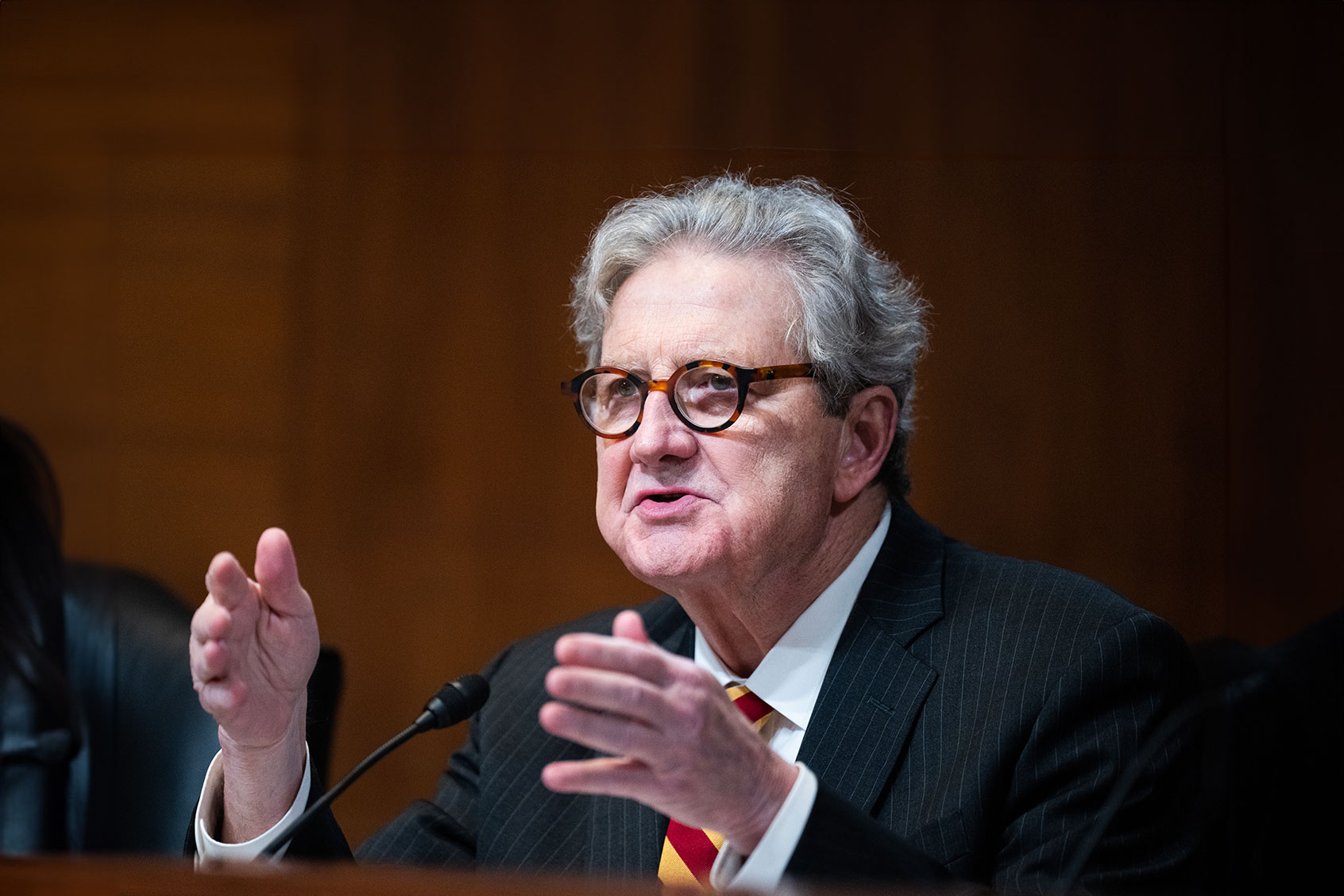
Raskin’s academic background is therefore relevant, even if it should never place him beyond scrutiny. A constitutional scholar should be expected to explain difficult legal questions clearly, acknowledge uncertainty where it exists and apply consistent standards regardless of which political party benefits.
The same expectation should apply to Kennedy.
The imagined confrontation also introduces another potentially significant element: financial disclosures involving a lawmaker’s spouse. Such records can raise legitimate questions about conflicts of interest, transparency and whether elected officials are subject to adequate financial restrictions.
But the material provided offers no identifiable transaction, document or verified allegation connecting Raskin to improper financial conduct. Introducing banking records without explaining their origin or significance does not establish wrongdoing.
That distinction is especially important in an era when political content is frequently designed around dramatic accusations. A document placed on a table may look persuasive on camera, but its value depends on what it actually contains. A financial disclosure is not proof of corruption.
An academic diploma does not prove that every legal argument is correct. And a politician’s inability or unwillingness to answer a question immediately does not establish that the underlying accusation is true.
The real test of congressional oversight is evidence.
If Kennedy were questioning Raskin about constitutional authority, the strongest exchange would begin with a clearly identified legal issue. What power does Congress possess?
What limits does the Constitution impose? Which precedent supports the interpretation being advanced? Has the same standard been applied to Democratic and Republican administrations?
Those questions would place the discussion on substantive ground rather than allowing it to become a contest over personalities.
The issue of consistency is particularly important. American politicians frequently defend expansive interpretations of constitutional authority when their own party controls the relevant institutions, only to condemn similar arguments when power changes hands.
Democrats and Republicans have both been accused of this behavior. It weakens public confidence because constitutional principles begin to look like political instruments rather than enduring rules.
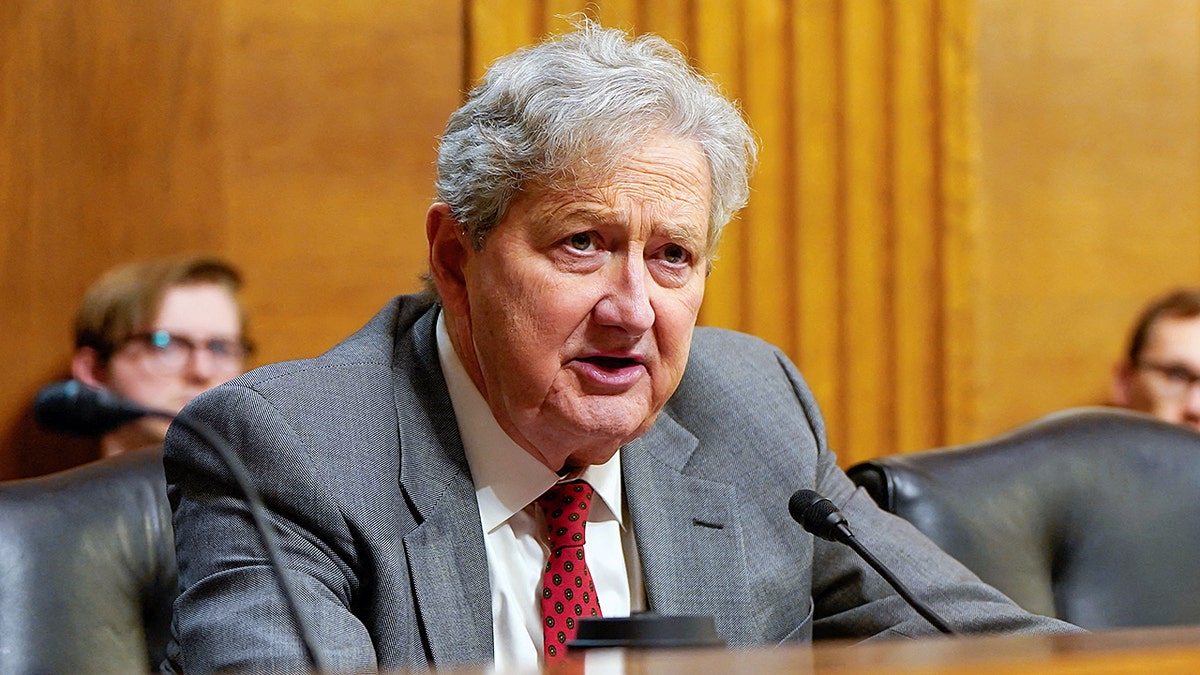
Raskin’s experience makes him an appropriate participant in that debate. His work as a professor, legislator and impeachment manager gives him extensive experience with constitutional questions. But experience should create greater responsibility, not immunity from criticism. If he argues that a particular presidential action violates constitutional principles, he should be prepared to explain the legal foundation of that position and demonstrate that the same reasoning would apply to a president from his own party.
Kennedy, meanwhile, should be judged by the same standard. His questioning may be entertaining, but the purpose of a congressional hearing is not simply to produce a memorable television clip. It is to establish facts, clarify legal responsibilities and help the public understand how government institutions function.
That is why the supposed leather briefcase should not become the central focus of the story. Its dramatic appearance may help create an engaging political narrative, but the more important question is what evidence it contains. A credible challenge does not depend on props, theatrical pauses or an opponent’s reaction. It depends on the strength of the underlying argument.
There is also a broader institutional lesson. Congress needs members who understand constitutional law, but it also needs members willing to challenge one another’s interpretations. Academic expertise without accountability can become intellectual arrogance. Political skepticism without factual discipline can become empty performance. Neither serves the public interest.
The strongest version of a Kennedy-Raskin confrontation would therefore not be a contest between a country lawyer and a Harvard-trained professor. It would be a serious examination of whether constitutional principles are being applied consistently, whether public officials are transparent about their decisions and whether political power is being exercised within legitimate legal boundaries.
Ultimately, voters should not have to choose between expertise and accountability. They should demand both.
A lawmaker’s academic achievements deserve recognition, but they do not settle every political argument. A senator’s ability to ask sharp questions deserves attention, but it does not automatically make his conclusions correct. In a functioning democracy, neither reputation nor rhetoric should replace evidence.
The most important question in Washington is not who appears more confident before the cameras. It is who can defend their position when the documents are examined, the legal standards are applied and the same rules are demanded of everyone.
That is the standard by which both John Kennedy and Jamie Raskin should be judged.
