
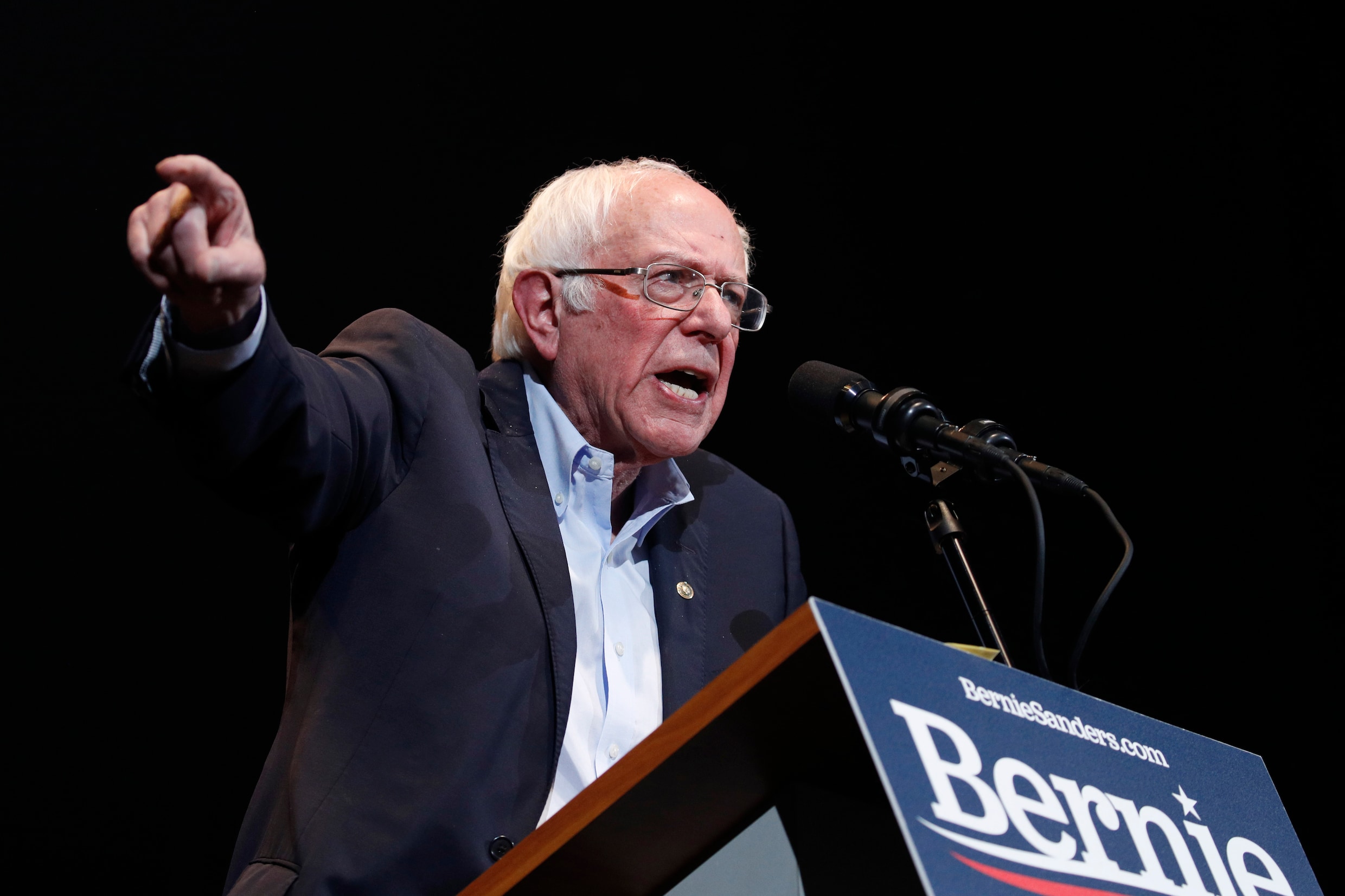
Senator Bernie Sanders delivered a pointed response to President Donald Trump after the president renewed his controversial proposal to rename New Mexico, turning an unusual dispute over geography into a confrontation about war, inflation, and the financial pressures facing American families.
The Vermont independent challenged Trump’s suggestion that New Mexico should become “New America,” arguing that the administration was focusing attention on symbolic political gestures while Americans struggled with rising energy costs.
Sanders’ response came on October 19, 2026, after Trump repeated an idea he had promoted through social media posts, campaign appearances, and images depicting the southwestern state under a different name.
Rather than debate whether the proposed name sounded more patriotic, Sanders redirected attention toward the economic consequences of the ongoing conflict with Iran.
His message identified gasoline, diesel, and heating oil prices as evidence of the financial difficulties he believed the administration needed to address.

The senator’s criticism also reflected his longstanding opposition to military interventions undertaken without what he considers adequate congressional authorization.
But the documented confrontation was not a live television exchange in which Sanders delivered a secret ultimatum that left government officials speechless.
It was a public political dispute involving Trump’s statements, Sanders’ social media response, and a broader congressional argument over the financial consequences of the Iran war.
The episode became significant because it connected an unusual presidential proposal with economic concerns extending far beyond New Mexico.
Trump had initially floated the name change in early September, publishing images and messages suggesting that replacing “Mexico” with “America” would improve the state’s identity.
His posts followed earlier efforts to change the federal government’s names for certain geographic features, including the Gulf of Mexico and Lake Ontario.
The administration argued that those naming initiatives reflected American identity and national pride, while critics questioned their relevance to immediate economic concerns.
New Mexico presented a different constitutional issue because the state possesses its own legal identity, established through its constitution and recognized within the American federal system.
Unlike geographic features subject to federal naming conventions, a state cannot simply be renamed through a unilateral presidential announcement.
Article I of New Mexico’s Constitution explicitly identifies the state as New Mexico, making a formal change a matter involving state constitutional procedures.
The relevant process would require action by New Mexico’s elected institutions and voters rather than a presidential social media declaration.
That distinction became important as Trump’s proposal attracted attention nationally and prompted strong objections from the state’s elected officials.
Governor Michelle Lujan Grisham rejected the suggestion, emphasizing that New Mexico’s name predates its admission to the United States.
New Mexico became the nation’s 47th state on January 6, 1912, but its name and cultural identity extend back centuries.
The governor argued that her administration was focused on healthcare, housing, education, and economic opportunities rather than changing the state’s identity.
Other New Mexico officials also criticized the proposal, defending the state’s history and questioning the president’s decision to prioritize the issue.
Democratic Senator Martin Heinrich publicly reaffirmed his intention to continue calling the state New Mexico.
Senator Ben Ray Luján likewise rejected the proposal, while members of the state’s congressional delegation challenged its historical and political justification.
Their reactions demonstrated that the dispute concerned more than the wording of a map.
For New Mexico’s elected officials, the proposal raised questions about state identity, historical recognition, and the federal government’s relationship with communities whose cultural heritage predates American statehood.
Trump continued promoting the idea despite those objections.
On October 19, he argued that New Mexico should immediately change its name to New America, presenting the proposal as a way to increase prestige and economic appeal.
The president suggested that the new name would be more closely associated with the United States and could improve the state’s public image.
However, he did not provide a formal legislative proposal or a detailed economic analysis demonstrating that a name change would increase household incomes or property values.
Nor did he identify a constitutional mechanism through which the White House could impose the change on New Mexico without the state’s participation.
That absence of an implementation plan became part of the criticism directed at the proposal.
While Trump’s supporters could interpret the suggestion as an expression of national identity, opponents questioned its practical relevance to the problems affecting residents.
Sanders entered the debate by arguing that those problems deserved considerably more attention than the proposed name.
His response directly addressed Trump and the priorities he believed Americans wanted the president to pursue.
Sanders wrote that Americans did not want an immediate renaming of New Mexico.
Instead, he argued, they wanted an end to the Iran war, which he blamed for rising energy costs across the country.
He then cited specific national prices: approximately $4.30 per gallon for gasoline, $6.30 for diesel, and $6.04 for heating oil.
Those figures formed the core of his criticism because they connected foreign policy decisions with household and transportation expenses.
Sanders concluded his message with a brief demand: “Enough.”
The remark was forceful, but it did not constitute a formal legal ultimatum or a threat to exercise powers unavailable to an individual senator.
It was a political statement demanding a change in priorities and an end to the military conflict.
The numerical claims also require attention to their timing.
Sanders cited prices associated with October 19, 2026, rather than presenting a permanent measure of energy costs across all states and future dates.
Fuel prices vary geographically, and national averages can change substantially as crude oil markets respond to supply conditions, refining capacity, taxes, and transportation costs.
Nevertheless, the figures captured an important concern about how military developments in the Middle East can affect American consumers.
The conflict with Iran has placed pressure on global energy markets, particularly because of uncertainty surrounding the Strait of Hormuz.
That waterway connects major Persian Gulf oil producers with international markets and provides a critical route for energy shipments.
When military activity threatens passage through the strait, shipping companies and energy traders must account for greater operational risks.
Those risks can increase transportation expenses, insurance costs, and the prices paid for crude oil and refined petroleum products.
The effects do not remain confined to the Middle East.
Higher petroleum costs can influence American gasoline and diesel prices, while also affecting heating fuel and the expenses associated with moving goods across the country.
For families, rising gasoline prices can immediately increase the cost of commuting to work, transporting children, and completing routine errands.
For trucking companies, higher diesel expenses can affect the price of moving food, manufactured products, and other goods through national supply chains.
Farmers also depend on diesel-powered equipment and transportation networks, connecting energy prices to agricultural production and food distribution.
Heating oil costs can place additional pressure on households in colder regions, particularly during the autumn and winter months.
These relationships explain why Sanders viewed the Iran conflict as an economic issue rather than a foreign policy debate disconnected from everyday life.
His argument was that Americans were experiencing financial consequences from decisions made thousands of miles from their homes.
The administration has defended its Iran policy as necessary to confront military threats, protect American security interests, and prevent greater regional instability.
Supporters of the military campaign argue that failing to respond to dangerous threats could produce more serious security and economic consequences over time.
Sanders disputes the administration’s approach, arguing that the military intervention has increased danger and imposed costs without producing the results promised by its supporters.
Those competing perspectives concern the strategic purpose of the conflict and whether the benefits of military action justify its human and economic consequences.
Determining the full effect of the war on energy prices requires distinguishing conflict-related supply disruptions from other influences on international markets.
Global oil prices respond to production decisions, economic demand, refinery conditions, shipping restrictions, and expectations about future supply.
The Iran conflict is a substantial factor in that environment, but not every increase in fuel prices can automatically be attributed to a single presidential decision.
Sanders nevertheless maintains that ending the conflict would be an important step toward reducing economic uncertainty.
His position became more consequential after the November midterm elections, when Democrats gained control of both chambers of Congress.
The election created the possibility that lawmakers opposing the administration’s military strategy could exert additional pressure through appropriations and congressional oversight.
Sanders has argued that Congress should exercise its constitutional responsibilities over decisions involving military force.
The Constitution assigns Congress authority concerning declarations of war and military funding, while the president serves as commander in chief.
Disagreements arise when presidents undertake substantial military operations without specific congressional authorization or continue conflicts beyond the limits opponents believe applicable law permits.
The War Powers Resolution establishes procedures intended to govern consultation, reporting, and the continuation of certain military operations.
Presidents of both major parties have disputed how those requirements apply to particular conflicts.
Sanders’ criticism reflects his view that Congress should not merely accept the administration’s decisions when an ongoing war produces substantial casualties and financial consequences.
That argument moved beyond social media on November 11, when Sanders joined Senators Michael Bennet, Chris Van Hollen, and Tammy Duckworth in a formal statement opposing additional funding for the Iran conflict.
The senators argued that Congress should not approve another short-term government spending agreement without restrictions on the use of appropriated funds for the war.
They cited rising expenses for gasoline, groceries, and fertilizer, while also emphasizing American military casualties and the broader humanitarian consequences of the fighting.
Their statement connected the conflict directly to the December 11 government funding deadline, creating a specific legislative opportunity to challenge administration policy.
Rather than restricting their criticism to Trump’s remarks about New Mexico, the senators proposed using congressional spending authority to influence the direction of the war.
That approach introduced a concrete institutional dispute over whether Congress should attach conditions to appropriations supporting military operations.
Supporters of such restrictions argue that legislative oversight is necessary when the executive branch continues a conflict without sufficient congressional approval.
Opponents warn that restricting funds during military operations could complicate the protection of American forces and reduce the flexibility available to military commanders.
Those concerns require lawmakers to distinguish funding for protecting personnel from spending intended to expand or continue particular operations.
A legislative restriction would also need to be written carefully enough to establish which activities are prohibited and which remain authorized.
The disagreement demonstrates why Sanders’ October remarks should be understood within a larger political campaign against the Iran war.
His rejection of the New Mexico renaming proposal was one expression of that campaign, not an isolated comment about geographic terminology.
The senator’s broader message concerned the priorities of an administration facing simultaneous disputes over military spending, inflation, and government responsibilities.
He argued that political leaders should concentrate on making everyday life more affordable instead of pursuing symbolic initiatives without demonstrated economic benefits.
Trump’s approach reflects a different political emphasis, incorporating national identity and cultural symbolism into his public communications.
The president has promoted geographic renaming as part of a broader effort to emphasize American sovereignty and distinctiveness.
His supporters may regard those gestures as meaningful expressions of patriotism even when they have limited direct economic consequences.
Critics question whether such initiatives justify presidential attention when the government faces urgent security and affordability problems.
That disagreement concerns political priorities rather than a constitutional prohibition on presidents discussing symbolic matters.
The president can advocate a change he cannot personally impose, just as members of Congress can publicly oppose proposals outside their direct legislative responsibilities.
What matters is whether officials accurately explain the powers they possess and the consequences of the changes they recommend.
In New Mexico’s case, the state constitution creates an obstacle to Trump’s proposal that presidential preference alone cannot overcome.
The practical implications of changing a state’s name would also extend beyond symbolic recognition.
An official change could require updates to government records, legal documents, administrative systems, signage, and public communications.
Those changes could impose financial and operational costs, although a reliable total would depend on the specific legislation and transition procedures.
No independently established estimate demonstrates that the economic benefits of the proposed new name would exceed those costs.
The historical dimension is also significant because New Mexico’s identity reflects centuries of Indigenous, Spanish, Mexican, and American history.
The territory became part of the United States during the nineteenth century and entered the Union after a lengthy period of territorial administration.
Its name is deeply embedded in the identities of communities, institutions, businesses, and public organizations throughout the state.
Changing it would therefore involve a major civic decision extending beyond a president’s choice of language.
That helps explain why New Mexico’s political leaders responded forcefully, even though the proposal lacked a clear legal pathway.
The controversy also reveals how political arguments can become distorted when a genuine policy disagreement is presented as a dramatic personal confrontation.
There is no authenticated televised exchange showing Sanders delivering a secret warning that left Trump or other administration officials unable to respond.
The documented sequence involves Trump’s public renaming proposal, Sanders’ October 19 criticism, and subsequent congressional efforts to restrict funding for the Iran war.
Those events are substantial enough to explain the political disagreement without inventing a private confrontation or reactions from unnamed officials.
The energy prices cited by Sanders deserve examination in their proper historical context, especially because consumers experience different costs depending on location and fuel type.
Likewise, claims about the war’s consequences should distinguish verified market developments from disputed political interpretations about who bears responsibility.
As of November 16, 2026, the New Mexico renaming proposal has not changed the state’s constitutional name.
Trump has continued discussing the idea, but no presidential announcement can independently amend the state’s constitution.
Sanders has continued criticizing the Iran war and has joined colleagues in seeking restrictions on federal spending supporting the conflict.
The central policy disagreement therefore remains unresolved.
The administration maintains that its national security decisions serve American interests, while Sanders argues that continuing the conflict is harming families and increasing economic instability.
Congress must now decide how to address those competing claims through the funding and oversight procedures available to it.
For New Mexico residents, the name dispute raises questions about state identity, constitutional authority, and the proper role of the federal government.
For Americans facing higher energy expenses, the more immediate concern is whether prices will stabilize and how government policy will affect household budgets.
For lawmakers, the challenge is evaluating the military conflict’s objectives, costs, and consequences while fulfilling their constitutional responsibilities.
Sanders’ October response brought those issues together through a criticism of presidential priorities.
He rejected the proposed name change and directed attention toward the expenses Americans were paying for fuel and essential goods.
The subsequent November statement showed that his opposition extended beyond rhetoric to a proposed congressional funding restriction.
The lasting significance of the controversy is not an imagined moment when the political establishment fell silent.
It is the disagreement over whether Washington should devote its attention to symbolic changes or confront the economic and security consequences of an ongoing war.
The unresolved question is whether Congress and the administration can reach decisions that protect national security while addressing the financial burdens facing American households.
For Sanders, the answer begins with ending the Iran conflict.
For Trump, the administration’s defense of its military strategy remains central to its explanation of why the conflict continues.
And for Americans paying for gasoline, heating oil, groceries, and transportation, the practical consequences will matter far more than whether New Mexico’s name ever changes.
