
GOP Sen. Kenne.d.y Fears Nobody — His Blunt Warning Leaves Congress With a Choice
After the midterm elections, Senator John Kenne.d.y had little patience for Republican self-congratulation. Instead of celebrating what his party had accomplished, he delivered a blunt message to his colleagues: stop pretending everything is fine, look at the numbers, and start listening to the people who sent them to Washington.
His criticism focused on a growing disconnect between political talking points and the financial pressure facing ordinary Americans. While lawmakers debate strategy and celebrate victories, families are still struggling with grocery bills, gas prices, and the rising cost of everyday life.
Kenne.d.y’s message was unmistakable: the Republican Party could not afford to waste the time it had left.
The Economic Numbers Republicans Could Not Ignore
Kenne.d.y began by challenging his colleagues to look beyond broad economic indicators and consider what Americans experience in their daily lives.
He pointed to inflation at 3.7 percent compared with wage growth of 3.1 percent. The difference may appear modest on a spreadsheet, but his argument was that it represents a real loss of purchasing power for working households.
When prices rise faster than paychecks, families have less money left after covering essentials. Groceries, transportation, housing, and utilities become harder to manage, even when the broader economy appears stable.
Kenne.d.y argued that Republicans needed to recognize this frustration instead of congratulating themselves over statistics that did not reflect how many voters felt.
His criticism was directed inward. He was not simply blaming political opponents; he was warning his own party that voters would not reward lawmakers who appeared disconnected from their everyday concerns.
The message was particularly urgent after the midterms. A disappointing electoral result, he suggested, should trigger serious reflection—not excuses, celebration, or another round of partisan finger-pointing.
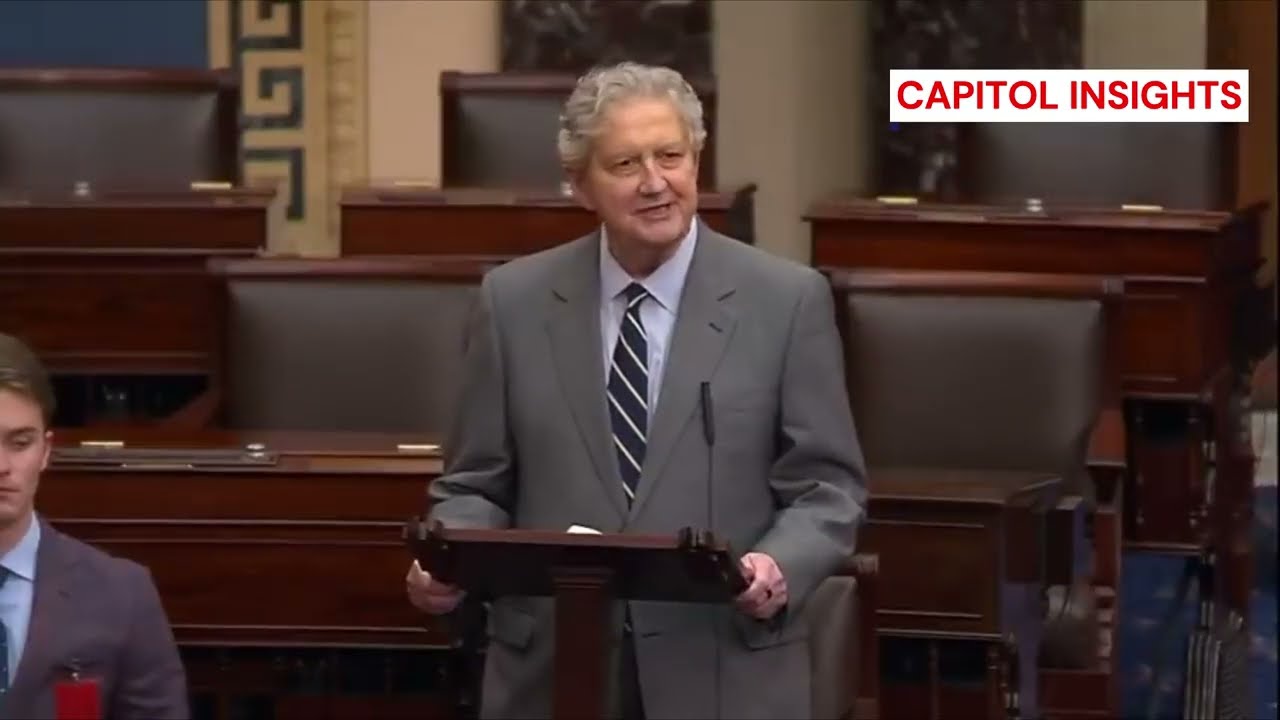
“Put Down the Juice Boxes” — Kenne.d.y’s Wake-Up Call
Then came the line that gave the speech its unmistakable Kenne.d.y character.
He urged Republicans to put down their juice boxes, listen to the American people, stop the bleeding, and fight.
The remark was humorous in its delivery, but the message behind it was serious. Kenne.d.y wanted his colleagues to stop acting as though they had unlimited time and political room to maneuver. The party needed to recognize its weaknesses and use the remaining weeks to accomplish something meaningful.
For Kenne.d.y, listening to voters meant more than repeating campaign slogans. It meant responding to the economic pressures that were shaping household decisions and demonstrating that Republican control of Congress could produce tangible results.
His warning also carried a sense of urgency about the approaching January transition. The time remaining before the new congressional session was not an opportunity to slow down. It was a final window to move priorities forward.
Judicial Confirmations: Work Through the Holidays if Necessary
Kenne.d.y next turned to judicial confirmations and presidential appointments.
He argued that Republicans should complete as many pending confirmations as possible before losing their ability to control the Senate agenda. If that required working through Thanksgiving and Christmas, he was prepared to do it.
The argument reflected a broader political reality: control of the Senate can determine how quickly nominees advance and which appointments receive consideration. Delaying action could mean leaving important positions unresolved and surrendering opportunities that might not return.
Kenne.d.y’s position was straightforward. If lawmakers believed these appointments mattered, they should not allow the calendar or holiday schedule to become an excuse for inaction.
His colleagues had been elected to do a job, and he wanted them to finish it.
The $200 Billion Military Proposal
The speech then moved from the courts to national defense.
Kenne.d.y advocated using budget reconciliation to advance major priorities while Republicans still had the opportunity. He called for at least $200 billion in additional military funding, emphasizing the need to strengthen the armed forces with ammunition, equipment, and other essential resources.
Reconciliation was central to his strategy because it can allow certain budget-related legislation to pass the Senate with a simple majority rather than the usual 60-vote threshold, provided the proposal complies with the applicable rules.
Kenne.d.y’s argument was that Republicans should use the legislative tools available to them instead of allowing disagreements or procedural hesitation to prevent action.
The military proposal was presented as a matter of preparedness. Additional resources, he argued, would help address shortages and ensure that the United States had the equipment needed to meet its defense commitments.
Whether lawmakers agreed on the scale of the proposal or the best way to fund it, Kenne.d.y wanted the debate to produce a concrete decision rather than another promise to revisit the issue later.
Cutting Federal Fraud and Tackling the Debt
Kenne.d.y paired the military proposal with another priority: reducing waste and fraud in federal spending.
He pointed to legislation associated with Senator Joni Ernst that aimed to identify fraudulent payments and improve accountability across government programs. His broader argument was that taxpayers should not be expected to keep financing a system that fails to protect public money.
For Kenne.d.y, finding and eliminating improper spending could serve two purposes: restoring confidence in federal programs and directing recovered resources toward reducing the national debt.
The proposal also reinforced his central theme. Republicans needed to show voters that they could address more than one problem at a time—strengthening national security while taking federal spending seriously.
Fraud reduction alone would not erase the national debt, but Kenne.d.y presented it as a practical starting point that lawmakers should be willing to pursue.
The Weeks Before January: A Final Test for Republicans
By the end of the speech, Kenne.d.y had laid out a demanding agenda: confront the economic frustration behind the midterm results, finish judicial confirmations, pursue reconciliation, strengthen the military, and crack down on federal fraud.
His message was not designed to make Republican lawmakers comfortable. It was a warning that political control means little if leaders fail to use it effectively.
The inflation and wage figures represented the pressure families were feeling. The judicial nominations represented opportunities that could disappear. The military proposal and fraud legislation represented priorities Kenne.d.y believed could still move before the transition in January.
His closing challenge was ultimately about accountability. Republicans could spend their remaining weeks congratulating themselves, arguing over strategy, and waiting for a better moment—or they could get to work.
And that leaves the question at the heart of Kenne.d.y’s warning: with so little time remaining, would his colleagues actually act on the priorities he laid out, or would another opportunity slip away while working Americans continued waiting for results?
