
Chip Roy and Marco Rubio’s America First Message: The ICC Confrontation Putting Washington on the Spot
Washington’s political debate over American sovereignty and international institutions has entered another intense chapter. Secretary of State Marco Rubio has delivered a forceful defense of the Trump administration’s position on the International Criminal Court, arguing that international legal institutions should not be allowed to restrict America’s ability to protect its national interests.
His remarks have attracted considerable attention, particularly among conservatives who have long questioned the authority of international organizations over American officials and military personnel.
Speaking at the Federalist Society’s 2026 National Lawyers Convention on November 13, Rubio challenged the International Criminal Court’s approach to jurisdiction and criticized what he described as attempts to impose international legal authority on countries that never accepted the court’s jurisdiction.
His message was unmistakably centered on national sovereignty. Rubio argued that the United States should not be expected to accept decisions by an international institution when those decisions could affect American officials or military personnel operating on behalf of their country.
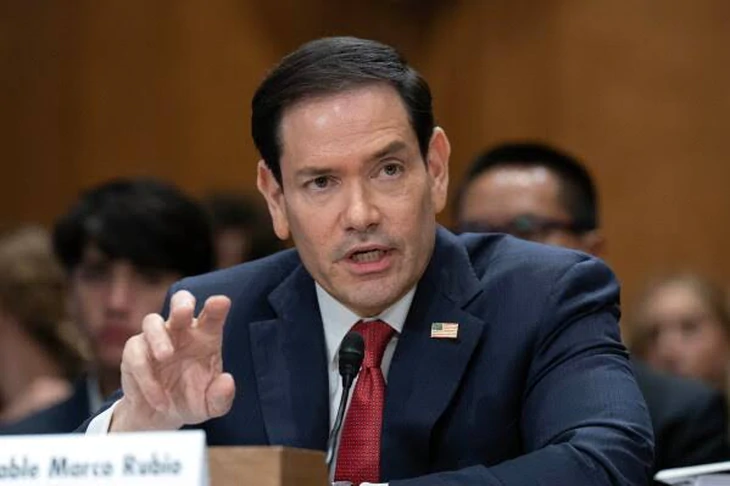
One of the most striking moments came when Rubio defended the administration’s broader approach to international law with a sharp statement: “Stop quoting laws to men with swords.” The phrase captured the confrontational tone of his remarks and quickly became a focal point of discussion.
The secretary also addressed the controversy surrounding the flags displayed at the State Department. He explained that the building’s display had been changed to feature American flags, rejecting criticism that the decision represented an abandonment of international engagement.
His argument was that the State Department exists to represent the United States and its national interests, not to function as an extension of the United Nations. At the same time, Rubio emphasized that America must remain engaged with other countries because international developments inevitably affect American security and economic interests.
The speech came amid an increasingly serious dispute between Washington and the International Criminal Court. The Trump administration has imposed sanctions on ICC officials and has pursued a broader campaign against what it considers an expansion of the court’s authority.

The disagreement is not simply symbolic. It concerns the limits of international jurisdiction, the responsibilities of countries that have not joined the Rome Statute and the ability of international institutions to investigate conduct involving nationals of non-member states.
The United States has never become a party to the Rome Statute establishing the ICC. Washington has repeatedly argued that the court should not claim authority over American citizens without the country’s consent.
The ICC and its supporters, however, defend the institution’s role in investigating serious international crimes within the jurisdiction established by its founding treaty. They argue that international accountability should not depend entirely on the political preferences of powerful governments.
This disagreement has created a diplomatic challenge for Washington and its allies. European governments have expressed concerns about American sanctions against the court, while the Trump administration has continued to press other countries to support its position.
For conservatives in Congress, the dispute also raises questions about the future direction of American foreign policy. Some lawmakers argue that Washington must take a more assertive position against international institutions they believe have exceeded their authority.
Representative Chip Roy has been associated with conservative efforts to challenge federal institutions and defend national sovereignty. His political positions make the broader debate relevant to his constituency within the Republican Party. However, claims that Roy delivered a specific 43-second endorsement of Rubio during a live press conference have not been independently verified.
There is also no reliable confirmation of the alleged Classified Directive #802 or the claim that Roy publicly exposed lawmakers secretly cooperating with an international panel in The Hague. Those details should not be confused with Rubio’s documented remarks.
Nevertheless, the underlying political conflict is real. The administration’s position on the ICC has become part of a much larger argument about the relationship between national sovereignty and international law.
Supporters of Rubio’s approach believe the United States must retain control over decisions affecting its citizens, armed forces and elected leadership. Critics warn that weakening international institutions could make it harder to investigate alleged violations of international law and hold powerful actors accountable.
Both sides are confronting a fundamental question: How should international legal institutions exercise authority when their decisions affect countries that have not accepted their jurisdiction?
Rubio’s speech did not settle that dispute. Instead, it brought the disagreement into sharper focus and demonstrated how central the issue has become to the administration’s foreign policy.
For Washington, the consequences extend beyond a single speech or political endorsement. They involve America’s diplomatic relationships, its position within the international legal system and the limits it is willing to accept when national interests collide with international institutions.
And as the debate continues, the central question remains whether the United States can defend its sovereignty while maintaining a credible role in a world where international rules and national interests increasingly come into conflict.
