
“THIS IS NOT A COUP!” Amy Klobuch.a.r Confronts Ted Cr.u.z in Explosive Senate Showdown as a 12-Word Constitutional Rebuke Changes Everything
The Senate chamber was supposed to be discussing constitutional procedure, presidential authority, and the limits of congressional power.
Instead, in this fictionalized political confrontation, Senators Amy Klobuch.a.r and Ted Cr.u.z find themselves locked in an increasingly personal argument over one of the Constitution’s most important checks on presidential authority.
At the center of the dispute is a question that has divided Washington.
When Congress votes to override a presidential veto, is it attacking the president’s authority, or exercising a constitutional power explicitly granted to the legislative branch?
Cr.u.z argues that Democrats are turning a legitimate legislative process into a partisan weapon against President Donald Trump.
Klobuch.a.r sees the argument differently.
She believes Cr.u.z is confusing political disagreement with constitutional procedure.
And when he describes the proposed override as a political coup, she decides that the Senate needs a reminder of how the American system actually works.
Then comes the sentence that becomes the centerpiece of this imagined confrontation.
“A MIDDLE SCHOOL CIVICS CLASS UNDERSTANDS THE CONSTITUTION BETTER.”
The remark changes the atmosphere.
Cr.u.z immediately pushes back.
Klobuch.a.r does not retreat.
And the debate moves from party politics to the constitutional framework governing the relationship between Congress and the White House.
THE ARGUMENT THAT STARTED THE SENATE CONFRONTATION
The fictional confrontation begins when Cr.u.z challenges the Democrats’ support for overriding a presidential veto.
He argues that the effort is not simply about a particular bill.
In his view, Democrats are attempting to undermine Trump’s legislative agenda by using congressional procedures to weaken the president’s authority.
CRUZ: “Let’s be honest about what is happening here. This is not an ordinary legislative disagreement. This is a partisan attempt to overturn the president’s decision because Democrats refuse to accept the outcome they don’t like.”
Several senators turn toward him.
Cr.u.z continues.
CRUZ: “The American people elected a president to govern. They did not elect Congress to manufacture a constitutional crisis every time the president exercises his authority.”
His argument is based on a broader Republican criticism of Democratic opposition to Trump’s agenda.
He insists that presidential veto power exists for a reason.
The president is not required to approve every bill passed by Congress.
The veto is an important constitutional instrument that allows the executive branch to challenge legislation it considers unacceptable.
But Klobuch.a.r believes Cr.u.z is leaving out another equally important part of the Constitution.
Congress also has a specific mechanism for responding to a presidential veto.
And that mechanism does not disappear simply because the president belongs to a different political party.
KLOBUCHAR FIRES BACK: “READ THE CONSTITUTION!”
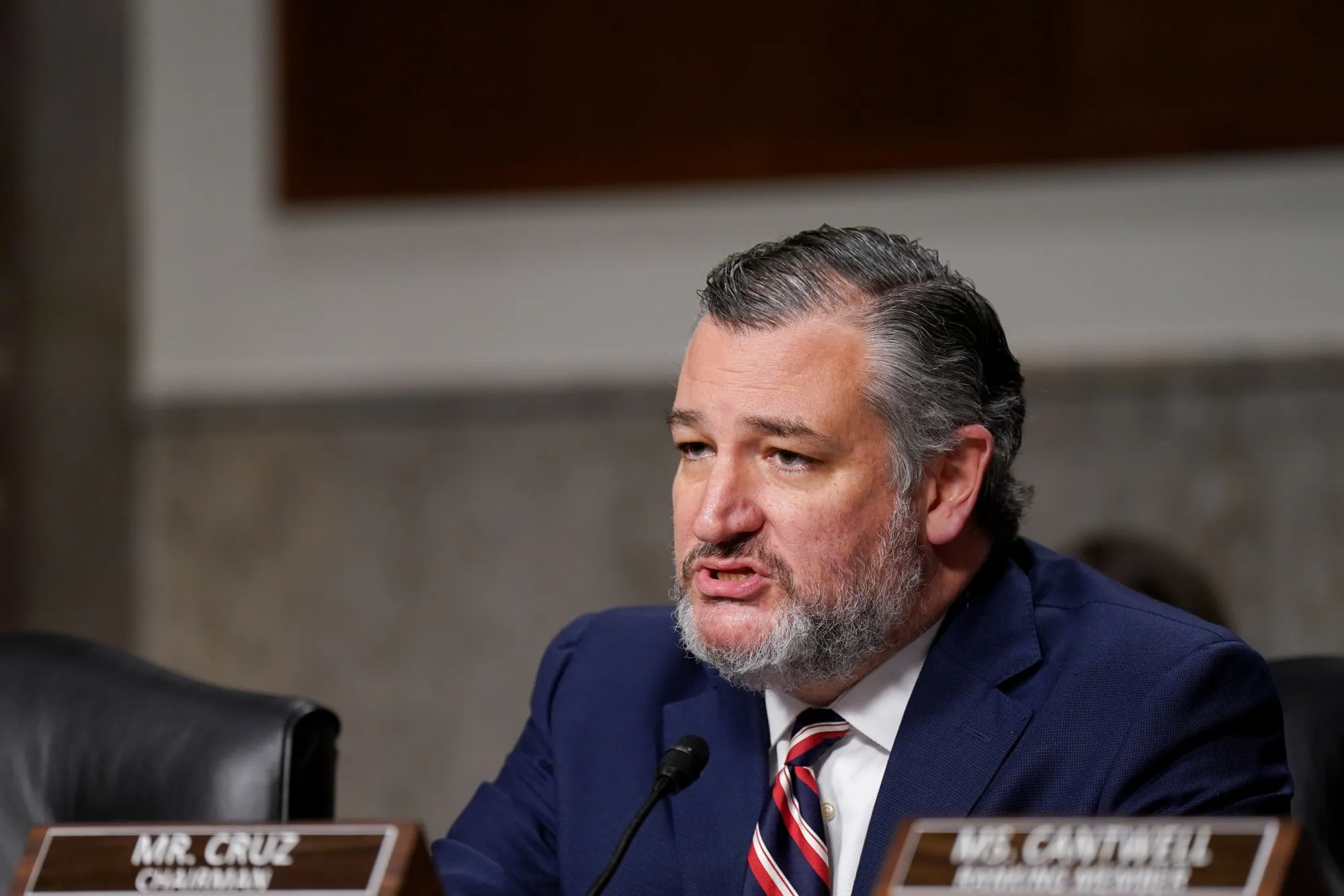
Klobuch.a.r waits for Cr.u.z to finish.
She then responds by distinguishing between the president’s constitutional authority and Congress’s constitutional authority.
KLOBUCHAR: “Senator Cr.u.z, nobody is arguing that the president does not have veto power. The question is whether Congress still has the authority to respond when that power is exercised.”
Cr.u.z interrupts.
CRUZ: “You are presenting this as a normal legislative disagreement. The political circumstances matter. You know exactly what Democrats are trying to accomplish.”
Klobuch.a.r responds that political disagreement cannot erase constitutional procedures.
KLOBUCHAR: “The Constitution does not say Congress loses its authority whenever the president disagrees with a bill.”
The exchange becomes increasingly tense.
Cr.u.z insists that Democrats are pursuing a partisan objective.
Klobuch.a.r argues that the constitutional process is available regardless of the political motivations of individual lawmakers.
Then she delivers the fictional remark that changes the tone of the discussion.
KLOBUCHAR: “A middle school civics class understands the Constitution better.”
The sentence is deliberately sharp.
Cr.u.z immediately objects to the personal nature of the criticism.
CRUZ: “Senator, insulting your colleagues does not make your constitutional argument correct.”
Klobuch.a.r responds without backing away.
KLOBUCHAR: “Then let’s discuss the constitutional argument instead of pretending that a lawful vote is an attack on democracy.”
THE TWO-THIRDS RULE THAT CHANGES EVERYTHING
The central issue is relatively straightforward.
Article I, Section 7 of the United States Constitution establishes the presidential veto process.
When the president vetoes legislation, Congress can reconsider the bill.
If two-thirds of the members voting in both the House of Representatives and the Senate support the legislation, the veto can be overridden.
That means a president does not possess unlimited authority to prevent legislation from becoming law.
The president has a powerful veto.
Congress has a constitutional mechanism to overcome it.
Neither branch has absolute control.
The system deliberately creates competing powers.
In the fictional confrontation, Klobuch.a.r uses this principle to challenge Cr.u.z’s description of the proposed override.
KLOBUCHAR: “The president has the right to veto legislation. Congress has the right to override that veto. Those powers exist together.”
Cr.u.z responds that constitutional authority does not automatically justify every political decision.
CRUZ: “Having the power to do something does not mean you should use it irresponsibly.”
Klobuch.a.r agrees that lawmakers should consider the consequences of their decisions.
But she argues that political disagreement is not sufficient reason to abandon a constitutional process.
KLOBUCHAR: “You can oppose the bill. You can vote against it. You can defend the president’s decision. But you cannot pretend the Constitution prohibits Congress from exercising its own authority.”
The argument exposes an important distinction.
A veto override can be politically controversial.
It can represent a major disagreement between Congress and the president.
But the procedure itself is explicitly authorized by the Constitution.
CRUZ CHALLENGES THE DEMOCRATS’ MOTIVES
Cr.u.z is not satisfied.
He argues that the Democrats are using constitutional language to disguise their opposition to Trump’s broader political agenda.
CRUZ: “You keep talking about procedure. But Americans can see the political objective. This is about stopping the president, not simply evaluating legislation.”
Klobuch.a.r responds that legislative disagreements are an ordinary part of representative government.
KLOBUCHAR: “Of course there is a political disagreement. That’s why we are here. Members of Congress are elected to make decisions, debate legislation, and vote.”
Cr.u.z argues that Democrats should respect the outcome of the presidential election.
Klobuch.a.r answers that respecting an election does not mean surrendering congressional authority.
KLOBUCHAR: “The president was elected to exercise executive power. Senators were elected to exercise legislative power. Both responsibilities come from the Constitution.”
That becomes the central philosophical disagreement.
Cr.u.z emphasizes the president’s electoral mandate.
Klobuch.a.r emphasizes the independent constitutional responsibilities of Congress.
The two positions illustrate the tension built into the American system of government.
The president leads the executive branch.
Congress writes legislation, controls appropriations, conducts oversight, and participates in the constitutional process governing vetoes.
Neither institution can simply erase the other.
THE ROLL-CALL NUMBERS THAT COMPLICATE THE POLITICAL ARGUMENT
The debate then turns toward congressional voting records.
Klobuch.a.r argues that legislative decisions should be evaluated through actual votes rather than broad accusations about party loyalty.
A bipartisan vote can demonstrate that lawmakers from both parties support a particular procedural step or legislative proposal.
But bipartisan support does not automatically mean that every senator agrees with the legislation’s underlying policy.
It is important to distinguish between procedural votes and final votes.
For example, an official Senate roll-call record dated September 22, 2026, shows that a motion to invoke cloture on an amendment sponsored by Cr.u.z passed 70–21.
The recorded vote included senators from both political parties. <Cite refs={[“turn800541search0”]}/>
That was a cloture vote, not a presidential veto override.
The distinction matters because the two procedures have different constitutional and Senate rules.
In the fictional confrontation, Klobuch.a.r makes the broader point that voting records should be examined carefully.
KLOBUCHAR: “If you want to talk about what senators support, show the actual votes. Don’t turn every disagreement into an accusation of constitutional sabotage.”
Cr.u.z responds that individual voting records cannot erase the political consequences of a particular legislative strategy.
CRUZ: “A bipartisan vote does not automatically make every decision wise or every political objective legitimate.”
Klobuch.a.r acknowledges that a vote does not settle every policy disagreement.
But she insists that the Constitution provides the framework within which those disagreements must be resolved.
THE MOMENT CRUZ DEMANDS AN ANSWER
The confrontation reaches another turning point when Cr.u.z asks Klobuch.a.r whether she believes a president’s veto should ever be respected.
CRUZ: “Let me ask you a simple question. Do you believe the president’s veto authority deserves respect?”
Klobuch.a.r responds immediately.
KLOBUCHAR: “Of course it does. That’s why the Constitution created it.”
Cr.u.z presses further.
CRUZ: “Then why are you defending an effort to defeat it?”
Klobuch.a.r looks toward him.
KLOBUCHAR: “Because the Constitution also created the override process. Respecting one branch does not require eliminating the authority of another.”
The exchange captures the fundamental disagreement.
Cr.u.z argues that the president’s decision should not be treated casually.
Klobuch.a.r argues that Congress must retain its ability to respond.
Neither position changes the constitutional text.
A veto override requires a supermajority.
It cannot be accomplished through a simple partisan majority.
It cannot be achieved merely because Democratic senators want a particular bill to become law.
And it requires support from members of both parties whenever the available votes demand it.
That threshold makes the process deliberately difficult.
THE 12-WORD REBUKE
As the imagined confrontation approaches its conclusion, Cr.u.z returns to the accusation that Democrats are staging a political coup.
Klobuch.a.r shakes her head.
She argues that the word coup is inappropriate when describing a procedure explicitly established by the Constitution.
Then she delivers the fictional 12-word response that becomes the headline’s defining moment.
“A VETO OVERRIDE IS CONSTITUTIONAL ACCOUNTABILITY, NOT A COUP AGAINST THE PRESIDENCY.”
The sentence contains exactly twelve words.
Cr.u.z immediately responds.
CRUZ: “Constitutional authority does not excuse political irresponsibility.”
Klobuch.a.r answers:
KLOBUCHAR: “And political disagreement does not erase constitutional authority.”
The exchange is short.
But it captures the entire disagreement.
The question is not whether the president possesses veto authority.
He does.
The question is not whether Congress can override that veto.
It can.
The real political dispute concerns whether lawmakers should use that authority in a particular legislative battle.
That is a question for Congress to debate and ultimately decide through the required voting process.
WHY THE CONSTITUTIONAL DISTINCTION MATTERS
The presidential veto was designed to create a check on legislative power.
It allows the president to prevent a bill from becoming law unless Congress can assemble sufficient support to override the objection.
The two-thirds requirement is significant.
It forces lawmakers to build support beyond a narrow majority.
A president who vetoes a bill is exercising constitutional authority.
A Congress that overrides the veto is also exercising constitutional authority.
The process does not automatically establish that either side has acted wisely.
It establishes how disagreements between the branches can be resolved.
The distinction is particularly important during periods of divided government.
When one party controls the presidency and another controls one or both chambers of Congress, disagreements over legislation become more frequent.
The veto becomes an important instrument of executive policy.
The override becomes an important instrument of congressional independence.
Both can produce intense political battles.
But describing every veto override effort as a coup would confuse a constitutional mechanism with an unconstitutional seizure of power.
At the same time, supporters of a president’s veto can legitimately argue that lawmakers are using their authority for partisan reasons.
Those arguments should be evaluated through the legislation, the voting record, and the public statements of the lawmakers involved.
THE BIGGER QUESTION FOR TRUMP AND CONGRESS
The fictional confrontation between Klobuch.a.r and Cr.u.z represents a broader debate about the balance of power in Washington.
How much authority should a president exercise over the legislative agenda?
When should Congress challenge a presidential decision?
Can bipartisan cooperation survive disagreements over major policy priorities?
And what happens when the executive and legislative branches believe they have competing democratic mandates?
These are not new questions.
They have shaped American politics since the founding of the republic.
Presidents from both parties have used vetoes to defend their policy priorities.
Congress has sometimes accepted those decisions.
At other times, lawmakers have attempted to override them.
The political consequences depend on the specific legislation, the votes available, and the broader relationship between the branches of government.
For Cr.u.z, defending Trump’s veto authority is part of defending the president’s constitutional responsibilities.
For Klobuch.a.r, defending the override process is part of preserving Congress’s independent legislative authority.
The disagreement deserves to be examined through the Constitution rather than reduced to personal insults.
THE FINAL QUESTION: WHO DECIDES WHEN THE PRESIDENT AND CONGRESS DISAGREE?
The imagined exchange ends without a verified shouting match, an authenticated 12-word insult, or evidence that either senator left the chamber speechless.
But the constitutional issue remains.
A president can reject legislation.
Congress can reconsider it.
And when two-thirds of the members voting in each chamber support the bill, the president’s veto can be overridden.
That process is neither automatic nor politically insignificant.
It requires substantial agreement among lawmakers who may otherwise disagree on almost everything.
The Constitution does not guarantee that Congress will make the right decision.
It provides a framework for making decisions while preventing any single branch from possessing unlimited power.
And that is the principle at the heart of this debate.
Because in Washington, the most important question is not whether a president can say no. It is whether Congress still has the constitutional authority to say yes.
