
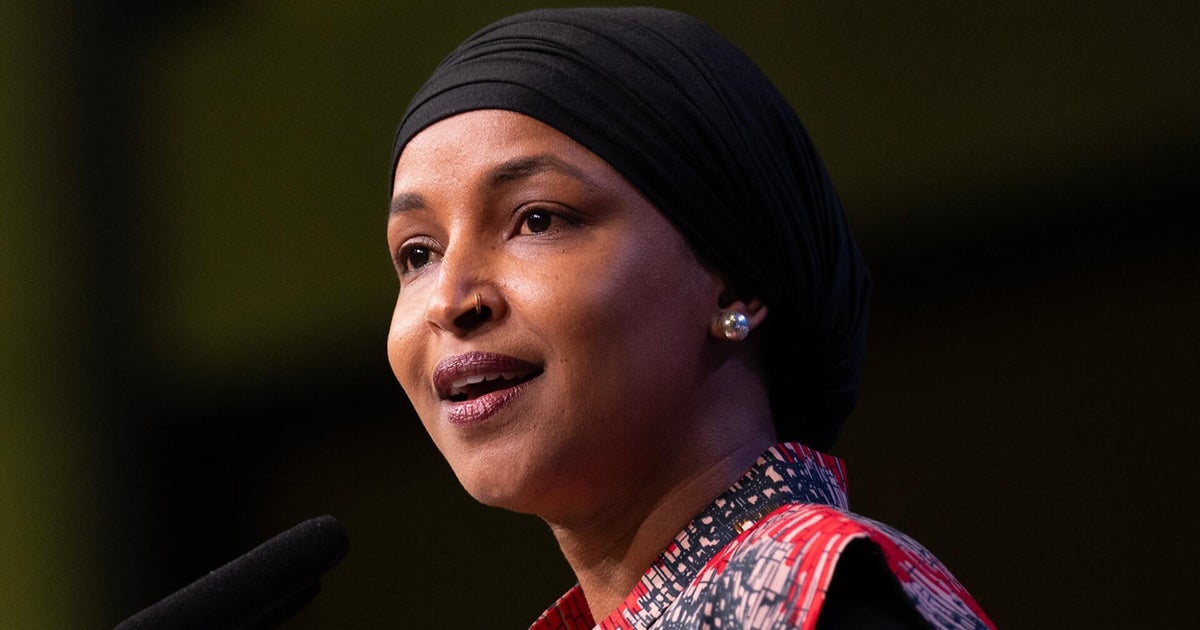
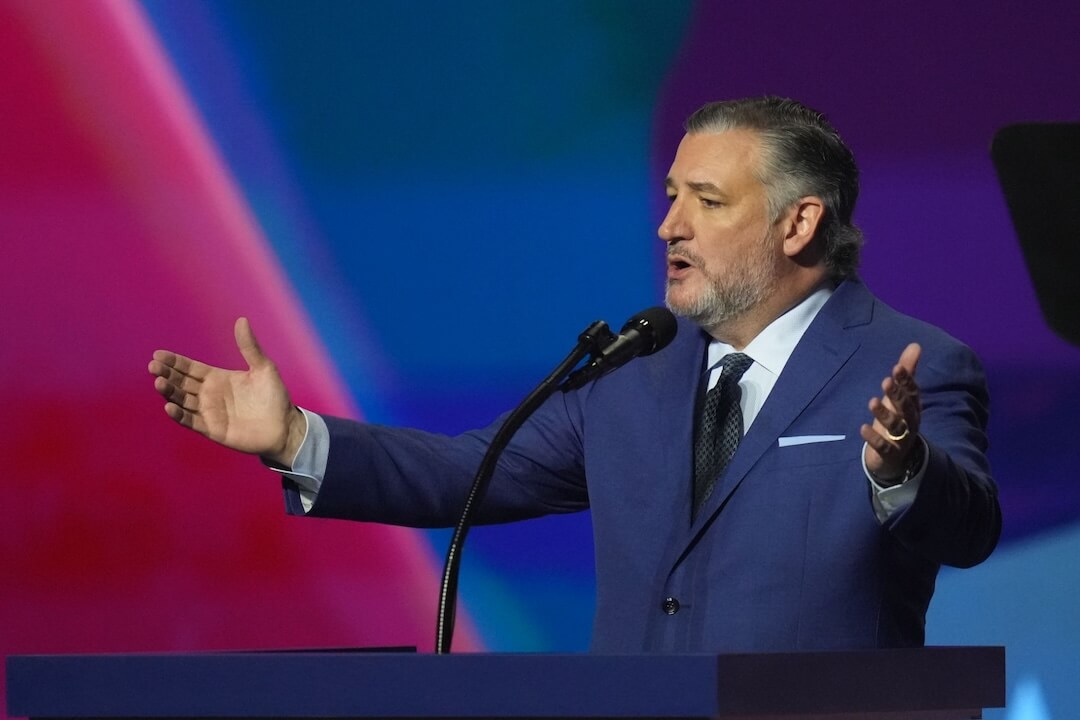
The fictional hearing was supposed to showcase Ted C.r.u.z’s constitutional arguments, but Ilhan O.m.a.r refused to follow his script.
C.r.u.z arrived confident, carrying a prepared argument against a proposed congressional veto override.
He described the effort as an outrageous political maneuver designed to undermine the president’s agenda.
Then he took the argument one step further.
He characterized the proposed override as a political coup disguised as constitutional procedure.
Several members of the fictional committee exchanged uncomfortable looks.
O.m.a.r remained silent, carefully examining the documents arranged before her.
C.r.u.z appeared convinced that his constitutional arguments would dominate the entire discussion.
He had underestimated one important detail.
A presidential veto override is explicitly provided for within the United States Constitution.
And O.m.a.r was prepared to make that distinction the center of her response.
She leaned toward her microphone.
“Senator, you don’t get to call a constitutional procedure a coup simply because you dislike its outcome.”
C.r.u.z attempted to interrupt, but O.m.a.r continued.
She pointed toward the constitutional provisions governing presidential vetoes and congressional reconsideration.
Then she placed a printed copy of the relevant constitutional language on the table.
The fictional hearing suddenly shifted away from political accusations and toward constitutional procedure.
C.r.u.z argued that the proposed legislation represented an attempt to undermine the administration’s authority.
O.m.a.r challenged him to identify the constitutional provision that prohibited Congress from overriding a presidential veto.
The moderator looked toward the legal analyst.
The analyst explained that Article I, Section 7, explicitly establishes the veto override mechanism.
When a president rejects legislation, Congress can reconsider the measure.
If two-thirds of voting members in both chambers approve it, the bill can become law.
That requirement applies to both the House of Representatives and the Senate.
The process is demanding, but it is not an unconstitutional seizure of power.
O.m.a.r pointed toward the constitutional text.
“That’s not a loophole, Senator. That’s the Constitution.”
C.r.u.z responded that constitutional procedures could still produce harmful political consequences.
O.m.a.r acknowledged that lawmakers could disagree about the substance of legislation.
But she challenged his decision to describe an authorized congressional vote as an attempted coup.
The distinction became the central issue of the fictional confrontation.
Congressional disagreement was one thing.
An allegation that constitutional procedures amounted to an overthrow was something entirely different.
C.r.u.z attempted to redirect the discussion toward the substance of the disputed legislation.
He argued that the proposed override would undermine the president’s policy objectives.
O.m.a.r responded that presidential disagreement did not eliminate Congress’s constitutional responsibilities.
She then opened a folder containing the legislative timeline.
The document showed the hypothetical sequence of passage, presidential veto, and congressional reconsideration.
Each stage represented a separate constitutional action.
O.m.a.r pointed toward the final stage.
“Where exactly does the Constitution say Congress must surrender its authority when the president disagrees?”
The legal analyst explained that the Constitution deliberately distributes legislative and executive powers.
The president possesses veto authority, but Congress retains the ability to override that decision.
Neither branch receives unlimited control over the legislative process.
The two-thirds requirement creates a substantial obstacle against overturning presidential decisions.
It also ensures that a veto override requires considerable agreement within Congress.
O.m.a.r turned toward C.r.u.z.
“That’s called checks and balances.”
The fictional audience became noticeably quieter.
C.r.u.z argued that the override proposal still deserved criticism based on its consequences.
O.m.a.r agreed that lawmakers could debate its financial, legal, and political implications.
But she insisted that criticism should accurately describe the constitutional process involved.
The moderator asked whether the proposed override had actually secured the necessary votes.
The analyst explained that the fictional scenario had not established such an outcome.
A proposed override and a successful override were separate events.
Even passing the measure through one chamber would not guarantee its enactment.
Both chambers would need to satisfy the constitutional supermajority requirement.
O.m.a.r nodded and turned toward another document.
It contained a comparison of presidential vetoes and congressional override attempts throughout American history.
The analyst explained that vetoes have been an established feature of presidential government since the nation’s founding.
Congress has also exercised its authority to override presidential vetoes on numerous occasions.
Those decisions became part of the country’s constitutional and legislative history.
The procedure was not invented for one political party or administration.
Nor did it automatically become unconstitutional when the opposing party supported it.
O.m.a.r placed the historical summary beside the constitutional text.
“Senator, are you suggesting the Constitution becomes a coup whenever Congress disagrees with your preferred president?”
C.r.u.z rejected that characterization.
He maintained that his criticism concerned the specific political circumstances surrounding the proposed legislation.
O.m.a.r responded that those circumstances deserved discussion without distorting the underlying constitutional mechanism.
The legal analyst agreed that political criticism and constitutional classification required different standards.
A policy could be controversial without its legislative procedure becoming unconstitutional.
Likewise, a constitutionally permitted action could still attract legitimate political opposition.
The committee now faced a more precise question.
Was C.r.u.z criticizing the proposed policy, or was he challenging Congress’s constitutional authority?
He insisted that the political context mattered.
O.m.a.r agreed that context mattered, but refused to abandon the constitutional distinction.
She then returned to the original accusation.
“Let’s discuss the word you used.”
C.r.u.z looked toward her.
“You called this a coup.”
He responded that the comparison reflected his concerns about the administration’s political position.
O.m.a.r asked the analyst to explain the ordinary constitutional meaning of a veto override.
The analyst described it as congressional reconsideration of legislation after presidential rejection.
The procedure follows an established constitutional framework and requires recorded votes.
It does not remove the president from office or transfer executive authority to Congress.
Instead, it determines whether legislation can become law despite a presidential veto.
O.m.a.r turned back toward C.r.u.z.
“That’s the process you’re describing as a coup?”
C.r.u.z argued that the broader political strategy remained objectionable.
O.m.a.r responded that objections to political strategy did not change constitutional definitions.
The chairman asked both lawmakers to focus on the legislative consequences.
The analyst explained that a successful override would enact the legislation without presidential approval.
However, Congress could not use that procedure to bypass every constitutional limitation.
The legislation would still need to comply with applicable constitutional requirements.
Any subsequent legal challenge would follow the ordinary judicial process.
O.m.a.r emphasized that constitutional disagreement was not evidence of constitutional collapse.
The fictional exchange had now moved beyond the original insult.
It had become a discussion about the limits of presidential power and congressional responsibility.
C.r.u.z attempted another defense.
He argued that lawmakers should consider whether an override would deepen political divisions.
O.m.a.r acknowledged that political consequences deserved serious consideration.
But she questioned whether those concerns justified describing an established constitutional procedure as illegitimate.
The legal analyst reminded the committee that constitutional government often involves competing institutions exercising separate powers.
The president can veto legislation.
Congress can reconsider that legislation.
Courts can review constitutional disputes within their jurisdiction.
Those mechanisms exist precisely because disagreements are unavoidable.
O.m.a.r placed the constitutional document directly in front of C.r.u.z.
“These powers don’t disappear because one party finds them inconvenient.”
The fictional room fell quiet again.
C.r.u.z examined the document before responding.
He maintained that his criticism concerned the political motives behind the proposed override.
O.m.a.r replied that political motives should be evaluated through evidence rather than dramatic labels.
She then asked whether C.r.u.z accepted Congress’s constitutional authority to override presidential vetoes.
The analyst confirmed that the Constitution expressly provides that authority.
C.r.u.z acknowledged the constitutional procedure but continued criticizing the proposal itself.
That distinction finally clarified the disagreement.
The senator could oppose the legislation and argue against its consequences.
But describing the existence of a veto override as an unconstitutional coup required a separate argument.
The analyst explained that the two questions should not be confused.
O.m.a.r turned toward the chairman.
“Then let’s stop pretending that disagreement with a bill means disagreement with the Constitution.”
The chairman requested a final summary from the legal analyst.
The analyst identified three separate issues.
The first concerned whether Congress possessed the authority to reconsider a presidential veto.
The second concerned whether the proposed legislation deserved political and substantive criticism.
The third concerned whether the particular proposal could obtain sufficient support in both chambers.
Each question required its own analysis.
None could be answered simply by repeating the word coup.
C.r.u.z returned to the policy argument, emphasizing the consequences he believed the override would produce.
O.m.a.r responded that those consequences should be debated openly.
But she insisted that constitutional terminology must remain accurate.
The moderator then asked whether either lawmaker believed political disagreement threatened the constitutional system.
O.m.a.r answered that disagreement was part of representative government.
C.r.u.z responded that constitutional powers should always be exercised responsibly.
The analyst agreed that both branches had obligations under the constitutional framework.
The fictional confrontation reached its final exchange.
O.m.a.r gathered her papers and looked toward C.r.u.z.
“Senator, you can oppose the legislation.”
She paused.
“You can criticize the president’s opponents.”
Then she placed her hand on the constitutional document.
“But you cannot erase Congress’s constitutional authority simply because you dislike how it is being used.”
The room became completely silent.
C.r.u.z looked toward the moderator before preparing his response.
The chairman asked him to clarify whether he disputed the legal authority behind veto overrides.
C.r.u.z maintained that his criticism focused on the proposed legislation and its political consequences.
O.m.a.r acknowledged that distinction.
But she reminded the committee that the original accusation had gone much further.
The constitutional process itself had been described as an attempted coup.
And that was precisely the characterization she had challenged.
The chairman finally brought the fictional exchange to a close.
The constitutional document remained open on the desk.
The disputed proposal still faced the difficult requirement of securing two-thirds support.
No successful override had been established in the scenario.
No actual congressional confrontation between O.m.a.r and C.r.u.z matching the exchange had been verified.
But the constitutional issue remained clear.
A presidential veto does not permanently end Congress’s consideration of legislation.
The Constitution provides a specific mechanism for reconsidering that decision.
Both chambers must satisfy the demanding two-thirds requirement.
That safeguard makes an override difficult, but does not make it unconstitutional.
The distinction matters regardless of which party controls Congress or the White House.
Political opponents can challenge legislation without misrepresenting the constitutional procedures governing it.
And lawmakers can defend presidential authority without denying Congress’s independent constitutional responsibilities.
The fictional hearing began with an explosive accusation.
It ended with a much narrower but more important constitutional question.
How should elected officials describe legitimate government procedures when they strongly oppose the political outcomes those procedures might produce?
That question extends far beyond one senator or representative.

It concerns the language politicians use when describing institutions that belong to the entire country.
The Constitution does not guarantee that every legislative decision will satisfy the president.
Nor does it require Congress to abandon its responsibilities whenever political disagreements intensify.
It establishes procedures through which those disagreements can be resolved.
And the veto override mechanism remains one of those procedures.
The ultimate test of constitutional government is whether political opponents respect the rules even when those rules produce outcomes they desperately want to prevent.
