
“WHO REALLY CONTROLS THE COURTS?” A Dark-Money Trail Exposes a Billion-Dollar Threat to Judicial Independence…
The room fell silent when a United States senator placed two financial records beside the Supreme Court’s proposed budget.
One documented millions of dollars in anonymous political donations.
The other concerned luxury travel accepted by a sitting Supreme Court justice from a billionaire benefactor.
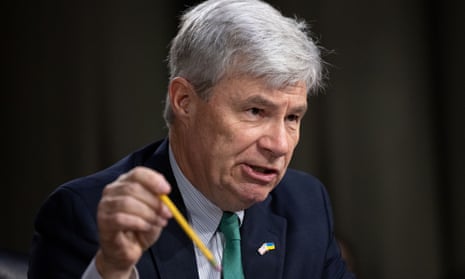
Sen@tor Sheld0n Whiteh0use looked across the table at Chief Justice J0hn R0berts.
The imagined judicial oversight hearing had begun as a discussion about federal court funding.
Now it was becoming a confrontation over money, secrecy, and the institution responsible for interpreting the Constitution.
Whitehouse was not questioning whether the judiciary needed adequate resources.
He wanted to know whether Americans could trust an institution whose most powerful members operated under controversial accountability arrangements.
Roberts defended judicial independence.
He argued that the courts must remain free from political interference, including pressure from Congress.
Whitehouse acknowledged the principle.
Then he opened a folder containing publicly documented financial relationships surrounding Supreme Court confirmation campaigns.
One number immediately stood out.
$1.6 billion.
That extraordinary sum had entered a nonprofit organization connected to conservative judicial advocacy.
But the final challenge would involve something more significant than the size of a donation.
Whitehouse wanted an answer to a question that could not be settled by political affiliation.
If the courts exist to protect equal justice, who ensures that wealthy interests cannot undermine public confidence in their independence?

The Budget Hearing That Became a Fight Over Judicial Power
The confrontation began with a discussion of the federal judiciary’s financial needs.
Roberts emphasized the importance of funding court operations, cybersecurity, courthouse security, and essential administrative services.
He argued that an independent judiciary needed sufficient resources to carry out its constitutional responsibilities.
Whitehouse agreed that courts required adequate financial support.
But he questioned whether operational independence could be separated from ethical accountability.
“Chief Justice, nobody is suggesting the courts should be unable to function,” Whitehouse said.
“The question is whether the public can see enough to trust how they function.”
Roberts challenged the implication that the judiciary operated without ethical requirements.
Federal judges were subject to financial disclosure obligations, recusal standards, and other legal restrictions.
The Supreme Court had also adopted its own written code of conduct.
Whitehouse acknowledged those protections.
But he argued that the existence of ethical rules did not automatically establish that violations could be investigated effectively.
Roberts maintained that judicial independence required caution about giving political institutions authority over judges.
Whitehouse responded that independence should protect judicial decision-making, not eliminate accountability.
The exchange introduced an important distinction.
Congress could not legitimately dictate how a justice should decide a particular case.
But lawmakers could examine the administration of the federal judiciary and consider legislation involving disclosure requirements.
Whitehouse pointed toward his first document.
It concerned a dispute that had already produced years of correspondence between Congress and the chief justice.
The subject was not an abstract accusation.
It involved documented luxury travel, financial disclosure concerns, and repeated requests for an independent investigation.

The Luxury Travel Reports That Triggered a National Ethics Crisis
In April 2023, ProPublica published an investigation into Justice Clarence Thomas’s relationship with billionaire Harlan Crow.
The reporting described luxury trips and accommodations that Thomas had received from Crow over many years.
Some travel had not appeared in the justice’s public financial disclosures.
Thomas maintained that he had understood certain hospitality arrangements did not require reporting under the guidance available at the time.
He subsequently acknowledged that disclosure guidance had changed and said he intended to comply with the updated requirements.
The controversy raised questions about the interpretation of gift-reporting rules.
It also prompted demands for greater transparency.
On April 7, 2023, Whitehouse and Representative Hank Johnson led a congressional letter urging Roberts to investigate the revelations.
The lawmakers argued that the reported benefits warranted examination and that public confidence in the judiciary was at risk.
Their concerns extended beyond the monetary value of the hospitality.
They questioned whether existing processes could adequately assess potential misconduct involving members of the nation’s highest court.
Roberts did not personally announce the comprehensive investigation Whitehouse requested.
Instead, the matter was referred through the Judicial Conference to its Committee on Financial Disclosure.
That response became a central source of disagreement.
Whitehouse considered it insufficient.
Roberts’s position reflected the judiciary’s institutional structure and the roles assigned to its administrative bodies.
At the imagined hearing, Whitehouse placed the April correspondence on the table.
“Who independently investigates a Supreme Court justice when the concern involves the court itself?”
Roberts pointed toward existing ethical and administrative arrangements.
Whitehouse pressed further.
He wanted to know whether those arrangements could conduct meaningful fact-finding and provide a credible public accounting.
The question was consequential.
A financial disclosure review could address whether reporting requirements had been satisfied.
But questions involving possible misconduct, conflicts of interest, or appearance of impropriety could require different forms of examination.
Roberts emphasized that ethical questions needed to be evaluated under established law rather than political pressure.
Whitehouse accepted that standard.
Then he introduced a separate source of concern.
The next records concerned wealthy donors financing campaigns around Supreme Court nominations.
And unlike the luxury travel controversy, much of the original donor information remained unavailable to the public.

The Anonymous Millions Behind Supreme Court Confirmation Campaigns
Whitehouse enlarged a financial diagram showing the Judicial Crisis Network and related advocacy organizations.
The Judicial Crisis Network had participated in major campaigns concerning Supreme Court nominees.
Its activities included advertising and public advocacy surrounding nominations during Donald Trump’s first presidency.
The organization received substantial contributions from donors whose identities were not publicly disclosed.
A 2019 PolitiFact examination confirmed two particularly large donations.
One totaled $17.9 million during fiscal year 2016.
Another totaled $17.1 million during the following fiscal year.
Together, they represented approximately $35 million in major contributions.
The available records did not establish whether both payments came from the same donor.
Nor did they demonstrate that either donor purchased a judicial decision.
That distinction was important.
Anonymous political contributions may be lawful.
And advocacy concerning judicial nominations is not automatically improper.
But Whitehouse argued that secrecy made it difficult to evaluate whether significant donors possessed financial interests connected to litigation.
Roberts challenged the suggestion that undisclosed donors necessarily controlled judges.
Whitehouse acknowledged that such a conclusion required evidence.
He did not claim that the two contributions established a criminal scheme.
Instead, he questioned whether the public had sufficient information to identify potential conflicts.
The moderator asked what the records proved.
They established that wealthy contributors had provided substantial funding to organizations active in judicial confirmation debates.
They also established limits on public visibility into the original funding sources.
But they did not establish that Roberts, Thomas, or another justice had exchanged a ruling for financial support.
Whitehouse agreed that the distinction mattered.
Then he moved toward the next section of the chart.
The new figure dwarfed the earlier contributions.
It was not a donation to an individual justice.
It was an extraordinary transfer into a political advocacy organization.
And its scale changed the entire discussion.
The $1.6 Billion Transaction That Raised the Stakes
In August 2022, ProPublica and The Lever reported on a massive financial transaction involving businessman Barre Seid.
Seid transferred ownership of Tripp Lite, an electronics company, to the Marble Freedom Trust.
The company was subsequently sold to Eaton Corporation for approximately $1.65 billion.
The transaction provided the nonprofit trust with extraordinary financial resources.
Leonard Leo, a prominent conservative legal activist, served as chairman and trustee.
The arrangement also carried substantial tax advantages compared with a conventional sale followed by a donation of proceeds.
Reporting described how the transaction could avoid significant capital-gains taxes under the applicable legal framework.
The documented arrangement did not establish criminal tax evasion.
But its extraordinary size demonstrated the financial power available to politically active nonprofit organizations.
Whitehouse pointed toward the figure.
“One billion, six hundred million dollars.”
He allowed the amount to stand alone.
Then he explained why it mattered.
Resources of that magnitude could support advocacy campaigns, legal organizations, and political activities over many years.
Roberts maintained that charitable and political organizations operated under relevant legal requirements.
Whitehouse agreed.
But he questioned whether existing transparency rules adequately addressed concentrated financial influence surrounding the judiciary.
The moderator asked whether the transaction involved money paid directly to Roberts.
It did not.
The documented financial record also did not establish that the trust had purchased any particular Supreme Court ruling.
Those limitations were essential.
A financial network could create opportunities for advocacy without establishing unlawful coordination.
A wealthy donor could support a legal philosophy without directing a judge’s decisions.
And a judicial ruling could align with an organization’s preferences without proving that the organization controlled the court.
Whitehouse acknowledged those distinctions.
But he argued that transparency remained important precisely because the public needed reliable information to evaluate such relationships.
The confrontation had moved beyond the original budget.
It concerned whether the institutions responsible for interpreting the Constitution possessed sufficient safeguards against undisclosed influence.
Then Roberts introduced a challenge of his own.
Would stronger congressional control over judicial ethics undermine the very independence Whitehouse claimed to defend?
The question forced the senator to address the other side of the constitutional argument.

The Chief Justice’s Defense Creates an Unexpected Reversal
Roberts argued that the Supreme Court occupied a distinct position within the constitutional system.
Justices needed to decide cases according to law rather than the preferences of elected politicians.
He cautioned that ethics enforcement mechanisms could become dangerous if political actors gained authority to pressure judges over unpopular decisions.
Whitehouse did not dismiss the concern.
He acknowledged that judicial independence protected both conservative and liberal justices.
A court subject to direct political retaliation could not reliably protect constitutional rights.
But he challenged whether independent ethical oversight necessarily amounted to political interference.
The disagreement concerned institutional design.
How could the judiciary maintain impartial decision-making while ensuring credible investigation of ethical complaints?
Roberts pointed toward the Supreme Court’s November 2023 Code of Conduct.
The code stated that justices should avoid improper influence and the appearance of impropriety.
It also emphasized the importance of public confidence in the judiciary.
Whitehouse welcomed the existence of written standards.
But he questioned whether the code included a sufficiently independent enforcement system.
The distinction was significant.
A rule could describe expected conduct without establishing a comprehensive process for investigating disputed facts.
Roberts argued that the court’s ethical obligations did not disappear merely because they were administered differently from those governing lower federal courts.
Whitehouse maintained that public confidence required more visible accountability.
He pointed toward legislation known as the Supreme Court Ethics, Recusal, and Transparency Act.
The proposal sought stronger disclosure requirements and clearer processes for addressing ethical concerns.
Supporters argued that it would improve accountability.
Critics warned that Congress could use enforcement mechanisms to influence an independent branch of government.
Both concerns implicated constitutional principles.
Whitehouse now faced a challenge as demanding as the one he had directed toward Roberts.
He needed to explain how oversight could be strengthened without allowing lawmakers to punish judges for decisions they disliked.
The senator answered that ethical investigation should concern conduct, disclosures, and conflicts rather than disagreement with judicial opinions.
Roberts agreed that the distinction was fundamental.
But he questioned how lawmakers would preserve it in practice.
The exchange had become more complicated.
The real issue was not whether judicial independence mattered.
Both men accepted that it did.
The problem was determining what independence required when ethical concerns involved the judiciary’s most powerful officials.
Whitehouse returned to the final document.
It contained a record that shifted the confrontation from theory toward an actual institutional disagreement.
The Unanswered Ethics Question That Changed the Hearing
Whitehouse placed a May 2024 letter beside the budget materials.
The document concerned Roberts’s refusal to meet with members of the Senate Judiciary Committee about Supreme Court ethics.
Whitehouse and Senator Dick Durbin had sought engagement with the chief justice in his administrative capacity.
Roberts declined the requested meeting.
Whitehouse publicly criticized the response.
He argued that the chief justice had not adequately addressed the distinction between judicial decision-making and administrative responsibilities.
The dispute mattered because Roberts also serves as presiding officer of the Judicial Conference of the United States.
That body addresses administrative policy for the federal judiciary.
Whitehouse maintained that congressional oversight of those functions did not necessarily threaten judicial independence.
Roberts’s institutional position emphasized the importance of maintaining appropriate boundaries between branches of government.
At the imagined hearing, Whitehouse held up the letter.
“Chief Justice, if the concern is about the administration of judicial ethics, who is accountable for explaining the process?”
Roberts emphasized the judiciary’s existing administrative responsibilities.
Whitehouse pressed for a clearer answer.
He asked whether the public should have confidence in an accountability system whose procedures were difficult to examine.
Roberts responded that confidentiality could protect judicial independence and fair consideration of complaints.
Whitehouse acknowledged that some proceedings legitimately required privacy.
But he argued that confidentiality could also create uncertainty about whether meaningful review had occurred.
The moderator returned to the financial records.
The anonymous donations did not establish purchased rulings.
The Marble Freedom Trust transaction did not establish personal corruption by Roberts.
The judicial travel reporting did not prove that every resulting court decision was improper.
But the documents did identify concrete questions about financial disclosure and institutional oversight.
Those questions could be addressed without asserting a criminal conspiracy.
Whitehouse turned toward the chief justice.
The most important issue, he argued, was whether the judiciary could demonstrate the independence and effectiveness of its ethical review processes.
Roberts maintained that judicial accountability needed to respect constitutional boundaries.
Both positions remained in tension.
Then Whitehouse delivered his final question.
The Final Constitutional Question That Left the Room Quiet
Whitehouse gathered the documents into a single stack.
He placed the anonymous donation records beside the ethics correspondence.
Then he looked directly toward Roberts.
“Chief Justice, is the Constitution protected by the rule of law, or by the backroom checks of billionaires?”
The moderator allowed the question to settle.
Roberts rejected the suggestion that the Constitution depended on wealthy donors.
He maintained that judicial decisions were governed by legal reasoning, precedent, and the Constitution.
Whitehouse accepted that those were the proper standards.
But he argued that public confidence also depended on whether potential conflicts could be examined credibly.
The chief justice emphasized that accusations needed to be established through reliable evidence.
Whitehouse agreed.
Then he identified the central distinction.
A large political donation did not prove judicial corruption.
But the absence of proven corruption did not automatically eliminate the need for transparency.
Roberts maintained that ethical oversight must preserve the court’s ability to make independent decisions.
Whitehouse argued that accountability could strengthen judicial independence by addressing legitimate concerns before they undermined public confidence.
The moderator asked whether the documents established that billionaires had purchased specific Supreme Court rulings.
They did not.
The records demonstrated substantial political financing, documented ethical controversies, and disagreements over oversight.
They did not establish an unlawful exchange involving Roberts or a particular judicial decision.
That clarification prevented the dramatic accusation from exceeding the evidence.
But it did not resolve the institutional question.
What procedures should apply when allegations concern members of the nation’s highest court?
Who should investigate disputed facts?
What information should become public?
And how should the system protect justices from political retaliation while maintaining meaningful accountability?
Those questions remained consequential.
They were not answered by the size of a donation alone.
Nor could they be dismissed simply because judicial independence was important.
The final exchange had produced a narrower but more substantial challenge than the original accusation.
The real issue was whether Americans could understand how ethical standards were enforced when the Supreme Court itself became the subject of scrutiny.
That question would remain even after the confrontation ended.
The Revelation That Outlasted the Hearing
The imagined hearing closed without a criminal finding or a dramatic admission of wrongdoing.
Roberts continued defending judicial independence and the need to protect judges from political pressure.
Whitehouse maintained that independence and accountability needed to function together.
The financial records remained significant.
Millions of dollars had flowed into organizations campaigning around Supreme Court nominations.
A $1.6 billion transaction had provided extraordinary resources to a politically influential nonprofit trust.
Investigative reporting had documented luxury travel and disclosure controversies involving a sitting justice.
And congressional correspondence had revealed persistent disagreements about the judiciary’s mechanisms for examining ethical concerns.
Those findings supported serious questions about transparency.
They did not demonstrate that billionaires had purchased Supreme Court rulings.
Nor did they establish personal misconduct by Roberts.
The distinction mattered because protecting the rule of law requires accurate allegations as well as credible institutions.
Whitehouse’s strongest argument was not that every anonymous donor had committed wrongdoing.
It was that the public needed trustworthy processes for examining possible conflicts.
Roberts’s strongest response was not that ethical concerns should be ignored.
It was that any oversight system must protect judicial decision-making from political interference.
The central challenge involved reconciling those principles.
An effective accountability system would need clear standards for disclosure.
It would also require procedures capable of examining credible allegations without treating political disagreement as proof of misconduct.
And it would need safeguards against retaliation by powerful interests inside or outside government.
The final question therefore extended beyond the two men at the table.
Americans depend on courts to resolve disputes involving constitutional rights, government authority, and powerful private interests.
That responsibility makes public confidence especially important.
But confidence cannot be sustained through assertions alone.
It depends on conduct, transparency, reliable procedures, and the consistent application of ethical rules.
The confrontation began with an accusation about billionaires influencing the judiciary.
It ended with a more precise question about the institutions responsible for investigating potential conflicts.
The answer would not come from a single financial chart.
It would come from whether the judiciary could demonstrate that its ethical safeguards were independent, effective, and worthy of public trust.
And that was the revelation behind Whitehouse’s final challenge.
The Constitution does not belong to the wealthiest donors, the politicians demanding answers, or the judges interpreting its provisions. Its authority depends on the rule of law applying consistently to everyone.
