
Ilhan O.m.a.r had been speaking for nearly ten minutes when Senator John Ken.n.e.d.y quietly closed his briefing folder.
The Minnesota congresswoman had delivered a forceful criticism of American military involvement in the Horn of Africa.
She argued that years of counterterrorism operations had failed to produce lasting stability across much of Somalia.
Her remarks focused on civilian casualties, military expenditures, and the consequences of prolonged American involvement overseas.
Several members listened closely as she questioned whether Washington had developed a coherent strategy for the region.
O.m.a.r insisted that military operations alone could never resolve Somalia’s complicated political and humanitarian challenges.
She criticized policies that appeared to measure success through military activity rather than long-term improvements in civilian security.
Ken.n.e.d.y remained silent.
He had not interrupted her opening remarks.
He had not challenged her statistics.
Instead, he studied a map of Somalia and several documents describing the country’s ongoing security crisis.
When O.m.a.r finished, the moderator turned toward the Louisiana senator.
Ken.n.e.d.y slowly adjusted his microphone.
Then he looked directly at O.m.a.r.
“Congresswoman, if American support disappears tomorrow, who protects Somali civilians from al-Shabaab the next morning?”
The fictional chamber fell silent.
O.m.a.r looked toward Ken.n.e.d.y, then toward the large map positioned behind the committee witnesses.
The question was considerably narrower than the political argument she had just delivered.
It did not ask whether military intervention had solved Somalia’s problems.
It asked what would happen to vulnerable civilians if American assistance suddenly disappeared.
And answering it required confronting a danger that neither politician could dismiss.
Al-Shabaab remained a significant security threat in Somalia.
The organization had carried out deadly attacks against civilians, government institutions, and security forces.
It had also demonstrated an ability to exploit political instability and weaknesses in local security arrangements.
Ken.n.e.d.y placed the map directly beneath the camera.
Several regions were marked with indicators showing areas affected by militant activity.
The senator did not make another speech.
He simply waited for O.m.a.r’s response.
She examined the map carefully.

Then she leaned toward her microphone.
“Senator, that’s an important concern, but you’ve framed the problem as though only two options exist.”
Ken.n.e.d.y remained silent.
O.m.a.r continued.
“Either America maintains its current military approach indefinitely, or Somali civilians are abandoned.”
She paused.
“Those are not the only possibilities.”
The moderator asked the committee’s regional security adviser to explain the existing international arrangements.
The adviser described the complicated network of Somali forces, African Union personnel, and international security assistance.
Somalia’s federal government had worked with international partners to confront al-Shabaab for many years.
The United States provided military training, intelligence support, equipment, and other forms of assistance.
American forces had also conducted counterterrorism strikes against militant targets.
African Union missions played a major role in supporting Somali security operations.
Those arrangements existed alongside humanitarian assistance and efforts to strengthen government institutions.
But the adviser emphasized that security progress had remained uneven.
Some areas experienced improvements.
Others continued facing serious militant threats.
And civilians remained vulnerable to violence, displacement, and humanitarian emergencies.
Ken.n.e.d.y listened without interrupting.
O.m.a.r turned toward the adviser.
She emphasized that military security and political stability were related but different objectives.
A successful operation might remove militants from a particular location.
But maintaining security afterward required reliable local institutions.
Communities needed functioning government services.
Families needed access to food, healthcare, and education.
Local authorities needed sufficient legitimacy to prevent armed groups from exploiting grievances.
The adviser acknowledged those considerations.
Then the moderator returned attention to Ken.n.e.d.y’s original question.
The central concern remained immediate civilian protection.
O.m.a.r responded that any responsible change in American military involvement required a transition plan.
Such a plan would need to account for Somali security capacity and the continuing role of regional partners.
It would also require monitoring the consequences of assistance reductions.
Ken.n.e.d.y looked toward the map.
The adviser explained that withdrawing support without adequate preparation could produce serious security risks.
Somali forces continued facing operational and logistical challenges.
African Union support missions also confronted funding and capacity limitations.
A sudden disruption could create opportunities for al-Shabaab to expand its activities.
O.m.a.r acknowledged those risks.
But she maintained that acknowledging them did not establish the effectiveness of every existing military operation.
She pointed toward a document describing the history of American involvement.
The United States had supported counterterrorism efforts in Somalia for more than two decades.
During that period, American policy had evolved through different administrations and military arrangements.
Yet the country continued facing significant security and governance challenges.
O.m.a.r argued that this history justified examining whether existing strategies achieved their stated objectives.
The adviser explained that measuring effectiveness required distinguishing different outcomes.
Military operations could disrupt militant leadership.
Security cooperation could strengthen particular Somali units.
Humanitarian programs could reduce immediate suffering.
But none of those achievements automatically guaranteed lasting political stability.
The moderator asked the adviser to identify the largest unresolved challenge.
The answer concerned the relationship between military progress and sustainable local governance.
Security forces needed reliable funding and institutional support.
Communities needed confidence that government institutions could protect them.
And international partners needed a strategy for reducing dependence without creating dangerous security gaps.
O.m.a.r nodded.
That concern aligned with the argument she had been making before Ken.n.e.d.y intervened.
But his question had introduced an additional requirement.
Any proposal to change American involvement needed to explain who would protect civilians during the transition.
The fictional committee moved toward the next document.
It contained a summary of the 2023 congressional debate surrounding American forces in Somalia.
That year, the House considered a war powers resolution concerning the deployment of United States armed forces.
O.m.a.r supported the resolution.
Her public remarks emphasized the need for a serious debate about long-term American strategy in Somalia.
She also raised concerns about civilian casualties and congressional oversight of military operations.
The resolution did not pass.
Ken.n.e.d.y examined the historical record.
He appeared interested in the distinction between opposing a military policy and opposing efforts to protect civilians.
The adviser explained that lawmakers could support counterterrorism objectives while questioning particular military deployments.
They could also support security assistance while seeking stronger reporting requirements.
The policy choices were not limited to unconditional military involvement or immediate abandonment.
O.m.a.r used the opportunity to clarify her position.
She argued that Congress needed better information about the long-term consequences of American operations.
The public deserved to understand the objectives behind military commitments.
Lawmakers also needed reliable assessments of civilian harm and operational effectiveness.
Without that information, Congress could struggle to determine whether a policy required continuation, revision, or replacement.
The fictional hearing grew quieter.
Ken.n.e.d.y’s original question remained visible on the screen.
But the discussion had moved beyond a simple confrontation.
It now concerned whether a responsible transition could protect civilians while addressing the shortcomings of existing policy.
The moderator asked the adviser to examine the humanitarian situation.
The adviser described the consequences of prolonged conflict, displacement, drought, and food insecurity.
Millions of Somalis depended on fragile systems of public services and humanitarian support.
Security disruptions could interfere with food delivery and medical assistance.
They could also force families to leave their homes.
O.m.a.r emphasized that civilian protection required more than preventing militant attacks.
It also involved ensuring that people could survive the broader consequences of instability.
The adviser agreed.
But humanitarian organizations frequently depended on adequate security to reach vulnerable communities.
An assistance program could not succeed if workers could not safely reach the people needing help.
That observation returned the discussion to Ken.n.e.d.y’s concern.
Civilian safety and humanitarian access could not be considered entirely separate issues.
O.m.a.r acknowledged the connection.
Then she argued that military planners should incorporate those concerns into every major policy decision.
The moderator requested a practical example.
The adviser introduced a hypothetical district where Somali forces depended heavily on external logistical assistance.
International partners had helped provide equipment, training, and operational coordination.
Local authorities controlled several population centers.
However, surrounding areas remained vulnerable to militant activity.
If external support ended abruptly, security operations could become more difficult.
Supply shortages might reduce patrols.
Intelligence gaps could weaken early warnings.
And militant organizations might exploit the disruption.
O.m.a.r examined the scenario.
She acknowledged that an immediate withdrawal without preparation would create unacceptable risks.
Then she suggested a different approach.
Any reduction in external military involvement should depend on demonstrated local capacity.
Security conditions needed independent evaluation.
Humanitarian access required continued protection.
And Somali authorities needed sufficient resources to maintain essential operations.
The adviser agreed that those were relevant transition considerations.
However, implementation would remain difficult.
Local security capacity varied substantially across different regions.
Political disagreements could complicate coordination.
And international assistance was vulnerable to funding changes.
The committee chairman asked staff to prepare a comparison of several policy options.
The first involved maintaining existing military support arrangements.
The second considered a gradual transition based on measurable security benchmarks.
The third examined the consequences of substantially reducing support without adequate replacement capacity.
The fictional discussion finally produced a concrete assignment.
But an unexpected complication emerged.
The adviser explained that maintaining the current approach also carried risks.
Prolonged external assistance could create dependence if local institutions failed to develop sufficient capacity.
Military operations could generate civilian harm or political resentment when safeguards failed.
And continuing financial commitments required evidence that programs produced meaningful outcomes.
O.m.a.r pointed toward the assessment.
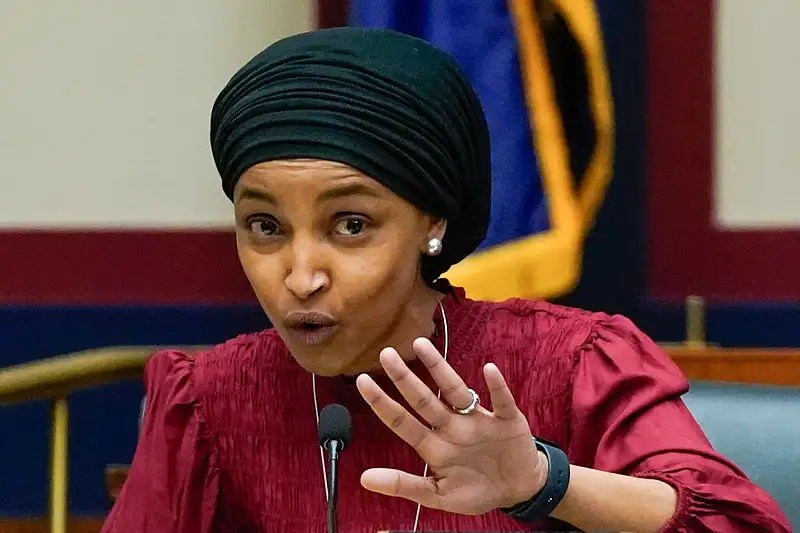
She argued that these concerns could not be dismissed simply because al-Shabaab remained dangerous.
Ken.n.e.d.y listened while the adviser reviewed the comparison.
The central question had become more complicated.
A sudden withdrawal might expose civilians to greater danger.
But an indefinite military commitment without clear objectives could also fail to produce durable security.
The committee needed to examine both possibilities.
The chairman asked for an assessment of the African Union’s role.
The adviser explained that African Union missions had provided substantial security support in Somalia since 2007.
Their operations helped Somali authorities confront militant organizations and protect important locations.
But funding difficulties and institutional challenges remained serious concerns.
Changes to international assistance could affect the missions’ effectiveness.
O.m.a.r emphasized that regional partners needed a meaningful role in determining future security arrangements.
She argued that Somalia’s long-term stability ultimately depended on Somali institutions.
The adviser agreed that durable security required local ownership.
But developing that capacity would require sustained planning and adequate resources.
The moderator then returned to the original exchange.
Ken.n.e.d.y’s single question had forced the discussion to confront the consequences of changing American involvement.
But O.m.a.r’s response had highlighted the importance of distinguishing sudden withdrawal from a carefully planned transition.
The committee chairman requested one final assessment.
The adviser stated that protecting Somali civilians required a combination of security, governance, and humanitarian measures.
No individual military operation could guarantee lasting stability.
Likewise, removing external assistance without assessing local capacity could create dangerous consequences.
Effective policy required measurable objectives and credible contingency planning.
O.m.a.r placed her notes beside the map.
She acknowledged that Ken.n.e.d.y had identified a serious issue.
Any proposal concerning American involvement needed to address the immediate safety of vulnerable communities.
But she argued that the answer could not simply assume current policies were effective because threats still existed.
The committee needed evidence demonstrating what assistance accomplished.
It also needed to identify which programs could be improved.
The chairman asked whether O.m.a.r supported establishing measurable civilian protection benchmarks.
She answered that such benchmarks would help Congress evaluate the consequences of policy decisions.
The adviser suggested examining civilian security, local operational capacity, humanitarian access, and institutional sustainability.
Those measurements could help determine whether changes in American support were appropriate.
The chairman directed staff to include those recommendations in the requested policy comparison.
That instruction gave the fictional confrontation a specific outcome.
The committee would examine what might happen if American assistance changed.
It would also evaluate whether existing operations were producing sustainable improvements.
The analysis would focus on civilian protection rather than political rhetoric alone.
Ken.n.e.d.y closed his folder.
O.m.a.r gathered the remaining documents.
The moderator observed that the original question had narrowed a lengthy policy disagreement into an immediate practical concern.
But the subsequent discussion had revealed why a single answer could not resolve the entire issue.
Somalia’s security challenges involved militant organizations, political institutions, humanitarian emergencies, and international partnerships.
Those problems required more than declarations of success or failure.
They required evidence about actual conditions.
The fictional exchange ended without proving that O.m.a.r opposed protecting Somali civilians.
Nor did it establish that Ken.n.e.d.y believed every existing American operation should continue indefinitely.
Their disagreement concerned the policies best suited to protecting civilians and promoting durable stability.
The historical record provided important context.
The United States had supported Somali and African Union counterterrorism operations for years.
Congress had debated the American military presence and its legal authorization.
O.m.a.r had publicly questioned whether Washington’s strategy adequately addressed civilian harm and long-term political stability.
Those issues remained legitimate subjects for congressional oversight.
But Ken.n.e.d.y’s question introduced a consequential test for any proposed policy change.
A recommendation to reduce military support needed to explain how vulnerable communities would remain protected.
Without that explanation, a strategy could leave a dangerous gap between its intentions and its consequences.
O.m.a.r’s response introduced another necessary test.
A recommendation to continue military involvement needed to demonstrate measurable progress toward sustainable security.
Without that evidence, temporary military achievements could become substitutes for a viable long-term strategy.
The committee’s proposed assessment would examine both standards.
It would consider the dangers of an abrupt security vacuum.
It would also examine the costs and limitations of prolonged external involvement.
And it would evaluate the role of Somali and regional institutions in protecting civilians.

The cameras remained focused on the map as the fictional hearing concluded.
Ken.n.e.d.y had asked one question.
O.m.a.r had spent the remaining discussion confronting its implications.
The answer was not a simple political slogan.
It required addressing who would protect vulnerable people, how that protection would operate, and when local institutions could assume greater responsibility.
The single question had changed the focus of the hearing.
But its significance lay in the policy decisions it demanded, not in any personal humiliation.
The final message was one that neither side could responsibly ignore.
A strategy for Somalia cannot be judged only by whether American forces stay or leave, but by whether Somali civilians become safer when the decision is made.
