
“THE FINAL QUESTION!” A $25,000-JOBS DISPUTE AND A DAMNING ETHICS REPORT TURN A HEATED POLITICAL SHOWDOWN UPSIDE DOWN
The confrontation began with a personal insult, but the most damaging document had nothing to do with political rhetoric.
Representative Alexandria Ocasio-Cortez had challenged Marco Rubio’s credibility during a televised discussion about economic policy and congressional accountability.
She dismissed his arguments as little more than a Sunday school lecture.
Rubio, who had served as secretary of state since January 2025, did not immediately respond.
He opened his briefcase.
Inside were three sets of records.
One concerned congressional legislation and the difference between sponsoring a bill and actually getting it enacted.
Another documented Amazon’s abandoned plan to establish a major corporate headquarters in Queens.
The final document was a bipartisan House Ethics Committee report concerning Ocasio-Cortez’s appearance at the 2021 Met Gala.
Rubio placed the records beside his microphone.
“Congresswoman, popularity is easy to measure.”
He paused.
“Accountability requires something considerably more difficult.”
Ocasio-Cortez challenged him to identify precisely what the documents established.
Rubio turned toward the first page.
He wanted to examine what happens when political influence becomes separated from measurable results.
But the strongest evidence was waiting in the final section.
It contained an official finding that neither politician could dismiss as a partisan accusation.
And the committee’s actual conclusion would prove more complicated than the sensational allegation surrounding it.
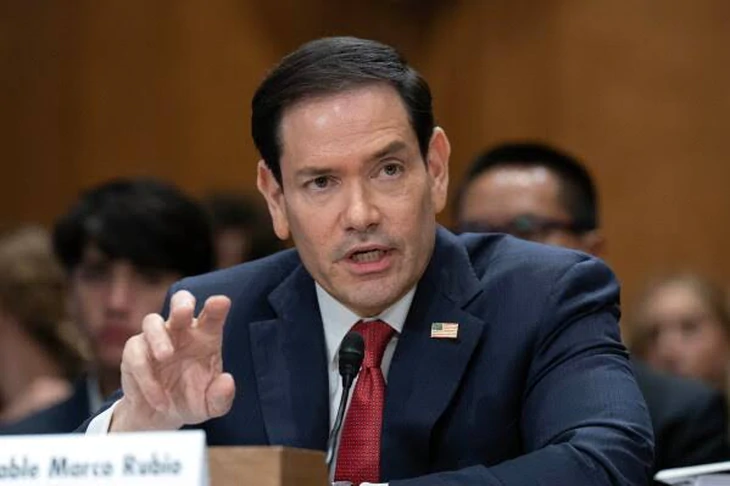
The Opening Insult That Turned Into an Accountability Challenge
The televised policy forum had begun with a disagreement over the role of government in creating economic opportunity.
Ocasio-Cortez argued that corporate incentives and tax policies frequently favored powerful businesses over working families.
She maintained that public investments should prioritize affordable housing, healthcare, and economic security.
Rubio challenged whether those goals were being achieved through the policies she supported.
He argued that lawmakers needed to examine actual outcomes rather than rely exclusively on intentions.
The congresswoman dismissed his criticism.
She accused him of treating complex economic questions as simple moral lectures.
Then she made the remark comparing him to a Sunday school teacher.
Rubio waited for the interruption to end.
He did not demand an apology.
Instead, he questioned whether political popularity had become a substitute for legislative achievement.
Ocasio-Cortez rejected the implication.
She argued that a member of Congress could influence policy through amendments, committee work, oversight, and coalition building.
Rubio acknowledged that those activities mattered.
But he challenged whether public officials should distinguish between proposals that generated enormous attention and legislation that became law.
The moderator asked him to identify the standard he wanted to apply.
Rubio opened his first document.
It concerned the congressional record.
And the distinction it revealed immediately complicated his own argument.
The Legislative Record That Exposed a Misleading Political Statistic
Rubio pointed toward a familiar political accusation.
Critics of Ocasio-Cortez had repeatedly claimed that her national popularity exceeded her record of personally sponsored legislation becoming law.
The comparison was designed to question whether her media influence translated into legislative success.
But the number required careful interpretation.
Congressional records distinguish between sponsoring legislation and cosponsoring measures introduced by other lawmakers.
They also distinguish between bills introduced, bills passing one chamber, and measures ultimately enacted.
A lawmaker can contribute to legislation without being listed as its original sponsor.
Committee negotiations, amendments, and coalition-building activities may also influence the final result.
Rubio acknowledged those limitations.
But he maintained that legislative accomplishments should be evaluated through identifiable outcomes.
Ocasio-Cortez responded that congressional influence could not be reduced to a single statistic.
She noted that individual lawmakers rarely determine the outcome of major legislation independently.
Rubio agreed.
Then he asked whether political messaging should nevertheless be separated from legislative results.
The moderator examined the records.
During the 117th Congress, none of the bills Ocasio-Cortez personally sponsored became law.
That was a specific historical finding.
It did not establish that she had never contributed to legislation that ultimately passed.
Nor did it establish that her legislative activity had produced no meaningful results.
Rubio accepted the distinction.
But he argued that politicians should not treat attention as proof of policy effectiveness.
Ocasio-Cortez challenged whether his own legislative career should be examined through the same standard.
Rubio agreed that consistent measurement mattered.
The exchange had produced its first unexpected development.
The legislative record could support a criticism about limited enactment of personally sponsored proposals.
But the broader accusation of accomplishing absolutely nothing exceeded what that statistic alone demonstrated.
The moderator turned toward Rubio’s second document.
It concerned an economic project that had divided New York long before the current confrontation.
And the financial stakes were much larger than a congressional report card.
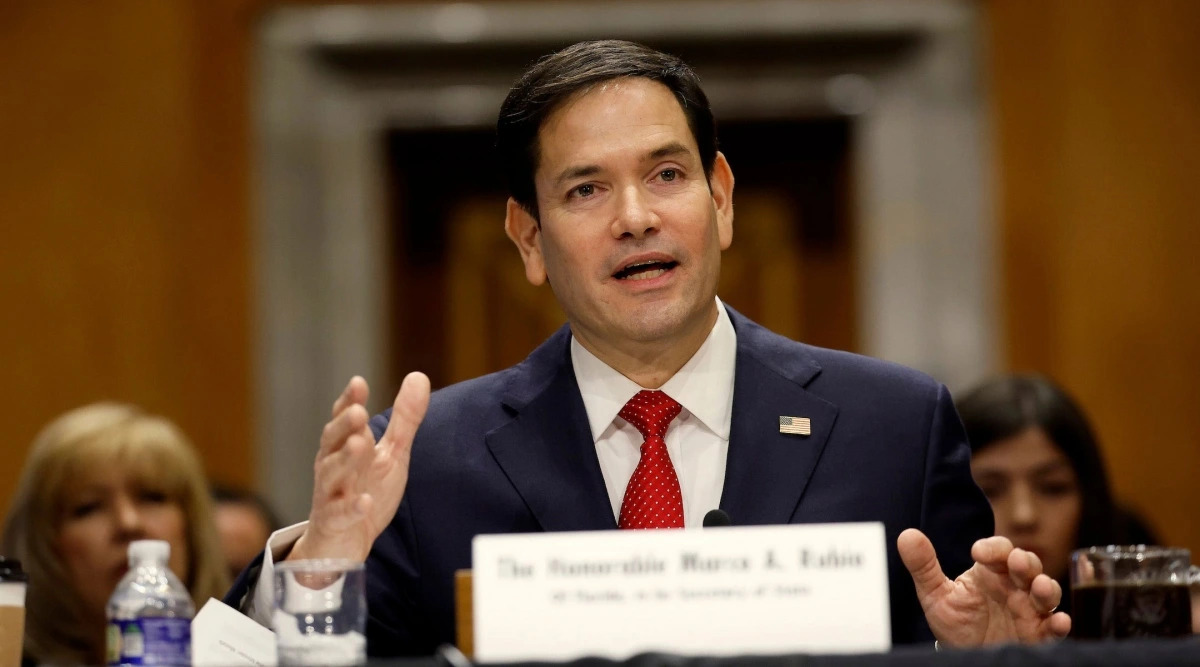
The 25,000 Jobs That Never Arrived in Queens
In November 2018, Amazon announced plans to establish part of its second headquarters in Long Island City, Queens.
The proposed development represented one of the most closely watched corporate expansion projects in the country.
Amazon projected that the New York location could eventually create at least 25,000 direct jobs.
The company anticipated an average salary exceeding $150,000 for those positions.
The proposal also included significant construction activity and opportunities for supporting businesses.
New York state and city officials offered incentives potentially approaching $3 billion.
Supporters argued that the project would generate substantial tax revenue and employment opportunities.
Opponents questioned whether the incentives represented an appropriate use of public resources.
They also raised concerns about housing costs, transportation capacity, and neighborhood displacement.
Ocasio-Cortez was among the politicians who publicly opposed the agreement.
She argued that public money should not subsidize a wealthy corporation without stronger guarantees for local communities.
Rubio pointed toward Amazon’s February 14, 2019, announcement.
The company had decided to abandon the New York headquarters project.
Its explanation cited opposition from some local political leaders and community groups.
Rubio emphasized the projected employment opportunities.
“Twenty-five thousand jobs, Congresswoman.”
He looked toward her.
“That’s not a number you can explain away with a television interview.”
Ocasio-Cortez challenged his characterization.
She argued that the proposed jobs were projections, not positions that already existed.
Rubio acknowledged that the project had not reached completion.
But he maintained that the cancellation eliminated a substantial potential investment.
The moderator examined the original agreement.
The proposal involved more than high-paying technology positions.
It also contemplated construction work, supporting services, and employment programs.
But the precise number of blue-collar jobs that would have materialized could not be established from the canceled project alone.
That limitation mattered.
No authenticated document identified particular workers whose jobs Ocasio-Cortez personally eliminated.
The economic opportunity was substantial.
The claim that one congresswoman had directly sacrificed identifiable workers was not established.
Still, the cancellation raised serious questions about the balance between economic development and corporate incentives.
Rubio’s next argument focused on what those incentives actually represented.
The $3 Billion Dispute That Changed the Economic Argument
Rubio turned toward the proposed tax incentives.
He argued that New York had rejected a project capable of bringing substantial investment and employment.
Ocasio-Cortez responded that the financial terms deserved close scrutiny.
The proposed incentive package was not equivalent to handing Amazon a $3 billion cash payment from an existing bank account.
Much of the support involved tax benefits and performance-based arrangements connected to future investment and employment.
That distinction changed the argument.
Supporters maintained that the incentives would be justified by economic activity generated through the project.
Opponents argued that New York should not provide such substantial advantages to one of the world’s most powerful corporations.
The Congressional Research Service examined the controversy in March 2019.
Its analysis identified competing approaches to economic development.
One emphasized attracting private investment and employment.
The other emphasized the opportunity costs of public incentives and the potential consequences for local communities.
Neither approach automatically settled the dispute.
Rubio questioned whether the project could have benefited families seeking better employment.
Ocasio-Cortez argued that economic growth should be evaluated alongside housing affordability and community stability.
The moderator asked whether the record established that her opposition alone caused Amazon’s withdrawal.
It did not.
Amazon faced resistance from multiple elected officials, unions, and community organizations.
The company made the final decision to cancel the project.
Ocasio-Cortez had been a prominent opponent, but she was not the sole participant.
That distinction prevented the economic controversy from becoming a simplistic account of individual blame.
Nevertheless, Rubio maintained that political leaders should accept scrutiny when they publicly celebrated the cancellation of a major investment.
Ocasio-Cortez answered that corporate development agreements also needed scrutiny before public incentives were approved.
The exchange remained unresolved.
But the documents had established one important consequence.
New York lost the opportunity to host the proposed headquarters under the terms Amazon had announced.
Whether that outcome represented a policy failure or a rejection of an unfavorable agreement remained contested.
Rubio then closed the Amazon folder.
The final document concerned a different kind of accountability.
This time, the findings came from the House Ethics Committee itself.
The Met Gala Report That Brought the Debate Back to Personal Responsibility
In September 2021, Ocasio-Cortez attended the Metropolitan Museum of Art’s annual fundraising gala.
Her appearance attracted national attention.
She wore a white gown bearing the message “Tax the Rich.”
The political statement generated both praise and criticism.
Supporters viewed it as an attempt to challenge wealth inequality inside an exclusive cultural event.
Critics questioned whether attending such a prestigious gathering undermined her message.
But the subsequent ethics investigation concerned something more specific than political symbolism.
It examined whether Ocasio-Cortez had accepted improper gifts and whether associated expenses had been handled correctly.
The House Ethics Committee released its findings on July 25, 2025.
The bipartisan committee concluded that her acceptance of certain goods and services had been inconsistent with applicable House rules and standards.
The report examined the clothing and accessories associated with her appearance.
It also addressed free admission provided to her then-partner, Riley Roberts.
The committee determined that additional payments were necessary.
Ocasio-Cortez was required to pay $2,733.28 to Brother Vellies for the fair-market value of goods received.
She was also required to donate $250 corresponding to her partner’s meal.
The combined amount was $2,983.28.
Rubio placed the committee report on the table.
“Congresswoman, this isn’t my investigation.”
He pointed toward the conclusion.
“It’s your own House Ethics Committee.”
Ocasio-Cortez acknowledged the findings.
But she challenged the suggestion that the committee had established deliberate wrongdoing.
The moderator examined the final section.
The report explicitly concluded that the violations were not knowing and willful.
It also recognized that Ocasio-Cortez and her representatives had made efforts to comply with the applicable rules.
That distinction was decisive.
The committee found improper gifts and delayed or insufficient payments.
It did not conclude that Ocasio-Cortez had intentionally orchestrated a criminal scheme.
Nor did it impose a formal sanction beyond requiring corrective payments as a condition for closing the matter.
Rubio accepted that the report did not establish intentional misconduct.
But he argued that the findings still demonstrated a responsibility to correct improper benefits.
Ocasio-Cortez responded that she had accepted the committee’s conclusions and the required corrective measures.
The moderator returned to the original allegation.
The documents established an ethics violation.
They did not establish that she had hidden a secret criminal scandal.
And the report’s final passage contained an unexpected lesson about congressional accountability.
The Finding That Changed the Meaning of the Entire Confrontation
The final page explained why the committee had declined to recommend additional punishment.
Investigators concluded that Ocasio-Cortez had not knowingly and willfully violated the rules.
The report also recognized efforts to address the problems.
Those findings did not erase the violations.
But they distinguished administrative and compliance failures from deliberate misconduct.
Rubio argued that public officials should be held responsible even when mistakes were unintentional.
Ocasio-Cortez agreed that congressional ethics requirements deserved serious attention.
She challenged whether the senator would apply the same standard to members of his own political party.
Rubio answered that lawmakers should face consistent scrutiny.
The moderator then connected the three document sets.
The legislative records concerned measurable political accomplishments.
The Amazon controversy involved competing economic forecasts and a canceled development agreement.
The ethics report documented specific conduct that violated House standards.
Those records could not be treated as interchangeable.
A legislative statistic could not establish personal corruption.
An abandoned corporate project could not identify individual workers whose livelihoods had been destroyed.
And an ethics finding that expressly rejected intentional wrongdoing could not be rewritten as proof of a deliberate criminal conspiracy.
Yet each document raised a legitimate accountability question.
How should voters measure political effectiveness?
What responsibility should elected officials accept for major policy positions?
And how should Congress respond when its members fail to comply fully with ethics requirements?
The answers required evidence.
They could not be supplied by social media popularity or personal insults.
Rubio turned toward Ocasio-Cortez.
His closing question brought the three controversies into one final challenge.
The Final Question That Neither Side Could Escape
Rubio placed his hand on the ethics report.
He looked toward the congresswoman.
“If accountability matters when you’re criticizing billionaires, shouldn’t it matter when your own conduct is under review?”
Ocasio-Cortez answered that it should.
She argued that the committee’s findings had been addressed through the process established by the House.
Rubio acknowledged the existence of that process.
But he maintained that political leaders should accept uncomfortable findings rather than dismiss every criticism as partisan hostility.
Ocasio-Cortez challenged whether he was accurately describing the committee’s conclusion.
The moderator returned to the document.
The committee had found violations involving gifts and delayed payments.
It had not found knowing and willful misconduct.
It required corrective payments and indicated that the matter would be closed after those conditions were satisfied.
Those findings established the appropriate limits of Rubio’s criticism.
He could challenge Ocasio-Cortez’s judgment and oversight.
He could question whether the incident conflicted with her public message about wealth and privilege.
But he could not accurately claim that the committee had established an intentional criminal scheme.
Ocasio-Cortez faced a corresponding limitation.
She could emphasize the absence of deliberate wrongdoing.
But that finding did not erase the committee’s conclusion that rules had been violated.
The distinction changed the entire encounter.
The strongest criticism did not require exaggerating the findings.
And the strongest defense did not require pretending the violation never occurred.
The moderator asked whether the same principle should apply to all public officials.
Both participants agreed.
That answer narrowed the confrontation to a standard the public could independently evaluate.
Accountability meant acknowledging what the evidence actually established, including conclusions that complicated a preferred political narrative.
The Closing Revelation That Outlasted the Personal Insults
The discussion ended without a verified record of the televised humiliation described in the viral account.
No authenticated transcript established that Ocasio-Cortez had called Rubio a Sunday school teacher during such an exchange.
Nor was there evidence that Rubio had personally confronted her with all three document sets in one broadcast.
But the underlying controversies were real.
Amazon canceled its proposed Long Island City headquarters in February 2019.
The original project had promised substantial employment and investment, while drawing significant opposition over incentives and neighborhood consequences.
Ocasio-Cortez participated in that opposition.
The cancellation remained a legitimate subject for economic debate.
Her legislative record could also be examined through public congressional databases.
But evaluating political effectiveness required more than counting personally sponsored laws.
And the House Ethics Committee had issued an unmistakable finding concerning her 2021 Met Gala appearance.
Its July 2025 report concluded that she had accepted improper benefits and failed to make adequate payments promptly.
It also found that the violations were not knowing and willful.
That final distinction was not a technicality.
It was an essential part of the official conclusion.
Rubio’s strongest argument concerned the consistency of accountability standards.
Ocasio-Cortez’s strongest response concerned the obligation to interpret documents accurately.
Both positions depended on the same principle.
The evidence had to support the accusation.
The Amazon records could establish a lost development opportunity without proving that one politician personally destroyed every projected job.
The legislative records could reveal limited success for particular sponsored bills without erasing every other form of congressional work.
And the ethics report could document violations without establishing deliberate corruption.
Those distinctions did not weaken accountability.
They made it credible.
The original confrontation promised a political humiliation built around secret receipts.
The actual public records offered a more demanding lesson.
Political figures can be challenged through documented evidence.
But the conclusions must remain faithful to what those records establish.
A politician’s popularity does not excuse failures.
A politician’s unpopularity does not justify unsupported accusations.
And an official finding should neither be exaggerated nor ignored.
The most consequential revelation was the committee’s precise conclusion.
It established wrongdoing under House ethics standards while rejecting the claim that the violations were intentional.
That distinction turned the final question back toward both sides.
Would they apply the same evidentiary standard when the findings favored their opponents?
The answer mattered more than any televised insult.
Because the most damaging political document isn’t always the one that proves everything an opponent alleges. Sometimes it’s the one that forces everyone to confront exactly what the evidence proves—and what it doesn’t.
