
Jim Jordan confronted former Special Counsel Jack Smith during a televised congressional hearing, demanding answers about phone records, confidential informant payments, and the federal investigations targeting Donald Trump.
The January 22, 2026, hearing placed Smith before the House Judiciary Committee after months of Republican investigations into his prosecutorial decisions.
Jordan entered the proceeding with a collection of records that challenged how Smith’s team exercised its investigative authority.
Among them were subpoenas involving Republican lawmakers, documents concerning a confidential source, and questions about the use of federal investigative resources.
The chairman argued that the records revealed serious problems with the Justice Department’s handling of politically sensitive investigations.
Smith rejected the allegation that his prosecution decisions were motivated by partisan objectives.
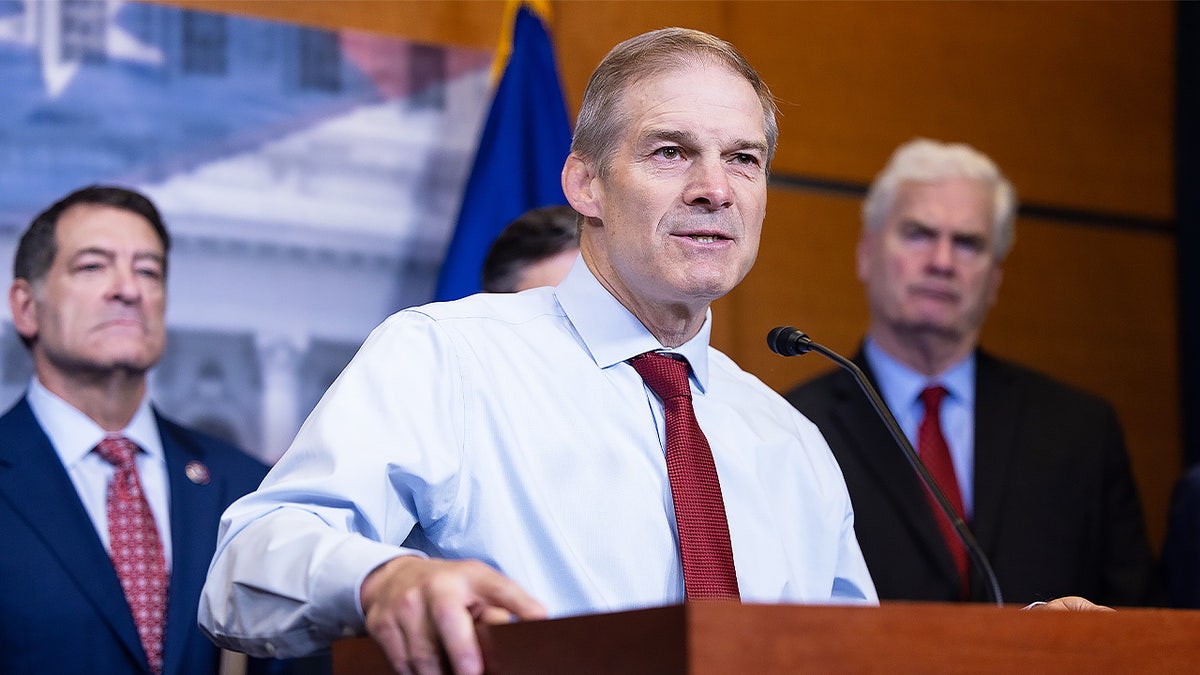
He maintained that investigators followed evidence, complied with applicable law, and pursued legitimate questions about efforts to overturn the 2020 election.
But Jordan wanted more than a general defense of prosecutorial independence.
He wanted explanations for specific decisions that had affected members of Congress and others connected to the investigation.
Then came a question about a $20,000 payment that transformed the hearing into a confrontation over investigative necessity.
Why had Smith authorized money for a confidential source while his office was already using subpoenas, financial records, and other investigative powers?
The exchange would become one of the most closely examined moments of Smith’s public testimony.
And documents released later in 2026 would create an additional dispute about the accuracy of his earlier answers.
The Hearing Begins With a Direct Accusation
Jordan opened the hearing by accusing the Justice Department of using federal investigative authority against Trump for political purposes.
The chairman argued that Smith’s investigations formed part of a broader pattern of legal actions directed toward the president.
He highlighted the timing of subpoenas involving Republican officials.
One example concerned Kevin McCarthy, who became speaker of the House in January 2023.
Jordan asserted that Smith subsequently sought telephone records connected to McCarthy’s communications during the period surrounding the 2020 election.
The records concerned calls made or received, including information about their timing and duration.
They did not automatically reveal the spoken content of those conversations.
Nevertheless, Jordan argued that obtaining such information about a congressional leader raised serious separation-of-powers concerns.
The chairman also questioned whether federal investigators had adequately respected the constitutional protections associated with legislative activity.
Smith approached the hearing with a sharply different explanation.
He argued that his office investigated evidence concerning alleged criminal attempts to interfere with the transfer of presidential power.
He maintained that his work was not intended to punish Trump for political expression or prevent him from participating in elections.
The dispute concerned the relationship between legitimate criminal investigation and potential political interference.
Jordan viewed the subpoenas as evidence of excessive investigative authority.
Smith viewed properly obtained records as tools for reconstructing communications relevant to alleged criminal conduct.
Neither position could be resolved merely by repeating accusations about political motivation.
The committee needed to examine what investigators requested, why they requested it, and which legal safeguards governed those decisions.
Jordan then turned toward a specific payment.
And the questioning became considerably more pointed.
The $20,000 Payment That Sparked the Exchange
During his questioning, Jordan pressed Smith about the use of a confidential human source.
The chairman referred to a payment of approximately $20,000 approved during the investigation.
He wanted to know why the government needed to spend that money.
Jordan also raised questions about the broader expenses associated with the special counsel’s work.
The exchange included a pointed challenge about spending taxpayer funds on individuals whose identities were not publicly disclosed.
Smith initially explained that he could not recall every relevant detail while answering questions.
Jordan pressed him to clarify the purpose of the payment.
The chairman contrasted the expenditure with other investigative methods already available to prosecutors.
His argument was that Smith’s team had substantial resources and extensive access to investigative records.
Why, Jordan asked, had an additional confidential source been necessary?
Smith responded that the payment concerned assistance reviewing video and photographic evidence from the January 6 Capitol attack.
He explained that investigators were examining people involved in assaults on police officers and efforts to obstruct congressional proceedings.
The source was intended to help analyze material that could connect individuals to relevant conduct.
That answer introduced an important distinction.
A payment to a confidential source does not automatically establish that prosecutors purchased false testimony.
Investigators may compensate individuals for assistance under applicable rules.
But such payments can raise legitimate questions about reliability, supervision, and the purposes for which public funds are used.
Jordan’s challenge focused on whether the expenditure was necessary and appropriately justified.
Smith maintained that it supported investigative work involving extensive visual evidence.
The chairman continued questioning the broader methods used by the special counsel’s office.
The exchange did not produce a confession of unlawful conduct.
But it established a specific decision that congressional investigators could examine through records and supporting documentation.
And the next issue involved information belonging to elected lawmakers.
The Congressional Phone Records Controversy
The Arctic Frost investigation began before Smith became special counsel in November 2022.
It examined conduct associated with efforts to overturn the 2020 presidential election.
As the investigation developed, federal authorities sought communications information from telecommunications providers.
Some subpoenas involved telephone records associated with Republican lawmakers.
The disclosures became a central issue in congressional oversight.
Jordan argued that lawmakers should have been protected against unnecessary executive-branch intrusion into legislative communications.
He questioned whether investigators had sufficiently considered the Speech or Debate Clause of the Constitution.
That provision protects certain legislative activities from interference by other branches of government.
Smith maintained that investigators sought non-content telecommunications records because they were relevant to communications surrounding the alleged conspiracy.
Those records could identify phone numbers, dates, times, and call duration.
They did not constitute recordings of conversations.
The distinction mattered because the legal standards governing metadata and communications content are not identical.
Nevertheless, metadata can reveal meaningful information about an individual’s contacts and activities.
Jordan argued that obtaining records associated with legislators warranted particularly careful scrutiny.
Smith responded that his team consulted Justice Department specialists when investigating matters involving members of Congress.
He also explained that prosecutors sought nondisclosure orders to protect investigative confidentiality.
Such orders can prevent service providers from informing customers that their records have been requested.
Jordan questioned whether those procedures deprived lawmakers of an opportunity to challenge the collection.
Smith maintained that investigative secrecy could be necessary to prevent evidence destruction, intimidation, or interference.
The exchange exposed two competing concerns.
Investigators need lawful methods for obtaining evidence in serious criminal cases.
Members of Congress also possess constitutional protections designed to preserve legislative independence.
Determining whether those interests were properly balanced required examining individual subpoenas and the circumstances supporting them.
Jordan’s committee continued gathering records after the hearing.
And the resulting documents would significantly intensify the controversy.
The Documents That Led Jordan to Seek Criminal Review
The confrontation entered a new phase on July 22, 2026.
Jordan sent a criminal referral to the Justice Department concerning statements Smith had made during a December 17, 2025, closed-door deposition.
The referral alleged that Smith had provided misleading information about access to communications involving members of Congress.
Jordan argued that newly obtained records contradicted the impression created by Smith’s earlier testimony.
The dispute involved an important difference between telephone metadata and the contents of written messages.
Smith had explained that telecommunications subpoenas sought non-content records, including call timing, duration, and associated telephone numbers.
Jordan subsequently highlighted documents indicating that investigators obtained actual message contents through a separate records request.
According to the referral, those messages involved communications between Trump administration officials and numerous members of Congress.
The chairman argued that Smith’s earlier answers had been incomplete or misleading.
Smith’s attorneys strongly rejected the allegation.
They maintained that his testimony accurately addressed the particular subpoenas and questions being discussed.
They argued that obtaining message contents through a different investigative process did not make his statements about non-content telephone records false.
The distinction became central to the dispute.
Two different categories of records could exist within the same investigation without being obtained through identical procedures.
A truthful explanation about one category would not necessarily describe every other category of evidence.
But Jordan argued that Smith’s answers had created a materially inaccurate impression about the scope of his office’s access.
The referral asked the Justice Department to consider whether the evidence justified criminal investigation.
It did not constitute a criminal conviction.
Nor did sending the referral require prosecutors to bring charges.
Nevertheless, the decision created a concrete consequence extending beyond the original hearing.
Jordan was no longer simply questioning Smith’s investigative judgment.
He was asking federal authorities to examine whether the former special counsel had made knowingly false statements to Congress.
The September Files Expand the Investigation
The controversy intensified again in September.
On September 22, the House Judiciary Committee’s Republican majority released transcripts of interviews with five former prosecutors from Smith’s team.
The committee also released an interview transcript involving a former Justice Department inspector general agent.
The prosecutors included J.P. Cooney, Molly Gaston, Ray Hulser, Tad Duree, and Thomas Windom.
Jordan’s committee argued that the material provided additional information about the investigative methods used during Arctic Frost.
The following day, the committee released an interim staff report examining subpoenas for congressional telephone records and associated nondisclosure orders.
Republican investigators alleged that the practices disregarded constitutional separation-of-powers protections.
They also criticized procedures that prevented affected lawmakers from knowing their records had been requested.
The report described subpoenas and secrecy orders obtained through proceedings that did not involve ordinary notice to the individuals concerned.
Jordan argued that lawmakers therefore lacked meaningful opportunities to challenge the investigative demands.
But the report’s conclusions remained those of the committee’s Republican staff.
They were not equivalent to a final judicial determination that every subpoena violated the Constitution.
Smith continued defending the investigative framework.
He maintained that investigators sought relevant records while following Justice Department policies.
The released materials nevertheless provided more specific evidence for congressional examination.
Lawmakers could now review testimony from former prosecutors and compare their explanations with the records supporting investigative decisions.
That comparison became increasingly important because the original hearing had left several factual questions unresolved.
Who authorized particular requests?
What information did prosecutors believe was necessary?
Which officials reviewed the constitutional implications?
And how much information did senior investigators possess about communications involving lawmakers?
Those questions could be investigated through records rather than political accusations alone.
The Final Question Jordan Left Hanging
By November 17, 2026, Jordan’s challenge to Smith had become a sustained congressional investigation with documented consequences.
The January hearing established the central disagreements over prosecutorial authority, confidential sources, and lawmakers’ communications.
The July criminal referral raised allegations about the accuracy of Smith’s sworn testimony.
The September documents expanded the public record concerning decisions made during Arctic Frost.
Together, those developments created a substantial dispute about the boundaries of federal investigative power.
But the available evidence did not establish that Smith had confessed to illegal conduct during Jordan’s questioning.
Nor did it establish a final criminal judgment against him.
Smith maintained that his work was grounded in evidence and legal obligations.
Jordan argued that the records exposed serious failures requiring further investigation.
The most consequential revelation concerned the distinction between obtaining telephone metadata and accessing the contents of communications through separate investigative channels.
That difference was central to evaluating both the original investigation and Jordan’s later allegation about Smith’s testimony.
The issue could not be resolved merely by comparing two dramatic statements.
It required examining the precise questions asked, Smith’s answers, the records obtained, and what he knew when he testified.
The same standard applied to the confidential source payment.
Jordan’s questions exposed a specific expenditure and demanded an explanation.
Smith supplied one involving assistance with photographic and video evidence.
Whether the payment complied with every applicable requirement depended on supporting records, not on the intensity of the exchange.
The congressional subpoenas required similar scrutiny.
Investigators might lawfully seek relevant records while still facing restrictions when constitutionally protected legislative activities were involved.
Those competing obligations made the dispute consequential.
Jordan’s committee had obtained documents and pursued additional testimony.
Smith had publicly defended his actions and disputed accusations of political misconduct.
And the Justice Department had received a referral seeking examination of alleged false statements.
The confrontation therefore produced a continuing accountability process rather than a documented personal collapse.
Its implications extend beyond one former special counsel.
Future federal investigations may also involve elected officials, politically sensitive communications, and contested claims of executive interference.
The standards used to examine Smith’s conduct could therefore influence broader debates about prosecutorial independence and congressional oversight.
For Jordan, the central question remains whether investigators exceeded constitutional limits while pursuing Trump.
For Smith, the issue remains whether prosecutors can investigate alleged criminal conduct without their decisions being judged primarily through partisan disagreement.
The documentary record offers important evidence relevant to both concerns.
But the final legal conclusions require more than a television exchange or a congressional accusation.
The ultimate question is not whether Jim Jordan confronted Jack Smith with difficult documents.
It is whether those documents establish violations of law, misleading testimony, or investigative decisions that were legally justified despite political controversy.
That distinction determines whether the confrontation produces accountability or remains another unresolved battle over federal power.
And it remains the most consequential issue arising from the hearing.
