
The most disturbing number in the room was not written in a Supreme Court decision.
It appeared in financial records documenting one of the largest political advocacy donations in American history.
$1.6 billion.
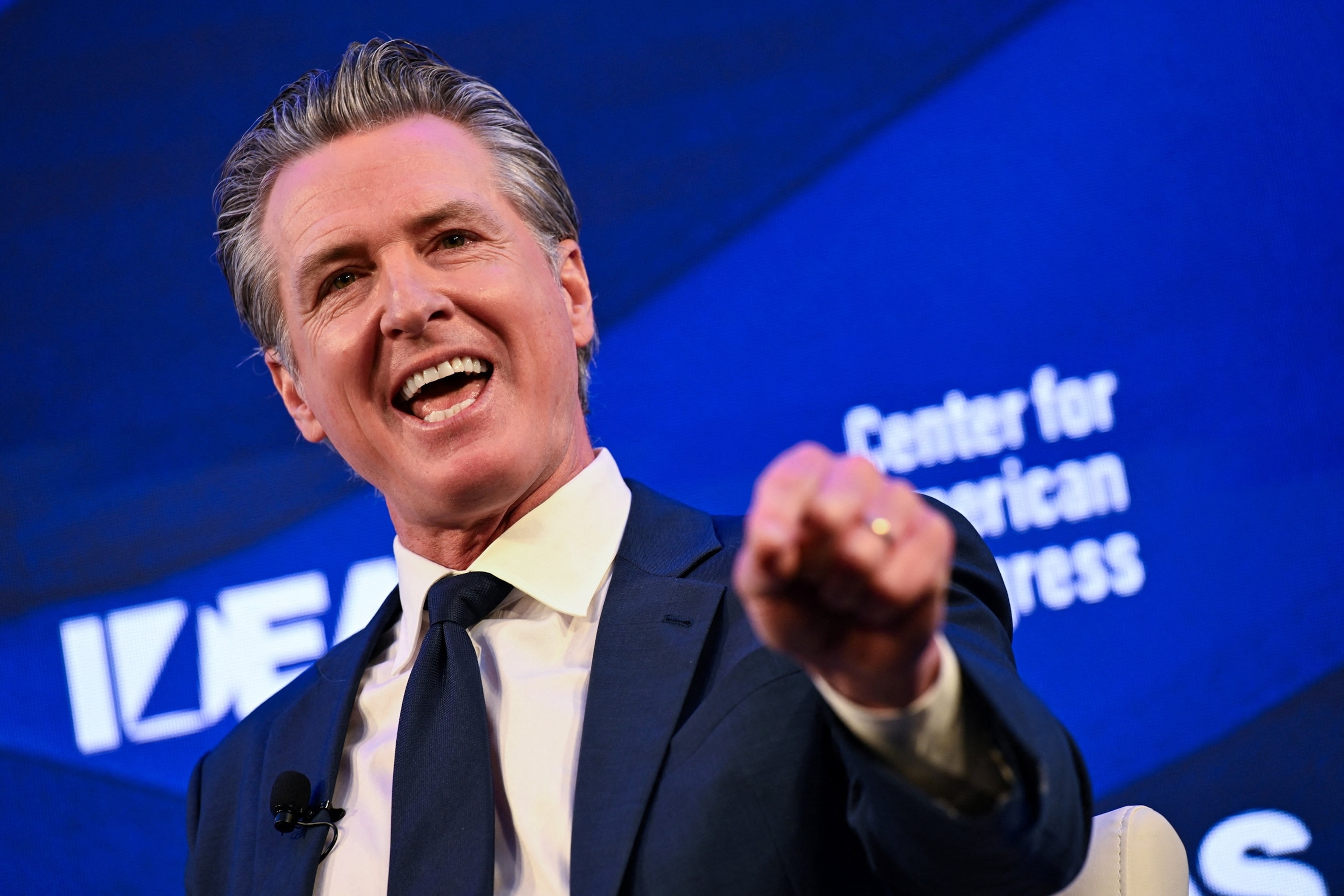
G0vern0r G@vin News0m placed the figure at the center of a sprawling financial diagram and turned toward Sen@tor M.i.t.c.h McC0nnell.
For years, McConnell had defended his role in transforming the federal judiciary during Donald Trump’s first presidential administration.
Now Newsom wanted to know whether Americans understood the financial machinery operating behind the confirmation battles.
The governor traced a series of connections between wealthy donors, conservative legal organizations, anonymous political spending, and campaigns supporting Supreme Court nominees.
McConnell challenged the accusation that those relationships amounted to buying judges.
Newsom pointed toward another figure.
$9 million.
Investigative reporting had documented that amount flowing from a conservative legal advocacy network into a political organization associated with McConnell.
But the money had not been established as a personal payment to the senator.
And that distinction would become crucial.
The documents exposed an extraordinary concentration of political resources.
They did not establish that a Supreme Court justice had sold a ruling.
Yet the final section of Newsom’s chart raised a question even more difficult to dismiss.
If Americans cannot identify who finances major campaigns to reshape their courts, how can they evaluate the influence surrounding those campaigns?
The judicial power struggle that started long before the money was exposed
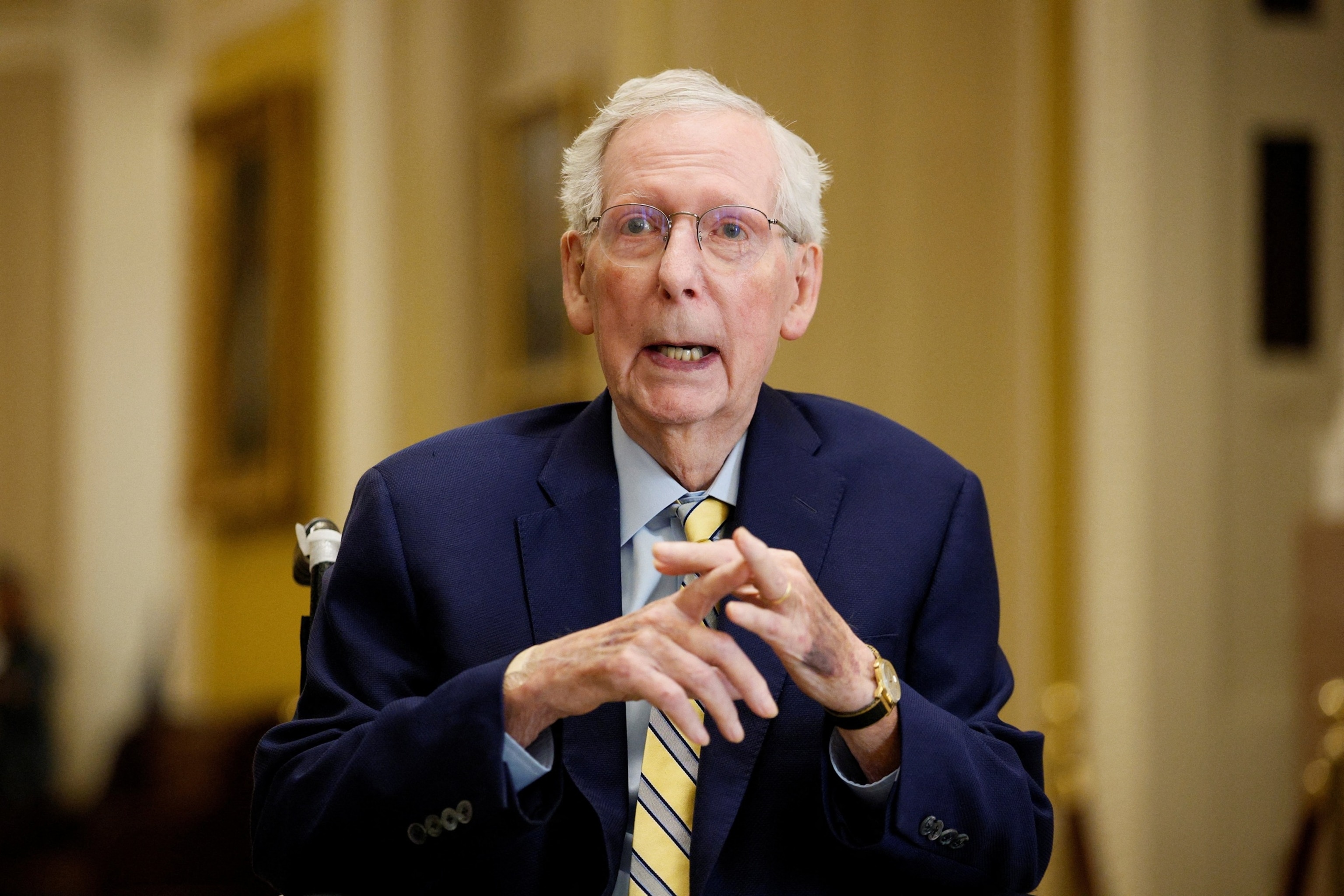
McConnell’s role in judicial appointments became a defining feature of his Senate leadership.
His most consequential move came in 2016.
Following the death of Supreme Court Justice Antonin Scalia, President Barack Obama nominated Merrick Garland to fill the vacancy.
McConnell refused to advance the nomination.
He argued that voters should have a voice through the upcoming presidential election.
Democrats countered that the Constitution had already assigned the president the authority to nominate justices.
They accused Senate Republicans of refusing to fulfill their institutional responsibilities.
The vacancy remained open.
After Trump won the presidency, Neil Gorsuch was confirmed to the Supreme Court.
Brett Kavanaugh followed in 2018.
Amy Coney Barrett was confirmed in 2020.
Those appointments helped establish a six-member conservative majority on the Court.
Across the federal judiciary, Trump’s first administration secured more than 200 judicial confirmations.
McConnell regarded the achievement as one of his most important political legacies.
Conservatives praised the appointments as victories for originalism and textualism.
Critics argued that the confirmation strategy had shifted constitutional interpretation for generations.
Newsom challenged whether the public understood the scale of financial advocacy surrounding those victories.
McConnell maintained that the Constitution, not outside organizations, determined how judges were nominated and confirmed.
Newsom acknowledged the constitutional process.
But he argued that an institution could follow formal procedures while still facing legitimate questions about concentrated political influence.
The disagreement was no longer simply about conservative and liberal judicial philosophies.
It concerned who had the resources to shape the political environment surrounding judicial appointments.
Newsom opened the first financial record.
And the figure it revealed was larger than many entire political campaigns.
The $1.6 billion transaction that transformed conservative judicial advocacy
In August 2022, ProPublica and The Lever reported an extraordinary transfer involving Chicago businessman Barre Seid.
Seid had owned Tripp Lite, a successful manufacturer of electrical and data-center equipment.
He transferred ownership of the company to a nonprofit organization called the Marble Freedom Trust.
The trust was controlled by conservative legal activist Leonard Leo.
In March 2021, Eaton Corporation acquired Tripp Lite for approximately $1.65 billion.
Because the company’s ownership had been transferred before the sale, the proceeds went into the nonprofit structure.
Investigators described the arrangement as the largest known donation to a political advocacy organization at the time.
The transaction also provided enormous potential tax advantages.
Legal experts estimated that Seid may have avoided as much as $400 million in capital-gains taxes.
The reporting did not establish that he had illegally evaded taxes.
Rather, it exposed how existing rules could permit a transaction of extraordinary financial and political significance.
Newsom highlighted the central figure.
“One billion, six hundred million dollars.”
He looked toward McConnell.
“That’s enough money to influence political battles for generations.”
McConnell challenged the implication that a lawful contribution amounted to corruption.
He argued that Americans retained constitutional protections for political expression and association.
Newsom acknowledged those protections.
But he questioned whether ordinary voters could compete with organizations controlling resources on such a scale.
The moderator examined the report.
The donation had gone to the Marble Freedom Trust, not to McConnell personally.
There was no authenticated evidence that the transaction purchased a judicial confirmation vote.
That limitation mattered.
But the story did not end with the size of the contribution.
It involved the person who gained control of the money.
Leonard Leo had spent decades developing one of America’s most influential conservative legal networks.
His role in judicial nominations gave the transaction a significance extending well beyond ordinary political fundraising.
And the next document explained why.

The architect behind the network that helped reshape the Supreme Court
Leonard Leo had long been associated with the Federalist Society.
The organization played a significant role in developing and promoting conservative legal thought.
Its members included lawyers, scholars, judges, and public officials committed to competing interpretations of constitutional law.
Leo became especially influential in identifying and promoting potential judicial nominees.
During Trump’s first presidential campaign, the candidate released a list of potential Supreme Court selections.
That decision reassured conservatives who questioned Trump’s commitment to their judicial priorities.
Leo subsequently advised Trump on judicial appointments.
He also helped coordinate advocacy efforts supporting conservative nominees.
Newsom pointed toward the organizational connections on his diagram.
A donor could finance a nonprofit.
The nonprofit could support legal advocacy organizations.
Those organizations could finance advertising, research, and campaigns intended to influence public opinion.
Some could also support political operations involved in broader electoral battles.
McConnell defended the legitimacy of advocacy.
He maintained that legal scholars and political organizations had every right to support judicial philosophies they believed were constitutionally sound.
Newsom agreed that advocacy itself was not unlawful.
But he questioned whether the public had sufficient information about who financed the campaigns.
The moderator asked whether the organizational relationships established that Supreme Court justices had been bribed.
They did not.
The documents concerned political spending and advocacy activities.
They did not demonstrate payments to judges in exchange for rulings.
Newsom acknowledged the distinction.
But he maintained that the financial relationships were still consequential.
An organization did not need to purchase a judicial decision directly to influence the politics of judicial appointments.
It could help shape the candidates considered, the public debates surrounding them, and the pressure facing elected officials.
McConnell challenged whether that influence differed fundamentally from advocacy conducted by liberal organizations.
Newsom agreed that transparency questions should apply across the political spectrum.
Then he turned to a contribution with a much closer connection to Republican Senate leadership.
The figure was $9 million.
And this time, the recipient was associated with McConnell’s political network.

The $9 million connection that brought the confrontation directly to Senate leadership
ProPublica’s investigation described a $9 million contribution from Leo’s network to a dark-money organization affiliated with McConnell.
The connection raised questions about the relationship between outside advocacy groups and political operations involved in judicial confirmation battles.
Newsom highlighted the transaction.
“Senator, this is where the money trail reaches the political leadership.”
McConnell challenged the characterization.
The contribution was not documented as a payment into his personal bank account.
Nor was it established as a bribe for a specific Senate action.
Newsom acknowledged both facts.
But he maintained that the financial connection deserved public examination.
The moderator reviewed the reporting.
The transaction linked political organizations through a substantial contribution.
It did not independently establish an illegal agreement.
That difference was essential.
Political organizations may lawfully support causes or candidates sharing their ideological commitments.
A financial connection alone does not prove that an elected official agreed to exchange official actions for money.
But Newsom argued that transparency was necessary to help voters assess potential influence.
McConnell maintained that lawful political associations should not be portrayed as criminal arrangements without evidence.
The exchange became sharper.
Newsom challenged why so much political spending could move through organizations that did not publicly identify all original contributors.
McConnell responded that donor privacy protected people from intimidation and retaliation.
Both concerns had constitutional and practical significance.
Political transparency could help expose improper influence.
Political privacy could protect lawful association.
The difficulty was determining where the balance should be drawn.
Then Newsom revealed a separate set of contributions.
The amounts were smaller than the $1.6 billion transfer.
But the original donors had remained anonymous.
And the funds were connected to some of the most consequential Supreme Court confirmation battles in modern American history.
The $35 million mystery that exposed the limits of public disclosure
The next section of the financial diagram concerned the Judicial Crisis Network.
The organization had participated in major conservative judicial confirmation campaigns.
It opposed Garland’s Supreme Court nomination.
It later supported conservative nominees under Trump.
Its campaigns involved substantial spending on advertising and public advocacy.
In 2019, PolitiFact examined claims about dark money influencing Supreme Court confirmation battles.
Public disclosure documents revealed an extraordinary funding pattern.
The Judicial Crisis Network received $17.9 million in fiscal year 2016.
It received another $17.1 million the following fiscal year.
Together, the donations totaled approximately $35 million.
The original source of each contribution was not publicly identified.
Investigators could not determine whether the money came from one donor or multiple donors.
Newsom pointed toward the two figures.
“Thirty-five million dollars, Senator. And Americans couldn’t even identify the people behind it.”
McConnell defended the right of donors to participate in political advocacy without automatically surrendering their privacy.
Newsom challenged whether secrecy on that scale weakened the public’s ability to identify potential conflicts.
The moderator asked whether the funds had been paid to Supreme Court justices.
The records did not establish that.
They documented contributions supporting political advocacy.
They did not demonstrate direct bribery.
The distinction prevented the financial data from supporting the sensational allegation that judicial seats had literally been purchased.
But the funding patterns remained significant.
A small number of undisclosed donors could provide extraordinary resources to organizations involved in major judicial debates.
Those resources could finance advertising, influence public discussion, and help organize political pressure.
Newsom argued that voters deserved to know more about the people financing such efforts.
McConnell maintained that political expression should not become conditional on public identification.
The confrontation now centered on two competing concerns.
How much transparency was necessary to protect public confidence?
And how much donor privacy was necessary to protect political freedom?
The documents did not resolve those questions.
But Newsom’s final diagram revealed another problem.
A financial connection was not always proof of the motive or misconduct suggested by the person displaying it.
That realization would transform the final argument.
The missing link that changed the meaning of the entire money trail
Newsom stepped toward the largest financial chart.
It contained the Marble Freedom Trust transaction.
It identified Leonard Leo’s connections to conservative legal advocacy.
It included the $9 million contribution to an organization associated with McConnell.
And it summarized the Judicial Crisis Network’s anonymous donations.
The relationships were supported by public records and investigative reporting.
But the diagram contained different kinds of connections.
Some represented donations.
Others showed organizational associations.
Still others described advocacy campaigns and political influence.
Those categories were not interchangeable.
The moderator examined the chart.
The records supported the conclusion that wealthy donors had financed substantial efforts to shape judicial politics.
They did not establish that judges had accepted payments in exchange for particular decisions.
Nor did they demonstrate that McConnell personally received unlawful compensation.
Newsom acknowledged those limitations.
He argued that the central issue was systemic influence rather than a proven individual bribery scheme.
McConnell challenged whether the governor’s original language had implied something more serious.
Newsom responded that extraordinary concentrations of private financial power could create legitimate concerns even when individual transactions complied with the law.
The moderator asked whether the distinction between influence and criminal corruption mattered.
It did.
A donor might contribute to an organization because its legal philosophy matched the donor’s beliefs.
An advocacy group might support a nominee because it believed that nominee would faithfully interpret the Constitution.
A political organization might receive financial support from aligned donors without promising an unlawful official action.
Those possibilities could not be dismissed without evidence.
At the same time, lawful financial arrangements could still raise policy questions about transparency and public confidence.
Newsom returned to the central dispute.
The public deserved an explanation of how financial networks operated around judicial appointments.
McConnell maintained that the constitutional process remained legitimate regardless of lawful outside advocacy.
Neither position entirely resolved the other’s concerns.
And the final question would expose why.
The final question that put judicial independence itself on trial
Newsom closed his folder.
He looked toward McConnell.
“Senator, if the Constitution belongs to every American, why should the financing behind campaigns to reshape its courts remain hidden?”
McConnell defended the Senate’s confirmation process.
He argued that judges were nominated by presidents and confirmed by elected senators.
Those officials could be held accountable by voters.
Newsom acknowledged that constitutional structure.
But he questioned whether electoral accountability was sufficient when major advocacy organizations concealed their original sources of funding.
McConnell responded that donors had legitimate constitutional interests.
Newsom agreed that those interests deserved protection.
But he argued that Americans also had a legitimate interest in understanding the financial forces surrounding judicial appointments.
The moderator returned to the documented transactions.
The financial network existed.
The contributions were substantial.
The anonymous funding raised questions about transparency.
But the evidence presented did not establish a criminal purchase of judicial decisions.
That qualification changed the meaning of the confrontation.
Newsom could argue that concentrated financial influence threatened public confidence.
McConnell could defend lawful political participation and constitutional confirmation procedures.
Neither could resolve the dispute simply by declaring the other corrupt or dishonest.
The harder issue involved institutional safeguards.
Could the public identify the organizations seeking to influence judicial confirmations?
Could disclosure rules provide meaningful transparency without exposing ordinary donors to unreasonable risks?
And could the judiciary maintain public trust when its composition became the focus of enormously expensive political campaigns?
Those questions mattered regardless of which political party controlled the White House.
The Supreme Court’s authority rested on the Constitution and federal law.
Its legitimacy depended in part on public confidence that decisions were based on legal principles rather than private financial pressure.
Newsom challenged whether existing transparency requirements sufficiently protected that confidence.
McConnell maintained that judicial independence also required protecting judges from political attacks based on the views of outside supporters.
Both arguments confronted genuine institutional concerns.
The financial documents could not resolve them alone.
But they made the questions impossible to ignore.
The revelation that reached far beyond one political showdown
The imagined confrontation ended without a criminal verdict.
McConnell defended his record of judicial confirmations.
Newsom challenged the financial networks operating around those appointments.
The public records supported a serious debate about money and political influence.
A $1.6 billion transaction had placed extraordinary resources under the control of a major conservative legal activist.
A $9 million contribution had connected part of that advocacy network to a political organization associated with Senate Republican leadership.
And approximately $35 million in donations had supported judicial confirmation advocacy without revealing the original contributors.
Those facts were consequential.
They demonstrated the scale of financial resources available to organizations seeking to influence the courts.
They also illustrated why public disclosure remained a contentious issue.
But the evidence did not establish that federal judges had sold their decisions.
It did not demonstrate that McConnell had personally accepted bribes.
And it did not authenticate the supposed confrontation between Newsom and McConnell on the Senate floor.
Those distinctions were not minor qualifications.
They were essential to understanding the actual financial record.
Concentrated political wealth can create serious questions about influence.
But answering those questions requires distinguishing lawful advocacy from illegal conduct.
It also requires evaluating the integrity of judicial nomination and confirmation procedures on their own merits.
Newsom’s argument emphasized the danger of allowing enormous sums to shape political institutions without adequate transparency.
McConnell’s defense emphasized the constitutional rights of political organizations and donors.
Both concerns would remain relevant beyond the careers of either politician.
The challenge for democratic institutions was balancing those interests without allowing financial power to escape meaningful scrutiny.
A credible disclosure system should identify relevant financial relationships wherever the law requires transparency.
A credible accountability system should also avoid declaring guilt without evidence.
And a credible judicial system should apply the law impartially, regardless of the wealth or political influence surrounding its appointments.
The most important discovery was not proof that America’s courts had been purchased.
It was evidence of how extraordinarily expensive the politics surrounding judicial appointments had become.
The financial arrangements described in the investigation showed that a small number of wealthy individuals could provide enormous resources to ideological organizations.
That concentration of political capital could affect public debate for years.
But the existence of influence did not automatically establish corruption.
Newsom’s final challenge therefore remained a question about institutions rather than an authenticated criminal accusation.
How much should Americans know about the money shaping the political battles surrounding their courts?
The answer would determine how transparently future judicial confirmation campaigns operated.
It could also influence whether Americans trusted the institutions responsible for interpreting their rights.
And that was the lasting consequence of the financial investigation.
Justice must be independent of political power. But public confidence also depends on knowing enough about the forces seeking to influence the system to hold those forces accountable.
The $1.6 billion contribution did not prove that a judge had been bought.
It revealed how much financial power could accumulate around the struggle to shape the judiciary.
And it left behind a question that no political victory could permanently silence.
When the next Supreme Court vacancy emerges, who will finance the battle to fill it—and how much of that financial influence will the American public actually be able to see?
