
The tension was already building when John Kenned.y and Adam Schif.f found themselves on opposite sides of a political confrontation that threatened to turn another congressional dispute into a national controversy.
Kenned.y, the Republican senator from Louisiana, had little interest in exchanging the usual Washington insults.
Schif.f, the California Democrat, had spent years navigating some of the most politically explosive investigations in modern American politics.
Both men understood how Washington worked.
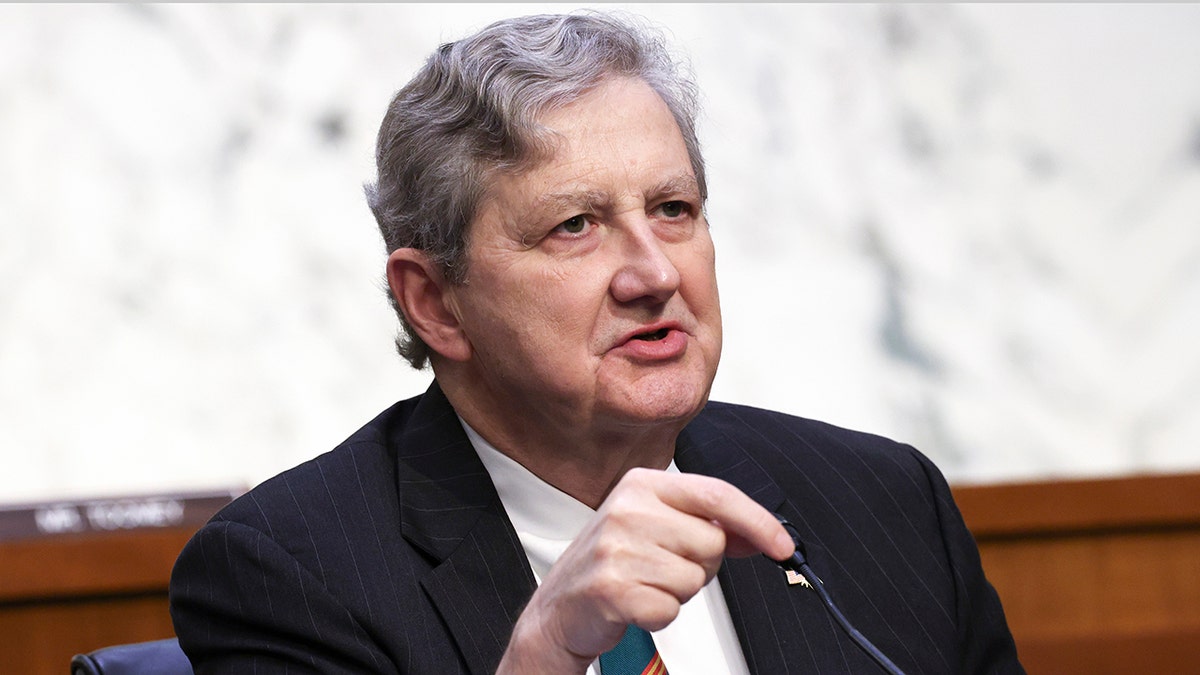
Both knew how to command attention.
And neither was particularly known for backing away when confronted by political opponents.
The controversy circulating online described a dramatic moment in which Kenned.y allegedly responded to Schif.f’s criticism by producing financial documents connected to an astonishing $9.24 million figure.
The alleged records included Treasury information, SEC filings, and real-estate transactions.
The viral account suggested that an entity connected to Schif.f’s family circle had received millions within two weeks of a $12 billion defense briefing.
But there was one enormous problem.
The alleged financial trail, its connection to Schif.f, and the dramatic confrontation have not been independently verified.
There is, however, a documented controversy involving Schif.f, mortgage-fraud allegations, federal referrals, and a subsequent investigation into officials connected to those allegations.
That real dispute provides the backdrop for a dramatic political reconstruction of what makes the Kenned.y-Schif.f rivalry so combustible.
And the central question is one neither political party can comfortably ignore:
When powerful politicians accuse one another of misconduct, who makes sure the evidence actually supports the accusation?
THE FIRST SHOT: “WASHINGTON DOESN’T NEED ANOTHER SHOWMAN!”
The confrontation’s imagined opening begins with Kenned.y facing criticism over his approach to political oversight.
Kenned.y has built a recognizable reputation through sarcastic remarks, deliberate pauses, and questions designed to make complicated political arguments sound remarkably simple.
His supporters consider him an effective interrogator.
His critics sometimes dismiss his style as political entertainment.
Schif.f, meanwhile, has spent much of his career confronting Republican accusations surrounding his investigations of Donald Trump and his administration.
His supporters view him as an experienced constitutional investigator.
His opponents accuse him of turning oversight into partisan warfare.
That history creates an obvious opening for confrontation.
Imagine Schif.f challenging Kenned.y’s approach, suggesting that dramatic presentations and provocative accusations do not establish wrongdoing.
Kenned.y would have a familiar response.
The Louisiana senator’s political style is built around refusing to let an argument disappear beneath complicated explanations.
He would likely insist that the public deserves documents, figures, and direct answers.
But there is a difference between demanding evidence and presenting allegations as established facts.
That distinction becomes the central battlefield of this controversy.
Because if Kenned.y wants to challenge Schif.f over financial misconduct, he must establish more than a suspicious-looking number.
He must establish who received the money, who controlled the relevant entity, and what evidence connects the transaction to the alleged wrongdoing.
And Schif.f would have every reason to demand precisely that information.
THE $9.24 MILLION QUESTION
The viral allegation revolves around a figure that immediately attracts attention.
$9.24 million.
According to the circulating story, an entity connected to Schif.f’s family circle allegedly received that amount over approximately two weeks after a $12 billion defense briefing.
The implication is serious.
If someone used confidential government information to obtain a financial advantage, that could raise significant legal and ethical questions.
But the amount itself proves nothing.
A financial transaction must be examined through authenticated records.
Investigators would need to identify the entity, establish its beneficial ownership, determine the source of the money, and establish whether the transaction was connected to any individual possessing confidential information.
They would also need to determine whether the relevant information was material and nonpublic.
Without those facts, the $9.24 million allegation remains unverified.
In the imagined exchange, this would be where Kenned.y attempts to press his advantage.
He could point to the alleged financial figure and demand an explanation.
Schif.f could immediately challenge the premise.
Who owns the entity?
Where are the original records?
What transaction is being described?
What evidence connects the money to him?
Those questions would put the burden back on Kenned.y.
And that is precisely what makes the hypothetical confrontation interesting.
A dramatic number can dominate a headline.
But a documented financial connection is what determines whether an allegation survives serious scrutiny.
SCHIFF’S RESPONSE: “YOU CANNOT TURN AN UNSUBSTANTIATED NUMBER INTO EVIDENCE!”
Schif.f would have an obvious defense against the alleged financial accusation.
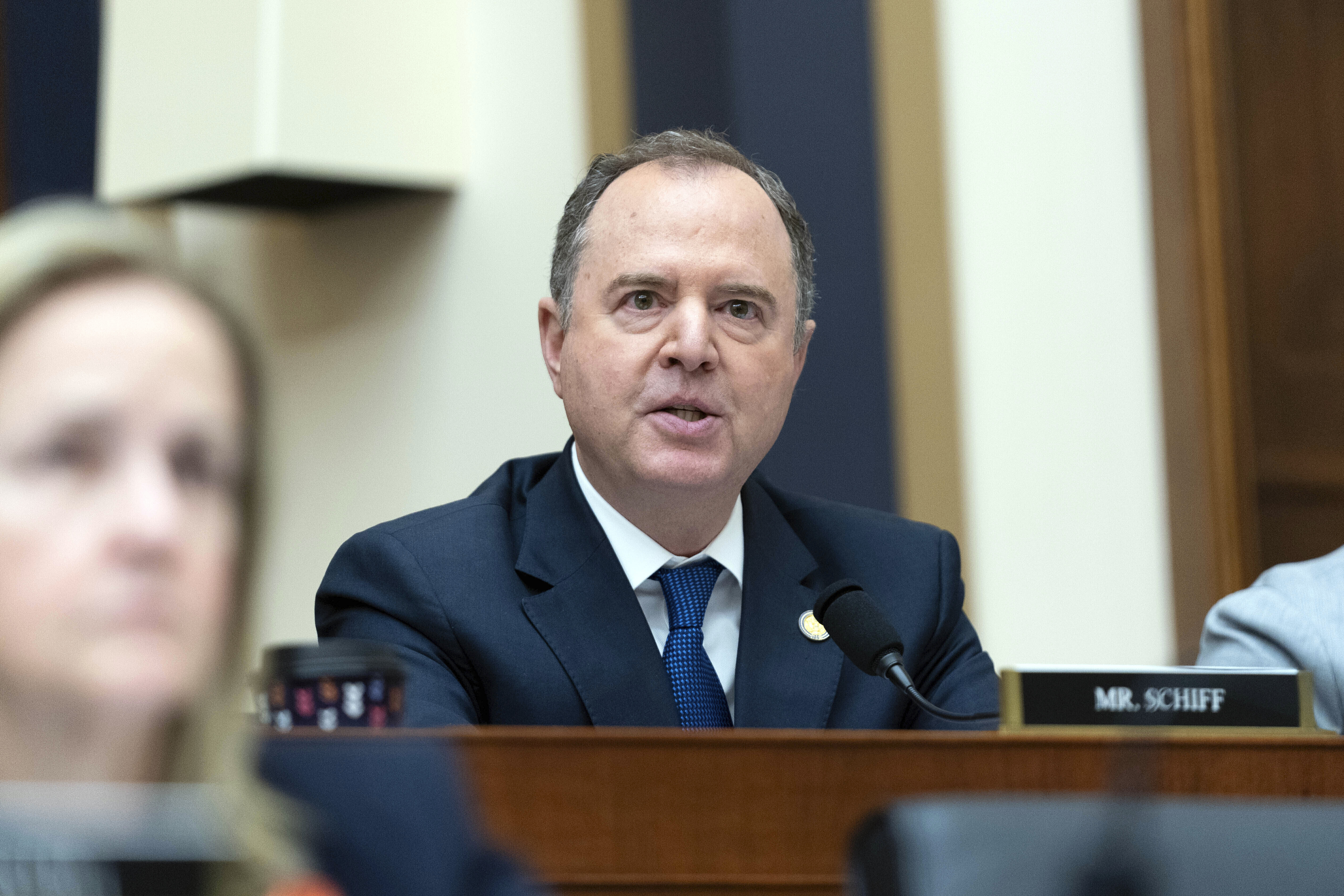
He could argue that political opponents cannot establish misconduct simply by placing unrelated financial figures beside his name.
A company associated with a relative is not automatically controlled by a senator.
A profitable transaction is not automatically evidence of insider trading.
And a briefing followed by a financial transaction does not automatically establish that confidential information was misused.
These are not technical excuses.
They are basic principles of evidence.
A serious financial investigation must establish the connection between the transaction and the person accused.
It must distinguish ownership from association.
It must distinguish suspicious timing from proof of intent.
And it must distinguish a political allegation from a criminal offense.
Schif.f could therefore turn Kenned.y’s challenge around.
Instead of defending himself against an unverified $9.24 million claim, he could demand that Kenned.y identify the underlying documents and explain precisely what they demonstrate.
That would be a powerful counterattack.
Because the person making a serious accusation carries responsibility for supporting it.
Kenned.y’s supporters might argue that powerful politicians should answer difficult questions rather than hide behind procedural objections.
Schif.f’s supporters would respond that nobody should be expected to disprove an allegation that has not been substantiated.
The disagreement would quickly become larger than the two politicians.
It would become a fight over the standards Americans should expect when public officials accuse one another of financial misconduct.
THE REAL INVESTIGATION THAT CHANGED THE POLITICAL LANDSCAPE
Unlike the alleged $9.24 million transaction, the mortgage investigation involving Schif.f is documented.
In May 2025, William Pulte, director of the Federal Housing Finance Agency, referred Schif.f to the Justice Department over allegations involving mortgage documentation and property occupancy.
Schif.f denied wrongdoing.
He argued that the allegations were politically motivated.
Republican allies of the Trump administration maintained that allegations involving a powerful elected official deserved investigation.
The controversy quickly attracted national attention.
But the next development made the situation considerably more complicated.
In November 2025, Reuters reported that federal prosecutors in Maryland were examining the conduct of individuals connected to the investigation.
Those individuals included Pulte and Justice Department official Ed Martin.
A subpoena sought communications and documents concerning their involvement and interactions with other individuals connected to the matter.
Suddenly, the political argument was no longer limited to allegations involving Schif.f.
Questions were also being raised about the conduct of people involved in pursuing those allegations.
That distinction is crucial.
A federal referral does not establish guilt.
A subpoena does not establish guilt either.
Both are investigative mechanisms designed to obtain information.
And an investigation into the handling of another investigation does not automatically establish that the original allegations were fabricated.
But it does create another important question:
Were the investigative procedures followed properly, regardless of which political party benefited from the allegations?
KENNEDY’S STRONGEST ARGUMENT: NOBODY SHOULD BE ABOVE SCRUTINY
In the reconstructed confrontation, Kenned.y’s most effective argument would not be the unverified $9.24 million figure.
It would be the broader principle of accountability.
A senator should not receive special treatment simply because of political influence.
A federal official should not receive protection simply because of an appointment.
And an investigator should not be allowed to disregard established procedures because the target belongs to the opposing political party.
Kenned.y could challenge Schif.f directly on whether he believes the same investigative standards should apply to Democrats and Republicans.
That question would be difficult to dismiss.
Schif.f could respond that he supports legitimate investigations but opposes investigations driven by political retaliation.
He could argue that accusations must be supported by evidence and that government investigative powers should never become tools for intimidating political opponents.
That is also a legitimate position.
The disagreement would then become a genuine constitutional argument.
Kenned.y would be demanding accountability.
Schif.f would be demanding fairness.
And the public would have to decide whether either politician was applying those principles consistently.
THE $12 BILLION DEFENSE BRIEFING: WHERE THE ALLEGATION NEEDS PROOF
The alleged connection to a $12 billion defense briefing is particularly sensitive.
Defense information can involve classified material, procurement decisions, military contracts, and other information that may affect financial markets or private businesses.
Federal law prohibits certain forms of insider trading and misuse of material nonpublic information.
The STOCK Act of 2012 specifically clarified that members of Congress and congressional employees are subject to insider-trading restrictions.
Members of Congress are not permitted to use confidential information obtained through their official positions for personal financial gain.
But the existence of a defense briefing does not establish that someone traded improperly afterward.
Investigators would need to establish what information was provided, who received it, whether it was confidential, and whether anyone used it in a prohibited transaction.
The alleged $9.24 million financial trail would have to be connected to those facts.
Without authenticated documentation, the defense briefing connection cannot responsibly be presented as established.
In the imagined exchange, this would be the moment when Schif.f demands something more concrete than a headline.
Kenned.y would need to produce verifiable records.
Schif.f would need to address any legitimate questions those records actually raised.
And the audience would need to distinguish between a political accusation and a proven financial violation.
WHEN THE INVESTIGATION ITSELF BECOMES THE STORY
Perhaps the most uncomfortable aspect of the documented controversy is that scrutiny eventually extended to the officials involved in pursuing the mortgage allegations.
That creates a complicated political situation.
If investigators discover that a public official committed wrongdoing, that official should face appropriate consequences.
If investigators discover that government employees improperly influenced an investigation, those actions should also be examined.
Neither outcome should be predetermined by political loyalty.
Schif.f’s opponents cannot simply dismiss the original allegations because the investigative process later attracted scrutiny.
Schif.f’s supporters cannot assume that scrutiny of the investigators automatically proves that every accusation against him was false.
The evidence must determine the outcome.
This is where Kenned.y’s demand for accountability could become a double-edged sword.
If he insists that Schif.f answer serious allegations, he must also accept the same standard when investigators connected to his political allies face questions.
And if Schif.f demands procedural fairness, he must accept that legitimate financial questions cannot be dismissed merely because they are politically inconvenient.
The standard must work in both directions.
THE MOMENT BOTH MEN WOULD PREFER TO AVOID
Imagine the reconstructed confrontation reaching its final stage.
Kenned.y has spent several minutes demanding explanations.
Schif.f has repeatedly challenged the reliability of the financial claims.
The discussion has moved from personal insults to documentary evidence and the responsibilities of federal investigators.
Then comes the question that neither political party can comfortably escape.
If the financial records are authentic, will Kenned.y demand an independent examination regardless of whose interests are affected?
And if the allegations are unsupported, will he publicly acknowledge that the accusations cannot be substantiated?
Schif.f faces an equally difficult question.
If the mortgage investigation was politically motivated, what evidence demonstrates that improper pressure was applied?
And if the investigation was legitimate, is he willing to allow the evidence to be examined without treating every inquiry as an attack on democracy?
These questions are more consequential than any sarcastic remark.
They force both men to explain whether their commitment to accountability extends beyond their political opponents.
Kenned.y’s reputation rests partly on his ability to demand straightforward answers.
Schif.f’s reputation rests partly on his experience in congressional oversight and constitutional investigations.
Both therefore have political reasons to defend their positions.
But neither can substitute political confidence for evidence.
THE FINAL SHOWDOWN: WHO REALLY HAS THE DOCUMENTS?
The alleged Capitol Hill confrontation ends with a powerful image: Kenned.y holding a thick financial folder while Schif.f faces questions about a multimillion-dollar trail.
It is an effective political scene.
But the $9.24 million allegation, the supposed family-linked entity, and the claimed connection to a defense briefing remain unverified.
The documented mortgage controversy offers a different, equally important story.
It shows how an allegation against a powerful politician can trigger an investigation, how the conduct of investigators can subsequently attract scrutiny, and how political pressure can complicate the search for facts.
Kenned.y can demand transparency.
Schif.f can demand evidence.
Investigators can examine both the original allegations and the procedures used to pursue them.
And the public can insist that the conclusions be supported by authenticated records.
Neither politician should be allowed to replace evidence with insults.
Neither should be allowed to escape legitimate scrutiny because of party affiliation.
Because the most uncomfortable question in Washington is no longer whether John Kenned.y can embarrass Adam Schif.f with another dramatic accusation. It is whether either man is prepared to accept the same standard of accountability when the evidence turns against his own political allies.
And until that question receives a convincing answer, the financial controversy surrounding Washington’s most powerful political figures will remain far from settled.
