
Eliza.b.e.t.h Wa.r.r.e.n was halfway through calling Pete He.g.s.e.t.h a national disgrace when the television producer suddenly interrupted her.
The Massachusetts senator had appeared on a liberal morning program expecting a comfortable interview.
She had already spent several minutes criticizing the Defense Secretary’s leadership.
Her remarks focused on immigration enforcement, military leadership, and the administration’s national security priorities.
She described He.g.s.e.t.h’s border security approach as cruel and fundamentally inconsistent with American values.
The studio audience responded with enthusiastic applause.
Warren smiled.
She appeared convinced that she had delivered another powerful political performance.
The host leaned toward her and asked whether He.g.s.e.t.h should reconsider his position.
Warren shook her head.
She argued that the country needed responsible leadership rather than aggressive political theater.
Then she delivered another pointed criticism.
She questioned whether a former television personality possessed the judgment necessary to oversee America’s military establishment.
The host smiled.
The audience laughed.
But something unexpected happened.
A producer suddenly approached the host with a small communication device.
The host listened.
His expression changed.
He looked toward Warren.
Then he glanced at the camera.
“Senator, we’ve just received an unexpected request from the Secretary of Defense.”
Warren raised her eyebrows.
The host continued.
“Secretary He.g.s.e.t.h is watching this interview, and he would like to respond directly.”
The studio became noticeably quieter.
Warren briefly smiled.
She appeared amused by the announcement.
“Well, I’m certainly happy to hear his explanation.”
The host confirmed that the Secretary was waiting on the line.
A few seconds later, another voice entered the broadcast.
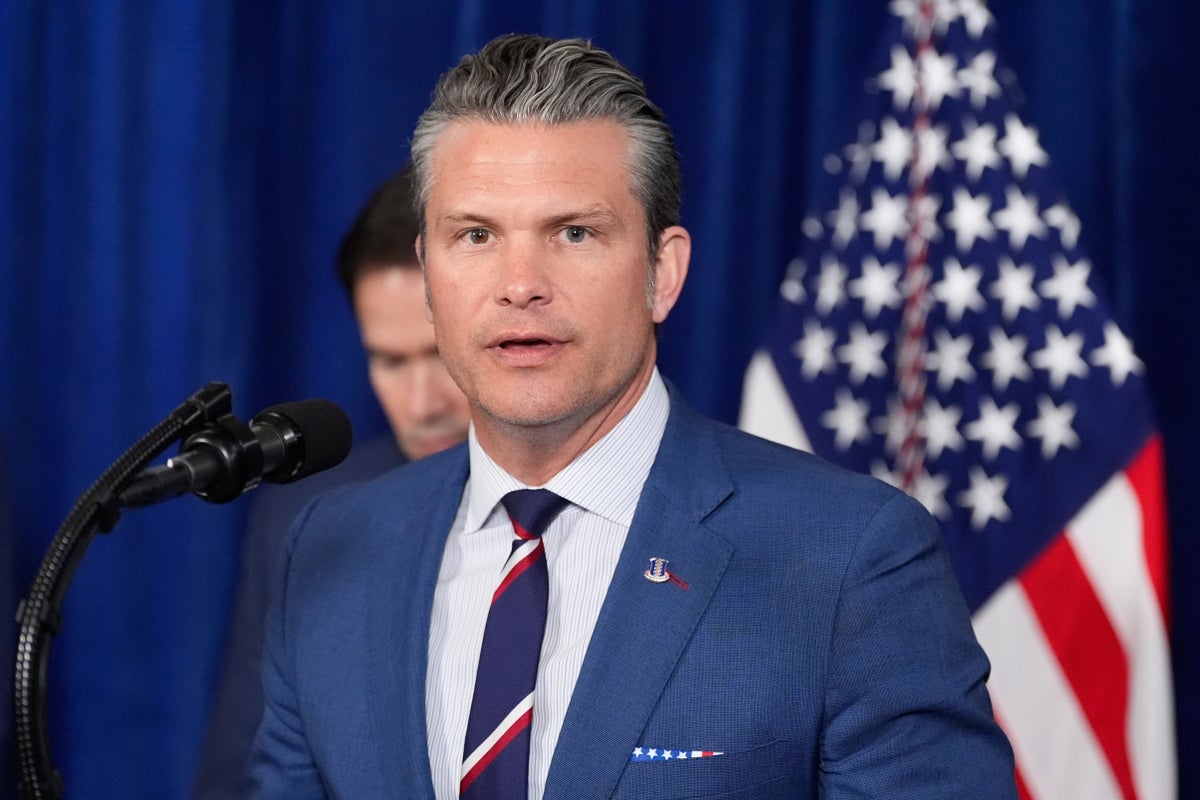
Pete He.g.s.e.t.h.
The Defense Secretary did not begin with an insult.
He did not raise his voice.
He simply greeted the host and acknowledged Warren’s criticism.
Then he asked for permission to address one specific point.
The host agreed.
He.g.s.e.t.h spoke calmly.
“Senator Warren, you’ve spent several minutes explaining why you believe my approach is dangerous.”
He paused.
“But I’d like to understand what you believe the alternative actually looks like.”
Warren immediately responded.
She argued that border security required effective enforcement without unnecessary cruelty.
She emphasized that immigration policy should respect American law and constitutional protections.
He.g.s.e.t.h acknowledged that legal protections mattered.
But he questioned whether her criticism adequately addressed the operational challenges facing federal agencies.
The host attempted to move the discussion toward immigration statistics.
He.g.s.e.t.h requested permission to finish his question.
Then he made a surprising announcement.
He had prepared several documents concerning congressional national security decisions.
Warren’s expression became more serious.
The Secretary explained that the documents included publicly available legislative voting records.
They covered military appropriations, border security funding, and defense-related policy decisions.
He wanted to examine the difference between criticizing an administration and presenting an alternative policy.
The host asked whether He.g.s.e.t.h could provide specific examples.
The Secretary answered that he could.
Then he requested permission to have a document displayed in the studio.
The producer immediately instructed the control room to prepare the screen.
A large congressional voting chart appeared behind Warren.
Across the top were several legislative categories.
Military readiness.
Defense appropriations.
Border enforcement.
Military personnel.
National security oversight.
He.g.s.e.t.h explained that these categories represented different congressional responsibilities.
He emphasized that individual votes could not automatically establish whether someone supported or opposed national security.
But he argued that voters deserved to examine the decisions lawmakers actually made.
Warren interrupted.
She questioned whether the Secretary intended to use selected votes to create a misleading political narrative.
He.g.s.e.t.h answered immediately.
“No, Senator. That’s precisely why we’re looking at the complete record.”
The studio audience stopped laughing.
He.g.s.e.t.h asked the producer to enlarge the first section.
It concerned defense appropriations.
The Secretary explained that congressional funding decisions affected military readiness and operational capabilities.
He acknowledged that lawmakers had legitimate reasons to oppose particular spending measures.
Some proposals involved costs that deserved scrutiny.
Others raised questions about procurement priorities or the allocation of resources.
But he argued that those decisions should be explained alongside their practical consequences.
Warren responded that Congress had a constitutional responsibility to examine defense spending.
She argued that approving every military request without scrutiny would be irresponsible.
He.g.s.e.t.h agreed.
“Absolutely. Oversight is part of the job.”
He paused.
“But oversight also requires understanding what the military needs.”
The host looked toward Warren.
She responded that she had repeatedly supported responsible national defense.
She also emphasized the importance of protecting American service members.
He.g.s.e.t.h acknowledged those principles.
Then he asked the producer to display the second section.
The next chart concerned border security appropriations.
It contained several legislative categories involving immigration enforcement and federal border operations.
He.g.s.e.t.h explained that Congress had debated funding for personnel, infrastructure, technology, and operational support.
He argued that the effectiveness of border policy depended on more than public statements.
It required resources, clear operational priorities, and cooperation between federal agencies.
Warren challenged his characterization.
She argued that enforcement spending alone could not solve immigration problems.
She also emphasized the importance of asylum procedures and comprehensive immigration legislation.
He.g.s.e.t.h acknowledged that immigration policy involved multiple responsibilities.
But he asked whether border security operations should be treated as inherently illegitimate.
Warren responded that enforcement needed to follow the law.
The Secretary agreed.
“Then we’re discussing how to enforce the law responsibly.”
He paused.
“Not whether the government should enforce it at all.”
The host leaned forward.
The discussion had moved beyond the prepared interview questions.
Warren attempted to return to her original criticism.
She argued that the administration’s approach had created unnecessary fear among immigrant communities.
He.g.s.e.t.h responded that enforcement decisions needed to be evaluated individually.
He also maintained that federal agencies had responsibilities to enforce immigration statutes.
The host asked whether the Secretary believed Warren had consistently opposed those responsibilities.
He.g.s.e.t.h declined to make that sweeping accusation.
He explained that the voting record contained different decisions involving different legislative proposals.
Some concerned funding.
Others involved oversight and broader immigration policy.
He argued that the differences deserved careful examination.
Warren appeared visibly less amused.
She asked whether He.g.s.e.t.h was suggesting that disagreement with his administration amounted to opposition to America.
The Secretary answered no.
He emphasized that legitimate policy disagreement was part of American democracy.
But he wanted lawmakers to explain the practical consequences of their proposals.
Then he asked the producer to display the third section.
Its heading read MILITARY READINESS AND PERSONNEL.
The chart summarized congressional debates involving military personnel, equipment, and defense infrastructure.
He.g.s.e.t.h explained that the Pentagon depended on trained personnel and reliable equipment.
He described the challenges involved in recruitment, retention, maintenance, and procurement.
He also acknowledged that funding alone could not solve every readiness problem.
Management and long-term planning mattered.
Warren responded that military personnel deserved more than political speeches.
She argued that their welfare should remain a central responsibility of the Defense Department.
He.g.s.e.t.h agreed.
He then asked whether Congress should examine the resources available to military families.
Warren answered that it should.
The Secretary nodded.
“Then we’re finally talking about something both sides should support.”
The host attempted to summarize the exchange.
But He.g.s.e.t.h requested one more minute.
He explained that he wanted to address the original accusation.
Warren had described his border security approach as cruel and un-American.
He asked whether she believed enforcing federal immigration law was inherently incompatible with American values.
Warren responded that she supported lawful immigration enforcement.
Her objection concerned how enforcement was conducted.
She emphasized that constitutional protections applied to everyone.
He.g.s.e.t.h acknowledged that point.
He agreed that federal agencies needed to operate within the law.
But he questioned whether criticism of individual enforcement practices should become a blanket condemnation of the entire mission.
Warren argued that government officials had to be accountable for operational decisions.
The Secretary agreed.
He also emphasized that accountability needed to apply to Congress.
The host asked what he meant.
He.g.s.e.t.h explained that lawmakers frequently criticized federal agencies while making funding decisions that affected their operations.
He wanted the public to understand both sides of that relationship.
He asked the producer to display the final section.
Its heading read THE COMPLETE POLICY RECORD.
The screen showed a comparison of public statements, legislative proposals, and recorded congressional votes.
He.g.s.e.t.h explained that no single vote could summarize an entire senator’s national security position.
He also acknowledged that supporting a particular funding measure did not automatically endorse every administration policy.
But he argued that public criticism should be accompanied by clear alternatives.
Warren challenged the presentation.
She maintained that her national security positions were based on constitutional responsibilities and responsible government spending.
She argued that the Secretary was attempting to turn a complicated policy disagreement into a television spectacle.
He.g.s.e.t.h responded without changing his tone.
“Senator, you came on this program to discuss my performance.”
He paused.
“I’m asking you to discuss yours.”
The host looked toward Warren.
For the first time during the interview, she appeared to be choosing her words particularly carefully.
She explained that her record reflected years of congressional work.
She rejected the suggestion that any individual vote could establish her overall position on military readiness or border security.
He.g.s.e.t.h acknowledged that the complete record required context.
But he insisted that the same principle applied to his own department.
He said he expected Congress to examine his decisions.
He also expected lawmakers to explain theirs.
The host asked whether the Secretary would submit the Pentagon’s policies to further congressional scrutiny.
He.g.s.e.t.h answered that oversight was an essential part of the department’s responsibilities.
He welcomed legitimate questions about military readiness, spending, and operational effectiveness.
Warren responded that she would continue demanding answers.
He.g.s.e.t.h agreed.
“Then we shouldn’t have a problem examining the evidence.”
The studio remained quiet.
The host attempted to move toward the commercial break.
But Warren asked for an opportunity to respond to the voting chart.
She argued that the documents did not establish that her positions had endangered American security.
He.g.s.e.t.h agreed that they did not establish such a conclusion.
He emphasized that the purpose was to examine specific policy disagreements.
The Secretary then returned to the subject that had started the confrontation.
He asked Warren what alternative she would propose for border operations.
She described an approach combining lawful enforcement, improved processing, and greater investment in immigration adjudication.

He.g.s.e.t.h acknowledged that those were legitimate policy areas.
But he asked how her proposed approach would address immediate operational demands.
Warren explained that immigration enforcement required coordination between multiple agencies.
She argued that the government needed to improve its processing capacity while maintaining legal safeguards.
He.g.s.e.t.h listened.
Then he asked whether she would support measurable performance standards for federal agencies.
Warren answered that she supported accountability.
The Secretary nodded.
“Then let’s measure the results.”
He explained that border operations should be evaluated through reliable data.
That included processing capacity, personnel requirements, enforcement outcomes, and compliance with legal procedures.
Warren agreed that meaningful oversight required reliable information.
The host looked toward the camera.
The interview had become a substantive debate about federal responsibilities.
The original personal attacks had largely disappeared.
He.g.s.e.t.h then made his final request.
He asked the producer to return to the first chart.
The screen displayed the congressional policy categories once more.
He explained that public officials could disagree about spending priorities.
They could challenge enforcement methods.
They could question the Pentagon’s leadership.
But those disagreements should be supported by specific arguments and documented decisions.
Warren responded that she had already provided those arguments.
He.g.s.e.t.h acknowledged her explanation.
Then he leaned slightly closer to the microphone.
“Senator, you called me a national disgrace.”
He paused.
“You said my policies were un-American.”
The studio became silent.
“But I haven’t heard you explain how your alternative would meet every responsibility you’re criticizing.”
Warren attempted to respond.
She emphasized constitutional protections and comprehensive immigration reform.
He.g.s.e.t.h listened without interrupting.
Then he asked the question that brought the fictional broadcast to its decisive moment.
“Senator Warren, if you reject our approach, will you show Americans exactly how yours will secure the border, protect constitutional rights, and keep this country safe?”
For several seconds, the studio remained silent.
Warren answered that her approach involved lawful enforcement, stronger processing capacity, and comprehensive immigration reform.
She argued that the country did not have to choose between national security and constitutional protections.
He.g.s.e.t.h acknowledged that both objectives mattered.
He maintained that the administration should be judged by its results.
He also insisted that Congress should be held to the same standard.
The host finally interrupted.
He thanked both participants and announced an upcoming commercial break.
The connection ended.
Warren remained seated.
The producer signaled that the segment was over.
The cameras continued recording for several seconds.
The earlier laughter had disappeared.
The fictional confrontation had begun with a personal attack on He.g.s.e.t.h’s qualifications.
It ended with a discussion about immigration enforcement, defense spending, and congressional accountability.
No evidence established that Warren had committed national security misconduct.
The voting chart did not prove that she opposed every defense priority.
Nor did the interview establish that He.g.s.e.t.h’s policies were automatically correct.
The underlying policy disagreements remained substantial.
Warren’s constitutional concerns deserved examination.
So did the operational responsibilities of federal agencies.
The documents presented during the fictional broadcast illustrated the importance of examining individual legislative decisions rather than relying on broad political labels.
A senator’s vote needed context.
A Secretary’s policy needed evidence.
And both needed to withstand public scrutiny.
The most important question was not who won the television exchange.
It was whether either side could demonstrate that its proposed approach would actually protect American interests.
Because national security deserves more than applause, political insults, or television performances. It deserves clear answers, measurable results, and accountability from everyone entrusted with protecting the country.
