
Representative Jamie Raskin is escalating his confrontation with Attorney General Todd Blanche, accusing the Justice Department of withholding evidence connected to Jeffrey Epstein and demanding a far-reaching investigation into the administration’s handling of the records.
The Maryland Democrat has made the Epstein files a central priority of his oversight agenda, arguing that the public still lacks crucial information about Epstein’s associates, alleged accomplices, and the decisions made by federal prosecutors.
Blanche has rejected accusations of a deliberate cover-up, maintaining that the department has worked to comply with federal disclosure requirements while protecting survivors and legally restricted investigative materials.

The disagreement has become especially consequential following the November 3 midterm elections, which gave Democrats control of Congress and created the possibility of substantially more aggressive oversight of the Trump administration.
But the most important development is not an authenticated confrontation in which Raskin supposedly left Blanche speechless during a chaotic congressional hearing.
The documented record instead reveals months of correspondence, disputed disclosures, congressional investigations, and a growing disagreement over whether the Justice Department has fulfilled its legal obligations.
A separate confrontation involving Blanche did occur before the Senate Judiciary Committee in July, when senators challenged his handling of the Epstein files during his confirmation hearing.
Raskin, however, serves in the House of Representatives, and no verified hearing transcript establishes the dramatic face-to-face exchange between the two men described in circulating accounts.
The real controversy concerns something more substantial: whether the nation’s principal federal law enforcement agency has adequately explained its decisions concerning one of America’s most notorious sexual abuse investigations.
Epstein died in federal custody in August 2019 while awaiting trial on sex trafficking charges, leaving survivors seeking accountability and answers about the people who may have participated in his crimes.

His longtime associate Ghislaine Maxwell was subsequently convicted of offenses connected to recruiting and trafficking underage girls and received a lengthy federal prison sentence.
Those convictions established serious criminal wrongdoing, but questions remain about other individuals who interacted with Epstein and whether additional evidence could support further investigations.
The existence of a person’s name in Epstein-related records does not independently establish criminal conduct, particularly because investigative files can contain witnesses, acquaintances, allegations, and unverified information.
That distinction is essential when examining allegations involving politically prominent individuals, whose reputations may be affected by accusations that have not been tested through criminal proceedings.
Raskin has argued that the public deserves greater transparency about those records and the government’s reasons for withholding portions of the investigative material.
His concerns intensified after Congress enacted the Epstein Files Transparency Act in November 2025, establishing requirements for releasing federal records connected to Epstein’s activities.
The legislation required the Justice Department to disclose qualifying records while preserving specific protections, particularly for survivors and other sensitive information.
Congress established a December 19 deadline, but the department did not release the complete collection of responsive materials by that date.
Raskin and Representative Robert Garcia criticized the delayed production, accusing federal officials of disregarding Congress’s instructions and preventing meaningful public examination of the evidence.
Blanche defended the department’s response, arguing that officials needed additional time to review enormous volumes of material and avoid improperly revealing victims’ identities.
That explanation reflected a legitimate concern because disclosure of sensitive personal information can expose survivors to additional harm, harassment, and unwanted public attention.
The disagreement concerned whether those protective responsibilities justified the pace and extent of withholding, especially after Congress had enacted a specific disclosure mandate.
On January 30, 2026, the Justice Department released another substantial collection of records and maintained that the production satisfied its obligations under the transparency law.
Raskin challenged that conclusion, questioning why substantial quantities of material remained unavailable and whether officials had applied disclosure exceptions too broadly.
He also demanded access to unredacted files so lawmakers could evaluate whether the department had withheld information consistent with the statute.
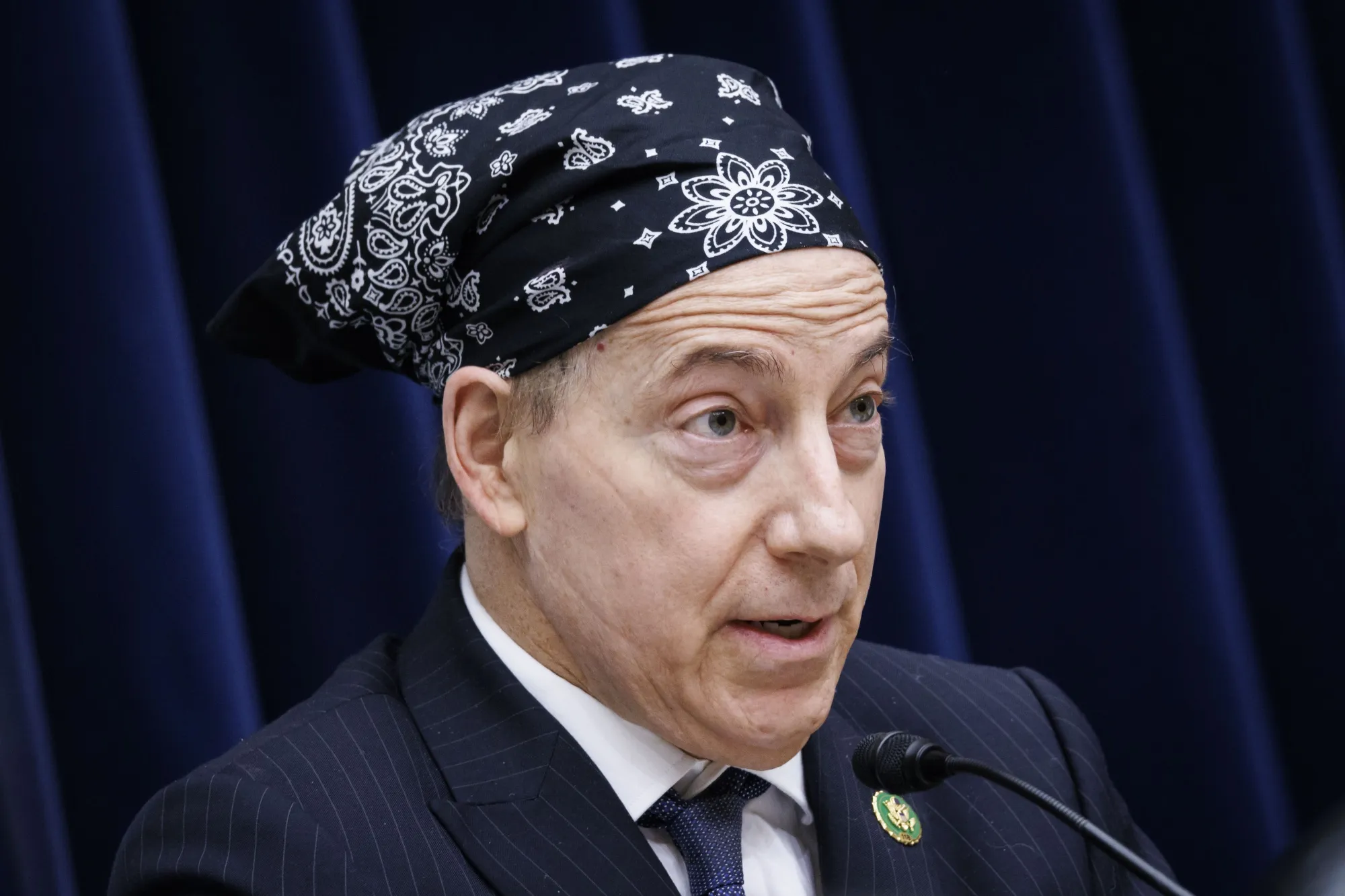
His January 31 letter to Blanche sought arrangements for Judiciary Committee members and staff to review the complete collection rather than relying exclusively on public releases.
The request placed direct responsibility on the department to explain its document-processing decisions and provide Congress with access necessary for oversight.
The confrontation intensified during a February 11 House Judiciary Committee hearing involving then-Attorney General Pam Bondi and the administration’s handling of the Epstein records.
Raskin accused the department of conducting an extensive cover-up, arguing that its production did not adequately satisfy the requirements established by Congress.
He cited a disparity between approximately six million potentially responsive documents and roughly three million that the department had released, demanding explanations for the difference.
Those figures reflected the congressional dispute over the scope of the production, not an independent finding that every unreleased document was legally required to become public.
Bondi defended the department’s approach while facing questions about redactions, investigative decisions, and the treatment of survivors seeking greater transparency.
The hearing also raised questions about who had supervised the review process, because Blanche had played a prominent role in managing the Epstein-related disclosures.
That responsibility became increasingly important when Bondi later told congressional investigators that she had delegated substantial oversight of the document review to Blanche.
The statement shifted attention toward the official who had previously served as Trump’s personal defense attorney and subsequently assumed senior leadership responsibilities at the Justice Department.
For Raskin, Blanche’s role raised questions about the department’s independence when reviewing files that could contain information concerning the president or his associates.
For Blanche, the responsibility involved managing complicated disclosure obligations while maintaining legal protections and defending the integrity of the department’s review process.
Neither position, standing alone, establishes whether evidence was deliberately concealed, making the underlying records and decisions essential to resolving the dispute.
Roll Call+2
The controversy expanded in July when Blanche appeared before the Senate Judiciary Committee for his confirmation hearing to become attorney general.
During the July 15 session, senators questioned his earlier work as deputy attorney general, his relationship with Trump, and the department’s handling of the Epstein records.
Several survivors of Epstein’s abuse attended, bringing additional attention to whether the government’s disclosure process had adequately protected people harmed by the trafficking operation.
Senator Richard Blumenthal challenged Blanche over mistakes that had exposed sensitive personal information belonging to survivors during the department’s document releases.
Blanche acknowledged that errors had occurred, stating that approximately one percent of the redactions required corrections after the materials became publicly accessible.
He said department lawyers had worked extensively to review records and that officials removed documents and corrected problems when improper disclosures were discovered.
His acknowledgment was significant because it established that the review process had not been flawless, even though he rejected broader accusations of intentional concealment.
Blanche maintained that the department had complied with the transparency law and argued that its legal teams had made substantial efforts to protect survivors.
That defense presented a competing interpretation of the same events: mistakes and delays did not necessarily prove the existence of a coordinated political cover-up.
The distinction between administrative failures and deliberate obstruction became central to the dispute, particularly as congressional Democrats sought evidence explaining specific decisions.
A disclosure error may demonstrate inadequate safeguards, while intentional concealment requires evidence concerning what officials knew, why they acted, and whether their decisions violated legal obligations.
Those questions cannot be resolved solely through the number of documents released or the intensity of accusations made during congressional proceedings.
The Senate hearing also exposed another point of disagreement involving Blanche’s unusual interview with Maxwell, who remains a central figure in the Epstein investigation.
Critics questioned why a former personal attorney for Trump had participated directly in an interview with someone convicted of helping Epstein abuse underage girls.
They also examined Maxwell’s subsequent transfer to a minimum-security federal facility, asking whether officials had followed applicable correctional policies and procedures.
Blanche defended the department’s actions, while congressional Democrats demanded further information about the interview, its preparation, and any limitations imposed on questioning.
Those concerns became more prominent on October 26, when Raskin released an extensive Judiciary Committee Democratic staff report examining allegations involving Trump and Epstein.
The report drew on survivor accounts, interviews, FBI materials, and documents disclosed under the transparency law to describe allegations warranting further investigation.
According to Raskin’s committee, accounts involving eleven women raised questions about Trump’s historical association with Epstein and individuals involved in the modeling industry.
Five women were described as having made accusations of rape or sexual assault involving Trump in Epstein’s company or presence.
Those are serious allegations presented by the committee, not criminal convictions or judicial findings establishing that Trump committed the alleged offenses.
The president has denied wrongdoing involving Epstein, and the committee’s interpretation of the material remains subject to scrutiny and potential challenge.
Raskin also alleged that Blanche had instructed Maxwell not to discuss a particular survivor whose account implicated Trump during the Justice Department’s interview.
That allegation became a particularly important element of the congressional report because it concerned whether investigators had avoided potentially relevant information.
However, establishing intentional suppression would require examining the interview record, instructions given to participants, and the legal reasoning behind any restrictions.
The committee called for an independent special counsel to investigate possible Epstein accomplices and examine whether Justice Department officials had improperly limited investigations.
It also urged greater cooperation with prosecutors outside the federal government who were examining allegations connected to Epstein’s network.
The report represented a substantial escalation of Raskin’s accusations, but its conclusions remained those of Democratic committee investigators rather than findings reached after a criminal trial.
U.S. House Judiciary Committee Democrats
Another significant dispute developed around the Justice Department’s handling of requests for assistance from state prosecutors and foreign law enforcement agencies.
On October 22, Raskin demanded explanations from Blanche and Office of International Affairs Director Vaughn Ary concerning reported refusals to provide investigative cooperation.
The requests reportedly involved authorities in several European countries seeking information that might assist investigations into individuals associated with Epstein.
Raskin questioned why the department would decline or delay assistance when other jurisdictions were attempting to examine possible offenses within their authority.
The Justice Department confirmed receiving his correspondence and indicated that officials were reviewing the requests through appropriate procedures.
Former federal officials cautioned that international evidence-sharing arrangements can involve complicated legal requirements, potentially taking weeks or months to resolve.
Such delays do not automatically establish improper interference, but they can warrant additional examination when prosecutors believe crucial evidence is being withheld.
Raskin argued that the department should explain its decisions and identify whether requests had been denied for legitimate legal reasons.
That question concerns a significant aspect of accountability because the investigation of transnational criminal activity often requires cooperation among multiple law enforcement authorities.
The controversy consequently expanded beyond public document disclosure into whether the United States was adequately supporting investigations by other governments.
The Washington Post
The dispute also entered federal court, where litigation sought to enforce provisions of the Epstein Files Transparency Act governing the review and release of records.
On October 28, the United States Court of Appeals for the District of Columbia Circuit denied the government’s request for a stay in related litigation.
The judges determined that the department had not demonstrated sufficient grounds for stopping a required review of foreign-language documents while the appeal proceeded.
The decision did not establish that Blanche had committed a cover-up or that every disputed document must immediately become public.
It did demonstrate that courts were examining the department’s obligations independently of the political disagreement unfolding in Congress.
The appellate order reinforced the importance of distinguishing the administration’s interpretation of the law from judicial determinations concerning its implementation.
Those distinctions became more consequential after the November elections gave Democrats majorities in both chambers of Congress.
Raskin is preparing to assume leadership of the House Judiciary Committee, creating opportunities to seek records, conduct hearings, and question senior Justice Department officials.
His prospective agenda includes examining the Epstein disclosures, politically sensitive prosecutions, and allegations that federal law enforcement decisions have improperly favored presidential interests.
Blanche has indicated that the Justice Department will cooperate with legitimate congressional oversight while continuing to defend the administration’s policies and prosecutorial decisions.
The administration has also warned against investigations it considers politically motivated, raising the prospect of legal disputes over subpoenas and executive privilege.
Those disagreements could make document production a central confrontation between the incoming congressional majority and the Justice Department.
A committee subpoena can demand information, but obtaining compliance may involve negotiations, litigation, and challenges concerning privileged or protected material.
For Raskin, the task will be establishing whether particular withholding decisions reflected valid statutory exceptions or improper efforts to shield politically influential individuals.
For Blanche, it will involve demonstrating that the department followed applicable laws while protecting survivors, investigative confidentiality, and legitimate government interests.
The challenge is complicated because documents concerning sexual abuse investigations may include extremely sensitive details that should not be released indiscriminately.
Survivors have repeatedly argued that accountability must include both meaningful transparency and protection against the unnecessary disclosure of their personal information.
Those objectives can coexist, but achieving them requires careful document review, reliable redaction procedures, and clear explanations when information is withheld.
The department’s acknowledged mistakes make oversight particularly relevant, while the sensitive nature of the files means that unrestricted public disclosure is not always appropriate.
The central question is whether federal officials applied legitimate protections consistently or used them to conceal information for reasons unrelated to the law.
As of November 15, 2026, the public record does not establish the alleged hearing in which Raskin supposedly confronted Blanche and left him visibly shaken.
It establishes something more consequential: Raskin has accused the department of a cover-up, Blanche has defended its actions, and Congress is preparing to examine the dispute.
The October committee report, the July confirmation testimony, and the continuing litigation provide concrete material for those investigations.
They also demonstrate why serious allegations against public officials require careful separation between witness accounts, investigative findings, political assertions, and proven misconduct.
Trump’s historical association with Epstein warrants examination where evidence raises legitimate questions, but association alone does not establish participation in criminal conduct.
Likewise, evidence of errors in the document-release process supports scrutiny without automatically proving that Blanche deliberately concealed crimes to protect the president.
The consequences of the dispute extend beyond individual political reputations because Congress enacted a disclosure law that the executive branch was required to implement.
Whether that obligation was fulfilled is a matter that can be examined through records, testimony, statutory interpretation, and judicial review.
For survivors, the most important outcome remains whether the government can provide meaningful answers while respecting their privacy and protecting them from additional harm.
For lawmakers, the responsibility is ensuring that investigations pursue evidence rather than relying on politically convenient conclusions reached before the facts have been established.
And for the Justice Department, the challenge is demonstrating that its decisions reflect consistent enforcement of the law rather than favoritism toward powerful individuals.
Raskin has made clear that he intends to pursue further answers when Democrats assume congressional control, placing Blanche’s handling of the Epstein records under renewed scrutiny.
Blanche continues to reject the premise that the department engaged in a coordinated cover-up, leaving the competing accounts to be tested through additional evidence.
The decisive question is not whether an attorney general appeared frightened during a confrontation that cannot be authenticated.
It is whether Congress can determine what information remains withheld, why those decisions were made, and whether federal officials complied with their legal responsibilities.
Until those questions are resolved, the Epstein files controversy will remain a significant test of government transparency, prosecutorial independence, and accountability for crimes involving influential people.
