
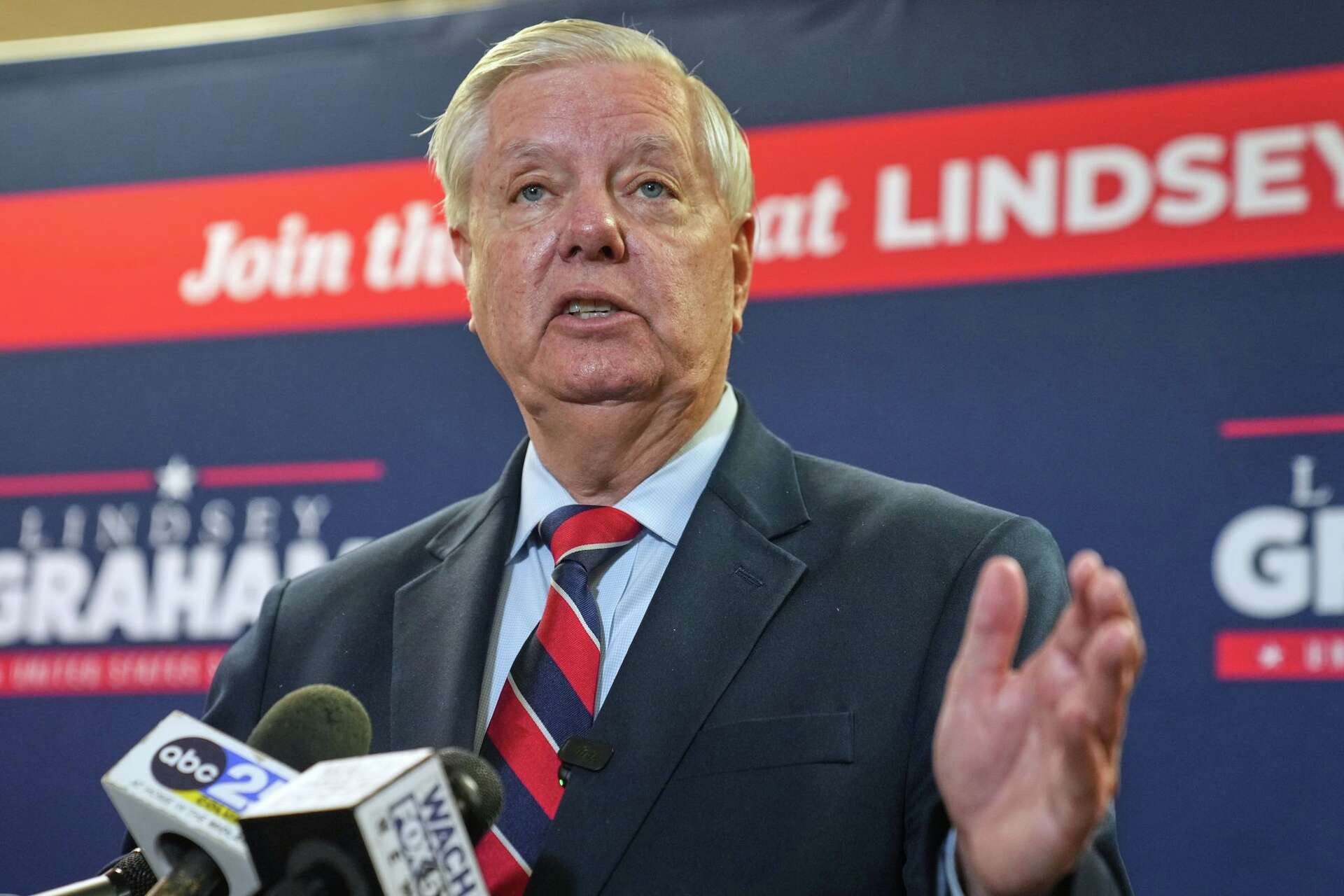
Lindsey G.r.a.h.a.m was halfway through defending the integrity of America’s judicial system when Sheldon Wh.i.t.e.h.o.u.s.e reached beneath his desk.
The Rhode Island senator had remained unusually quiet throughout the opening arguments.
He listened as G.r.a.h.a.m discussed constitutional principles, judicial independence, and the importance of respecting the Supreme Court.
Several lawmakers appeared satisfied with the familiar arguments.
But Wh.i.t.e.h.o.u.s.e was preparing to introduce something entirely different.
He reached beneath the table and retrieved a large cylindrical document case.
Inside was a carefully prepared financial network chart.
Across its upper edge appeared five words.
THE SUPREME COURT INFLUENCE NETWORK.
Wh.i.t.e.h.o.u.s.e slowly loosened the fasteners.
Then he began unrolling the chart across the hearing table.
The paper extended farther than several senators expected.
Names, organizations, financial relationships, and political advocacy groups appeared across the enormous diagram.
Some connections were marked with solid lines.
Others were identified as relationships requiring further examination.
Wh.i.t.e.h.o.u.s.e placed several supporting documents beside the chart.
Then he looked directly toward G.r.a.h.a.m.
“Senator, you’ve spent considerable time explaining why Americans should respect the law.”
He paused.
“But respect becomes harder to demand when powerful institutions refuse to answer legitimate questions.”
G.r.a.h.a.m leaned toward his microphone.
He argued that judicial independence was essential to the constitutional system.
He also warned against treating political disagreements as evidence of corruption.
Wh.i.t.e.h.o.u.s.e acknowledged both principles.
Then he pointed toward the financial network.
“Senator G.r.a.h.a.m, this isn’t about whether we agree with a particular Supreme Court decision.”
He paused.
“It’s about whether Americans deserve to understand the financial relationships surrounding the institution.”
The fictional hearing room became quiet.
Wh.i.t.e.h.o.u.s.e opened the first folder.
It concerned billionaire political donor Harlan Crow and Supreme Court Justice Clarence Thomas.
Public reporting had documented luxury travel and hospitality provided by Crow to Thomas over a period of years.
The disclosures generated intense debate about judicial ethics and financial reporting obligations.
Thomas maintained that he had followed the guidance he received concerning applicable disclosure requirements.
Crow denied attempting to influence the justice through their personal relationship.
Wh.i.t.e.h.o.u.s.e acknowledged those positions.
But he argued that the controversy raised broader questions about transparency.
He pointed toward the first section of the chart.
“Here we have a wealthy political donor.”
He moved his finger toward the next entry.
“And here we have a Supreme Court justice whose relationship with that donor attracted serious public scrutiny.”
G.r.a.h.a.m responded that a personal friendship did not automatically establish judicial misconduct.
Wh.i.t.e.h.o.u.s.e agreed.
“Of course it doesn’t.”
He paused.
“But the absence of proven misconduct doesn’t make disclosure requirements unnecessary.”
The senator opened another document.
It concerned the Judicial Conference’s March 2023 revisions to financial disclosure guidance.
The updated guidance addressed the reporting of certain gifts, travel, and hospitality.
Wh.i.t.e.h.o.u.s.e explained that the changes reflected the importance of clearer standards.
He questioned whether the public should have to depend on investigative journalism to discover relationships deserving examination.
G.r.a.h.a.m argued that the judiciary needed to preserve independence from political pressure.
Wh.i.t.e.h.o.u.s.e acknowledged that judicial independence was important.
But he challenged the assumption that independence meant freedom from meaningful ethics oversight.
Then he reached for the second folder.
Its cover contained another name.
LEONARD LEO.
Wh.i.t.e.h.o.u.s.e placed the document beneath the cameras.
Leo had played an influential role in conservative legal networks and judicial selection efforts.
He had been associated with organizations supporting conservative legal advocacy and judicial appointments.
His influence had become a major subject of debate concerning money, ideology, and the federal courts.
Wh.i.t.e.h.o.u.s.e pointed toward the chart.
“Senator, this is where the discussion becomes much larger than one donor or one justice.”
He traced a line between several organizations.
The diagram illustrated relationships involving legal advocacy groups, nonprofit organizations, donors, and political campaigns.
Some entities had publicly disclosed their activities.
Others operated under legal structures that did not require disclosure of every contributor.
Wh.i.t.e.h.o.u.s.e emphasized that undisclosed donations were not automatically illegal.
Nor did financial support for judicial advocacy independently prove corruption.
But he argued that concentrated and difficult-to-trace funding could raise legitimate transparency questions.
G.r.a.h.a.m responded that Americans had constitutional rights to participate in political advocacy.
He argued that those rights included supporting organizations that promoted particular legal philosophies.
Wh.i.t.e.h.o.u.s.e agreed.
Then he pointed toward the next document.
“Nobody is suggesting that political advocacy becomes criminal because somebody contributes money.”
He paused.
“I’m asking whether the public can understand the financial interests shaping campaigns that influence the courts.”
The exchange became increasingly focused.
Wh.i.t.e.h.o.u.s.e opened another folder.
It contained material concerning the Judicial Crisis Network and related conservative judicial advocacy efforts.
The organization had been active in campaigns surrounding major judicial confirmation battles.
Its spending and funding relationships attracted scrutiny from lawmakers and watchdog organizations.
Wh.i.t.e.h.o.u.s.e placed the material beside the network chart.
He explained that judicial confirmation campaigns could involve enormous financial commitments.
Advertising campaigns could influence public debate.
Advocacy organizations could pressure lawmakers.
And donors could support efforts promoting particular judicial philosophies.
G.r.a.h.a.m acknowledged that outside advocacy played a major role in modern confirmation politics.
But he argued that similar political activity occurred across ideological lines.
Wh.i.t.e.h.o.u.s.e agreed that judicial advocacy was not limited to conservatives.
He maintained that transparency standards should apply consistently.
Then he asked G.r.a.h.a.m whether the source of major judicial advocacy spending was relevant to public confidence.
G.r.a.h.a.m responded that political speech deserved constitutional protection.
Wh.i.t.e.h.o.u.s.e nodded.
“But constitutional protection and public accountability aren’t opposites.”
The fictional chamber grew quiet again.
Wh.i.t.e.h.o.u.s.e reached toward the third section of the financial chart.
It contained a cluster of organizations connected through documented donations, leadership relationships, and advocacy activities.
He had separated the connections into different categories.
One represented publicly reported financial transfers.
Another represented organizational leadership relationships.
A third identified political advocacy activities.
A fourth marked questions that remained unresolved.
Wh.i.t.e.h.o.u.s.e explained why those distinctions mattered.
A shared donor did not automatically establish improper coordination.
A legal organization’s advocacy did not necessarily indicate unlawful conduct.
And a relationship between a justice and a donor did not prove that a judicial decision had been purchased.
But the senator argued that those facts could still justify examining financial disclosure rules and potential conflicts.
G.r.a.h.a.m leaned forward.
“Then you’re acknowledging that your chart doesn’t prove anybody bought a judge.”
Wh.i.t.e.h.o.u.s.e looked directly at him.
“Yes, Senator.”
He paused.
“And I’m also saying Americans shouldn’t have to prove a completed crime before Congress considers stronger transparency rules.”
The moderator asked the committee’s ethics adviser to explain the distinction.
The adviser described the difference between criminal bribery and judicial ethics concerns.
Bribery required evidence satisfying specific legal elements.
Ethics rules could also address gifts, disclosures, recusal, and appearances of impropriety.
An undisclosed relationship might raise concerns without establishing criminal conduct.
Likewise, an accurately disclosed relationship could still generate questions about whether recusal was appropriate.
Wh.i.t.e.h.o.u.s.e nodded.
“That’s why the standards matter.”
He turned toward G.r.a.h.a.m.
“If the only rule is that nobody gets investigated until bribery is proven, we’re ignoring the purpose of preventive ethics safeguards.”
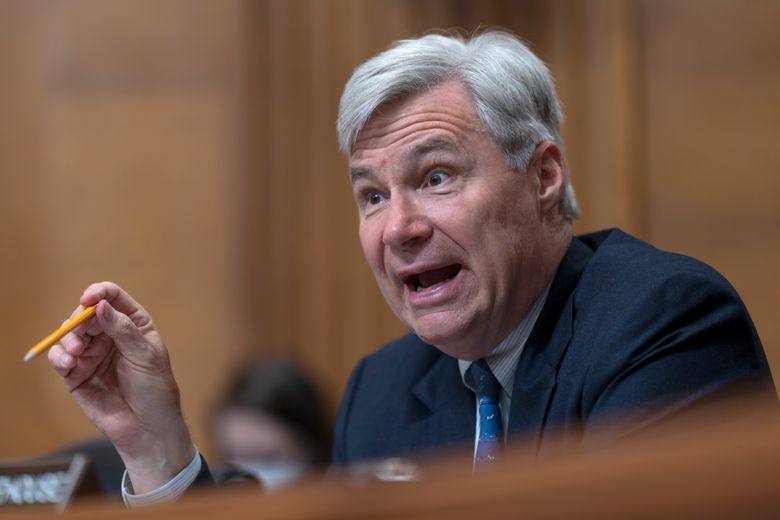
G.r.a.h.a.m argued that ethics enforcement should not become a tool for punishing judges because of controversial decisions.
Wh.i.t.e.h.o.u.s.e agreed that political disagreement alone was insufficient.
But he maintained that clear rules could protect judicial independence by reducing uncertainty.
Then he opened the fourth folder.
Its cover read SUPREME COURT ETHICS CODE.
The document concerned the Supreme Court’s adoption of a formal code of conduct in November 2023.
The code addressed ethical expectations for the justices.
Its publication followed growing public attention to judicial ethics controversies.
Wh.i.t.e.h.o.u.s.e placed the code beside earlier reform proposals.
He noted that critics had questioned whether the code contained adequate independent enforcement mechanisms.
G.r.a.h.a.m responded that the Supreme Court operated within a distinct constitutional framework.
He argued that reforms needed to respect the separation of powers.
Wh.i.t.e.h.o.u.s.e acknowledged the constitutional concerns.
But he questioned whether the existence of those concerns justified avoiding every possible enforcement mechanism.
The ethics adviser explained that congressional proposals could raise complicated constitutional questions.
Some involved disclosure requirements.
Others concerned recusal procedures and ethics investigations.
Still others proposed mechanisms for reviewing allegations against justices.
The adviser emphasized that lawmakers needed to evaluate those proposals carefully.
Wh.i.t.e.h.o.u.s.e agreed.
Then he pointed toward the chart again.
“That’s what serious oversight is supposed to do.”
He paused.
“Identify the problem, examine the evidence, and determine what rules are necessary.”
G.r.a.h.a.m maintained that judicial ethics reform should not undermine public trust through unsupported accusations.
Wh.i.t.e.h.o.u.s.e acknowledged the danger.
But he argued that public trust also suffered when legitimate questions went unanswered.
The room became quiet.
Wh.i.t.e.h.o.u.s.e reached for the fifth folder.
Its label read FINANCIAL DISCLOSURE AND PUBLIC CONFIDENCE.
Inside were proposed questions for an oversight review.
The first concerned whether disclosure requirements adequately captured significant gifts and travel.
The second examined how justices should assess potential conflicts involving personal relationships.
The third addressed the transparency of organizations engaged in judicial advocacy.
The fourth concerned the procedures available when questions about judicial ethics arose.
Wh.i.t.e.h.o.u.s.e placed the questions beside the enormous chart.
He explained that each one could be examined without assuming that a particular justice had committed a crime.
G.r.a.h.a.m reviewed the list.
Then he challenged whether the same standards would apply to advocacy groups supporting liberal judicial causes.
Wh.i.t.e.h.o.u.s.e answered that transparency principles should not depend on ideological alignment.
He acknowledged that political advocacy across the spectrum deserved consistent treatment under the law.
G.r.a.h.a.m nodded.
But he questioned whether Wh.i.t.e.h.o.u.s.e’s presentation placed disproportionate emphasis on conservative organizations.
Wh.i.t.e.h.o.u.s.e responded that the specific relationships on the chart were the subject of his inquiry.
He maintained that documented concerns should be examined individually.
The committee chairman asked whether the financial chart contained evidence of direct payments in exchange for particular Supreme Court decisions.
The ethics adviser answered that the materials presented did not establish such an exchange.
The chart illustrated financial, organizational, and personal relationships.
Those relationships could provide grounds for examining disclosure and ethics standards.
But they did not independently prove judicial bribery.
Wh.i.t.e.h.o.u.s.e acknowledged the answer.
Then he returned to G.r.a.h.a.m.
“Senator, that’s why we need to distinguish what the documents establish from what still needs examination.”
G.r.a.h.a.m agreed that allegations should not exceed the evidence.
Wh.i.t.e.h.o.u.s.e nodded.
“But we also shouldn’t use the absence of a criminal conviction as an excuse to avoid every question.”
The confrontation had moved beyond the opening partisan arguments.
It now concerned whether existing rules adequately protected the Supreme Court’s credibility.
Wh.i.t.e.h.o.u.s.e opened another document.
It summarized the public controversy surrounding Justice Samuel Alito’s previously undisclosed luxury fishing trip with billionaire Paul Singer.
Reporting about that trip generated debate over disclosure and potential recusal concerns.
Alito publicly defended his conduct and rejected allegations of wrongdoing.
Wh.i.t.e.h.o.u.s.e acknowledged the response.
But he argued that the controversy reinforced questions about disclosure standards.
He placed the material beside the Thomas-Crow records.
The cases involved different facts and different individuals.
Yet both had contributed to broader public debate about judicial ethics.
Wh.i.t.e.h.o.u.s.e traced a line across the chart.
“These controversies don’t all prove the same thing.”
He paused.
“But they raise a common question about whether the public can rely on clear, enforceable standards.”
G.r.a.h.a.m responded that judges should not face allegations of corruption merely because wealthy individuals supported similar political ideas.
Wh.i.t.e.h.o.u.s.e agreed.
But he questioned whether that principle resolved concerns involving significant gifts or undisclosed personal benefits.
The ethics adviser explained that financial contributions to advocacy organizations and personal gifts to judges raised different legal issues.
They should not be conflated.
Wh.i.t.e.h.o.u.s.e accepted the distinction.
Then he separated the chart into two areas.
The first concerned judicial relationships and disclosure obligations.
The second concerned political spending and judicial advocacy networks.
He explained that both could affect public confidence.
But each required its own legal analysis.
G.r.a.h.a.m looked toward the display.
He argued that broader public education about judicial ethics might be more effective than political accusations.
Wh.i.t.e.h.o.u.s.e acknowledged that possibility.
But he maintained that transparency also required access to meaningful information.
The chairman requested a practical proposal.
Wh.i.t.e.h.o.u.s.e outlined a framework for examining disclosure rules, recusal procedures, and enforcement options.
He suggested reviewing the Supreme Court’s existing ethics code.
He also proposed studying disclosure requirements applicable to lower federal judges.
The review would identify differences between existing systems.
It would then assess whether reforms could improve consistency without compromising constitutional independence.
G.r.a.h.a.m questioned whether the review would remain impartial.
Wh.i.t.e.h.o.u.s.e responded that the committee should establish clear criteria and allow competing legal perspectives to be heard.
The chairman asked the ethics adviser whether such a review could produce useful recommendations.
The adviser answered that a structured comparison could help lawmakers identify areas requiring clarification.
The review would need to account for constitutional constraints and existing judicial procedures.
Wh.i.t.e.h.o.u.s.e nodded.
Then he returned to the financial web chart.
Its enormous size had become the defining image of the hearing.
Names and organizations stretched across the table.
Financial relationships were marked in different categories.
Some were established through publicly available reports.
Others remained subjects for additional inquiry.
The senator slowly rolled back one edge.
Then he looked toward G.r.a.h.a.m.
“Senator, I’m not asking you to agree with every interpretation on this chart.”
He paused.
“I’m asking whether the American people deserve to understand the relationships it documents.”
G.r.a.h.a.m responded that transparency had to coexist with constitutional rights.
Wh.i.t.e.h.o.u.s.e acknowledged the point.
But he argued that lawful disclosure and carefully designed ethics standards could help preserve those rights.
The moderator asked both senators to summarize their positions.
G.r.a.h.a.m emphasized judicial independence, freedom of political advocacy, and the importance of avoiding unsupported corruption allegations.
Wh.i.t.e.h.o.u.s.e emphasized disclosure, enforceable ethics standards, and public confidence in the Supreme Court.
The disagreement remained substantial.
But both positions involved legitimate constitutional considerations.
Then Wh.i.t.e.h.o.u.s.e reached toward the final page.
It contained a proposed question for the committee’s next oversight session.
The question was not whether every wealthy donor had committed a crime.
It was whether the Supreme Court’s ethics system adequately addressed situations involving significant personal benefits and potential conflicts.
Wh.i.t.e.h.o.u.s.e placed the page beneath the cameras.
G.r.a.h.a.m examined it.
The room became quiet again.
Wh.i.t.e.h.o.u.s.e spoke slowly.
“Senator, if Americans believe the rules apply differently depending on how powerful somebody is, confidence in the law suffers.”
G.r.a.h.a.m acknowledged that public confidence mattered.
Wh.i.t.e.h.o.u.s.e continued.
“And if our ethics system cannot clearly explain how serious conflicts are handled, that uncertainty becomes its own problem.”
He pointed toward the chart.
“That’s why these relationships deserve examination.”
The chairman asked whether Wh.i.t.e.h.o.u.s.e had a final statement.
He nodded.
Then he slowly removed his glasses.
He placed them beside the financial documents.
His tone remained controlled.
“Senator G.r.a.h.a.m, nobody should be declared guilty because somebody draws a line between two names.”
He paused.
“But nobody should be exempt from reasonable ethical scrutiny because the questions are politically uncomfortable.”
G.r.a.h.a.m prepared to respond.
Wh.i.t.e.h.o.u.s.e raised one hand.
He wanted to finish.
The senator turned toward the cameras.
Then he delivered his final warning.
“You cannot demand respect for the law while refusing to examine whether powerful donors receive the same ethical scrutiny as everyone else.”
The fictional chamber fell silent.
G.r.a.h.a.m responded that the Constitution required lawmakers to respect judicial independence while considering reform.
Wh.i.t.e.h.o.u.s.e acknowledged that requirement.
But he insisted that independence and accountability were not mutually exclusive.
The chairman closed the exchange.
The massive financial chart remained spread across the desk.
No evidence presented during the hearing established that Lindsey G.r.a.h.a.m had protected a criminal bribery scheme.
Nor did the documented donor relationships prove that Supreme Court decisions had been purchased.
But the materials illustrated real controversies surrounding judicial disclosure, political advocacy, and institutional trust.
The Supreme Court had adopted its ethics code in 2023.
Public debate continued over its implementation and the adequacy of existing accountability mechanisms.
Questions about gifts, travel, disclosure, and recusal remained important subjects for legal analysis.
So did constitutional protections for judicial independence and political advocacy.
Wh.i.t.e.h.o.u.s.e slowly rolled the chart back into its case.
G.r.a.h.a.m collected his notes.
The committee chairman dismissed the session.
The opening partisan confrontation had become a discussion about the standards expected of the nation’s highest court.
The central question was not whether wealthy people could participate in political debate.
They could.
Nor was it whether judges should face punishment simply because their decisions were controversial.
They should not.
The question was whether existing safeguards provided sufficient transparency when significant financial relationships intersected with the judiciary.
Answering that question required documented evidence, clear rules, and careful constitutional analysis.
It also required avoiding conclusions that the evidence did not support.
Political contributions were not automatically bribes.
Personal relationships were not automatically corrupt.
But ethical concerns could still deserve examination before criminal misconduct was established.
That distinction was essential to maintaining public confidence.
The fictional hearing ended without a criminal finding against any participant.
But it left lawmakers confronting a challenge that extended beyond party affiliation.
How could Americans trust judicial independence if the rules governing significant personal benefits remained difficult to evaluate?

And how could Congress improve transparency without undermining the constitutional protections that preserve the courts’ independence?
Those questions required serious answers.
Because the Supreme Court’s authority depends not only on the decisions its justices make, but also on public confidence that those decisions are reached under clear, consistent, and meaningful ethical standards.
