
“WHERE DID THE SENIORS’ MONEY GO?” Sheldon Whitehou.s.e Confronts Rick Sco.t.t in Explosive Senate Showdown Over Millions and a Disputed Document
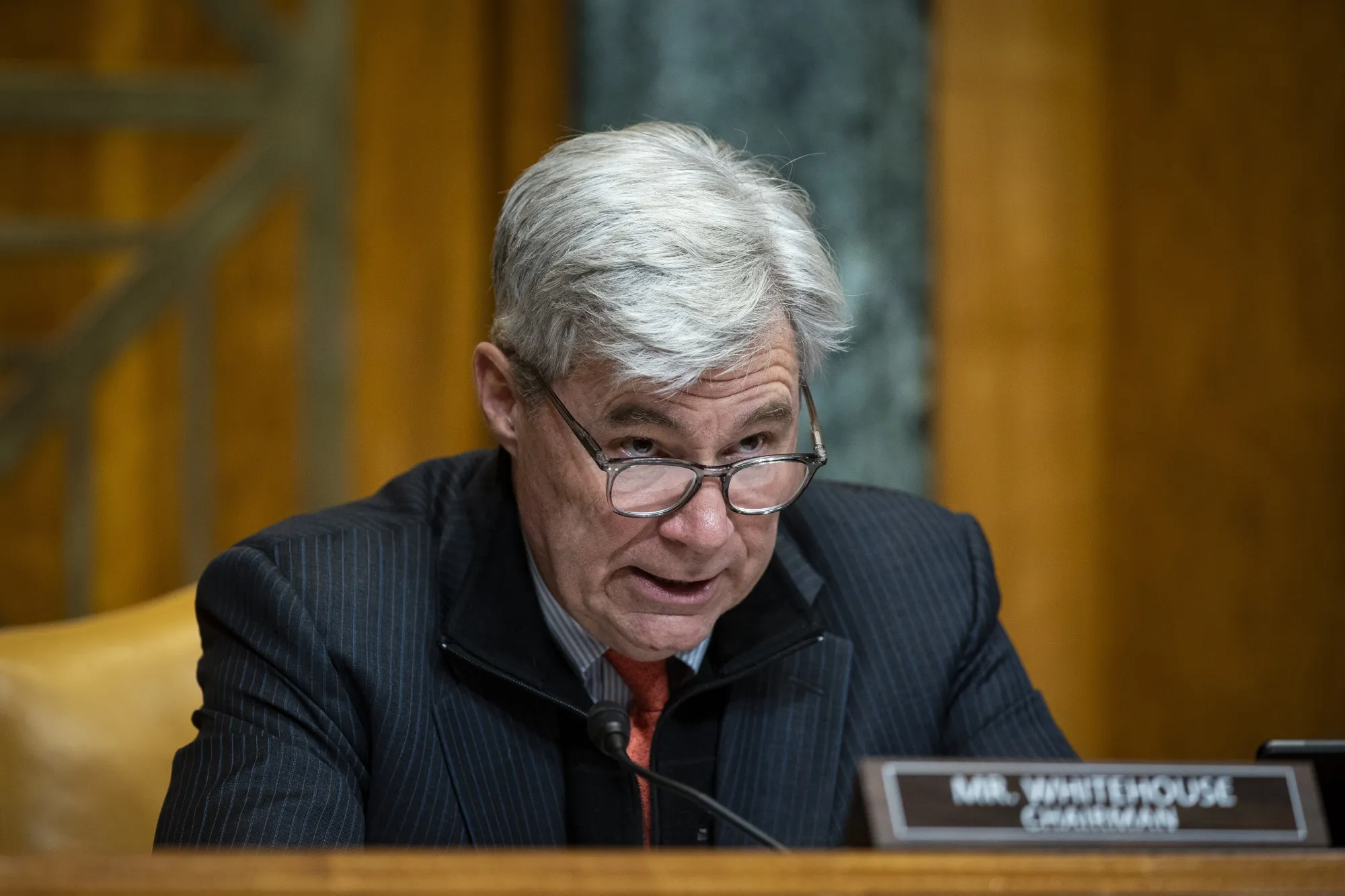
The Senate hearing room was already tense when Senator Sheldon Whitehou.s.e turned toward Rick Sco.t.t, preparing to confront the Republican senator over questions involving millions of dollars and the financial interests of American seniors.
Sco.t.t appeared ready to defend himself.
Whitehou.s.e, however, was determined to pursue a different question: where had the money gone, who had controlled it, and why were so many questions still unanswered?
“Senator Sco.t.t, American seniors worked their entire lives for that money. They deserve to know what happened to it.”
Sco.t.t immediately pushed back.
“Senator, if you’re accusing me of taking money, then show me the evidence. Don’t stand here making accusations without proof.”
Whitehou.s.e did not retreat.
“I’m asking you to explain the financial trail. That’s not the same thing as making an unsupported accusation.”
The exchange quickly became a confrontation over accountability, financial documentation, and the responsibilities of elected officials when public money is involved.
For Whitehou.s.e, the issue was bigger than a political disagreement.
It concerned Americans who had spent decades working, saving, and depending on retirement programs to protect their future.
For Sco.t.t, the challenge was equally serious.
He needed to distinguish documented financial decisions from allegations that could damage his reputation.
And neither senator appeared prepared to back down.
THE FIRST CLASH: “STOP DODGING THE QUESTION!”
Whitehou.s.e returned to the documents before him.
“Senator Sco.t.t, let’s stop talking around the issue. I want to understand exactly where the money went.”
Sco.t.t responded sharply.
“And I want you to identify exactly what you’re accusing me of doing.”
Whitehou.s.e continued.
“I’m asking about the financial arrangements, the people involved, and the documentation explaining the movement of these funds.”
Sco.t.t shook his head.
“You’re presenting this as though something illegal happened. If you have evidence of wrongdoing, put it on the table.”
Whitehou.s.e replied:
“That’s precisely why we’re examining the records. Financial accountability begins with asking questions, not pretending that questions are accusations.”
The disagreement reflected two competing arguments.
Whitehou.s.e wanted greater transparency surrounding the financial arrangements under examination.
Sco.t.t wanted specific evidence before accepting the suggestion that he or his political associates had acted improperly.
The distinction mattered because allegations involving public money can have serious consequences.
A missing explanation does not automatically establish theft.
But a financial arrangement involving public resources deserves scrutiny when legitimate questions remain unanswered.
Whitehou.s.e appeared determined to keep the discussion focused on that distinction.
THE SECOND CLASH: THE DOCUMENT THAT BECAME THE CENTER OF ATTENTION
The most contentious part of the supplied account concerned a disputed document supposedly connected to the financial trail.
Whitehou.s.e’s argument centered on the importance of examining original records rather than relying on political assurances.
“Senator Sco.t.t, documents exist for a reason. They establish who authorized a transaction, who received the funds, and what happened afterward.”
Sco.t.t immediately responded.
“Then show the complete document. Show the context. Don’t take one page and pretend it proves something it doesn’t.”
Whitehou.s.e pressed him.
“Are you disputing the document itself, or are you disputing what it appears to show?”
Sco.t.t answered:
“I’m disputing any attempt to turn incomplete information into an accusation of misconduct.”
Whitehou.s.e returned to the central question.
“Then explain the discrepancies.”
Sco.t.t insisted that the allegations needed to be supported by complete and independently verifiable records.
The argument became increasingly focused on the document’s authenticity, context, and interpretation.
Those distinctions were critical.
A financial document can identify a payment without establishing that its recipient acted improperly.
A discrepancy can justify further investigation without proving criminal conduct.
And a disputed document cannot responsibly be treated as conclusive evidence until its origin and contents have been independently established.
Nevertheless, the disagreement highlighted the importance of transparency whenever financial resources intended to benefit vulnerable Americans are involved.
THE THIRD CLASH: WHY SHOULD SENIORS HAVE TO WAIT FOR ANSWERS?
Whitehou.s.e then shifted the discussion toward the people most directly affected by the controversy.
American seniors.
For millions of retirees, financial security is not an abstract political concept.
It determines whether they can afford housing, medication, groceries, and basic living expenses.
Whitehou.s.e’s broader argument was that public officials must take extraordinary care when dealing with financial arrangements that could affect retirement security.
“Senator Sco.t.t, we’re not discussing some private political disagreement. We’re discussing people who depend on financial protections after decades of work.”
Sco.t.t responded that he supported protecting seniors and opposed accusations unsupported by evidence.
Whitehou.s.e challenged him.
“Then why should Americans accept incomplete explanations when the financial records deserve closer examination?”
Sco.t.t answered:
“Because an investigation must establish facts. It cannot begin with a conclusion and work backward.”
Whitehou.s.e paused.
“Agreed. But establishing facts requires access to records and answers from the people involved.”
The two senators had reached a point where their disagreement was no longer simply about political rhetoric.
It concerned the standards necessary to establish financial accountability.
Whitehou.s.e wanted explanations.
Sco.t.t demanded proof.
And the public interest required both.
THE FINAL QUESTION: WHO IS RESPONSIBLE FOR THE MONEY?
As the confrontation approached its conclusion, Whitehou.s.e returned to the financial trail.
He wanted to establish who had authorized the arrangements, who had received the funds, and whether the documentation could account for every relevant transaction.
Sco.t.t continued rejecting any implication that the disputed information established personal wrongdoing.
“Senator, I will not accept an accusation simply because you repeat it.”
Whitehou.s.e responded:
“And I will not accept a vague explanation when the financial questions remain unresolved.”
Sco.t.t pushed back.
“Then produce the complete evidence.”
Whitehou.s.e answered:
“Then provide the complete records.”
The exchange captured the central conflict.
One senator was demanding transparency.
The other was demanding evidentiary standards.
Neither position eliminated the need for a complete examination of the underlying financial arrangements.
And that left the most important question unanswered.
Where exactly did the money go?

THE CONTROVERSY THAT COULD GROW MUCH BIGGER
The supplied account describes a dramatic confrontation involving Whitehou.s.e, Sco.t.t, senior-related funds, and a disputed document.
However, it does not identify the specific financial program, transaction, or document involved, so the allegation cannot responsibly be presented as an established case of missing millions or financial misconduct.
That distinction does not make the underlying accountability questions unimportant.
Whenever money intended to protect seniors becomes the subject of conflicting explanations, the public deserves clear documentation.
Every relevant transaction should be traceable.
Every disputed payment should be examined.
And every allegation should be tested against verifiable evidence rather than political accusations.
For Sco.t.t, the challenge is to address specific questions without allowing an unverified document to become proof of wrongdoing.
For Whitehou.s.e, the challenge is to demonstrate that the financial concerns are supported by records that withstand independent scrutiny.
But the most consequential development may still be ahead.
If the disputed document is authentic, what exactly does it establish?
If its interpretation is incorrect, what do the complete records actually show?
And if the financial trail contains unexplained transactions, who will ultimately be responsible for answering the questions raised by American seniors?
Because the real story is not which senator delivers the final insult. It is whether the money can be accounted for, dollar by dollar, and whether the public will finally receive an explanation.
