
Abdul El-Sayed’s “Arab America” Remark Sparks a Debate Over Identity and National Unity
A brief remark about Michigan’s Arab American community has sparked a wider political debate over cultural identity, national belonging and the meaning of American unity. The controversy began after Abdul El-Sayed, Michigan’s newly elected Democratic senator, described the state as “the capital of Arab America” during a national gathering in Virginia.
El-Sayed made the comment on November 6 at the CONNECT Arab America Empowerment Summit in Chantilly, just three days after winning Michigan’s open Senate seat. Addressing an audience of Arab American leaders and community members, he began by acknowledging that the event was taking place near Washington, D.C., the capital of the United States.
He then drew a comparison between the national capital and Michigan’s place within Arab American life.
“I’m honored to be the next United States senator from the great state of Michigan,” El-Sayed said. “I know we’re here in D.C., which of course is the capital of the United States of America, but Michigan is the capital of Arab America.”
The audience responded with cheers. But the sentence soon traveled beyond the conference, becoming a subject of political commentary and criticism across social media.
For supporters, the remark reflected the history and cultural importance of Arab American communities in Michigan. For critics, the language raised questions about whether ethnic and cultural identities should be emphasized in discussions of national representation. The disagreement quickly developed into a broader argument about how Americans understand their shared national identity.
The controversy also produced a wave of misleading online posts. Some presented the statement as though El-Sayed had announced a separate political identity for Michigan or suggested that the state stood apart from the United States. The available footage, however, shows him making a cultural comparison at an event specifically organized around Arab American leadership and community engagement.
Michigan has long been one of the most important centers of Arab American life in the country. The Detroit metropolitan area, particularly Dearborn, has a substantial Arab American population and a history of cultural, religious, commercial and civic institutions serving the community.
That background is central to understanding El-Sayed’s choice of words. The phrase “capital of Arab America” was used in a setting where Arab American identity was the subject of the gathering. It was not presented as a proposal to establish a separate government, territory or political authority.
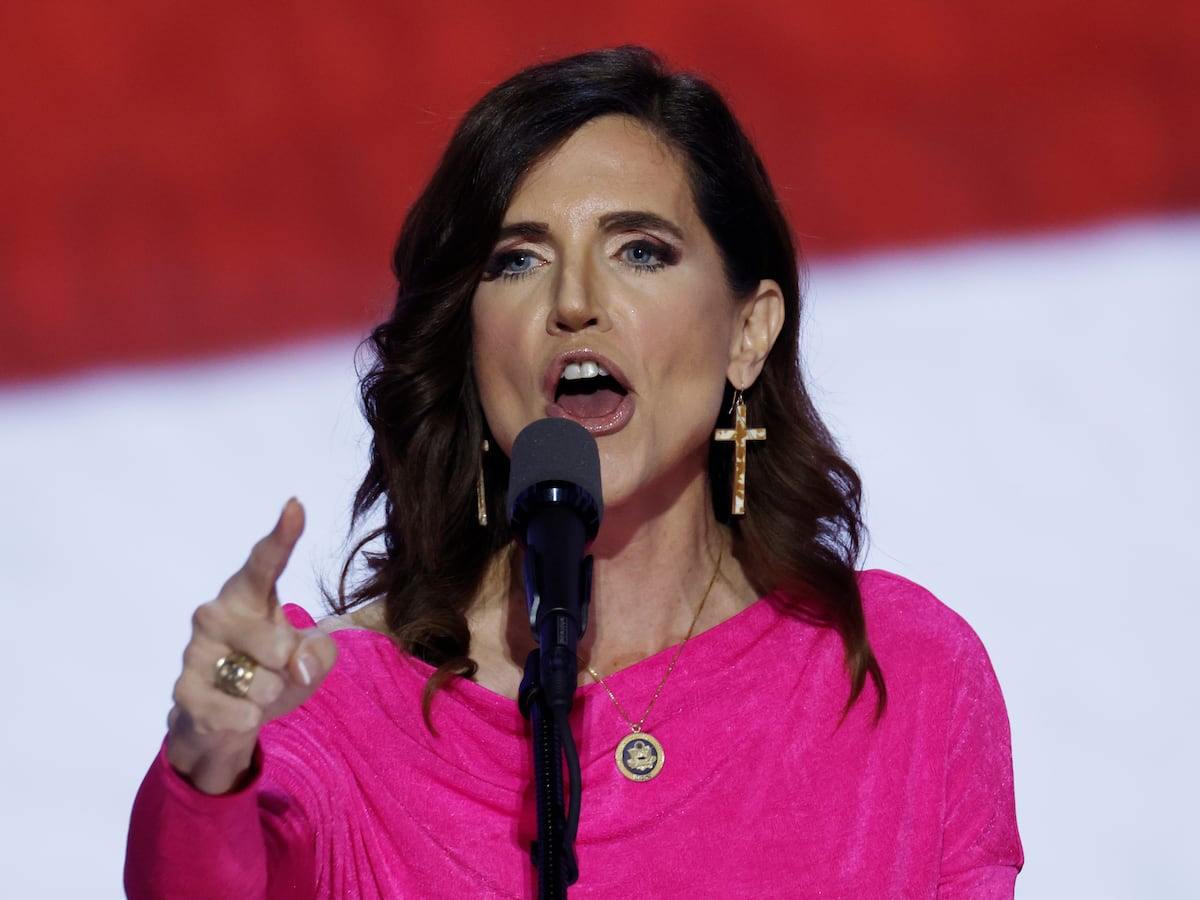
Nevertheless, the political reaction was swift. On November 9, Republican Representative Nancy Mace responded publicly on X with a message emphasizing national unity.
“There is no Arab America. There is the United States of America. One country. One flag. One nation. AMERICA FIRST,” she wrote.
Her statement echoed a similar response from Turning Point USA chief executive Erika Kirk and became another widely circulated part of the debate. The exchange illustrated how a short sentence about cultural representation could become a much larger dispute over the relationship between heritage and national identity.
It is important, however, to distinguish the documented events from the more dramatic versions circulating online. There is no verified record of Senator John Kennedy confronting El-Sayed in a Senate hearing, delivering a 30-second speech against him or issuing the alleged warning described in viral posts. The “one nation, one flag” response attributed to Kennedy in those posts is not supported by the available reporting. The documented response came from Nancy Mace.

The distinction matters because the viral narrative changes not only the speaker but also the setting and nature of the event. A public comment at a community summit is transformed into an imagined confrontation inside a political chamber. That version may attract attention, but it does not accurately describe what happened.
For El-Sayed, the moment comes at the beginning of a significant transition into national office. His election on November 3 made him the first Muslim elected to the United States Senate. The son of Egyptian immigrants, he previously served in public health leadership roles in Michigan and built his political profile around healthcare, economic issues and the concerns of working families.
His election also brought renewed attention to the visibility of Arab American and Muslim American communities in national politics. That visibility has been accompanied by intense scrutiny of his background, religious identity and political positions, particularly during a campaign in which questions of national allegiance became recurring themes.
The debate over his summit remarks therefore extends beyond the wording of a single sentence. It reflects a longstanding tension in American public life: how can people celebrate a particular cultural heritage while also participating fully in a national identity shared by citizens from many different backgrounds?
For many Arab Americans, recognizing Michigan as a center of their community is a way of acknowledging generations of migration, family history, business development and civic participation. For critics such as Mace, political language should emphasize the common national identity that unites citizens regardless of ancestry.
Those positions do not necessarily address the same question. One concerns the cultural significance of a community within a state; the other emphasizes the political unity of the country. The disagreement becomes more difficult when online commentary presents those ideas as mutually exclusive.
As the controversy continues, the original footage remains an important reference point. El-Sayed spoke at an Arab American leadership event, praised Michigan’s place within that community and received an enthusiastic response from the audience. Mace subsequently offered a sharply different message about national identity. Those are the documented events behind the viral debate.
What happens next will depend less on the dramatic claims circulating online than on how El-Sayed approaches his responsibilities as a senator representing all of Michigan’s residents. The broader question remains relevant well beyond one conference: how should American leaders recognize the country’s many cultural communities while reinforcing the shared civic identity that holds the nation together?
