
Jamie Raskin is preparing to challenge the Trump administration through congressional investigations, even as the White House warns that some Democratic oversight tactics could cross criminal boundaries.
The Maryland Democrat has made clear that he intends to scrutinize the Justice Department, presidential business relationships, and executive decisions when Democrats take control of Congress.
But the administration has delivered a warning of its own.
President Donald Trump has accused incoming Democratic investigators of engaging in political extortion.
Attorney General Todd Blanche initially declined to rule out criminal prosecution of lawmakers whose investigative activities violated federal law.
And White House counsel Will Scharf sent a formal letter suggesting that certain planned investigations could constitute criminal misconduct.
The confrontation has created an unusually direct dispute between two branches of the federal government.
Can the executive branch threaten criminal investigations against lawmakers preparing to exercise their constitutional oversight powers?
Raskin argues that Congress possesses independent authority to investigate government misconduct.
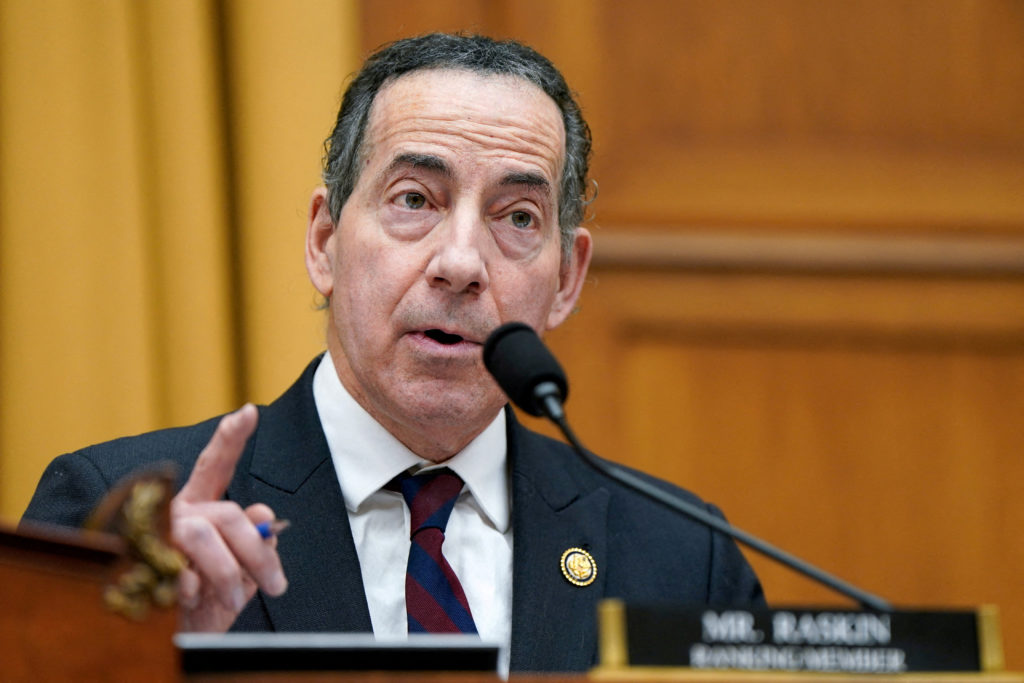
The White House maintains that congressional investigations must have legitimate legislative purposes and respect constitutional rights.
Both positions involve important legal principles.
But the administration’s warnings have raised additional questions about whether the Justice Department could be used to discourage lawful congressional scrutiny.
The conflict intensified after the November 3, 2026, midterm elections returned Democrats to congressional power.
And on November 18, Democratic lawmakers began issuing detailed requests for records involving some of Trump’s closest associates.
The oversight campaign is no longer merely a campaign promise.
It is developing into a confrontation over documents, subpoenas, executive privilege, and the limits of presidential authority.
The White House Letter That Started the Confrontation
The immediate dispute emerged after California Representative Robert Garcia warned Trump administration officials to prepare for congressional investigations.
Garcia is expected to lead the House Oversight Committee when Democrats assume control in January 2027.
His public statements drew attention from the White House.
On November 9, White House counsel Will Scharf sent Garcia a formal warning concerning the planned investigations.
The letter was subsequently reported by Punchbowl News and other national outlets.
Scharf argued that congressional subpoenas must serve legitimate legislative purposes.
He warned that investigative demands designed primarily to intimidate individuals could exceed Congress’s constitutional authority.
The letter suggested that certain abusive actions might constitute criminal conduct.
That language immediately generated criticism from Democratic lawmakers and constitutional scholars.
The central concern was whether the administration was attempting to discourage investigations before they had even begun.
Garcia rejected the warning.
He argued that Congress possesses independent authority to investigate executive conduct and pursue legislative reforms.
Raskin also challenged the administration’s approach.
He suggested that Garcia could consider seeking judicial protection against threats intended to interfere with lawful legislative activity.
The exchange transformed a disagreement about future hearings into a direct confrontation over constitutional power.
And it came only days after Trump had publicly accused congressional Democrats of extortion.
Trump’s Extortion Accusation Raises the Stakes
On November 7, Trump posted a statement criticizing Democrats who intended to investigate his administration.
He accused lawmakers of threatening government officials, businesses, and political supporters with congressional scrutiny.
Trump characterized the threatened investigations as extortion.

He also called for the Justice Department to examine what he considered potential criminal conduct.
The statement attracted immediate attention because it involved the president urging law enforcement scrutiny of future congressional activity.
Congressional investigations are a recognized part of the American constitutional system.
But investigators are not exempt from laws prohibiting genuine criminal conduct.
The dispute therefore concerned where lawful oversight ends and unlawful coercion begins.
Trump argued that Democrats were threatening investigations for political purposes.
Democrats responded that examining government officials and potential conflicts of interest was part of their constitutional responsibility.
Neither interpretation can establish criminal wrongdoing without evidence of specific conduct.
An announcement that Congress intends to investigate the executive branch is not itself proof of extortion.
Similarly, congressional authority does not automatically legalize every action taken under the label of oversight.
The disagreement requires examining the purposes, procedures, and legal basis of particular investigations.
That distinction became central when Blanche discussed the administration’s position on national television.
Todd Blanche’s Warning—and His Subsequent Clarification
On November 8, Blanche appeared on CNN to discuss the administration’s response to Democratic oversight plans.
He questioned whether certain lawmakers were attempting to intimidate private businesses and public officials.
Blanche argued that congressional authority did not provide unlimited permission to threaten people.
He declined to categorically rule out criminal investigations if lawmakers engaged in unlawful conduct.
His comments intensified concerns that the Justice Department might target members of Congress over legitimate investigative activities.
But Blanche subsequently clarified his position.
On November 12, he told reporters that the department had no active criminal investigations into lawmakers’ statements about future oversight.
He also said he had not identified a specific Democratic statement that crossed the criminal threshold.
That clarification was significant.
It distinguished the administration’s earlier warning from an actual criminal proceeding.
As of that statement, Blanche had not announced prosecutions based on the oversight rhetoric.
He also acknowledged that Congress has longstanding investigative authority.
The attorney general said the Justice Department would continue responding to congressional inquiries through established procedures.
Nevertheless, the political conflict remained.
Democratic lawmakers continued questioning whether the administration’s warnings were intended to intimidate them.
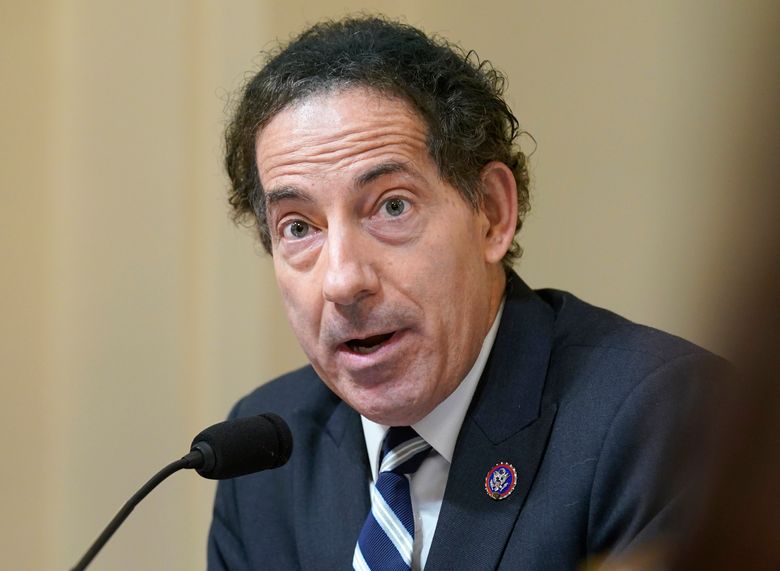
The White House continued criticizing investigations it considered abusive or politically motivated.
And Raskin maintained that congressional oversight would proceed.
Jamie Raskin’s Response Focuses on Constitutional Authority
Raskin approaches the confrontation with extensive experience in constitutional law and congressional investigations.
Before entering Congress, he taught constitutional law at American University.
He later became a prominent Democratic member of the House Judiciary Committee.
His congressional work has involved presidential accountability, impeachment, and disputes over executive power.
Following the midterm elections, Raskin began coordinating oversight plans with other senior Democrats.
Those discussions involved Garcia, Democratic leadership, and members expected to chair major investigative committees.
Raskin identified restoring constitutional accountability as a major priority.
He argued that Congress needed access to information concerning executive decisions and potential conflicts of interest.
He also criticized the administration’s threats concerning Democratic investigations.
His position reflects a fundamental principle of American government.
Congress cannot exercise meaningful legislative oversight if it is prevented from examining executive actions.
The Constitution divides authority among separate branches precisely to prevent unlimited concentration of power.
But Raskin’s argument does not establish that every proposed subpoena will necessarily be lawful.
Congressional investigative demands must still satisfy applicable constitutional and legal requirements.
The distinction matters because the administration has raised questions about legitimate legislative purposes.
Raskin believes the planned investigations satisfy those standards.
The White House disputes some of their stated objectives.
That disagreement may ultimately require courts to determine the limits of particular subpoenas.
The Speech or Debate Clause Becomes a Central Defense
One of the most important constitutional protections in this dispute is the Speech or Debate Clause.
Article I protects members of Congress from being questioned elsewhere for certain legislative acts.
The provision is intended to preserve the independence of the legislative branch.
Its protections can extend to activities closely connected with legitimate congressional work.
That includes significant aspects of committee investigations and legislative proceedings.
The clause does not provide blanket immunity for all conduct by elected officials.
Members can still face criminal liability for actions outside protected legislative activities.
But prosecutors generally cannot bypass constitutional protections simply because they disagree with congressional investigations.
That distinction is particularly relevant when the executive branch threatens lawmakers with possible prosecution.
An ordinary political disagreement cannot automatically become a criminal case.
Investigators would need evidence of an actual offense.
Courts would also have to consider whether the relevant conduct was protected legislative activity.
Raskin and other Democrats argue that the administration’s warnings threaten those constitutional boundaries.
The White House maintains that genuine abuses of investigative authority would not be protected.
The disagreement is therefore about more than political language.
It concerns the circumstances under which one branch of government may investigate officials working within another.
And the outcome could influence the balance of power during the final years of Trump’s presidency.
The Business Deals Democrats Want to Investigate
The coming oversight effort extends beyond the Justice Department.
Democrats have identified presidential business relationships and potential conflicts of interest as major investigative priorities.
They want to examine transactions involving members of Trump’s family and companies connected to the administration.
The inquiries also concern financial relationships involving foreign governments and private contractors.
Some lawmakers have questioned whether participants in commercial arrangements received favorable government treatment.
Others want records concerning businesses that supported major White House construction projects.
The administration has rejected allegations that its financial relationships reflect improper conduct.
Supporters argue that the president’s commercial and diplomatic activities should not automatically be treated as suspicious.
Democrats maintain that transparency is necessary to determine whether official decisions benefited private interests.
The distinction between concern and proof is essential.
A government contract does not automatically establish corruption.
A financial relationship involving a political figure does not necessarily constitute an unlawful conflict.
And commercial participation in administration projects is not inherently criminal.
Investigators must examine transactions, communications, official decisions, and applicable ethics requirements.
That process may identify wrongdoing.
It may also substantiate legitimate explanations for disputed relationships.
Raskin argues that Congress should obtain the evidence necessary to make those determinations.
The White House contends that investigations cannot become instruments for political retaliation.
Those competing positions are now shaping the approaching oversight struggle.
November 18 Brings the First Major Wave of Records Requests
The confrontation became more concrete on November 18.
Garcia sent a series of letters seeking documents from senior administration officials and individuals associated with Trump’s family.
The recipients included Vice President JD Vance and Attorney General Blanche.
Other letters went to Donald Trump Jr., Eric Trump, and Jared Kushner.
White House officials and former senior administration figures also received requests.
The letters addressed several subjects.
One involved potential conflicts of interest associated with family business arrangements.
Another concerned the administration’s handling of documents related to Jeffrey Epstein.
Other requests examined immigration enforcement, government decision-making, and possible preferential treatment.
The letters did not themselves constitute criminal charges.
Nor did every request carry the immediate enforcement power of a congressional subpoena.
They represented an early effort to identify documents relevant to future committee investigations.
The distinction matters because Democrats had not yet assumed control of the House committees.
Their expanded authority would begin in January.
Nevertheless, the requests provided a clear preview of their intended priorities.
And they demonstrated that the dispute involved more than statements exchanged through television interviews.
The oversight campaign was beginning to take documentary form.
Raskin’s Investigation of Howard Lutnick Adds Another Dimension
Raskin has also pursued questions involving Commerce Secretary Howard Lutnick.
On November 17, he joined Representatives Gregory Meeks and Sydney Kamlager-Dove in requesting records from Cantor Fitzgerald.
The financial firm had previously been led by Lutnick.
The inquiry concerned reported Nvidia shareholdings and decisions involving advanced semiconductor exports.
Lawmakers questioned whether financial interests connected to Lutnick’s family could have influenced Commerce Department decisions.
The investigation also involved Megaspeed International, a Singapore-based technology company facing scrutiny over potential semiconductor diversion to China.
Cantor Fitzgerald disputed suggestions of improper financial conduct.
The Commerce Department said Lutnick had complied with his ethics obligations.
No finding of unlawful conduct had been established.
But the investigation demonstrated the specific kinds of financial questions Democrats intended to examine.
It involved transaction records, communications, and government regulatory decisions.
Those are familiar subjects for congressional oversight.
They also illustrate why the administration’s warnings have generated legal disagreement.
Raskin believes Congress should investigate possible conflicts affecting national security decisions.
The administration maintains that officials should not face abusive investigations based on unsupported accusations.
Determining whether particular investigative demands are lawful requires examining their actual purposes and scope.
But the existence of political disagreement does not eliminate Congress’s general authority to investigate.
That is the distinction at the center of the constitutional controversy.
The Justice Department Faces Its Own Oversight Questions
Democrats are also preparing to examine decisions made by the Justice Department during Trump’s second term.
Raskin has questioned investigations involving individuals the president publicly criticized.
He has expressed concern about potential political influence over prosecutorial decisions.
Other Democrats have demanded records related to the department’s handling of Epstein-related documents.
The Justice Department says its mission remains enforcing federal law and protecting the public.
Blanche has defended the department’s actions and argued that lawful investigations should not be characterized as political retaliation without evidence.
Congress may investigate how the department exercises its authority.
But disputes can arise when lawmakers seek information involving ongoing criminal matters or privileged communications.
The executive branch may argue that certain disclosures would interfere with law enforcement.
Congress may contend that the information is essential to evaluating official conduct or considering legislative reforms.
Those competing claims have produced disputes under administrations of both parties.
The current confrontation is unusual because of the explicit criminal warnings directed toward incoming congressional investigators.
That rhetoric raises questions about whether ordinary institutional disagreements are becoming threats of prosecution.
Blanche’s November 12 clarification reduced one immediate uncertainty.
He said no criminal investigations were underway into lawmakers’ oversight statements.
But that announcement did not resolve future disputes over subpoenas or documents.
Those conflicts may intensify once Democrats assume committee control.
Republicans Also Recognize Congress’s Oversight Authority
The confrontation does not divide neatly between Democrats supporting congressional authority and Republicans rejecting it.
Representative James Comer, the current Republican chairman of the House Oversight Committee, publicly acknowledged the committee’s independent role.
He emphasized that congressional oversight remains important regardless of which party occupies the White House.
Comer criticized Garcia’s rhetoric as inappropriate.
But he also recognized that Democrats would control the committee after winning the election.
That distinction reflects an institutional principle extending beyond partisan disagreements.
Congressional committees possess oversight responsibilities under Republican and Democratic leadership.
The subjects and methods of investigation may change with elections.
But the underlying constitutional authority does not disappear.
Republican Representative Thomas Massie also expressed skepticism about whether Democrats would use their new powers effectively.
He urged them to focus on substantive investigations rather than politically unproductive disputes.
Massie acknowledged concerns about possible corruption involving individuals associated with the administration.
His comments demonstrated that Republicans can recognize legitimate oversight questions while disagreeing with Democratic investigative priorities.
The debate therefore involves the purposes and methods of particular investigations.
It is not simply a referendum on whether Congress possesses investigative authority.
That authority is well established.
The legal disputes concern its boundaries.
Why Subpoenas Could Become the Next Major Battleground
When Democrats assume control of the House in January 2027, committee leaders will gain greater power to pursue investigations.
They may schedule hearings, request testimony, and authorize subpoenas under applicable House rules.
Subpoenas can compel production of documents or testimony.
But they are not unrestricted instruments.
Recipients may challenge them on constitutional or other legal grounds.
Executive officials may assert privileges involving sensitive presidential communications.
Private organizations may argue that requests are excessively broad or unrelated to legitimate legislative purposes.
Congress may respond that the information is necessary for oversight or potential legislation.
Courts can become involved when the parties cannot reach an agreement.
That process may take considerable time.
Previous administrations have engaged in lengthy disputes over congressional subpoenas.
Some conflicts have continued for years.
The Trump administration’s current warnings suggest that similar disagreements could emerge quickly.
But threats of criminal prosecution represent a separate issue from ordinary subpoena litigation.
Challenging a subpoena in court is not equivalent to alleging that the lawmaker issuing it committed a crime.
That distinction will matter if the administration takes further action.
For Raskin, the objective is obtaining documents necessary for oversight.
For the White House, the challenge is defending executive interests while respecting lawful congressional demands.
How the branches manage those disagreements will shape the constitutional confrontation.
The Political Stakes Go Beyond Trump’s Presidency
The dispute is occurring after a significant electoral change.
Democrats regained congressional control in the November 2026 midterms.
That result altered the institutional balance during Trump’s second term.
Republicans had previously controlled the House agenda.
Democrats will now possess greater authority to investigate administration decisions.
Raskin and Garcia intend to use that authority aggressively.
Trump has criticized their plans as politically motivated.
Blanche has defended the administration against what he considers improper investigative threats.
But congressional oversight is not supposed to depend entirely on whether the president welcomes scrutiny.
The constitutional system gives Congress responsibilities separate from those of the executive branch.
It also limits Congress through legal requirements and judicial review.
Those reciprocal constraints form the basis of the present dispute.
The stakes are especially substantial because the conflict involves potential use of criminal law against elected representatives.
If lawful oversight activity were treated as criminal solely because it challenged the president, congressional independence could be affected.
Conversely, lawmakers cannot use constitutional authority to engage in conduct that genuinely violates criminal law.
The legal challenge is distinguishing those circumstances through evidence rather than political accusation.
And that challenge will become more immediate once subpoenas begin arriving.
The Warning Raskin Is Actually Delivering
The viral headline attributes the declaration “You Do Not Own This Country!” to Raskin.
No authenticated footage reviewed for this account establishes that he delivered those exact words during the reported confrontation.
The documented statements are different.
Raskin has promised to pursue information necessary for congressional accountability.
He has emphasized restoring constitutional government and examining alleged abuses of executive authority.
He has also questioned the administration’s warnings concerning Democratic investigators.
Those positions are supported by public reporting.
The White House’s legal warning to Garcia is documented.
Trump’s extortion accusation is documented.
Blanche’s initial comments and subsequent clarification are documented.
And Democrats’ expanding requests for records are documented.
What remains unproven is the existence of a single dramatic confrontation containing every quotation and reaction described in sensational online accounts.
That distinction does not make the underlying dispute less important.
A constitutional conflict can be significant without an invented exchange of insults.
Indeed, the documented facts reveal a more consequential disagreement.
The executive branch has questioned whether planned congressional investigations could become criminally abusive.
Incoming congressional leaders argue that such warnings threaten the independence of legitimate legislative oversight.
Neither side can settle that dispute through political rhetoric alone.
The legality of future actions will depend on their purpose, scope, and constitutional protections.
The Constitutional Confrontation Is Only Beginning
The November warnings have established the positions of the competing institutions.
Trump believes some Democratic investigative threats amount to political coercion.
Blanche has argued that unlawful intimidation would not become permissible merely because lawmakers invoked oversight authority.
But he has also acknowledged Congress’s power and said no criminal investigations were underway into the lawmakers’ statements.
Raskin and Garcia maintain that the Constitution protects legitimate congressional scrutiny of executive conduct.
Their expanding records requests demonstrate that they intend to pursue it.
The coming dispute will involve presidential business relationships, federal contractors, the Justice Department, immigration enforcement, and other administration decisions.
Some investigations may uncover evidence supporting allegations of misconduct.
Others may reveal lawful conduct or disputes over policy rather than wrongdoing.
Those possibilities must remain open until the records are examined.
The central question is whether both branches will respect the legal boundaries governing their responsibilities.
Congress has authority to investigate.
The executive branch may assert legitimate legal objections.
And courts can adjudicate disputes when the branches cannot agree.
But the mere announcement of a lawful congressional investigation is not itself an established criminal offense.
That is why the administration’s warnings attracted such intense scrutiny.
They raised the possibility that legal threats could influence how lawmakers exercise constitutional authority.
Raskin’s central message is that congressional oversight will continue despite opposition from the White House.
The administration’s response is that oversight must remain within lawful limits.
Those principles are not inherently incompatible.
But their practical application will determine whether the coming investigations proceed through ordinary constitutional processes or become a prolonged institutional conflict.
The first major records requests have already been issued.
The new Congress will convene in January.
And lawmakers are preparing to exercise powers that may compel senior officials and private organizations to explain their conduct.
The decisive question is not whether Jamie Raskin can deliver a dramatic warning to Donald Trump.
It is whether Congress can investigate the executive branch without facing improper retaliation, while remaining accountable to the legal limits of its own authority.
That question reaches beyond one president, one attorney general, or one political party.
It concerns the structure of American government itself.
And the documents, subpoenas, court decisions, and congressional hearings ahead will determine how that structure operates during the next two years.
