
Donald Trump publicly attacked ABC News anchor David Muir after a presidential debate fact-check challenged one of his most forceful campaign arguments: that violent crime was spiraling out of control across America.
The confrontation began on September 10, 2024, during Trump’s televised debate with Vice President Kamala Harris.
Trump insisted that crime was reaching alarming levels.
Muir interrupted with a correction based on federal statistics.
“The FBI says overall violent crime is actually coming down in this country.”
Trump immediately rejected the numbers, arguing that the FBI’s statistics were unreliable because some crimes were not being reported.
Three days later, the dispute became personal.
Speaking at a September 13 news conference at his California golf property, Trump singled out Muir and attacked his credibility.
He referred to the ABC anchor as a “foolish fool.”
The exchange generated controversy over the role of debate moderators, the reliability of federal crime statistics, and whether journalists should challenge candidates’ factual claims during nationally televised events.
But the dispute did not end with the debate.
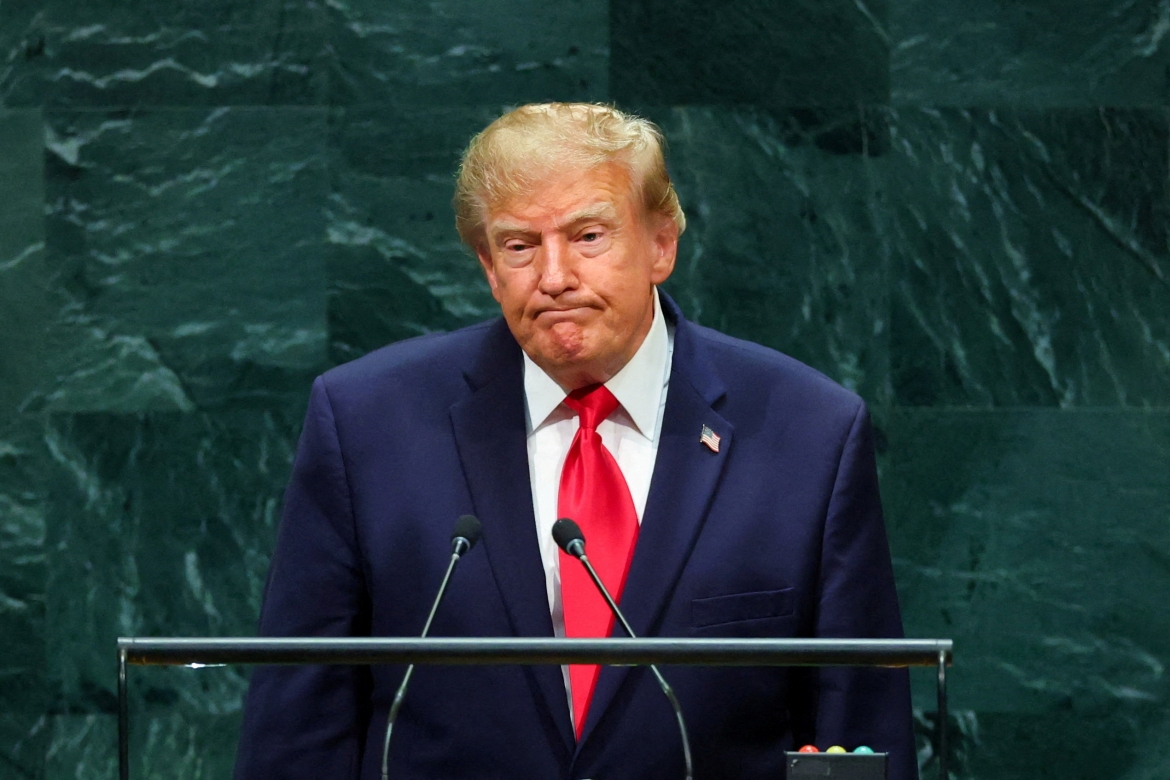
In October 2024, revised FBI estimates appeared to strengthen one part of Trump’s criticism.
The bureau’s updated figures changed the reported direction of violent crime between 2021 and 2022.
Republican commentators argued that those revisions undermined Muir’s correction.
However, the broader national trend told a different story.
Even after the revisions, FBI statistics showed that the violent crime rate had declined from its pandemic-era level in 2020.
And the latest figures, released in August 2026, documented another substantial reduction.
The FBI reported that the national violent crime rate fell approximately 9.7 percent from 2024 to 2025, with the murder rate declining even more sharply.
That development creates an important distinction.
Trump’s criticism of particular FBI revisions raised legitimate questions about statistical reporting.
But the revisions did not establish that his broader claims of continuously rising national violent crime were accurate.
The central question is whether Muir’s original correction survived the later revisions—and what the newest crime figures reveal about the argument that followed.
The September Debate That Triggered the Confrontation
The dispute began during the September 10, 2024, presidential debate in Philadelphia.
ABC News anchors David Muir and Linsey Davis moderated the encounter between Trump and Harris.
Immigration, public safety, economic conditions, and abortion policy were among the major subjects.
Trump repeatedly argued that the Biden administration had allowed crime to worsen.
He linked his criticism to immigration enforcement and public safety concerns.
At one point, Trump declared that crime was rising dramatically.
Muir challenged the statement.
He cited FBI information indicating that overall violent crime was declining.
Trump rejected the correction.
He described the federal data as fraudulent and argued that the reporting system failed to capture major categories of criminal activity.
The confrontation occurred in front of a national television audience.

It was significant because Muir was not simply asking the candidates to explain competing proposals.
He was directly challenging the factual basis of a presidential candidate’s statement.
That approach attracted immediate criticism from Republicans.
Some argued that moderators should ask questions and leave competing factual interpretations to the candidates.
Others defended real-time corrections when candidates made claims contradicted by available evidence.
The disagreement over moderation continued after the debate ended.
But the underlying question concerned the FBI’s statistics.
Were they accurately describing the direction of violent crime?
And could later revisions change that conclusion?
Trump Escalates the Dispute With a Personal Attack
On September 13, Trump addressed reporters at Trump National Golf Club in Rancho Palos Verdes, California.
He revisited his debate performance and criticized ABC News.
The former president accused the network of treating Harris more favorably during the encounter.
He also challenged Muir’s use of FBI crime statistics.
Trump argued that Americans were experiencing a serious public safety crisis and that the moderator had relied on incomplete information.
Then he turned his criticism toward Muir personally.
“This foolish man, this foolish fool.”
The remark drew national media attention.
Mediaite reported the attack that day.
Other outlets highlighted the unusual spectacle of a presidential candidate personally insulting a television anchor over a statistical correction.
Trump’s objection had two parts.
First, he argued that the crime data were unreliable.
Second, he maintained that Muir had acted improperly by interrupting him during the debate.
Those were separate claims.
The accuracy of the FBI’s figures was a question of statistical evidence.
The fairness of ABC’s moderation was a question of journalistic practice.
Neither issue could be resolved through a personal description of the anchor.
But Trump’s remarks ensured that the disagreement would continue beyond September.
And the FBI’s next statistical release gave the controversy new momentum.
The October Revisions That Republicans Seized Upon
In October 2024, the FBI’s updated crime figures became the subject of intense political scrutiny.
The revisions changed the estimated year-over-year direction of violent crime between 2021 and 2022.
Earlier estimates had suggested that violent crime declined approximately 2.1 percent in 2022.
The revised figures instead indicated an increase of approximately 4.5 percent.
That was a meaningful change.
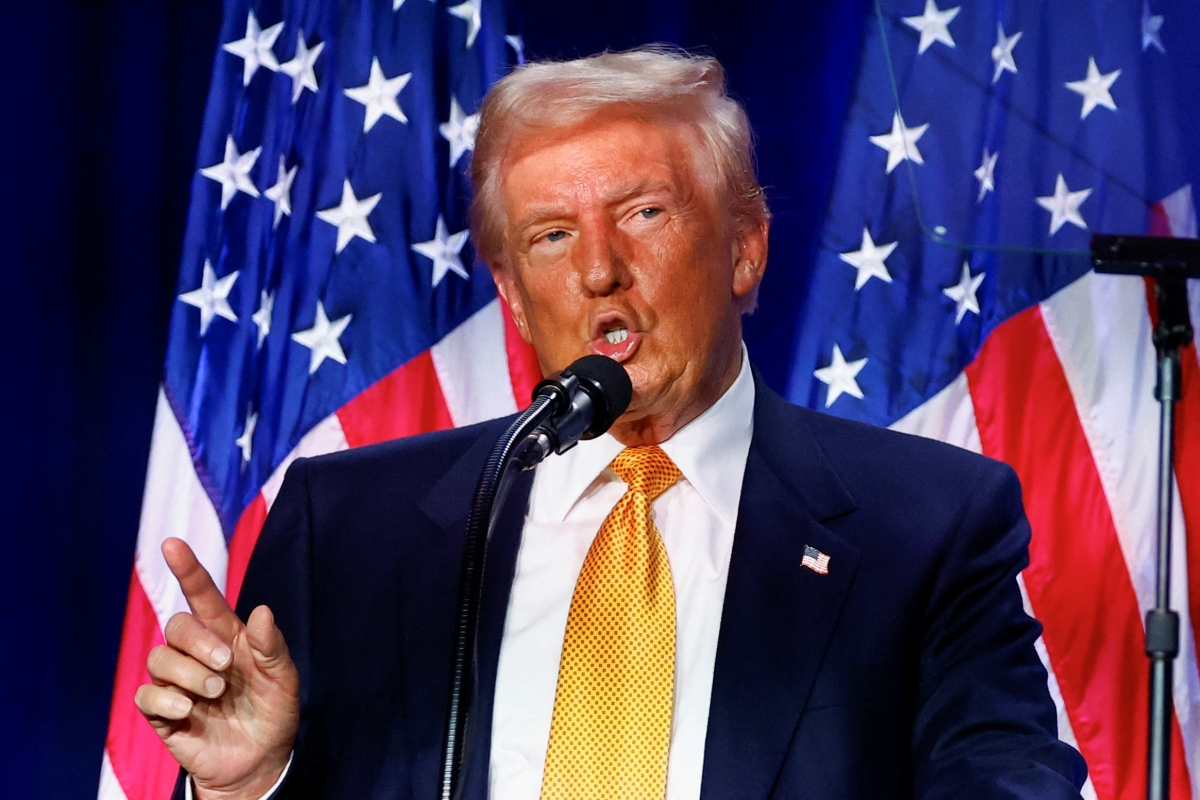
Conservative commentators argued that the correction demonstrated weaknesses in the FBI’s original reporting.
Some accused the bureau of quietly revising politically sensitive statistics.
Trump used the development to renew his criticism of Muir.
He argued that the ABC moderator had been wrong to insist that violent crime was declining.
But the revision concerned a particular comparison between 2021 and 2022.
It did not establish that violent crime rose throughout the entire period after 2020.
Nor did it prove that national violent crime had increased by the much larger percentages Trump cited in campaign speeches.
FactCheck.org examined the dispute in October 2024.
Its analysis concluded that the revised figures still showed an overall decline in violent crime compared with 2020.
The organization also questioned claims that the revisions demonstrated deliberate manipulation.
Criminal justice experts explained that the FBI regularly updates estimates as additional information becomes available.
The revisions raised questions about statistical communication.
But they did not overturn the broader trend.
That distinction became the central factual issue behind the continuing Trump–Muir confrontation.
Why the FBI Changed Its Numbers
The FBI’s reporting system underwent a major transition during the early 2020s.
The bureau moved toward a more detailed National Incident-Based Reporting System.
The transition created challenges because not every police department immediately adopted the new process.
Participation problems were particularly significant in 2021.
Some large law enforcement agencies did not provide complete data through the system.
That complicated efforts to produce reliable national estimates.
The FBI subsequently adjusted its methodology and revised earlier figures.
In its explanation to FactCheck.org, the bureau described changes involving estimates based on information directly submitted by participating agencies.
The revisions affected comparisons between years.
But revisions are a recognized part of statistical reporting.
Government agencies frequently update economic, employment, and crime data when additional information becomes available.
That does not mean every revision is insignificant.
Large changes can affect public interpretation.
They can also expose weaknesses in how preliminary estimates were communicated.
Critics were therefore entitled to question why particular figures had changed.
But a numerical revision does not automatically establish deliberate deception.
Evidence of intentional manipulation would require more than showing that updated estimates differed from earlier ones.
That distinction matters because Trump and some allies used the revision to challenge the FBI’s credibility.
The bureau’s methodological explanation offered a different account.
The dispute became a test of whether the public could distinguish flawed or incomplete reporting from proven political interference.
The 2020 Comparison Changes the Argument
One of the most important points concerns the starting year.
Violent crime increased sharply during the COVID-19 pandemic.
The national murder rate rose substantially in 2020.
That year was Trump’s final full year of his first presidential term.
According to the FBI’s subsequently revised figures, the violent crime rate stood at approximately 389.2 offenses per 100,000 people in 2020.
The rate increased slightly to approximately 389.5 in 2022.
It then declined.
By 2024, the rate had fallen to approximately 362.9 per 100,000.
That was below the 2020 level.
The four major categories of violent crime also recorded lower rates in 2024 than in 2020.
Those categories included murder, rape, robbery, and aggravated assault.
The comparison matters because Trump often described national violent crime as continuously worsening.
The revised FBI data did not support that characterization.
They showed variation between years.
They also showed a broader reduction after the pandemic-era increase.
Muir’s September 2024 correction concerned the direction of overall violent crime.
The later revisions did not establish that the national trend was one of sustained growth.
That does not mean every city experienced the same pattern.
Crime rates differ substantially across communities.
Some locations may experience increases while national figures decline.
And public concern about safety can remain significant even when national statistics improve.
But national claims require national evidence.
The distinction between local experiences and nationwide trends is essential.
The Bureau of Justice Statistics Adds Another Perspective
Trump and his allies also cited findings from the Bureau of Justice Statistics.
Those figures came from the National Crime Victimization Survey.
The survey measures experiences of criminal victimization, including incidents never reported to police.
That makes it different from the FBI’s police-based statistics.
The FBI primarily compiles offenses reported to law enforcement agencies.
The victimization survey asks people directly about experiences involving crime.
Both measures provide useful information.
But they do not measure exactly the same events.
The victimization survey excludes homicide because murder victims cannot participate in interviews.
It also focuses on nonfatal victimization involving people within the survey’s covered population.
The FBI’s violent crime measure includes murder and uses police records and statistical estimates.
During the 2024 debate controversy, Trump pointed to victimization survey findings as evidence that crime was higher than Muir suggested.
The survey showed that some measures of violent victimization increased after unusually low rates during the pandemic.
But it did not establish that the FBI’s overall trend was fraudulent.
The 2023 victimization rate was approximately 22.5 incidents per 1,000 people age twelve or older.
That was statistically similar to the 2022 rate.
The 2024 rate was approximately 23.3 per 1,000.
These results illustrate why different sources can describe different aspects of crime.
A survey can show elevated victimization relative to earlier years while police-based data show declines in reported offenses.
The figures should not be treated as interchangeable.
Why Muir’s Fact-Check Survived the Revisions
Muir’s statement was specific.
He cited the FBI’s finding that overall violent crime was declining.
He did not claim that every category of crime had declined in every city.
He also did not claim that the bureau’s statistics were immune from revision.
The October 2024 changes complicated comparisons involving 2021 and 2022.
But the revised series still showed a decline after the pandemic-era increase.
That is why FactCheck.org concluded that Muir’s statement remained accurate.
The distinction is important when evaluating Trump’s later criticisms.
A correction can be based on the best official data available at the time.
Subsequent revisions may require journalists to provide additional context.
But they do not automatically make the original statement false.
The appropriate question is whether the updated evidence contradicts the underlying claim.
In this case, the broader trend remained downward.
Trump’s criticism of the bureau’s statistical process raised a different issue.
He argued that incomplete reporting could distort the public’s understanding of crime.
That concern is legitimate to examine.
The FBI’s historical participation problems were real.
But the existence of those problems did not establish the much larger crime increases Trump asserted.
Nor did they demonstrate that Muir knowingly presented false information.
The available record supports a narrower conclusion.
The figures were revised.
The revision deserved explanation.
And the overall national decline remained visible.
The 2024 FBI Report Strengthens the Declining-Crime Picture
The FBI’s subsequent annual report provided additional evidence about the national trend.
In August 2025, the bureau released its comprehensive crime statistics for 2024.
The report estimated that violent crime declined approximately 4.5 percent from 2023.
The reductions extended across major categories.
Murder and nonnegligent manslaughter declined.
Robbery declined.
Aggravated assault declined.
Rape also recorded a decrease.
These figures strengthened the conclusion that nationwide violent crime was falling.
But they did not establish that public safety problems had disappeared.
The United States continued recording large numbers of violent offenses.
Victims and communities still faced substantial risks.
The FBI itself emphasized the scale of crime even while documenting improvements.
The distinction matters because national statistics can be misused in two directions.
A politician can exaggerate increases to suggest that public safety is collapsing everywhere.
Another can emphasize declines while overlooking persistent problems in particular communities.
Responsible reporting must account for both.
The national trend is one part of the story.
Local conditions and victims’ experiences are another.
Muir’s original correction addressed the first.
The broader public safety debate requires examining both.
The Latest 2025 Numbers Bring Another Twist
The strongest recent development came in August 2026.
The FBI released detailed national crime statistics for 2025.
The results showed a sharp decline in violent crime compared with 2024.
The violent crime rate fell from approximately 362.9 offenses per 100,000 residents to 327.6.
That represented a reduction of roughly 9.7 percent.
The murder rate declined from approximately 5.1 to 4.1 per 100,000.
The bureau described the year-over-year declines as historically large within its national estimation series.
The decreases extended across murder, robbery, aggravated assault, and rape.
The data created an important political development.
Trump, now president, highlighted the falling crime numbers as evidence of his administration’s success.
The White House argued that stronger enforcement and other policies had contributed to improved public safety.
But the downward trend had begun before Trump’s return to office in January 2025.
Violent crime had already declined during 2023 and 2024.
That complicates claims assigning the entire 2025 reduction to one administration.
Crime trends can be affected by many factors.
Those include local policing, economic conditions, community programs, demographic changes, and shifts in criminal activity.
Researchers have not established a single explanation for the national decline.
The latest data therefore support the conclusion that violent crime fell sharply.
They do not, by themselves, prove which policies caused that reduction.
And they reinforce the statistical point at the center of Muir’s original correction.
Overall violent crime was declining.
Trump’s Later Use of FBI Data Creates a New Debate
Trump’s response to the 2025 figures contrasted with his earlier criticism of the bureau.
During the 2024 campaign, he repeatedly questioned FBI statistics that showed falling violent crime.
He argued that those numbers understated the severity of America’s public safety problems.
After returning to office, he cited new FBI figures showing major declines.
He presented those results as evidence that his administration had improved public safety.
The difference drew attention from fact-checkers.
In August 2026, FactCheck.org examined Trump’s claims concerning the 2025 crime reduction.
It acknowledged that the FBI had recorded historically large one-year declines.
But it questioned the president’s suggestion that the decrease represented a complete reversal of a crisis inherited from Democrats.
The data showed that violent crime had already been declining for two years before 2025.
That finding does not rule out a contribution from policies introduced after January 2025.
It means the statistical evidence alone cannot assign the entire reduction to those policies.
The distinction concerns causation.
A president may be in office when a crime rate changes.
But that timing is not sufficient to establish why the change occurred.
The same standard should apply to previous administrations.
Political claims about crime should distinguish observed trends from explanations for those trends.
That principle applies to Trump’s criticism of Muir and to his later claims of policy success.
The Debate Also Raised Questions About Journalistic Independence
The original confrontation extended beyond crime statistics.
Trump criticized ABC for challenging his statements during the debate.
He accused the network of treating Harris more favorably.
Some conservative commentators argued that real-time fact-checking gave moderators too much influence over the debate.
Other observers defended the practice as a means of preventing demonstrably inaccurate claims from going unchallenged.
The dispute concerns the role of journalists during presidential debates.
Moderators are expected to ask relevant questions and enforce agreed rules.
They must also decide how to respond when a candidate makes a claim contradicted by available information.
Fact-checking can improve public understanding.
But its credibility depends on accuracy and consistent application.
Journalists also have an obligation to update reporting when new evidence emerges.
The FBI revisions therefore warranted examination.
And they were examined.
The important distinction is between acknowledging revised figures and abandoning a conclusion that the updated evidence still supports.
Muir’s correction concerned the overall direction of violent crime.
The revisions did not establish that his statement was false.
But the controversy demonstrated how quickly disputes over statistical evidence can become arguments about media bias.
Trump’s personal attack on the anchor intensified that conflict.
It did not resolve the underlying data question.
What the Numbers Mean for Americans Concerned About Safety
National crime statistics are important because they inform public policy.
They can help officials identify trends and evaluate potential responses.
But they also have limitations.
Police-based data depend on offenses being reported or otherwise recorded by law enforcement.
Victimization surveys capture additional experiences but exclude certain crimes and populations.
Both systems involve statistical uncertainty.
And national averages can conceal major differences among cities and neighborhoods.
A falling national violent crime rate does not mean every community is safer.
Likewise, a serious local crime problem does not establish that national violent crime is rising.
These distinctions are central to responsible public debate.
Politicians can argue for stronger enforcement or different prevention strategies.
They can question government data and seek better reporting methods.
They can also examine whether crime reductions are being experienced equally across communities.
But factual claims should accurately identify the measure being used.
A comparison involving 2022 should not automatically be presented as proof about 2025.
A victimization survey should not be described as though it measures exactly the same incidents as FBI police reports.
And a decline that began under one administration should not be assigned entirely to a different administration without evidence.
The public deserves that level of precision.
Crime statistics have consequences for policing priorities, criminal justice legislation, and the allocation of public resources.
They deserve more than political slogans.
The Real Outcome of the Trump–Muir Confrontation
The original exchange occurred on September 10, 2024.
Trump attacked Muir personally on September 13.
The FBI revised older estimates in October.
And the bureau’s subsequent annual reports documented further declines in violent crime.
Those developments form the factual sequence.
They do not describe a new face-to-face confrontation between Trump and Muir in November 2026.
Nor do they establish that Muir issued an extended personal rebuttal to the president’s insult.
The documented response is primarily statistical.
The revised FBI numbers still showed a decline in overall violent crime from 2020.
The 2024 report showed another decrease.
And the 2025 report documented an additional major reduction.
That does not settle every debate about public safety.
It does answer the specific question behind Muir’s original correction.
The FBI’s overall national violent crime trend was downward.
The 2022 revisions did not establish that violent crime had been continuously rising.
They demonstrated that individual annual comparisons could change as reporting improved.
That is a meaningful qualification.
But it is not the sweeping reversal Trump suggested.
The Fact-Check That Continued Beyond the Debate Stage
More than two years after the ABC presidential debate, the argument illustrates why accurate statistical reporting matters in politics.
Trump’s personal attack on Muir was documented.
So was the moderator’s correction.
The FBI’s revisions were real.
And the subsequent reductions in violent crime were also real.
Those facts should not be collapsed into a simple story in which one person was completely vindicated by a single revised figure.
The broader statistical record is more informative.
It shows that crime rose substantially during the pandemic.
It shows that estimates for some intervening years were revised.
And it shows that reported violent crime declined in 2023, 2024, and 2025.
Questions about why those changes occurred remain important.
So do questions about incomplete reporting and differences between crime measures.
But the central claim can be evaluated against the available figures.
Trump called David Muir a “foolish fool” for challenging his description of rising crime.
The FBI later revised its older statistics, but those changes did not reverse the overall declining trend cited by Muir.
The newest figures make the distinction even clearer.
Violent crime fell sharply in 2025.
The murder rate also declined substantially.
And those results came after earlier decreases that began before Trump’s second term.
The political disagreement may continue.
But the statistical questions require consistent standards.
A moderator’s statement should be examined against the evidence available at the time.
New figures should be incorporated when released.
And political leaders should be held to the same requirement when they cite government data.
The enduring issue is not whether Donald Trump delivered a memorable insult to David Muir.
It is whether Americans can trust public officials and journalists to explain complicated crime statistics accurately, even when the numbers challenge their preferred political narratives.
The data can be updated.
The methodology can be examined.
And conclusions can be refined as new information emerges.
But one principle remains unchanged.
A revised statistic deserves scrutiny—not an automatic claim that the entire national crime trend has been overturned.
