
John Kennedy, John Roberts and the Dark Money Debate: The Real Story Behind a Viral Supreme Court Showdown
The relationship between money, political influence and judicial independence has become one of the most persistent controversies surrounding the American Supreme Court. As questions about undisclosed donations, judicial ethics and the influence of wealthy political networks continue to attract national attention, the debate has increasingly focused on a fundamental issue: how can Americans be confident that the nation’s highest court remains independent from outside pressure?
A viral political account recently described an extraordinary confrontation between Senator John Kennedy of Louisiana and Chief Justice John Roberts during a judicial budget hearing. According to the story, Kennedy challenged Roberts over alleged connections between billionaire donors and landmark Supreme Court decisions, eventually delivering a pointed question about whether the Constitution was protected by the rule of law or by the financial influence of powerful interests.

The dramatic exchange, however, does not appear in the available official hearing records. There is no verified evidence that Roberts and Kennedy confronted each other in the manner described, or that Kennedy delivered the quoted closing question directly to the chief justice. The underlying controversy is real, but the viral account presents an unverified confrontation as though it were an established event.
One documented episode that helps explain the story took place on March 10, 2021, when the Senate Judiciary Committee held a hearing examining the influence of large political donations and undisclosed financial networks on the federal judiciary. The hearing brought together witnesses with sharply different perspectives on the relationship between money, judicial appointments and the Supreme Court.
Kennedy, who participated in the proceedings, focused on the distinction between demonstrating that money had been spent to influence judicial nominations and proving that financial contributions had actually affected the decisions of individual justices.
During an exchange with Ben Jealous, then president of People for the American Way, Kennedy repeatedly asked whether the witness was alleging that corporate money or undisclosed political spending had effectively influenced Chief Justice Roberts’s votes. Jealous described what he considered a system of political influence and pointed to millions of dollars spent in connection with Supreme Court appointments.

Kennedy pressed him to explain how that spending established a connection with the chief justice’s judicial decisions. When Jealous eventually acknowledged that he believed dark money played a part, Kennedy continued questioning the evidence behind the allegation.
The exchange illustrated a central disagreement that continues to shape the debate over judicial independence. One side argues that financial networks can influence the judicial system long before a case reaches the Supreme Court, particularly through the selection, promotion and confirmation of judicial nominees. The other emphasizes that allegations of improper influence require evidence and should not automatically be treated as proof that a judge has been bought or directed by political donors.
The distinction is important. Financial support for political organizations, campaigns and judicial advocacy groups does not by itself establish that a justice has changed a ruling in exchange for money. At the same time, critics argue that influence can operate through institutional networks and long-term political investments without resembling a traditional cash-for-votes arrangement.
The controversy became even more prominent in 2023, when investigative reporting raised questions about gifts, travel and financial relationships involving members of the Supreme Court. Reports concerning Justice Clarence Thomas and billionaire Harlan Crow generated renewed demands for stronger disclosure requirements and a more enforceable ethics framework.
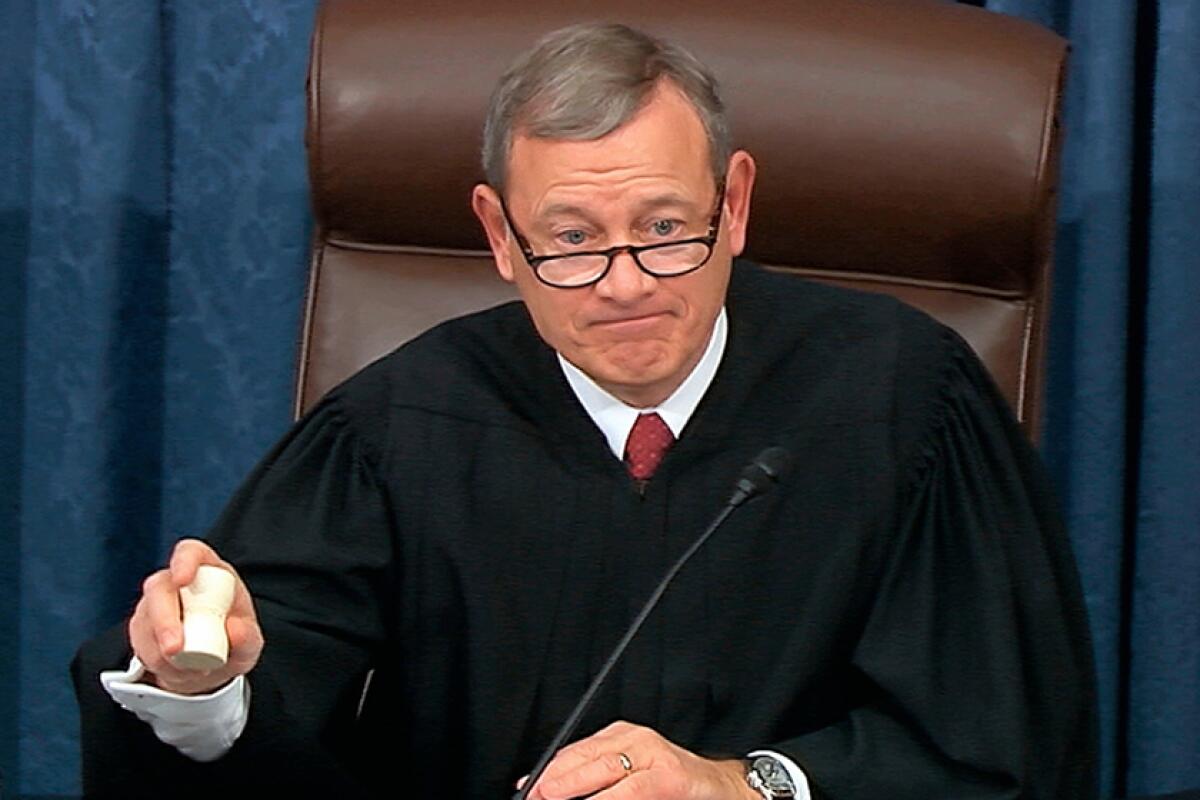

The revelations placed Chief Justice Roberts under considerable institutional pressure. Senate Judiciary Committee Chairman Dick Durbin invited Roberts to testify at a May 2, 2023, hearing focused on Supreme Court ethics. Roberts declined, citing concerns about separation of powers and the importance of preserving judicial independence.
Instead, he provided a statement outlining the ethical principles and practices followed by the justices. Durbin criticized the decision, arguing that congressional oversight and public accountability were important safeguards within the constitutional system.
The disagreement exposed a difficult question about the limits of congressional authority. The Supreme Court is an independent branch of government, but its members exercise enormous public power and are not entirely outside the reach of federal disclosure and recusal requirements.
In November 2023, the Supreme Court announced its first formal code of conduct. The document established ethical principles and standards for the justices, but critics questioned whether it went far enough because it did not establish an independent enforcement mechanism comparable to those governing many other federal judges.
The debate did not end with that announcement. In December 2024, Senate Judiciary Committee Democrats released the findings of a lengthy investigation into Supreme Court ethics. The report discussed undisclosed gifts, travel and potential conflicts of interest involving several justices. Its conclusions reflected the committee majority’s assessment, while the broader debate over the report’s findings and the appropriate standards for the Court continued.
The question of dark money adds another layer to the controversy. Unlike traditional campaign contributions, dark money generally refers to political spending through organizations that are not required to disclose all of their original donors. Such arrangements can make it difficult for the public to determine who ultimately finances campaigns and advocacy efforts.
In the judicial arena, these networks can support organizations involved in researching candidates, promoting legal philosophies, influencing public debate and participating in nomination battles. Their supporters may describe this activity as legitimate political advocacy. Critics argue that the lack of transparency makes it harder to identify potential conflicts and understand the full extent of outside influence.
The issue also extends beyond one political party. In April 2025, a Senate Judiciary subcommittee hearing examined undisclosed political spending and its possible effects on the judicial branch. Senator Sheldon Whitehouse emphasized that anonymous financial networks should concern lawmakers regardless of which political side benefits from them. Witnesses discussed the role of nonprofit organizations, judicial advocacy groups and large financial networks in shaping the legal environment.
Yet identifying a connection between political spending and judicial appointments is not the same as proving that a particular justice has acted improperly. The constitutional system requires judges to decide cases according to law, while the public has a legitimate interest in knowing whether financial relationships create conflicts that should be disclosed or trigger recusal.
That distinction lies at the center of the ongoing dispute involving Roberts and the Supreme Court. The chief justice has repeatedly faced questions about the Court’s ethical standards, while lawmakers have disagreed over whether additional legislation is necessary or whether the judiciary should retain primary responsibility for regulating its own conduct.
For Kennedy, the issue has also involved a broader defense of the Supreme Court’s institutional legitimacy. At a May 2023 hearing, he criticized what he described as politically motivated attacks on the Court and argued that disagreements with judicial decisions should not automatically become accusations of corruption. He acknowledged that disclosure requirements matter, while warning against assuming improper motives without sufficient evidence.
His position illustrates the tension between two responsibilities: protecting judicial independence from political retaliation and ensuring that public institutions remain accountable to the people they serve.
Neither concern can simply be dismissed. A judiciary vulnerable to political pressure would threaten the constitutional separation of powers. A judiciary that fails to address credible ethical concerns, however, risks weakening public confidence in its impartiality.
Ultimately, the verified record does not support the viral account of Kennedy confronting Roberts with a dramatic question about billionaire checks and backroom influence. But the controversy behind that story is far from imaginary. The Senate has held hearings, lawmakers have demanded greater transparency, and the Supreme Court has faced sustained scrutiny over financial disclosure and ethical accountability.
The larger question remains unresolved: how should the United States protect the independence of its highest court while ensuring that the public can trust the institutions responsible for interpreting the Constitution?
That is a serious debate, and it deserves more than an invented confrontation. It requires documented evidence, transparent financial disclosures and a clear understanding of where legitimate political advocacy ends and improper influence begins.
