
David Muir asked Israeli Prime Minister Benjamin Netanyahu a question that went directly to the heart of one of Israel’s gravest intelligence and security failures.
“As prime minister, do you personally bear any responsibility here?”
The question came during an exclusive ABC News interview on November 6, 2023, exactly one month after Hamas-led militants launched their devastating attack on southern Israel.
The attack had overwhelmed Israeli defenses, killed approximately 1,200 people, and resulted in roughly 250 people being taken hostage.
For a government that had invested heavily in intelligence gathering, surveillance technology, and military preparedness, the failure to anticipate and prevent the assault demanded explanation.
Muir wanted more than a general acknowledgment that mistakes had occurred.
He wanted to know whether the country’s highest elected leader accepted personal responsibility.
Netanyahu acknowledged that Israel had failed in its central responsibility to protect its citizens.
But he stopped short of offering an immediate, unqualified admission of his own culpability.
Instead, he promised to answer difficult questions and said responsibility would be examined after the war.

Muir pressed again.
He pointed out that other senior Israeli officials had already acknowledged their responsibility without waiting for a formal investigation.
The exchange revealed a distinction that would remain central to Israeli politics for years.
Acknowledging a national failure is not necessarily the same as accepting personal responsibility for it.
And as subsequent investigations, resignations, and interviews unfolded, that distinction became increasingly consequential.
The November 6 Interview That Put Netanyahu Under Pressure
The interview took place while Israel was conducting military operations in Gaza following the October 7 attacks.
The country was dealing with profound grief, widespread displacement, and urgent questions about the remaining hostages.
Israel’s military campaign had also created a growing humanitarian crisis for Palestinians in Gaza.
Muir questioned Netanyahu about the war, demands for humanitarian pauses, the fate of hostages, and Israel’s plans for Gaza after the fighting.
But one segment focused on what had happened before the attack.
Muir noted that Israel was internationally recognized for its intelligence capabilities.
He referenced evidence indicating that Hamas had prepared its assault over an extended period.
Training footage and the scale of the coordinated operation raised questions about how Israeli authorities had failed to identify the imminent threat.
The anchor asked how Netanyahu’s government had missed the preparations.
Netanyahu did not deny that a serious failure had occurred.
He acknowledged that the government had fallen short of its most basic obligation.
“The first task of government is to protect the people.”
He added that Israel had experienced a major setback because that responsibility had not been fulfilled.
Those remarks were significant.
They recognized the scale of the national failure.
But they did not directly establish what Netanyahu personally believed he should be held accountable for.
Muir recognized the distinction.
And his next question moved directly toward it.
“Do You Personally Bear Any Responsibility Here?”
Muir asked Netanyahu whether he personally bore responsibility for the October 7 failure.
It was a question about leadership, not merely the performance of intelligence agencies.
Netanyahu replied that difficult questions would eventually be asked and that he intended to answer them.
He repeated that the government had failed to protect its people.
But Muir continued.
He observed that Israel’s defense minister, military intelligence chief, and military chief of staff had already acknowledged responsibility.
Those officials had not all insisted that a future investigation must occur before they could accept their part in the failure.
Muir asked whether Netanyahu believed he should do the same.
The prime minister replied:
“Of course, that’s not a question.”
But his answer included an important qualification.
He said the allocation of responsibility would be resolved after the war.
That made the exchange more complicated than a simple refusal.
Netanyahu did not categorically deny responsibility in the interview.
He acknowledged the government’s failure and indicated that questions about responsibility would need answers.
But he deferred a fuller account of his personal role.
That was the distinction Muir’s questions exposed.
And it became central to the public debate over accountability.
The Intelligence Failure Behind the Questions
The October 7 attack raised fundamental questions about Israel’s assessment of Hamas.
Before the assault, Israeli officials had relied heavily on intelligence collection, border surveillance, and assumptions about the militant group’s intentions.
The country’s security system included sophisticated monitoring capabilities.
Yet Hamas-led attackers breached the Gaza border defenses and attacked Israeli communities and military facilities.
The scale and coordination of the operation exposed serious weaknesses.
Subsequent reporting revealed that Israeli intelligence personnel had obtained information describing a potential Hamas assault before October 7.
One important document outlined a plan involving border breaches, attacks on military positions, and the capture of hostages.
Reporting also described warnings from personnel who observed suspicious training and operational activity.
But possessing intelligence about a possible attack is not the same as correctly assessing its likelihood or timing.
Intelligence organizations must evaluate enormous amounts of incomplete and sometimes contradictory information.
The central question was why the available warnings did not generate sufficient defensive preparation.
Investigators also needed to examine how strategic assumptions influenced decisions.
Some Israeli officials had believed Hamas was primarily interested in governing Gaza and securing economic advantages rather than launching a major war.
The October 7 attack demonstrated that those assumptions were dangerously incomplete.
But the responsibility for those assumptions could not be assigned to one institution without examining the relevant decision-making process.
Military intelligence, domestic security agencies, operational commanders, and political leaders all held different responsibilities.
That complexity became central to Netanyahu’s argument for delaying individual judgments.
His critics argued that complexity did not remove the prime minister’s responsibility for the government’s overall security policy.
Senior Security Officials Acknowledge Their Failures
Muir’s follow-up question became particularly significant because several senior officials had already accepted responsibility.
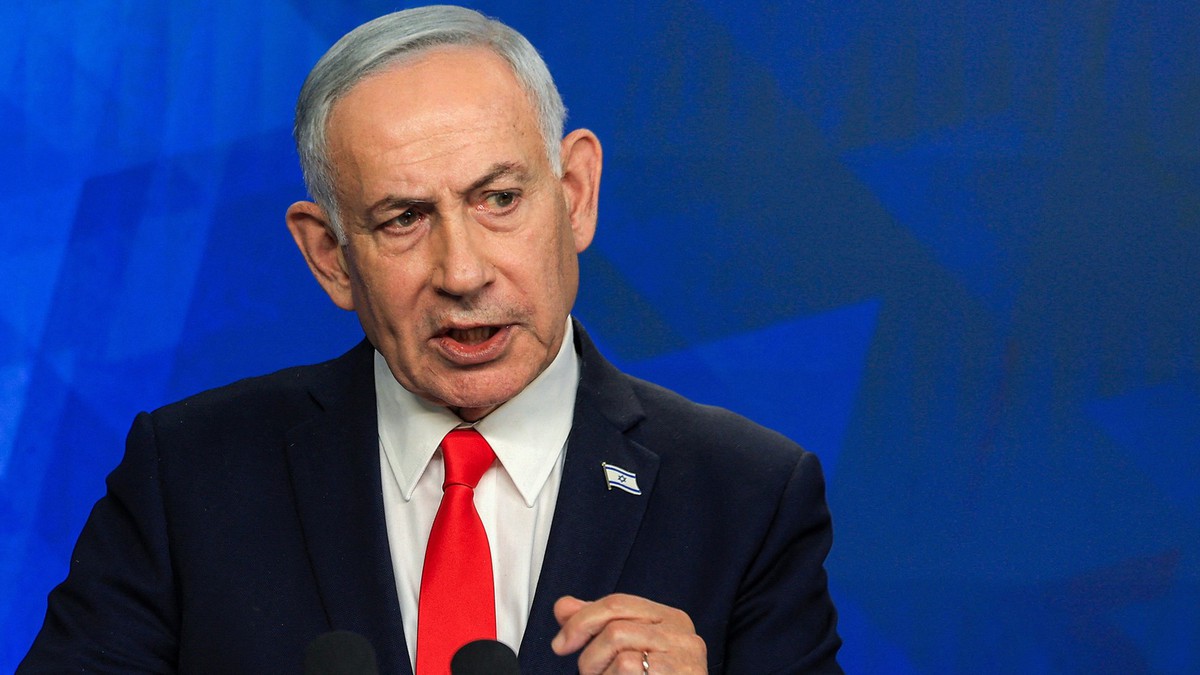
Israeli military leaders acknowledged that the armed forces had failed to protect civilians.
Senior intelligence officials also recognized failures in threat assessment and preparation.
The head of the Shin Bet domestic security service accepted responsibility for the agency’s failure to anticipate the attack.
The military chief of staff acknowledged the army’s responsibility for the breakdown.
The head of military intelligence also accepted responsibility.
These acknowledgments did not establish the full legal or operational responsibility of each official.
But they demonstrated a willingness to recognize institutional failure while investigations remained incomplete.
Over time, some senior security figures resigned or left their positions.
Their departures intensified questions about political accountability.
If military and intelligence leaders could acknowledge responsibility and face professional consequences, should elected political leaders do the same?
Supporters of Netanyahu argued that the prime minister’s responsibility differed from that of operational commanders.
They also maintained that wartime leadership required continuity.
Critics responded that political leaders establish strategy, appoint senior officials, and ultimately oversee national security policy.
The disagreement extended beyond individual reputations.
It concerned how a democratic government should distribute accountability after a catastrophic security failure.
Muir’s question captured that institutional dilemma in one direct exchange.
Netanyahu’s Initial Response Becomes a Continuing Controversy
Netanyahu’s hesitation to make an immediate personal admission became an ongoing source of political criticism.
He argued that a comprehensive investigation should examine the events leading to October 7.
He also maintained that certain inquiries should be conducted after the war rather than during active military operations.
That position had supporters.
Some believed that wartime investigations could distract senior officials from urgent military and security responsibilities.
Others argued that a commission established during the conflict might lack access to all relevant information.
But critics questioned why a basic acknowledgment of responsibility required postponement.
They distinguished between accepting political accountability and determining precise operational failures.
A prime minister, they argued, could acknowledge responsibility for the performance of the government without waiting for investigators to assign fault in detail.
Netanyahu’s public statements did not consistently satisfy those critics.
At different points, he emphasized intelligence failures, the actions of senior security officials, and broader strategic circumstances.
He also defended decisions made before October 7.
That created a prolonged argument over the meaning of responsibility.
Was he acknowledging failure while leaving its causes open?
Or was he shifting the focus away from decisions taken by the political leadership?
The available record allows those interpretations to be examined.
But it does not support treating every refusal to give an immediate answer as proof of personal wrongdoing.
The relevant evidence concerns specific warnings, decisions, and actions taken before the attack.
The War Complicates the Question of Accountability
The dispute unfolded alongside the continuing consequences of the October 7 attack and Israel’s subsequent military operations.
Israeli families demanded answers about why their communities had been left vulnerable.
Families of hostages sought information about efforts to secure their relatives’ release.
Palestinians in Gaza faced immense suffering as military operations devastated infrastructure and civilian life.
These events placed Israeli political leadership under extraordinary pressure.
Netanyahu’s government argued that defeating Hamas and protecting Israel from further attacks were immediate priorities.
Critics questioned the military strategy, the treatment of hostages, and the humanitarian consequences of the campaign.
Those debates involved separate questions from the original intelligence failure.
But they were connected through the issue of leadership.
The same government responsible for responding to October 7 was being asked to explain why the attack had not been prevented.
Netanyahu maintained that wartime decisions required attention and continuity.
His critics argued that accountability could not be postponed indefinitely.
The timing of an official inquiry therefore became a political dispute in its own right.
An investigation held during the war might encounter operational and security restrictions.
An investigation delayed until afterward risk losing public confidence.
And any inquiry would need sufficient independence to examine decisions across the political, military, and intelligence systems.
That concern would become increasingly prominent as the years passed.
The Fight Over an Independent Commission
Calls for an independent state commission of inquiry became a major feature of the accountability debate.
In Israel, such commissions can examine matters of substantial public importance.
Their institutional independence is intended to strengthen confidence in findings about government conduct.
Advocates argued that an investigation into October 7 needed the authority to examine both operational failures and political decision-making.
They wanted investigators able to question senior officials and review sensitive government records.
Netanyahu resisted demands for the specific independent commission sought by critics.
Instead, he supported alternative arrangements involving a different appointment structure.
That disagreement was significant.
The authority to determine an inquiry’s composition can affect public perceptions of its independence.
Critics argued that a government whose actions were under investigation should not control the selection of investigators.
Netanyahu and his supporters maintained that the investigation must be balanced and capable of examining a broad historical context.
They argued that an inquiry should consider earlier governments’ policies as well as decisions made immediately before October 7.
The competing positions produced another unresolved question.
How can a state conduct a credible investigation when the subjects of that investigation disagree about who should conduct it?
Muir’s 2023 interview had focused on the prime minister’s willingness to accept responsibility.
By 2026, the debate had expanded to the institutional mechanisms required to establish that responsibility.
A 2026 Interview Brings a More Explicit Acknowledgment
Nearly two and a half years after the October 7 attack, Netanyahu revisited the question in a CBS 60 Minutes interview aired in May 2026.
The discussion included why senior security officials had left their positions while Netanyahu remained prime minister.
The prime minister challenged the significance of some officials’ statements about responsibility.
He suggested that the term required greater precision.
But in a portion of the interview included in the full transcript, Netanyahu acknowledged that responsibility extended across the political and security leadership.
He said that everyone bore some responsibility, including the prime minister.
That was more explicit than his answer to Muir in November 2023.
But it was still framed as shared responsibility rather than an exclusive admission of personal fault.
Netanyahu emphasized that the failures involved political leaders, military commanders, and security officials.
He also argued that the country’s response after October 7 deserved attention.
His position was that the period following the attack should be evaluated alongside the failures that preceded it.
Critics maintained that later military decisions could not erase responsibility for the original catastrophe.
Supporters argued that the government’s response was relevant to any complete assessment of Netanyahu’s leadership.
The May 2026 remarks did not settle the debate.
They did, however, provide an important update to the record.
Netanyahu had moved beyond a purely deferred discussion of responsibility and explicitly included the prime minister within the leadership that bore some share of it.
That development makes it inaccurate to describe his position as though nothing had changed since the 2023 ABC interview.
But the wider disagreement over the extent and consequences of his responsibility remained unresolved.
New Reporting Raises Questions About Earlier Warnings
The question of what Netanyahu knew before October 7 returned to public attention in September 2026.
Reporting examined claims that warnings about a possible Hamas attack had reached Israeli political or intelligence circles before the assault.
The allegations involved information reportedly communicated through regional diplomatic channels.
Former officials offered differing accounts concerning which warnings had been received and whether they reached the relevant security authorities.
The disagreement was important because it concerned the distribution of intelligence within the government.
A warning delivered to a political office does not necessarily establish that the prime minister personally received and understood it.
Likewise, a warning communicated to intelligence personnel does not automatically prove that political leaders were adequately informed.
Investigators would need to reconstruct the sequence of communications.
They would have to determine when information arrived, who received it, how it was assessed, and what actions followed.
Netanyahu has disputed suggestions that he knowingly disregarded clear warnings of the imminent attack.
Some former security officials have challenged his account of the information available to him.
Those disagreements remain relevant to any independent inquiry.
They demonstrate why the question Muir asked in 2023 cannot be resolved solely through a politician’s statement about responsibility.
It requires evidence about what happened before the attack.
Why Muir’s Follow-Up Still Matters
Muir’s November 2023 interview remains notable for the distinction he drew between two kinds of accountability.
Netanyahu was prepared to acknowledge that the government had failed.
He was less willing to provide an immediate, precise account of his personal responsibility.
Muir did not accuse him of personally planning or knowingly allowing the attack.
He asked whether the prime minister accepted responsibility for a failure that occurred under his leadership.
When Netanyahu answered in general terms, Muir returned to the same question.
He then introduced a comparison with senior security officials who had already acknowledged responsibility.
That follow-up was important because it prevented a broad statement about government failure from replacing the narrower question of personal accountability.
The exchange also demonstrated the limits of a television interview.
A journalist can ask a direct question.
The interviewee can offer a qualified answer.
But the reporter cannot compel a confession or determine legal responsibility during a broadcast.
That requires evidence and, where appropriate, formal investigation.
Muir’s questions therefore established what Netanyahu was prepared to acknowledge publicly at that moment.
They did not establish the final distribution of responsibility for October 7.
Subsequent interviews, resignations, investigations, and document disclosures added context.
But none eliminated the need for an independent examination of the relevant decisions.
The Unanswered Question Behind October 7
The ABC interview took place on November 6, 2023.
It was not a new confrontation recorded in November 2026.
Its significance lies in the persistence of the question it raised.
Israel’s government had failed to prevent a devastating attack despite extensive military and intelligence capabilities.
Senior security officials accepted responsibility for failures within their institutions.
Netanyahu acknowledged the national failure while initially deferring a fuller allocation of personal responsibility.
By May 2026, he had more explicitly included himself among leaders who bore some responsibility.
But that acknowledgment did not settle the dispute over what decisions contributed to the catastrophe.
The unanswered questions remain concrete.
What intelligence was available before October 7?
Which officials received the warnings?
Why were dangerous assumptions about Hamas allowed to persist?
Were defensive preparations adequate?
And which political, military, and intelligence decisions contributed most directly to the failure?
Those questions cannot be answered through political loyalty or opposition.
They require documented evidence and scrutiny of officials across the relevant institutions.
Netanyahu’s supporters argue that accountability must encompass the wider security establishment and the country’s subsequent response.
His critics argue that ultimate political authority carries a responsibility that cannot be deferred indefinitely.
An independent investigation would need to examine both arguments rather than assume either conclusion.
David Muir’s question did not resolve responsibility for October 7. It exposed how difficult it was for Israel’s prime minister to define his own share of it.
The subsequent record demonstrates that the question remained relevant long after the interview ended.
And the prime minister’s later acknowledgment of shared responsibility makes the original exchange an important part of a continuing historical debate.
The central issue is not whether Netanyahu was momentarily uncomfortable answering David Muir.
It is whether Israel can establish a credible, evidence-based account of why its defenses failed and what responsibility belongs to each level of leadership.
That is the accountability question behind the interview.
And it remains more consequential than any single televised answer.
