
The Senate hearing turned unexpectedly tense when Kirsten Gillibr@nd looked toward Pete Heg.s.e.t.h and questioned whether his military experience had adequately prepared him to lead the Pentagon.
Heg.s.e.t.h had been defending his approach to military leadership, arguing that the armed forces needed greater accountability, operational discipline, and a renewed emphasis on combat readiness.
Gillibr@nd listened, then delivered a remark that brought the confrontation to an abrupt halt.
“Mr. Secretary, this job isn’t a participation trophy handed to somebody because a president likes what he says on television.”
Several people turned toward Heg.s.e.t.h, anticipating an immediate response to the unusually personal criticism.
But he remained quiet.
He straightened the papers resting beside his microphone, opened a black folder, and removed a document containing the Pentagon’s financial audit history.
Across the first page appeared a heading that changed the direction of the discussion.
NINE CONSECUTIVE YEARS WITHOUT A CLEAN AUDIT.

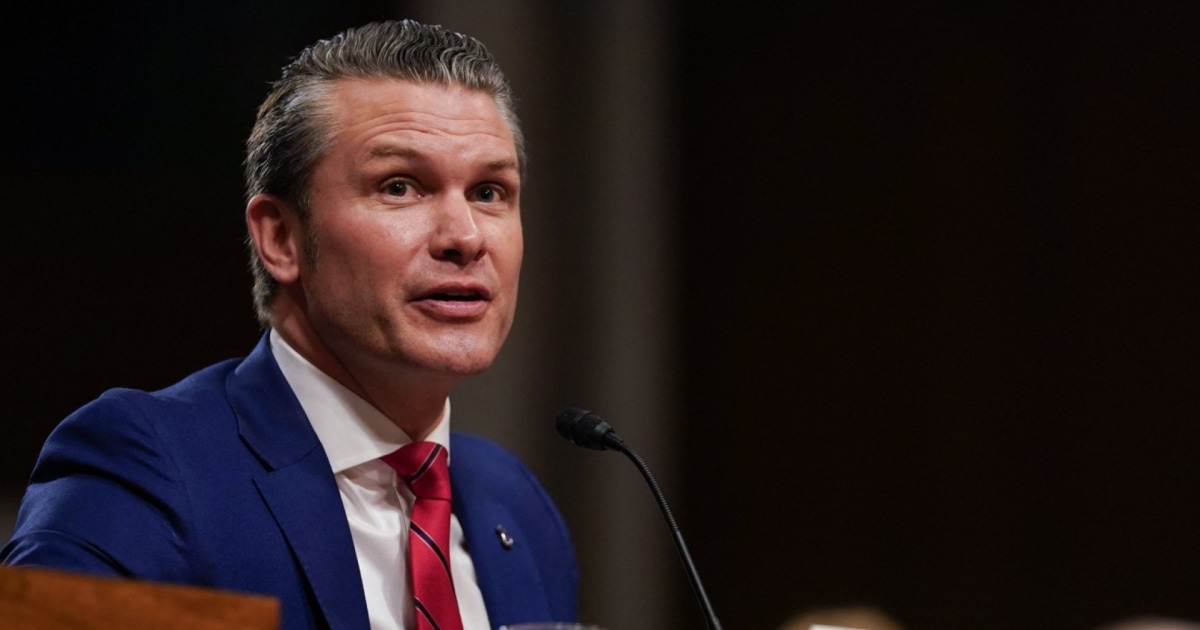
Heg.s.e.t.h placed the document beneath the cameras, then looked toward the New York senator.
“Senator Gillibr@nd, if we’re going to talk about qualifications and accountability, shouldn’t we examine the results produced by the institutions we’re responsible for overseeing?”
Gillibr@nd responded that the Senate Armed Services Committee had a responsibility to scrutinize the Pentagon and that oversight did not make individual senators responsible for every management decision.
Heg.s.e.t.h acknowledged the distinction, then pointed toward the audit history to explain why the department’s financial management remained such a serious concern.
The Pentagon began undergoing full department-wide financial statement audits in fiscal year 2018, after years of difficulty preparing its sprawling financial systems for examination.
The first audit did not produce a clean opinion, and the department continued facing significant obstacles in subsequent years.
By fiscal year 2024, the Pentagon had received its seventh consecutive disclaimer of opinion, meaning auditors could not obtain sufficient evidence to support a clean assessment.
The Government Accountability Office identified ineffective financial systems and processes as major obstacles to establishing the reliability of the department’s consolidated statements.
Heg.s.e.t.h pointed toward the findings, arguing that the situation demonstrated how difficult it had become to track assets and validate financial information.
“Senator, we’re talking about the department responsible for defending the United States. Its financial records need to be trustworthy.”
Gillibr@nd agreed that financial accountability was essential, but emphasized that repeated audit problems predated Heg.s.e.t.h’s leadership and involved complicated systems developed over decades.
Heg.s.e.t.h acknowledged the historical problems, then moved toward another page containing the most recent audit results.
The Pentagon failed to obtain a clean audit opinion for fiscal year 2025, marking the eighth consecutive unsuccessful department-wide assessment.
Auditors identified twenty-six material weaknesses and two significant deficiencies in internal controls over financial reporting during that period.
The findings concerned weaknesses that could interfere with the department’s ability to produce reliable financial information and manage certain risks effectively.
But the next page contained information that made the exchange more uncomfortable for both participants.
In November 2026, the Pentagon received its ninth consecutive unfavorable department-wide audit outcome, continuing the pattern of financial management difficulties.
That result occurred during Heg.s.e.t.h’s own tenure as defense secretary, giving Gillibr@nd a direct opportunity to challenge his claims about institutional reform.
“Mr. Secretary, you’ve just described nine failed audits,” Gillibr@nd said. “The ninth occurred while you were responsible for leading the department.”
Heg.s.e.t.h acknowledged that fact, explaining that inherited problems remained his responsibility to address even when their origins preceded his appointment.
Gillibr@nd leaned forward and asked whether accepting responsibility required more than pointing toward the failures of previous administrations or congressional committees.
The room grew quieter as Heg.s.e.t.h returned to the financial documents, preparing to explain how he intended to address the weaknesses identified by auditors.
He argued that the department needed stronger asset tracking, more reliable financial systems, and clearer accountability for organizations responsible for maintaining records.
Gillibr@nd agreed that those changes mattered, but questioned whether the Pentagon had established measurable milestones for completing the necessary reforms.
The committee’s financial adviser explained that an unmodified audit opinion required sufficient, appropriate evidence supporting the department’s financial statements.
The adviser emphasized that an unsuccessful audit did not automatically mean every dollar had disappeared or that all reported financial activity was fraudulent.
A disclaimer of opinion instead meant auditors could not obtain enough reliable evidence to express an opinion on the statements as a whole.
Heg.s.e.t.h acknowledged the clarification, then argued that the inability to establish reliable financial records remained a serious operational and management problem.
Gillibr@nd agreed, but warned that public discussion should not confuse accounting weaknesses with proven criminal wrongdoing or documented losses of specific amounts.
The adviser confirmed that distinction, emphasizing that audit findings required examination of particular systems, transactions, and controls before responsibility could be assigned.
The exchange had become more precise, but Heg.s.e.t.h still had another subject prepared.
He opened the second section of his folder, revealing information concerning military recruitment challenges during the years preceding his appointment.
Several branches of the armed forces had struggled to meet recruiting objectives during the early 2020s, raising concerns about personnel readiness.
The Army experienced particularly significant recruiting shortfalls in fiscal years 2022 and 2023, prompting changes in outreach, preparation, and recruitment strategies.
Heg.s.e.t.h argued that recruitment difficulties reflected a need to strengthen public confidence in military service and maintain a clear focus on operational requirements.
“Senator, when the military struggles to attract enough qualified people, that’s not a communications problem we can simply talk away.”
Gillibr@nd responded that recruitment trends reflected multiple factors, including labor market competition, medical eligibility, public perceptions, and changing opportunities available to young Americans.
She questioned whether attributing the difficulties primarily to social policies ignored the evidence concerning the broader recruiting environment.
The committee’s personnel adviser explained that recruiting challenges could not responsibly be assigned to a single cause without examining demographic, economic, and institutional conditions.
The adviser also noted that different services had experienced different recruitment outcomes, making sweeping conclusions about the entire military potentially misleading.
Heg.s.e.t.h acknowledged that complexity, but argued that military leaders still needed to ensure service members understood the institution’s mission and expectations.
Gillibr@nd agreed that readiness mattered, then asked whether policies concerning equal opportunity and professional treatment necessarily conflicted with effective combat preparation.
The secretary responded that every military initiative should be evaluated according to whether it strengthened readiness, unit cohesion, and operational effectiveness.
Gillibr@nd acknowledged the standard, then questioned whether the department had conducted sufficiently detailed evaluations before altering policies affecting personnel.
The confrontation shifted toward another disagreement that had featured prominently during Heg.s.e.t.h’s actual January 2025 confirmation hearing.
Gillibr@nd had challenged his previous statements about women serving in combat roles, arguing that his views risked undermining confidence among military personnel.
Heg.s.e.t.h had defended his commitment to maintaining rigorous standards and emphasized his respect for service members fulfilling demanding operational responsibilities.
In the exchange, Gillibr@nd returned to that controversy and asked whether combat readiness required excluding qualified individuals based on assumptions about gender.
Heg.s.e.t.h responded that military standards needed to reflect genuine operational requirements and that personnel decisions should prioritize mission effectiveness.
Gillibr@nd argued that qualified service members could meet demanding standards without being judged according to broad assumptions about their suitability.
The personnel adviser explained that combat readiness involved physical requirements, technical proficiency, training, leadership, and the ability to perform assigned missions.
The adviser emphasized that policy assessments needed evidence concerning operational performance rather than unsupported generalizations about entire groups of service members.
Heg.s.e.t.h acknowledged the importance of evidence, then returned to the question of whether the Pentagon was measuring its own readiness accurately.
He placed a third document beneath the cameras, describing problems involving delayed procurement, expensive defense programs, and difficulties tracking equipment and inventory.
The department’s enormous operational responsibilities required coordination among military services, civilian organizations, contractors, and complex financial management systems.
Heg.s.e.t.h argued that inefficiencies could interfere with readiness when equipment maintenance, procurement delays, and administrative weaknesses affected military operations.
Gillibr@nd agreed that mismanagement could reduce effectiveness, but questioned whether the department was distinguishing problems inherited from previous leadership from failures occurring under its current management.
Heg.s.e.t.h acknowledged that his department needed to demonstrate progress rather than merely explain why longstanding problems were difficult to resolve.
Then he returned to his personal military background, placing his service history beside the audit findings.
Heg.s.e.t.h served in the Army National Guard and deployed to Guantanamo Bay, Iraq, and Afghanistan during his military career.
His experience included service in operational environments far removed from the congressional hearing rooms where national security policy was often debated.
He had earned two Bronze Stars and the Combat Infantryman Badge, reflecting his military service during overseas deployments.
Heg.s.e.t.h argued that experience serving alongside military personnel shaped his understanding of operational responsibilities and the demands placed on service members.
“Senator, I served in Iraq and Afghanistan. I know what it means when decisions made in Washington reach the people wearing the uniform.”
Gillibr@nd acknowledged his service, but questioned whether combat experience automatically established the skills needed to manage one of the federal government’s largest organizations.
The secretary agreed that military leadership and administrative management required different capabilities, while emphasizing that operational experience remained relevant to understanding the department’s mission.
Gillibr@nd pointed toward the financial records and asked how his experience translated into improvements in accounting systems, procurement oversight, and contractor accountability.
Heg.s.e.t.h responded that those improvements required qualified management teams, measurable objectives, and sustained attention to the department’s financial weaknesses.
The chairman asked whether Heg.s.e.t.h believed members of the Armed Services Committee had personally caused the Pentagon’s repeated audit failures.
The secretary answered that the department’s financial difficulties involved management responsibilities extending across multiple administrations and military organizations.
But he maintained that Congress also possessed significant oversight authority and could influence accountability through legislation, appropriations, and committee investigations.
Gillibr@nd acknowledged that responsibility, then emphasized that lawmakers could investigate management failures without personally administering the Pentagon’s accounting systems.
The financial adviser agreed, explaining that executive officials were responsible for operating the department while Congress exercised legislative and oversight functions.
The distinction mattered because a senator could demand accountability for failures without possessing direct authority over the internal systems producing those failures.
Heg.s.e.t.h accepted the clarification, then asked whether Congress should demand clear explanations when military leaders failed to achieve financial management goals.
Gillibr@nd agreed, emphasizing that committee oversight should focus on documented weaknesses, responsible officials, and practical plans for remediation.
The discussion had now reached the point where both participants were being challenged by the same underlying evidence.
The Pentagon’s financial management problems had persisted through multiple administrations, but Heg.s.e.t.h now held direct executive responsibility for addressing them.
Congress had repeatedly examined those problems, yet the department still had not achieved the clean audit opinion required under its long-term objectives.
Heg.s.e.t.h looked toward Gillibr@nd and returned to the original insult that had disrupted the beginning of the hearing.
“Senator, you started by asking whether I deserved a participation trophy. I think the people paying for this department deserve something better than participation.”
He paused, then pointed toward the audit results.
“They deserve systems that work, money that can be accounted for, and leaders who don’t hide behind explanations when the results fall short.”
Gillibr@nd responded that she agreed with the demand for results, but insisted that the same standard now applied directly to Heg.s.e.t.h’s leadership.
The secretary acknowledged that obligation, then asked whether Congress would support reforms designed to improve financial reporting, strengthen oversight, and clarify management responsibilities.
Gillibr@nd answered that reforms needed detailed plans, credible performance measures, and evidence that the proposed changes would improve the department’s operations.
The hearing room remained quiet as the chairman invited the financial adviser to explain the department’s legally established audit objective.
Congress had required the Pentagon to achieve an unmodified audit opinion by the end of 2028, creating a deadline for addressing persistent financial management weaknesses.
The adviser emphasized that meeting the deadline would require reliable records, effective internal controls, and sustained cooperation across numerous department organizations.
Heg.s.e.t.h nodded, then pointed toward the requirement as evidence that the department could not continue indefinitely without demonstrating measurable improvement.
Gillibr@nd acknowledged that objective, but questioned whether the current administration had provided enough information to establish that the Pentagon was on track.
The secretary responded that financial management improvements needed to be tracked through milestones, corrective actions, and the performance of individual components.
The adviser noted that the 2026 audit had also identified progress, including a majority of component entities obtaining favorable opinions for the first time.
That development suggested improvement in certain parts of the department, even though the overall financial statements still lacked a clean opinion.
Gillibr@nd acknowledged the progress, then emphasized that success within individual components did not eliminate the need to resolve department-wide weaknesses.
Heg.s.e.t.h agreed, returning to the importance of achieving reliable consolidated financial reporting rather than simply highlighting favorable portions of the audit.
The exchange had begun with a personal challenge concerning qualifications and political loyalty.
But the financial records had forced both participants to confront a more difficult question about institutional responsibility and measurable results.
Gillibr@nd argued that the secretary needed to demonstrate how his leadership would address problems that had persisted long before he assumed office.
Heg.s.e.t.h maintained that Congress should also examine whether its oversight and legislative decisions were helping the Pentagon resolve those longstanding weaknesses.
The chairman asked both participants to identify one concrete measure that could demonstrate meaningful progress before the department’s audit deadline.
Gillibr@nd proposed regularly published milestones addressing significant weaknesses, supported by independent verification of completed corrective actions.
Heg.s.e.t.h emphasized more reliable financial systems, improved asset tracking, and clear accountability for organizations responsible for producing accurate records.
The adviser explained that those priorities were related and that achieving a clean audit would require coordinated progress across several areas.
Gillibr@nd then returned to the ninth failed audit, asking whether the secretary would accept responsibility if the department missed its established 2028 target.
Heg.s.e.t.h responded that department leadership needed to answer for its performance and that failures required explanations supported by evidence and corrective action.
The chairman signaled that the hearing was approaching its conclusion, but Heg.s.e.t.h requested permission to make one final statement.
He placed his military service record beside the financial audit documents, visually connecting the two subjects that had dominated the confrontation.
“Senator, my military service doesn’t make me immune from criticism, and your years on this committee don’t make you responsible for every Pentagon accounting problem.”
He paused, then looked toward Gillibr@nd without raising his voice.
“But neither of us should be satisfied with another year of promises when service members and taxpayers are depending on actual results.”
Gillibr@nd acknowledged the sentiment, then asked whether the secretary would commit to providing the committee with measurable progress reports rather than general assurances.
Heg.s.e.t.h responded that meaningful oversight required reliable information and that the department should be prepared to explain how it was addressing documented weaknesses.
The chairman then invited the secretary to ask the final question he had been preparing throughout the exchange.
Heg.s.e.t.h returned to the page containing the Pentagon’s audit history and the requirement to achieve a clean opinion by 2028.
“Senator Gillibr@nd, if the standard is results rather than participation, will you hold me accountable for meeting that deadline—and help ensure Congress measures every defense secretary by the same standard?”
Gillibr@nd responded that rigorous oversight should apply to every administration, emphasizing that the department’s financial responsibilities did not change with political leadership.
Heg.s.e.t.h acknowledged that answer, then closed the folder that had occupied the committee’s attention throughout the hearing.
The chairman concluded the exchange without establishing that Gillibr@nd had delivered the alleged insult or that Heg.s.e.t.h had made the quoted rebuttal during an actual proceeding.
The historical Pentagon audit record nevertheless revealed a substantial and persistent financial management challenge that had survived multiple presidential administrations.
The department’s seventh unsuccessful audit occurred in fiscal year 2024, followed by an eighth in 2025 and a ninth in 2026.
Those results did not establish that every reported dollar had been stolen or that specific officials had committed fraud.
They demonstrated that the department had not yet provided sufficient reliable evidence to support a clean opinion on its consolidated financial statements.
Gillibr@nd’s congressional role involved oversight, legislation, and scrutiny of defense policy rather than direct management of the Pentagon’s accounting systems.
Heg.s.e.t.h’s military service provided operational experience, but his responsibilities as defense secretary also required executive leadership over financial systems, procurement, and administrative performance.
The confrontation illustrated why neither professional background nor political criticism could independently settle questions about institutional accountability.
The decisive measure remained whether the Pentagon could correct its weaknesses and demonstrate meaningful financial management improvements by the established deadline.
The most important question was not who deserved a participation trophy, but who would take responsibility for ensuring that America’s defense department finally produced financial records auditors could trust.
