
President Donald Trump’s promise to stop Wall Street investors from competing with American families for single-family homes has created an unusual political debate.
The administration argues that large financial institutions should not enjoy an advantage over ordinary homebuyers.
Many Democrats agree with that objective.
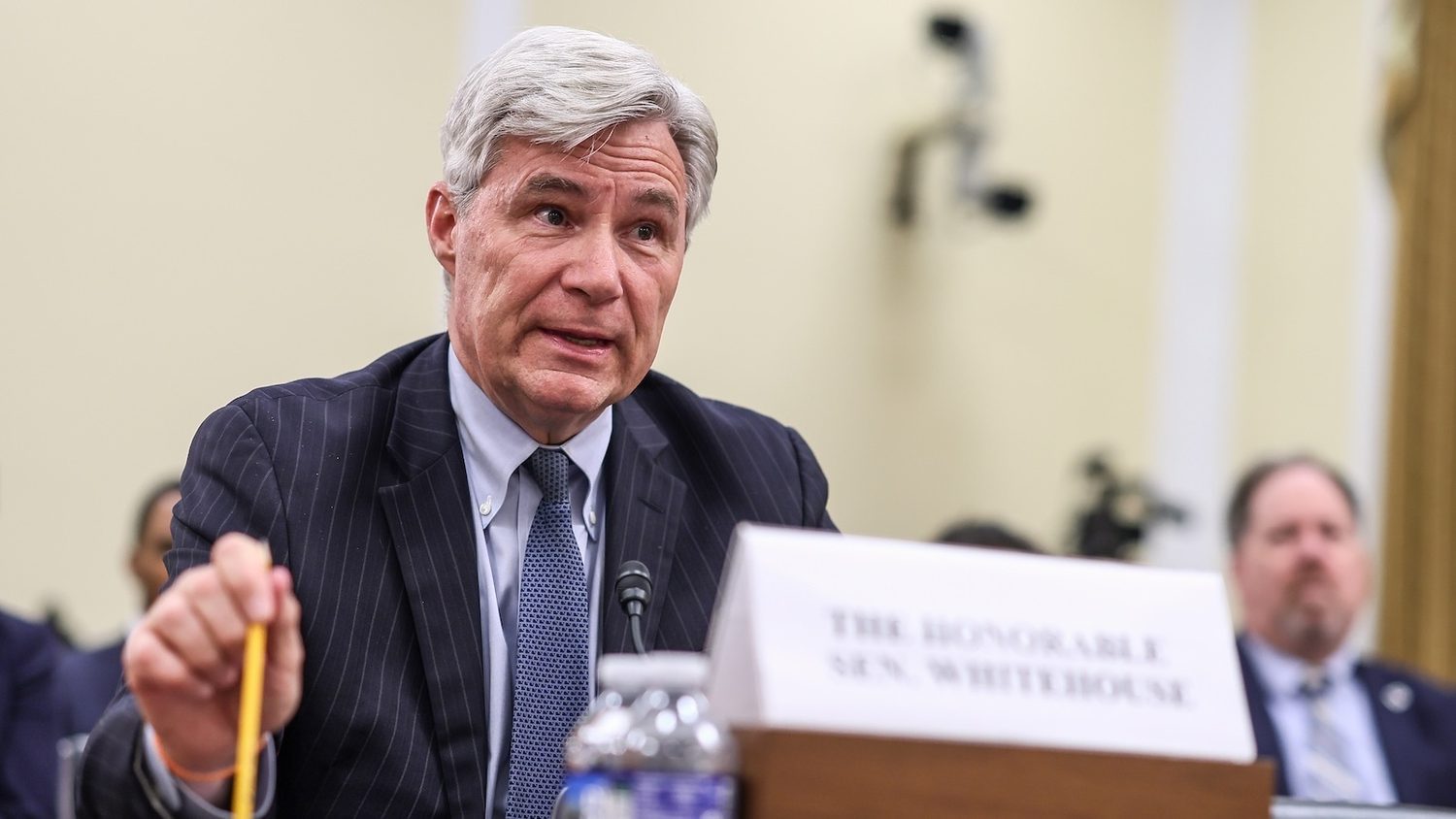
But Senator Sheldon Whitehouse has identified a serious question about how the restrictions will work.
What happens when investors do not buy the house directly, but instead acquire the mortgage attached to it?
That distinction has become central to the controversy over Trump’s housing policy.
Whitehouse and five Democratic colleagues raised the issue in a March 9, 2026, letter to Federal Housing Finance Agency Director Bill Pulte.
They warned that existing mortgage-sale practices involving Fannie Mae and Freddie Mac could allow institutional investors to acquire financial control over distressed homeowners’ loans.
Those investors might ultimately obtain the underlying properties through foreclosure or other transactions.
The senators argued that this possibility conflicted with the administration’s stated objective of protecting homeowners from powerful institutional buyers.
Their warning was not a finding that every investor involved in such transactions had acted unlawfully.
Nor did it establish that Trump’s executive order had been deliberately designed to benefit Wall Street.
It identified a potential weakness in the mechanisms intended to deliver the policy’s promised results.
And the issue became more complicated after Congress enacted the 21st Century ROAD to Housing Act in July 2026.
That legislation included restrictions on purchases by large institutional investors.
But it also contained exemptions for certain transactions, including some newly constructed rental properties and substantially rehabilitated homes.
The law is scheduled to bring its major purchase restrictions into effect on January 7, 2027.
Republicans who support the housing initiative can point to a concrete effort to protect prospective homeowners.
Critics such as Whitehouse argue that implementation and enforcement will determine whether the restrictions achieve their purpose.
The alleged Senate-floor confrontation between Whitehouse and Senator Tom Cotton has not been independently verified.
There is no authenticated exchange establishing that the two men argued face-to-face over the specific loophole described in viral commentary.
But the underlying policy dispute is real.
A housing law can prohibit one method of acquiring a property while leaving other legally permitted paths available.
Whether those paths undermine the law’s purpose is now an important question for federal regulators.
Trump’s January Order Targets Corporate Homebuyers
On January 20, 2026, Trump signed Executive Order 14376, titled Stopping Wall Street from Competing with Main Street Homebuyers.
The administration described the policy as an effort to preserve homeownership opportunities for American families.
Its central argument was that large institutional investors sometimes possess financial advantages when purchasing single-family homes.
Corporations may be able to make cash offers, purchase multiple properties, or acquire homes through specialized investment structures.
Individual buyers often face different constraints.
They may depend on mortgage approval, down payments, and financing conditions.
In competitive markets, those differences can affect which offers sellers accept.
Trump’s order directed federal agencies to examine their housing-related programs and limit certain transactions benefiting large institutional investors.
It instructed officials to review relevant financing and property-disposition practices.
The administration also called for legislation placing restrictions into federal law.
The White House presented the initiative as part of a broader effort to improve housing affordability.
But an executive order is not identical to a comprehensive statutory ban.
Its implementation depends on the authority already available to federal agencies.
It also depends on definitions and administrative procedures.
That distinction became important as lawmakers examined how the policy would operate.
A restriction on direct purchases does not necessarily determine how every mortgage, foreclosure, rental development, or ownership restructuring must be treated.
And that is where Whitehouse’s concerns began.
Whitehouse Identifies the Mortgage-Sale Problem
Whitehouse joined Senators Jack Reed, Jeff Merkley, Adam Schiff, Ron Wyden, and Tina Smith in sending a letter to FHFA Director Bill Pulte.
The senators focused on mortgage-note sales conducted through Fannie Mae and Freddie Mac.
These government-sponsored enterprises purchase or guarantee large volumes of American residential mortgages.
They also have procedures for selling certain delinquent or previously delinquent mortgage loans.
Such sales can transfer the financial rights associated with the loans to new purchasers.
Institutional investors may participate in those transactions.
The senators warned that large investors could obtain distressed mortgages at discounted prices.
If a borrower subsequently lost the property, the investor might ultimately acquire the home.
That outcome could increase institutional ownership of existing housing stock.
The concern was particularly significant because the executive order sought to prioritize families rather than large investors in housing-related transactions.
Whitehouse and his colleagues argued that federal housing agencies should not facilitate arrangements that undermine that objective.
They called on the FHFA to reform mortgage-note sales.
Their proposed changes included excluding institutional investors from certain loan pools and giving community-oriented purchasers earlier access.
They also emphasized foreclosure prevention.
The letter did not claim that every loan sale resulted in foreclosure.

It argued that existing practices created risks requiring regulatory attention.
That distinction matters.
A mortgage purchaser may modify a loan, provide relief, or pursue other permitted servicing outcomes.
But the senators wanted stronger protections against transactions that could shift homes from individual families to institutional ownership.
Their central concern was the relationship between federal policy and the incentives created by mortgage markets.
The Financial Detail That Changes the Debate
Consider two hypothetical transactions.
In the first, a large investment company purchases a single-family home directly from a seller.
That transaction may fall within the restrictions created by the new housing law, depending on the investor and property involved.
In the second, an investor purchases a distressed mortgage secured by a single-family home.
The investor does not necessarily acquire ownership of the house immediately.
Instead, it acquires rights associated with the mortgage.
Those rights may include receiving payments or participating in legally permitted servicing and foreclosure processes.
If the borrower defaults and the property is eventually transferred, the investor could acquire an ownership interest.
The legal treatment of that transaction may differ from an ordinary home purchase.
This is the distinction Whitehouse wanted regulators to examine.
A policy focused on direct acquisitions may not automatically control every financing transaction capable of producing an eventual change in ownership.
But that does not mean purchasing a mortgage is itself improper.
Mortgage markets depend on the transfer and management of loans.
Such transactions can provide liquidity and influence the availability of housing finance.
The challenge is distinguishing legitimate financial activity from arrangements that may frustrate the intended protections for homeowners.
Whitehouse’s proposed response was stronger regulatory oversight.
He wanted the FHFA to examine whether its existing procedures gave institutional investors opportunities inconsistent with the president’s stated policy.
The letter was especially notable because it used Trump’s own executive order as the basis for challenging the administration.
Rather than rejecting the goal, the senators demanded more consistent implementation.
A July Law Changes the Legal Landscape
The dispute expanded when the 21st Century ROAD to Housing Act became law on July 11, 2026.
The legislation included provisions intended to limit purchases of single-family homes by large institutional investors.
It also addressed other housing policy issues.
The investment restrictions established a statutory framework rather than relying solely on the January executive order.
Under the law, certain investors meeting the definition of a large institutional investor generally cannot purchase additional covered single-family homes once the restriction takes effect.
One important threshold concerns control of at least 350 single-family homes.
The definition also includes requirements concerning the investor’s business activities and financial relationships.
Not every individual who owns rental property falls within that category.
And not every company purchasing a house is automatically prohibited from doing so.
The law includes exclusions and exceptions that determine its practical coverage.
That structure makes the details particularly important.
An investor’s property count can affect whether the restriction applies.
The type of home can matter.
The purpose of the purchase can matter.
And certain transactions remain permitted even when the buyer otherwise meets the definition of a large institutional investor.
Supporters argue that these distinctions protect legitimate housing development and financing activity.
Critics question whether the exceptions could become too broad.
The disagreement concerns the design and implementation of the law rather than a confirmed finding of abuse.
The 350-Home Threshold Raises Important Questions
The statutory threshold is one of the most consequential elements of the new restrictions.
An investor meeting the relevant criteria and controlling at least 350 covered homes may fall within the prohibition.
But determining control is not always straightforward.
Real estate investment companies frequently use subsidiaries, partnerships, investment funds, and other ownership arrangements.
A single corporate group may hold properties through multiple entities.
The law addresses direct and indirect investment control rather than relying exclusively on the name recorded on a property deed.
That is intended to make ownership structures more transparent.
But implementation still requires reliable information about affiliated entities and financial interests.
Regulators must decide whether particular relationships establish investment control under the statute.
They also need procedures for identifying transactions that cross the threshold.
The October 2026 Treasury proposal began clarifying how those provisions would operate.
These details matter because sophisticated investors may use complicated structures for ordinary business purposes.
Those same structures can make enforcement more difficult.
A subsidiary should not automatically escape the law simply because it has a separate legal name.
At the same time, an investor should not be classified as violating the law without evidence that the statutory conditions apply.
The effectiveness of the restrictions will depend on that distinction.
Build-to-Rent Creates One of the Biggest Exceptions
One of the most debated exemptions concerns homes built specifically for rental use.
The law permits certain purchases made through qualifying build-to-rent programs.
Supporters argue that restricting such developments could reduce construction of new housing.
A company financing an entire rental community may provide homes that would not otherwise be built.
Under that interpretation, the exemption can support housing supply rather than reduce opportunities for existing homeowners.
But critics raise another question.
If large institutional investors remain able to own substantial numbers of newly constructed single-family rentals, how much will the law change the overall structure of the housing market?
The answer depends on the transactions involved.
A newly built home intended for rental use is different from an existing home purchased out of the owner-occupied market.
The Treasury Department’s October proposal recognized that distinction.
It proposed requirements intended to ensure that qualifying properties were newly constructed and had not previously been occupied by homeowners.
The proposal also examined documentation needed to establish eligibility.
Those conditions were designed to limit the exemption’s use for acquiring existing owner-occupied housing.
But the rules were still subject to the regulatory process.
Their practical effect will depend on final requirements and enforcement.
The build-to-rent exception therefore presents a policy tradeoff.
It may support new rental supply.
But it also allows institutional ownership to continue in a defined segment of the single-family housing market.
The Renovate-to-Rent Exception Creates Another Test
The law also permits certain acquisitions involving substantial rehabilitation.
Under the renovate-to-rent exception, qualifying investors may purchase homes requiring significant repairs to structural or essential building systems.
The statute includes a requirement for improvements amounting to at least 15 percent of the relevant purchase price.
The Treasury proposal sought to clarify the standards.
It distinguished substantial rehabilitation from cosmetic improvements or ordinary maintenance.
The proposed framework also required the correction of material deficiencies.
Supporters of the exception argue that investors can restore homes that might otherwise remain vacant or unsafe.
Renovation can increase the usable housing supply.
It can also require financing and management resources that individual homebuyers may not possess.
But the exception raises enforcement questions.
What qualifies as a sufficiently serious deficiency?
How should improvement costs be documented?
And how can regulators distinguish genuine rehabilitation from transactions structured primarily to qualify for an exemption?
The Treasury proposal addressed these questions through documentation and eligibility requirements.
But those rules must be applied consistently.
A genuine renovation project may advance housing availability.
An improperly classified transaction could undermine the restriction’s purpose.
That is why the precise financial terms matter.
A broad promise to stop corporate purchases cannot substitute for examining which purchases remain legally permitted.
Existing Corporate-Owned Homes Are Not Automatically Sold
Another important provision concerns homes acquired before July 11, 2026.
The legislation does not generally require institutional investors to sell properties purchased before that date.
That means existing corporate-owned housing portfolios are not automatically dismantled by the new law.
Large landlords may continue owning many properties already in their portfolios.
The statute also contains provisions involving certain reorganizations of existing ownership.
Supporters argue that mandatory divestment could disrupt property markets and create uncertainty for tenants.
They contend that restrictions on future acquisitions can protect prospective buyers without requiring immediate restructuring of existing ownership.
Critics respond that preserving large established portfolios means institutional ownership will remain an important feature of some local markets.
That is a meaningful limitation.
A law can reduce future purchases without reversing decades of previous acquisitions.
The consequences may also differ geographically.
Institutional investors account for a relatively modest share of single-family rental homes nationally.
But ownership is concentrated in certain metropolitan areas.
That concentration can make institutional purchases more significant for buyers in particular communities.
A nationwide average therefore cannot fully describe the potential local effects.
The relevant question is whether the restrictions change competition in the markets where large investors have been particularly active.
That outcome will take time to measure.
Why the Impact on Home Prices Remains Uncertain
Trump’s policy is designed to improve homeownership opportunities.
But housing affordability depends on more than institutional investment.
Mortgage interest rates influence monthly payments.
Construction costs affect the price of new homes.
Local zoning rules can limit supply.
Household incomes and population changes also influence demand.
Large investors may contribute to competition in particular markets.
But reducing their purchases does not automatically resolve a national shortage of affordable housing.
The Government Accountability Office reported that large institutional investors owned approximately 450,000 single-family rental homes as of June 2022.
That represented around 3 percent of the national single-family rental market.
The figure indicates that institutional ownership was a relatively small share nationally.
But the same research found meaningful concentration in some areas.
That distinction is central to understanding the policy.
Restrictions may have greater effects in markets where institutional buyers represent a significant share of purchases.
Their effects may be smaller in areas where such investors are uncommon.
Other market conditions will also matter.
If lower investor demand makes existing homes more accessible to individual buyers, the policy may help prospective homeowners in affected markets.
But if restrictions substantially reduce financing for new rental construction, they could also affect rental housing supply.
Researchers will need transaction data, price trends, and local comparisons to determine the results.
The existence of a loophole concern does not establish that the policy will fail.
Nor does passage of the law establish that housing affordability has been solved.
Whitehouse’s Demand Goes Beyond Criticizing Trump
The March letter is particularly interesting because Whitehouse and his colleagues were not simply opposing the administration’s housing goal.
They were urging federal officials to enforce that goal more consistently.
Their argument was that mortgage-note sales could produce outcomes conflicting with the executive order’s stated intent.
They requested specific reforms to the FHFA’s procedures.
Those proposals included first-look opportunities for public-interest buyers and measures to reduce avoidable foreclosures.
The senators also wanted stronger reporting about what happened to borrowers after their mortgages were sold.
Such reporting could help determine whether particular transactions resulted in loan modifications, continued homeownership, or foreclosure.
That information is essential for evaluating the consequences of note-sale programs.
An investor purchasing a distressed mortgage might help resolve a troubled loan.
Another transaction might lead to the homeowner losing the property.
Without reliable data, policymakers may struggle to distinguish the outcomes.
Whitehouse’s concern therefore involved both legal coverage and public accountability.
The question was whether federal housing institutions were using their authority consistently with the policy of prioritizing families.
That is a more specific issue than claiming every corporate investment in housing is improper.
It is also a question regulators can investigate through transaction records and program rules.
Tom Cotton and the Limits of the Claimed Confrontation
The viral framing presents Senator Tom Cotton as defending Trump’s crackdown while Whitehouse exposes a major loophole during a dramatic Senate-floor exchange.
The broader debate over Trump’s housing policy is documented.
But the alleged direct confrontation between Cotton and Whitehouse has not been established through an authenticated transcript or video.
It would therefore be misleading to describe Cotton as being silenced, embarrassed, or forced to concede a specific point during that supposed encounter.
The policy arguments can be examined without inventing such a scene.
A defender of Trump’s approach could argue that the order and subsequent legislation represent meaningful restrictions on institutional purchases.
That argument has a factual basis in the existence of the executive order and statutory prohibition.
A critic could respond that broad exceptions and complicated financing transactions require additional safeguards.
That argument has a factual basis in the enacted law, proposed regulations, and Whitehouse’s March letter.
Neither position alone determines whether the policy will succeed.
The result depends on implementation, enforcement, and measurable changes in housing markets.
The useful confrontation is therefore between competing policy claims, not an unverified televised exchange.
The October Rules Make Enforcement the Central Issue
On October 22, the Treasury Department announced proposed regulations implementing the institutional-investor restrictions.
The proposal appeared in the Federal Register the following day.
It addressed definitions, exemptions, and enforcement mechanisms.
The department sought to clarify which entities qualify as large institutional investors.
It also examined documentation needed for the build-to-rent and renovate-to-rent exceptions.
Those details matter because the law’s effective date is approaching.
Beginning January 7, 2027, covered investors generally will face restrictions on additional single-family home purchases unless an exemption applies.
But enforcement will depend on information.
Regulators must be able to identify covered investors.
They must understand relevant ownership structures.
And they must determine whether a transaction satisfies an exception.
The Treasury proposal offered a framework for those determinations.
It did not eliminate every possible dispute.
Market participants may challenge how the rules apply to particular acquisitions.
Regulators may need to investigate disputed ownership relationships.
And Congress may eventually evaluate whether the rules require amendment.
The federal government will also need to examine the relationship between the statutory purchase prohibition and mortgage-related transactions involving Fannie Mae and Freddie Mac.
Those are not necessarily identical areas of law.
But both affect the broader objective of protecting opportunities for homeownership.
The January Deadline Could Become a Major Housing Test
The next significant deadline is January 7, 2027.
That is when the statutory restrictions on covered institutional purchases are scheduled to take effect.
For regulators, the priority will be implementing the law consistently.
For investors, the challenge will be determining which transactions remain permitted.
For prospective homeowners, the question will be whether the restrictions produce meaningful changes in competition.
And for Congress, the issue will be whether the policy addresses the problems lawmakers intended to solve.
The incoming Democratic majority may also examine how the administration has implemented the housing restrictions.
Whitehouse’s March letter provides a starting point for that oversight.
But an investigation would still need to establish whether particular practices violated applicable requirements or undermined the policy’s stated purpose.
The mere existence of exemptions is not proof of evasion.
Exemptions are written into the law for specific reasons.
The important question is whether they are being applied as intended.
Similarly, the existence of institutional mortgage purchases does not automatically establish that homeowners are being unlawfully displaced.
Those outcomes require evidence.
But the possibility of indirect acquisitions is a legitimate subject for examination.
The Question Behind the Wall Street Loophole Warning
Trump’s housing initiative created a policy goal that attracted interest across party lines.
Large institutional investors should not be able to use their financial advantages to exclude ordinary families from opportunities to purchase homes.
The administration pursued that objective through an executive order.
Congress subsequently enacted legislation imposing restrictions on certain large investors.
But the new legal framework contains important limitations.
It does not require divestment of existing portfolios.
It allows certain build-to-rent developments.
It permits qualifying renovation programs.
And complicated mortgage and ownership transactions raise additional implementation questions.
Whitehouse and his colleagues highlighted one of those questions months before the statutory restrictions were scheduled to take effect.
They warned that mortgage-note sales could transfer financial control over distressed homeowners’ loans to major investors.
Their proposed solution was stronger federal oversight and changes to the way government-sponsored enterprises sell those loans.
The issue cannot be resolved through political declarations alone.
It requires examining the mechanics of mortgage transactions, the limits of the statutory prohibition, and the actual outcomes for homeowners.
The alleged Cotton–Whitehouse Senate-floor confrontation remains unverified.
But the policy dispute is substantial.
A law intended to protect homebuyers must be evaluated not only by the purchases it prohibits, but also by the transactions it continues to permit.
That does not automatically make an exemption a loophole.
Some exceptions may encourage construction and rehabilitation.
Others may require closer scrutiny to prevent conduct inconsistent with the law’s purpose.
The distinction will matter as regulators implement the new requirements.
For families struggling to buy homes, the practical outcome will be more important than the political argument.
Will fewer institutional investors compete for existing houses?
Will more homes become available to owner-occupants?
Will new construction continue?
And will distressed homeowners receive meaningful protection when their mortgages are transferred?
Those questions can be answered only through evidence collected after implementation.
The central challenge is whether the federal government can translate its promise to prioritize families into rules that function as intended across the complicated American housing market.
Trump’s executive order established the policy.
Congress supplied statutory restrictions.
Whitehouse identified a possible weakness in related mortgage-market practices.
Now the test is whether those measures work together.
Because protecting homeownership requires more than restricting one kind of transaction.
It requires understanding every legally significant path by which financial control over a home can change hands.
