
The Warning That Put Robert F. Kennedy Jr. Under Congressional Scrutiny
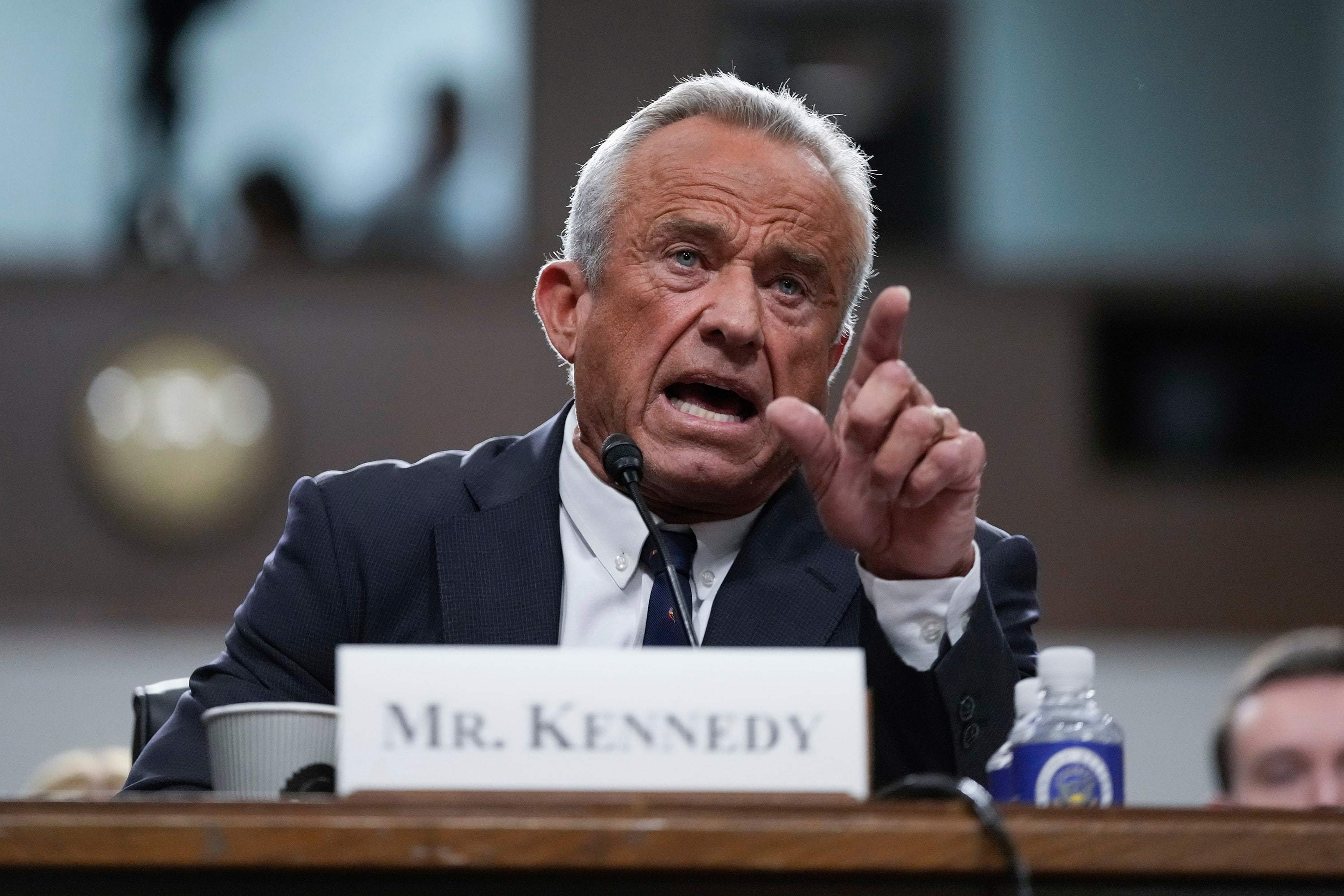
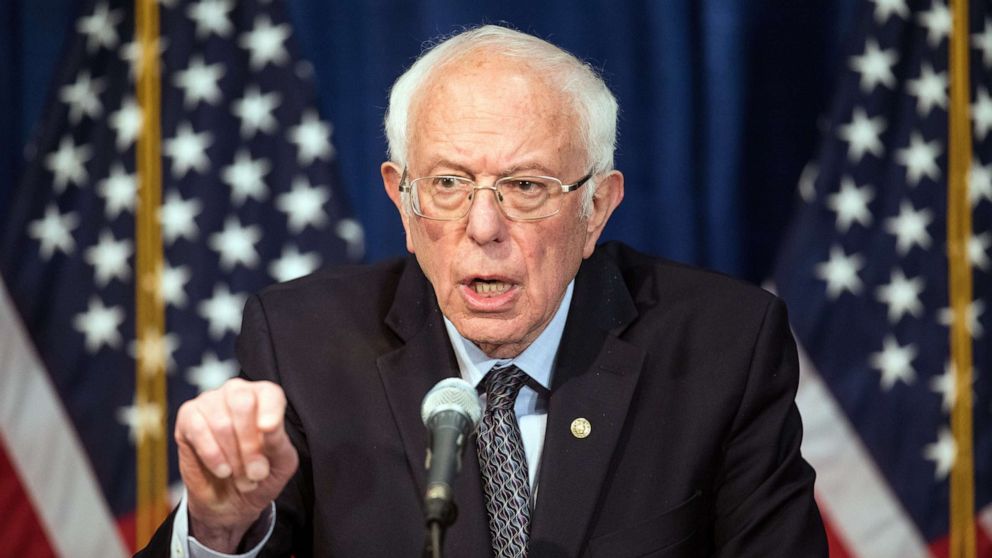
Senator Bernie Sanders delivered a pointed warning on November 18, 2026, that could signal a major confrontation with Health and Human Services Secretary Robert F. Kennedy Jr.
Speaking at a Washington news conference, the Vermont independent outlined his priorities as Democrats prepared to take control of Congress.
But one of his sharpest criticisms concerned the man responsible for overseeing America’s federal health agencies.
Sanders accused Kennedy of embracing conspiracy theories and steering national health policy in a direction that had undermined public confidence in vaccination.
The accusation carried particular weight because the United States was experiencing its worst measles resurgence in decades.
Federal health officials had just acknowledged that the country had lost the measles elimination status it achieved in 2000.
Sanders suggested that Kennedy’s leadership deserved serious congressional examination.
“That is certainly one area that needs investigation,” Sanders declared.
The warning was not an announcement that Kennedy had been convicted of misconduct or that a new hearing had already been scheduled.
Instead, it signaled how Sanders might use his expected leadership of the Senate Health, Education, Labor and Pensions Committee.
With Democrats preparing to assume congressional majorities, the political circumstances surrounding Kennedy’s department were changing dramatically.
The administration would face lawmakers increasingly willing to demand documents, question senior officials, and investigate controversial health policy decisions.
And the numbers behind America’s measles resurgence made the dispute impossible to dismiss as an ordinary partisan disagreement.
According to the Centers for Disease Control and Prevention, the United States had recorded 5,838 confirmed measles cases during 2026 as of November 19.
That figure represented a major escalation from the 2,289 cases recorded throughout 2025.
But the most consequential development involved more than the growing case count.
America had officially lost a public health designation maintained for more than a quarter-century.
That development transformed Sanders’s warning into a confrontation over scientific credibility, federal responsibility, and the future of vaccination policy.
The Measles Numbers That Changed the National Debate
For decades, the United States maintained measles elimination status through widespread vaccination, surveillance, and rapid responses to imported infections.
Elimination did not mean that measles cases could never appear in the country.
It meant that continuous domestic transmission had been interrupted under established public health criteria.
The United States achieved that milestone in 2000.
But sustained transmission eventually returned, and international public health authorities determined that the country no longer met the elimination standard.
On November 17, 2026, the CDC publicly acknowledged the loss.
The announcement came during a year of widespread outbreaks across multiple states.
By November 19, federal officials had recorded 43 new outbreaks during 2026.
Approximately 96 percent of confirmed cases were associated with outbreaks.
Those figures demonstrated that the resurgence was not limited to isolated infections.
Instead, measles was spreading through communities where conditions allowed sustained transmission.
The disease is highly contagious and can cause serious complications, including pneumonia and brain inflammation.
Young children and people with weakened immune systems can face particularly severe consequences.
The CDC continues to identify vaccination as the most effective method of preventing measles.
Two recommended doses of the measles, mumps, and rubella vaccine provide strong protection against infection.
However, vaccination coverage has declined in some communities, creating conditions in which the virus can spread more easily.
The resurgence developed through several interacting factors, including gaps in immunization and ongoing chains of transmission.
Those conditions cannot be attributed automatically to one federal official or a single administrative decision.
Nevertheless, federal leadership plays an important role in vaccination recommendations, public communication, outbreak monitoring, and coordination with state health departments.
That responsibility placed Kennedy’s decisions under increasing scrutiny.
Sanders argued that the secretary’s statements and policy changes needed to be examined alongside the deterioration in the country’s measles situation.
The question was not simply whether outbreaks occurred during Kennedy’s tenure.
It was whether federal decisions had contributed to weakened protections, reduced public confidence, or unnecessary delays in responding to preventable disease.
That question would require evidence reaching beyond the headlines.
And Sanders had already begun pursuing such evidence.
Sanders Had Already Opened an Investigation Into Kennedy’s Vaccine Decisions
The November warning was not Sanders’s first attempt to scrutinize Kennedy’s leadership.
On July 29, 2025, Sanders joined seven Democratic members of the Senate HELP Committee in announcing an investigation into Kennedy’s vaccine advisory committee changes.
Their concerns centered on the Advisory Committee on Immunization Practices, commonly known as ACIP.
The committee plays a major role in evaluating scientific evidence and advising the CDC on vaccination recommendations.
Kennedy had removed the committee’s existing members and appointed replacements.
He defended the overhaul as necessary to address concerns about conflicts of interest and restore confidence in federal vaccine policy.
Critics argued that replacing experienced advisers could weaken scientific independence and introduce ideological considerations into vaccine recommendations.
Sanders and his Democratic colleagues demanded information about the dismissals and the qualifications of the replacement members.
They also questioned whether the changes were consistent with established scientific standards.
The investigation followed an earlier request for bipartisan scrutiny addressed to Republican Senator Bill Cassidy.
Cassidy, a physician, had previously expressed concerns about Kennedy’s vaccine positions during his confirmation process.
Sanders argued that the committee changes created serious risks at a time when vaccination confidence was already under pressure.
The July investigation demonstrated that Democratic concerns had moved beyond public criticism.
Lawmakers were seeking documents and explanations about identifiable administrative decisions.
Those requests established a potential foundation for additional oversight when congressional leadership changed.
But the underlying dispute remained contested.
Kennedy’s supporters defended the advisory committee overhaul as part of a broader effort to reform federal health institutions.
They argued that public trust required greater transparency about conflicts of interest and the evidence behind official recommendations.
Critics countered that reforms should strengthen scientific review rather than undermine confidence in established vaccines.
The central issue concerned whether Kennedy’s changes improved the integrity of the advisory process or weakened its independence.
That question could not be resolved through political accusations alone.
It required examining appointments, qualifications, internal communications, published recommendations, and the scientific evidence considered by federal officials.
Sanders’s November comments suggested that those records could become part of a much wider inquiry.
A Separate Investigation Opens Another Front Against RFK Jr.
Just days before Sanders’s news conference, two Democratic senators announced a separate inquiry involving Kennedy’s past statements to Congress.
On November 12, Senators Ron Wyden and Angela Alsobrooks sought documents concerning Kennedy’s 2019 visit to Samoa.
Their investigation followed reporting by the Associated Press and The Guardian about Kennedy’s statements during his confirmation process.
Kennedy had previously described his trip as unrelated to vaccination.
However, journalists identified correspondence suggesting that vaccine-related matters had been involved.
The senators questioned whether Kennedy had provided Congress with an accurate account of his activities.
Their inquiry focused partly on Children’s Health Defense, the organization Kennedy formerly chaired.
The senators requested records concerning his travel and communications involving the organization.
The historical circumstances were especially sensitive because Samoa experienced a devastating measles outbreak in 2019.
That outbreak killed 83 people, most of them children.
The tragedy occurred amid dangerously low vaccination rates and widespread public concern about vaccine safety.
The investigation does not establish that Kennedy caused the outbreak or committed a criminal offense.
It examines whether his statements to lawmakers accurately described his earlier activities.
The distinction matters because congressional oversight requires reliable testimony.
If officials provide materially inaccurate information, lawmakers may be unable to evaluate their qualifications or administrative decisions properly.
Kennedy’s supporters have challenged criticism of his advocacy and defended his broader commitment to investigating vaccine-related concerns.
But the senators’ request created a concrete documentary dispute.
What did Kennedy communicate before and during his Samoa visit?
How did those communications compare with his later statements to Congress?
And could authenticated records resolve the apparent contradiction?
Unlike an anticipated future hearing, this inquiry had already begun.
Its existence demonstrated that Democratic scrutiny of Kennedy was becoming broader and more organized.
Sanders’s expected committee leadership could create an additional avenue for examining federal vaccination policy.
Together, the developments raised the prospect of sustained congressional oversight extending into 2027.
Kennedy’s Defense Creates a More Complicated Political Fight
Kennedy’s position has been more complicated than the claim that he opposes every vaccination effort.
The Health and Human Services secretary has publicly supported measles vaccination while advocating changes to broader vaccine policy and federal advisory structures.
The CDC’s November 17 statement explicitly identified MMR vaccination as the most effective protection against measles.
It also stated that Kennedy and CDC Director Erica Schwartz continued recommending the vaccine.
That acknowledgment matters when evaluating Sanders’s criticism.

Kennedy’s support for measles vaccination does not eliminate questions about his other statements or administrative decisions.
But it prevents an accurate account from portraying him as categorically rejecting the MMR vaccine.
The administration has emphasized efforts to improve outbreak response and strengthen cooperation with state health departments.
The CDC reported approximately $100 million in additional funding to support prevention, surveillance, and responses to vaccine-preventable diseases.
Federal officials also described assistance provided to states experiencing significant outbreaks.
Those actions form part of the administration’s defense of its public health response.
Sanders’s argument concerns whether other decisions have undermined those efforts.
The controversy has also involved the administration’s support for reconsidering the presentation and formulation of childhood vaccines.
Kennedy has defended examining alternatives to combination vaccines and reviewing existing recommendations.
Independent medical research has consistently found no causal association between the MMR vaccine and autism.
Major medical organizations continue to support vaccination according to evidence-based schedules.
That scientific record is important because the debate extends beyond administrative procedure.
Statements that undermine confidence in safe and effective vaccination can influence whether families seek protection against preventable diseases.
But establishing the precise effect of particular statements requires careful research.
Changes in vaccination behavior can reflect multiple influences, including access, political beliefs, misinformation, and community-specific conditions.
A congressional investigation could examine how federal communications affected those factors.
It could also assess whether the administration’s reforms improved transparency or created confusion about established scientific recommendations.
Neither outcome should be assumed before the evidence is examined.
The competing claims therefore establish a substantial oversight question rather than a predetermined finding of misconduct.
The Incoming Senate Committee Could Demand Answers
The November 3 midterm elections altered the political balance in Congress.
Democrats gained control of both chambers, creating new opportunities to examine decisions made during the Trump administration.
Sanders is expected to chair the Senate HELP Committee when the next Congress begins.
That position would give him an influential role in shaping hearings, requesting information, and setting oversight priorities concerning federal health policy.
At his November 18 news conference, Sanders outlined a broad legislative agenda involving healthcare, wages, prescription drug prices, and labor rights.
But his comments about Kennedy introduced a more confrontational dimension.
He signaled that the committee could examine the Health and Human Services secretary’s leadership during the measles resurgence.
Such an investigation could address several distinct issues.
Lawmakers could request documents explaining the replacement of vaccine advisory committee members.
They could examine scientific recommendations developed after those appointments.
They could also review public health communications and federal coordination during major measles outbreaks.
Another subject could involve the relationship between administration decisions and changes in vaccination confidence.
That examination would require distinguishing correlation from causation.
A measles outbreak occurring during a particular administration does not automatically establish that its policies caused the outbreak.
But federal decisions can still be evaluated against available scientific evidence and established public health responsibilities.
The committee could also examine whether officials communicated risks accurately and responded promptly to emerging problems.
Those questions would have consequences for future recommendations and federal oversight structures.
However, the political process would remain complicated.
President Trump retains executive authority, and Republicans can challenge Democratic investigations through legislative and political means.
Potential hearings would also require decisions about witnesses, requested documents, and the scope of committee inquiries.
As of November 21, Sanders had signaled his interest in investigating Kennedy’s policies, but no specific new hearing date was established by his announcement.
That limitation is important.
An expressed intention to investigate is not equivalent to completed findings or a formal determination of wrongdoing.
The existing investigations provide a foundation for further examination.
The next stage will depend on what evidence lawmakers obtain and how they choose to use their authority.
The Most Consequential Question Is What Federal Leadership Actually Changed
The dispute between Sanders and Kennedy arrives at a moment when American public health officials face a measurable national problem.
The CDC has documented thousands of confirmed measles cases and acknowledged the loss of the country’s elimination status.
Kennedy’s department has defended its outbreak response and continued recommending MMR vaccination.
Sanders has questioned whether the secretary’s broader policies and public statements have undermined confidence in established medical science.
Those positions cannot be reconciled merely by comparing political quotations.
The underlying records will determine whether specific administrative decisions weakened vaccine oversight or delayed effective public health responses.
The July 2025 investigation into advisory committee appointments provides one line of inquiry.
The November 2026 investigation concerning Kennedy’s Samoa testimony provides another.
The CDC’s outbreak data establishes the scale and progression of measles transmission.
Together, those materials create a basis for evaluating what federal officials knew, what decisions they made, and what consequences followed.
The most important development may involve internal documentation that has not yet been publicly examined.
Committee correspondence could clarify why particular scientific advisers were removed.
Agency records could reveal how vaccination recommendations were developed.
Communications surrounding outbreak responses could show whether officials acted consistently with the available evidence.
Those findings would matter regardless of which political party controlled the investigation.
An inquiry that establishes weaknesses could inform changes to federal policy.
An inquiry that supports particular administrative decisions could clarify where criticism exceeded the evidence.
Either result would be more consequential than a televised exchange dominated by personal accusations.
For Sanders, the political opportunity is substantial.
He is preparing to lead a committee with direct responsibilities involving federal health programs and public accountability.
For Kennedy, the potential challenge is equally significant.
His department may face demands for explanations covering appointments, scientific decisions, and the handling of a major vaccine-preventable disease resurgence.
But the consequences extend far beyond the two politicians.
Families, healthcare professionals, schools, and local health departments are confronting the practical effects of measles transmission.
Those communities need reliable information, accessible vaccination, and coordinated outbreak responses.
The political dispute becomes meaningful only when it addresses those responsibilities.
The CDC’s November acknowledgment that America had lost measles elimination status provided a concrete national benchmark.
The country had achieved that designation through sustained vaccination and public health coordination.
Regaining it will require renewed control of continuous transmission.
That objective depends on scientific evidence, effective public communication, and cooperation across government institutions.
Sanders’s warning therefore raises a question with implications far beyond congressional politics.
Did Robert F. Kennedy Jr.’s leadership strengthen America’s ability to prevent measles, or did specific decisions make an already dangerous public health situation harder to control?
The answer requires examining evidence rather than assuming guilt or dismissing legitimate scrutiny.
And with Democrats preparing to exercise greater congressional oversight, that examination could become one of Washington’s most consequential public health disputes.
The immediate result is already clear.
A national measles crisis has moved from the domain of disease surveillance into the center of congressional accountability.
The next important answers will come from the documents, testimony, and findings that investigators can establish.
Those findings will determine whether the administration’s approach withstands scrutiny and what changes may be necessary to restore public confidence.
For the families affected by measles, the essential question is not which politician delivers the stronger warning.
It is whether federal leadership can demonstrate that its decisions protect Americans against a disease that modern vaccination can prevent.
