
NANCY MACE PRESSES TIM WALZ OVER MINNESOTA’S BILLIONS IN FRAUD AS CONGRESSIONAL HEARING TURNS CONFRONTATIONAL
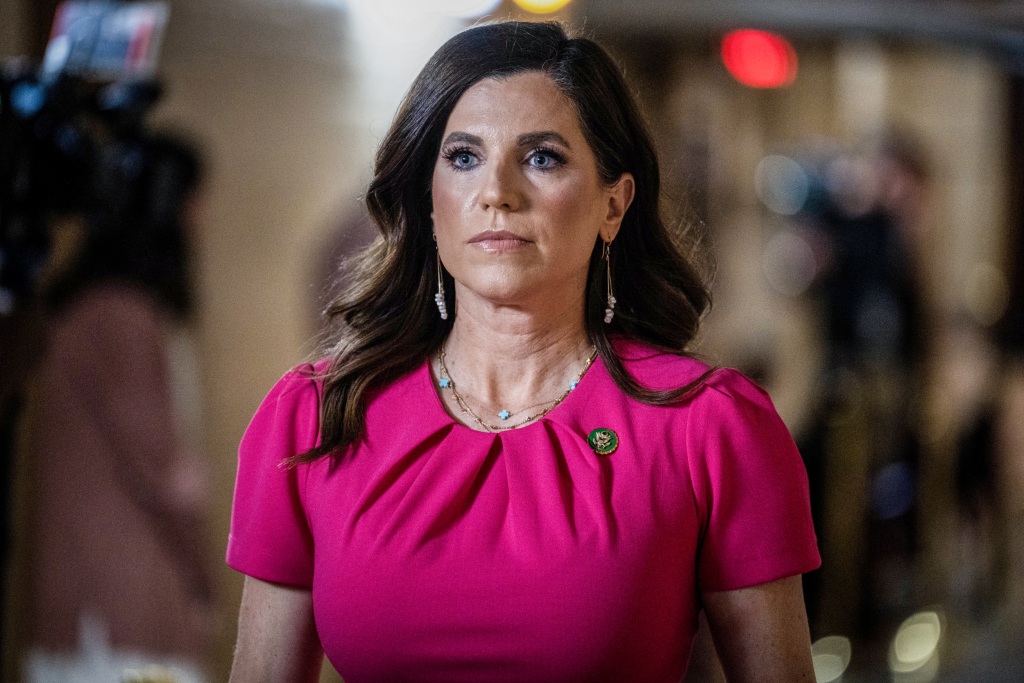
WASHINGTON — Minnesota Governor Tim Walz faced an increasingly difficult round of questioning, when Representative Nancy Mace challenged his administration’s handling of widespread fraud involving taxpayer-funded social services.
The confrontation took place during a House Oversight and Government Reform Committee hearing examining allegations of extensive financial abuse in Minnesota’s public assistance programs.
Mace, a Republican from South Carolina, focused her questioning on the dramatic increase in spending on autism-related services and the state’s responsibility for monitoring public funds.
Walz, a Democrat who appeared alongside Minnesota Attorney General Keith Ellison, defended his administration while facing accusations from Republican lawmakers that officials had failed to respond adequately to repeated warnings.
The exchange became particularly contentious when Mace pressed the governor about a reported 34,200 percent increase in autism-related spending between 2017 and 2024.
“What percentage increase is that?” Mace asked.
Walz responded, “I’m not here to be your prop.”
Mace immediately challenged him.
“Are you governor of Minnesota or not?”
“Yes, I am,” Walz replied.
“When I’m governor of South Carolina you can sure as hell bet that I’m going to know the math,” Mace said.
The exchange captured the central tension of the hearing: Republicans wanted direct explanations for the state’s spending increases and oversight failures, while Walz resisted what he characterized as politically motivated questioning.
Mace subsequently delivered another pointed criticism, telling Walz, “Thank God you’re not vice president of the United States.”
The confrontation was not simply a dispute over political style. It unfolded against the background of federal investigations into fraud schemes that had exploited programs intended to provide food, healthcare, housing, and assistance to vulnerable Americans.
For lawmakers examining the scandal, the most troubling issue was not merely how much money had been lost, but why state agencies had failed to prevent suspicious payments from continuing.
The Republican-led committee had already released an interim investigative report accusing senior Minnesota officials of receiving warnings about fraud years before major enforcement actions were taken.

The report alleged that officials possessed the authority to suspend payments to suspicious providers but repeatedly failed to exercise it.
Walz disputed the Republican characterization of his administration’s response, arguing that the state’s efforts to address fraud should be considered alongside the actions taken to strengthen oversight and cooperate with investigators.
The hearing therefore placed two competing accounts of Minnesota’s response directly before Congress.
One focused on missed warnings and delayed intervention. The other emphasized the complexity of administering large public programs while distinguishing actual criminal conduct from suspicious or improper billing.
The financial figures at the center of the investigation were substantial. Republican investigators cited estimates suggesting that potentially billions of dollars in federal funds had been exposed to fraudulent activity across Minnesota’s social services programs.
A March 2026 committee report estimated that approximately $300 million in federal child nutrition funding had been lost through the Feeding Our Future scheme, while potentially $9 billion in Medicaid-related payments had been lost or placed at significant risk.
Those figures quickly became central to the political dispute.
But the distinction between established criminal losses and broader estimates of potentially fraudulent payments became one of the most important questions surrounding the investigation.
The Feeding Our Future case provided the clearest example of how a government assistance program could be exploited on an extraordinary scale.
The nonprofit had received federal funding intended to reimburse meals provided to children during the COVID-19 pandemic.
Federal prosecutors subsequently uncovered a scheme involving fabricated meal counts, false invoices, shell companies, and millions of dollars diverted for personal enrichment.
The investigation resulted in numerous criminal prosecutions and convictions, making it one of the largest pandemic-related fraud cases in the United States.
For congressional Republicans, the case demonstrated that Minnesota’s oversight mechanisms had failed at a critical moment.
Their argument was that state officials had received warning signs but allowed payments to continue, exposing additional public money to fraudulent claims.
The committee’s March report specifically questioned why Minnesota agencies continued funding organizations after identifying serious deficiencies.
It also challenged explanations suggesting that federal authorities or court proceedings had prevented state officials from suspending payments.
According to the committee, Minnesota agencies possessed the authority to intervene independently.
That allegation placed additional pressure on Walz.
If officials had the authority to stop suspicious payments, why did the money continue flowing?
And if warnings had reached senior government offices, what steps were taken to investigate them?
These questions became increasingly difficult to separate from the governor’s political responsibility.
During the hearing, Mace attempted to bring the discussion back to the numbers, challenging Walz to explain the dramatic growth in spending on autism services.
The 34,200 percent figure became a particularly memorable element of the confrontation.
It was an enormous percentage increase, but understanding what it represented required additional financial context, including the original spending level, the period measured, and the growth in the number of people receiving services.
Mace’s argument was that such a dramatic increase demanded stronger oversight and direct answers from the governor.
Walz, however, objected to the manner in which the questions were being presented.
His response, “I’m not here to be your prop,” revealed the frustration that had developed during the exchange.
The disagreement was about more than a spreadsheet.
It reflected a larger conflict over whether the administration had adequately recognized and addressed financial vulnerabilities within programs designed to help vulnerable residents.
Other lawmakers also questioned Walz and Ellison about the timing of their responses, the treatment of whistleblowers, and the extent to which senior officials had been informed about suspected wrongdoing.
The committee’s investigation relied on interviews with current and former state employees, internal communications, and government records.
Its March findings alleged that warnings had reached officials as early as 2019 within the Department of Human Services and April 2020 within the Department of Education.
The report further alleged that employees who raised concerns were sidelined or faced retaliation.
Those are serious allegations, and the Republican-led committee’s conclusions should be distinguished from independent judicial findings.
Walz and his administration disputed the broader accusations of deliberate inaction and defended their efforts to improve fraud detection.
Nevertheless, the documentary record raised legitimate questions about the effectiveness of the state’s oversight systems.
The issue became particularly sensitive because the affected programs served people who depended on government assistance.
Every fraudulent payment potentially diverted resources from legitimate beneficiaries.
Children relying on meal programs, families seeking childcare assistance, individuals receiving disability services, and patients depending on Medicaid all had an interest in ensuring that public money was properly administered.
That was the argument Mace emphasized when criticizing the administration’s handling of the scandal.
Her position was that government officials had a fundamental obligation to protect taxpayer money and ensure that assistance programs operated as intended.
The political consequences extended beyond the hearing room.
Walz announced in January 2026 that he would not seek a third term as governor, amid mounting scrutiny over Minnesota’s fraud crisis and the growing political controversy surrounding his administration.
The scandal had become a national issue, drawing attention from congressional investigators, federal law enforcement agencies, and officials in the Trump administration.
But the investigation was not finished.
In June 2026, the House Oversight Committee released a substantially expanded report containing additional testimony and documents.
The committee maintained that senior state officials had received credible warnings, possessed the authority to intervene, and failed to take sufficient action.
The report also renewed allegations that whistleblowers had been ignored or retaliated against.
Walz’s office and Democratic critics disputed the Republican committee’s interpretation, arguing that its conclusions reflected a partisan investigation rather than a complete assessment of the state’s response.
That disagreement remains important because congressional investigative reports do not themselves establish criminal liability.
Determining whether individual officials committed wrongdoing requires evidence, appropriate investigations, and the relevant legal process.
Still, the underlying financial scandal cannot be dismissed as a political invention.
Federal criminal cases have established that substantial fraud occurred within Minnesota’s publicly funded programs.
The unanswered questions concern the full extent of the losses, the failures that allowed the schemes to continue, and whether government officials adequately responded to warnings.
For Mace, the March confrontation offered an opportunity to put those questions directly to the governor.
For Walz, it was an opportunity to explain his administration’s decisions while defending its record against accusations that the state had failed taxpayers.
Neither the sharp exchanges nor the political accusations could independently settle the matter.
The answers would have to come from financial records, investigative findings, and evidence establishing what officials knew and when they knew it.
That is ultimately what makes the Minnesota scandal consequential.
The public money involved was intended to support children, families, patients, and people facing difficult circumstances.
The people who committed fraud must be held accountable, but the government systems responsible for protecting those funds must also be examined.
And as Congress continues investigating the failures surrounding Minnesota’s social services programs, one question remains at the heart of the controversy:
If the warning signs were visible years before the scandal reached national attention, why did it take so long for the people responsible for protecting taxpayer money to act?
