
John Kennedy, Chuck Schumer and Big Tech: The Political Battle Over Competition and Corporate Influence
The battle over Big Tech’s influence in Washington has exposed a complicated divide within American politics, where arguments about free markets, corporate power and government regulation have repeatedly crossed traditional party lines. At the center of that debate are two senators with sharply different approaches to political leadership: Louisiana Republican John Kennedy and New York Democrat Chuck Schumer.
A viral account describes Kennedy confronting Schumer in a televised Senate hearing, presenting evidence of corporate lobbying and challenging the Democratic leader to explain why Silicon Valley companies should enjoy special treatment while smaller businesses struggle to compete. The dramatic exchange, however, is not established by an official hearing record. There is no verified evidence of Kennedy throwing lobbying documents onto a desk or forcing Schumer into an extended silence.

The real political history is more complicated, and in some ways more revealing. Kennedy was among the Republican senators who initially supported bipartisan legislation designed to restrict certain practices by dominant technology platforms. Schumer, who controlled the Senate floor as majority leader, ultimately declined to bring the major proposals to a vote in 2022.
The legislation at the center of the dispute was the American Innovation and Choice Online Act, introduced by Senators Amy Klobuchar, Chuck Grassley and Kennedy in October 2021. Its stated purpose was to prevent dominant online platforms from using their market power to disadvantage competitors, favor their own products or discriminate against businesses dependent on their services.
Kennedy’s support was explicit. In announcing the legislation, his office argued that major technology companies had a history of limiting consumer choice and undermining free-market competition. The senator said the measure would give consumers more options and help smaller online businesses compete against dominant platforms.
The proposal targeted practices such as self-preferencing, the misuse of business data and restrictions that could prevent competitors from accessing essential platform services. Supporters argued that companies controlling major digital marketplaces should not be allowed to use their position as gatekeepers to undermine rivals.
For smaller businesses, the issue was not simply about the size of technology companies. It concerned the rules governing access to customers, search visibility, app distribution and online marketplaces. A business could develop a competitive product and still face disadvantages if the platform controlling access to consumers also competed directly against it.
The debate attracted support from lawmakers across party lines, but it also encountered substantial resistance from the technology industry. Amazon, Apple, Google and Meta opposed measures they believed could interfere with their business models, affect user experiences or create security and privacy risks.
The companies and their industry associations invested heavily in lobbying efforts. A December 2022 investigation published by the Los Angeles Times, based on reporting by Bloomberg journalist Emily Birnbaum, described an extensive campaign involving corporate executives, trade groups, advertising and political outreach.
The investigation reported that major technology companies and their trade groups had spent more than $100 million on lobbying over two years and contributed millions of dollars to political organizations and politicians. The companies also supported campaigns warning that the proposed legislation could damage popular services, weaken security and disrupt the digital economy.
Supporters of the bills disputed those arguments, saying the companies were attempting to protect their dominant positions from meaningful competition. The disagreement became a major test of whether Congress could establish new rules for the country’s most powerful technology platforms.
Schumer’s role became especially important because the legislation needed time on the Senate floor. As majority leader, he had considerable influence over which measures received consideration and when they could be brought forward.
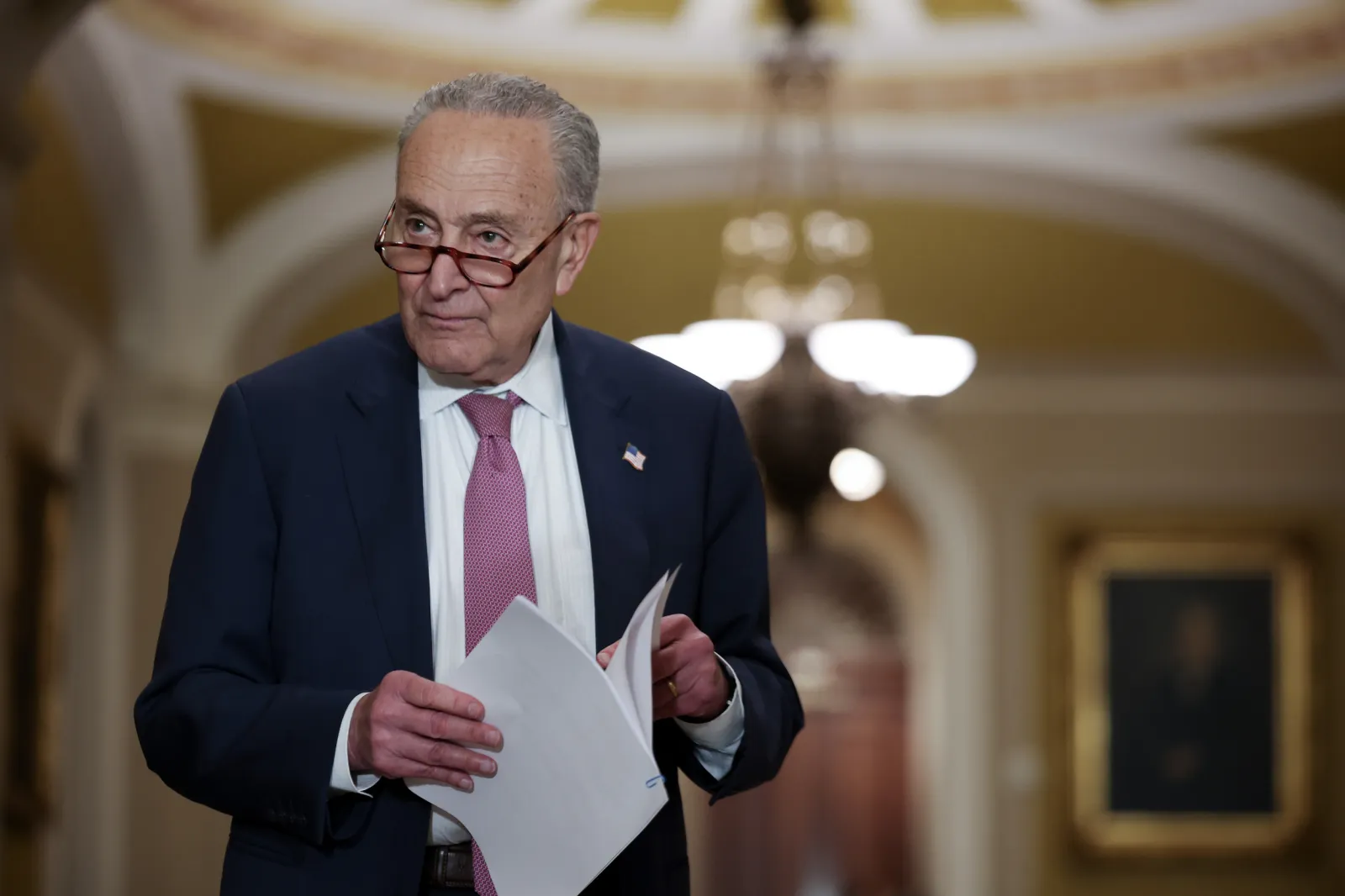
Despite pressure from the bills’ supporters, Schumer declined to schedule a full Senate vote before the end of the 2022 session. He said the legislation did not have sufficient support to pass. That decision frustrated advocates who believed the proposals had enough backing to move forward.
The failure was not the result of a single decision or one political confrontation. The legislative effort faced partisan disagreements, concerns about the bills’ language, competing priorities and an unusually aggressive lobbying campaign from the technology industry.
Kennedy’s own position also evolved. Although he had initially joined Klobuchar and Grassley in introducing the American Innovation and Choice Online Act, he later expressed frustration with the legislative strategy.
During the debate surrounding the Open App Markets Act, another proposal aimed at changing competition in digital marketplaces, Kennedy criticized efforts to pressure senators into supporting the legislation. He objected to suggestions that lawmakers questioning the bill were necessarily acting on behalf of Big Tech.
His criticism reflected a broader disagreement over how antitrust legislation should be developed. Some lawmakers believed the government needed stronger rules to prevent dominant platforms from suppressing competition. Others worried that complicated regulatory requirements could produce unintended consequences or give federal agencies excessive discretion.
That distinction matters because opposing a particular bill does not automatically mean supporting every business practice of the companies it seeks to regulate. Likewise, supporting stronger competition rules does not necessarily mean endorsing unlimited government intervention in the technology sector.
For Schumer, the challenge involved balancing competing demands within his own party, maintaining support for legislation and deciding whether a controversial bill had a realistic path through the Senate. His decision not to schedule a vote effectively ended the immediate prospects for the most ambitious proposals during that session.
Critics argued that the decision allowed major technology companies to avoid a significant legislative challenge. Others maintained that the bills needed further negotiation and that Congress should not advance sweeping changes without resolving concerns about privacy, security and the effects on consumers.
The controversy also raised questions about the relationship between political influence and legislative outcomes. Lobbying is a legal part of the American political system, but the scale of corporate spending can create concerns about whether ordinary consumers, independent businesses and smaller organizations have comparable access to decision-makers.
The issue becomes particularly sensitive when the companies involved control services used by millions of Americans and serve as essential gateways for businesses trying to reach customers. Their decisions can affect competition across entire industries, even when those decisions are made privately.
Yet allegations of corporate influence must be supported by evidence. Campaign contributions, lobbying expenditures and meetings with lawmakers can demonstrate political access and organized advocacy, but they do not independently prove that a senator changed a vote in exchange for financial support.
That distinction is essential to understanding the Schumer controversy. The public record establishes that major technology companies mounted a substantial lobbying campaign, that Schumer declined to bring the sweeping bills to a vote and that the legislative effort ultimately failed to produce the changes its strongest supporters wanted.
It does not establish that Schumer personally acted on behalf of corporate donors or that a specific financial arrangement determined his decision.
The broader question remains relevant to the American economy. When a handful of platforms control major parts of the digital marketplace, what obligations should they have toward smaller businesses that depend on them? How should lawmakers distinguish legitimate product integration from conduct that unfairly disadvantages competitors? And how can Congress protect innovation without allowing dominant companies to establish rules that preserve their own market power?
Those questions cannot be answered through partisan slogans alone. They require careful examination of competition, consumer protection, business practices and the consequences of regulation.
The history of Kennedy’s involvement makes the story especially interesting. A Republican senator initially joined Democratic and Republican colleagues in proposing stronger competition rules, then became dissatisfied with the legislative process. Schumer, meanwhile, faced pressure from supporters of the legislation but ultimately decided not to bring it to a vote.
Their positions demonstrate that the fight over Big Tech was never simply a contest between Republicans defending free markets and Democrats demanding regulation. It was a struggle over what fair competition should mean in an economy increasingly shaped by a small number of powerful digital platforms.
The unanswered question is whether Congress will eventually establish rules capable of protecting smaller competitors while preserving the benefits of technological innovation. Until lawmakers reach that agreement, the balance between corporate power, consumer choice and fair competition will remain one of Washington’s most consequential economic debates.
