
Jack Smith Faces Jim Jordan: The Explosive Battle Over Political Weaponization and the Rule of Law
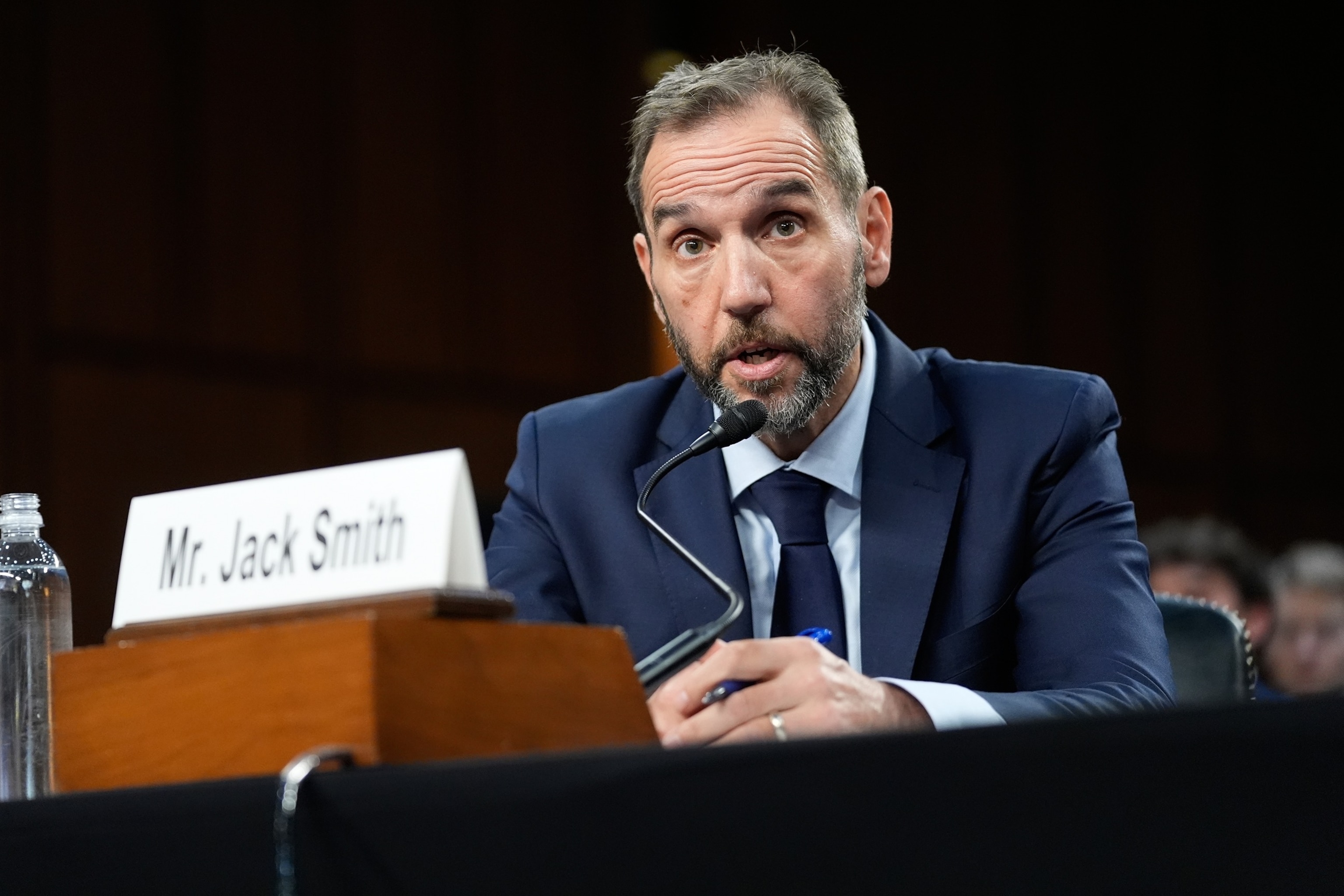
The first public congressional testimony of former Special Counsel Jack Smith on January 22, 2026, brought one of Washington’s most contentious political disputes directly into the House Judiciary Committee. Under the leadership of Chairman Jim Jordan, the hearing became a confrontation over presidential investigations, prosecutorial independence and the meaning of accountability under American law.
Jordan opened with a forceful accusation: Smith’s investigations into Donald Trump had always been political. The Ohio Republican argued that federal law enforcement had been turned against a political opponent and that investigators had been willing to cross legal boundaries in pursuit of the former president.
Smith rejected that characterization. Speaking in a measured tone, he emphasized his nearly three decades of experience as a prosecutor under both Republican and Democratic administrations. He said his professional responsibility had always been to follow the facts and the law without fear or favor.

“I am not a politician, and I have no partisan loyalties,” Smith told the committee in his opening statement.
He defended the work of his investigative team, arguing that decisions had been made according to Justice Department policies and established legal requirements. He also maintained that Trump had been charged because the evidence presented to two separate grand juries supported the indictments returned against him.
The disagreement was fundamental. Jordan viewed the investigations as evidence of a Justice Department pursuing political objectives. Smith argued that the investigations concerned alleged criminal conduct and that the president’s political position did not place him beyond the reach of federal law.
Jordan’s opening remarks focused heavily on the investigation into efforts to overturn the results of the 2020 presidential election. He highlighted the subpoena for telephone records belonging to former House Speaker Kevin McCarthy, which Smith’s team obtained in January 2023.
The chairman questioned why investigators had sought information about communications between Republican lawmakers and other individuals during the period surrounding January 6. He also criticized nondisclosure orders that prevented telecommunications companies from informing affected customers about the requests.
Jordan argued that the investigation had intruded into congressional activity and raised serious concerns about the constitutional protections afforded to members of Congress.
Smith’s defense centered on the nature of the records. He explained that investigators had obtained telephone toll records, which show details such as the numbers involved and the timing and duration of calls, rather than the actual contents of conversations.
He maintained that the requests were consistent with Justice Department policy and that investigators had followed the applicable legal procedures. His position was that the records were relevant to an investigation into alleged efforts to obstruct the lawful transfer of presidential power.
The distinction did not satisfy Jordan. The chairman argued that even without access to the content of conversations, call records could reveal sensitive information about a lawmaker’s political and personal relationships.
The dispute raised a difficult constitutional question: how should investigators balance the need to obtain relevant evidence against the protections designed to preserve the independence of Congress?
The Speech or Debate Clause protects members of Congress from certain forms of interference connected to their legitimate legislative activities. However, it does not provide unlimited immunity from criminal investigation. Determining how the protection applies depends on the nature of the information sought and the circumstances surrounding the investigation.
Jordan’s criticism was part of a broader Republican effort to examine Smith’s investigative methods. The committee had previously questioned the former special counsel in a closed-door deposition in December 2025, before bringing him back for public testimony.
The public hearing also gave Smith an opportunity to address claims that his office had acted as an extension of the Democratic Party. He rejected those accusations and defended the legal basis for the investigations.
His prepared testimony emphasized that he had served in federal prosecution roles across multiple administrations and had handled cases involving public corruption, election crimes, violent offenses and war crimes. He argued that his professional record demonstrated a commitment to applying the law consistently.
Smith also addressed the legal cases involving Trump. His office had brought charges related to the former president’s alleged retention of classified documents and alleged efforts to overturn the 2020 election results.

Both federal cases were ultimately dismissed after Trump won the 2024 presidential election, consistent with longstanding Justice Department policy against prosecuting a sitting president. Their dismissal did not amount to a judicial determination that every allegation was false, just as the original indictments did not constitute findings of guilt.
That distinction became important throughout the hearing. Republicans emphasized the political consequences of the investigations and questioned the judgment of the prosecutors involved. Smith emphasized the evidence that had been presented to grand juries and the legal standards governing charging decisions.
The exchange also reflected a larger conflict over the meaning of prosecutorial independence. For Jordan and other Republican critics, the use of investigative powers against Trump raised questions about whether federal institutions had been influenced by partisan considerations.
For Smith, the central concern was that prosecutors must be able to investigate potential violations of federal law without being intimidated by the political influence of those under investigation.
The hearing became increasingly contentious as other Republican lawmakers questioned Smith’s decisions, his interpretation of federal statutes and the conduct of his investigative team. Some accused him of pursuing an expansive interpretation of criminal law, while others focused on the timing and procedures associated with his appointment.
Smith consistently rejected the suggestion that his actions had been motivated by political loyalty. He defended the decisions made by his office and argued that prosecutors must evaluate evidence rather than calculate the political consequences of their work.
Democratic members of the committee offered a sharply different assessment. They argued that the Republican questioning was designed to undermine investigations into Trump’s conduct and distract from the underlying allegations. They emphasized that grand juries had independently reviewed evidence before returning indictments.
The result was a hearing that exposed the extraordinary difficulty of maintaining public confidence in federal law enforcement during a period of intense political polarization.
There is no verified record of Smith dramatically placing a stack of sworn testimony and grand jury documents on the witness table during the exchange with Jordan. Nor did the official transcript establish the viral quotation in which Smith supposedly challenged politicians to explain why ordinary Americans should obey laws that powerful figures could ignore.
What the record does establish is that Smith defended his investigations under sustained questioning and repeatedly returned to the principles of evidence, legal procedure and prosecutorial independence.
Jordan, meanwhile, used his position as committee chairman to challenge the legitimacy of those investigations and to argue that the Justice Department had exceeded its authority.
The disagreement cannot be settled by the appearance of a document or the delivery of a particularly forceful speech. It requires examining the underlying evidence, the legal basis for investigative decisions, the judicial orders involved and the constitutional protections that apply to both Congress and the executive branch.
At its core, the hearing raised a question that extends beyond Trump, Smith and Jordan: can federal prosecutors investigate the most powerful political figures in the country without facing accusations that their work is partisan, and can Congress scrutinize those prosecutors without turning oversight into another instrument of political conflict?
For Smith, the answer rests on the principle that the law must be applied without fear or favor. For Jordan, accountability requires examining whether the institutions enforcing that law have themselves respected their legal and constitutional limits.
Those competing arguments remain central to the national debate over the Justice Department. The January hearing did not resolve them, but it placed the underlying issues before the public with unusual clarity: prosecutorial power, congressional oversight and the enduring question of whether American institutions can apply the same legal standards to everyone, regardless of political influence.
